If you've been searching for an employee discount Tesla deal, you're not alone — the phrase pulls hundreds of searches every month. But here's the reality most buyers discover quickly: Tesla doesn't offer a traditional employee discount program to the public the way legacy automakers do. There's no haggling at a dealership, no "friends and family" voucher, and no end-of-year clearance event. Tesla sells direct at fixed MSRPs, and the price you see on the configurator is the price you pay.
That doesn't mean there aren't legitimate ways to lower your effective cost on a new Model Y, Model 3, Cybertruck, or Model S/X in 2026. Between federal tax credits under IRS §30D, state rebates, referral program benefits, and Tesla's occasional inventory promotions, informed buyers can shave thousands off the sticker. This guide explains what "employee discount Tesla" actually means in practice, which incentives stack, and what the current lineup really costs once you factor in real-world ownership economics.
What "Employee Discount Tesla" Actually Means
Unlike Ford, GM, or Toyota — which run formal Employee Pricing programs (often extending to friends, family, and supplier networks) — Tesla has never offered a public-facing employee discount. Tesla employees do receive vehicle purchase benefits, but these are internal, non-transferable, and explicitly prohibited from resale or proxy use.
When shoppers search "employee discount Tesla," they're usually looking for one of three things:
- Referral program credits — Tesla's owner referral program periodically offers $500–$1,000 in credit toward a new purchase when an existing owner shares their referral link.
- Demo or loaner vehicle discounts >Tesla occasionally sells former service loaners and demo vehicles at reduced prices, typically $2,000–$5,000 below new MSRP depending on mileage.
- Inventory vehicle price reductions — Tesla dynamically adjusts pricing on existing and in-transit inventory based on demand. Checking the inventory page weekly can surface price drops without any negotiation.
None of these are "employee discounts" in the traditional sense, but they represent the actual mechanisms Tesla buyers use to pay less than sticker.
2026 Tesla Model Y: The Volume Seller — Full Specs
The Model Y remains Tesla's best-selling vehicle globally and the one most buyers research when hunting for deals. Here's the complete 2026 spec breakdown for the Long Range AWD, the trim most shoppers cross-shop against the Hyundai Ioniq 5, Ford Mustang Mach-E, and Chevrolet Equinox EV.
| Spec | 2026 Model Y Long Range AWD |
|---|---|
| EPA Range | 320 miles |
| Battery Capacity | ~75 kWh usable (NMC chemistry) |
| Drivetrain | Dual-motor AWD |
| Horsepower | 384 hp combined |
| 0–60 mph | 4.8 seconds |
| MPGe (combined) | 111 MPGe |
| Efficiency | 30 kWh/100 mi |
| Max DC Fast Charge | 250 kW (CCS via adapter or native NACS on newer builds) |
| 10–80% DC Charge Time | ~27 minutes |
| Level 2 Home Charge Rate | 11.5 kW (~44 mi/hr) |
| Cargo Volume | 30.2 cu ft (rear seats up) / 72.1 cu ft (folded) |
| Rear Legroom | 41.6 inches |
| Battery Warranty | 8 years / 120,000 miles (min 70% retention) |
| Base MSRP | $48,990 |
Charging Speed: What You'll Actually Experience
Tesla's Supercharger network remains the gold standard for public DC fast charging in the U.S., with over 6,000 stations and 30,000+ stalls as of early 2026. The Model Y Long Range peaks at 250 kW on V3 Superchargers, though that peak is only sustained between roughly 10–30% state of charge. The charge curve tapers progressively:
| Charge Level | Power (kW) | Rate | Typical Use Case |
|---|---|---|---|
| Level 1 (120V) | ~1.4 kW | ~5 mi/hr | Emergency / trickle top-off |
| Level 2 (240V, 48A) | 11.5 kW | ~44 mi/hr | Overnight home charging (7–8 hr full charge) |
| DC Fast (V3 Supercharger) | Up to 250 kW | ~175 mi in 15 min | Road trips, 10–80% in ~27 min |
| DC Fast (V4 Supercharger) | Up to 350 kW* | Model Y currently capped at 250 kW | Future vehicles (Cybertruck, next-gen) benefit |
*V4 Supercharger stalls deliver up to 350 kW, but the Model Y's onboard architecture limits intake to 250 kW. Preconditioning the battery via navigation routing to a Supercharger is essential for hitting peak rates — arriving cold can cut charge speed by 40–50%.
Tax Credits and the Real Cost of a 2026 Model Y
The federal EV tax credit under IRS §30D remains the single largest price-reduction mechanism for Tesla buyers. However, eligibility is not automatic — it depends on three intersecting requirements that change annually:
- MSRP Cap: SUVs (including Model Y) must have an MSRP ≤ $80,000. Sedans (Model 3) ≤ $55,000. The Model Y Long Range at $48,990 qualifies.
- Buyer Income Cap: Modified adjusted gross income must not exceed $150,000 (single), $225,000 (head of household), or $300,000 (joint filers).
- Battery Sourcing: Critical minerals and battery components must meet phased-in domestic/FTA-country sourcing thresholds. For 2026, the sourcing requirements are stricter than in 2024–2025. Tesla has worked to localize supply chains, but the exact credit amount ($3,750 or $7,500) depends on whether both the critical-minerals and battery-components tests are met for your specific VIN's build date.
- Point-of-Sale Transfer: As of 2024, you can transfer the credit to the dealer (Tesla) at purchase, reducing your out-of-pocket cost immediately rather than waiting for a tax refund.
| Cost Factor | Amount |
|---|---|
| Model Y Long Range AWD MSRP | $48,990 |
| Federal Tax Credit (if fully eligible) | –$7,500 |
| Effective Price After Credit | $41,490 |
| Estimated State Rebate (varies — e.g., CA, CO, NY) | –$1,000 to –$7,500 |
| Destination / Order Fee | +$1,390 |
| Typical As-Tested (with FSD, paint, wheels) | $52,000–$58,000 |
Critical caveat: Tax credit rules are subject to legislative change. The Inflation Reduction Act's EV credit provisions have faced ongoing political scrutiny, and some provisions may be modified or sunset. Always verify current eligibility on fueleconomy.gov and consult a tax professional before relying on the credit in your purchase decision.
Tech, Driver Assistance, and What Sets Tesla Apart
Tesla's software-first approach continues to differentiate it from legacy competitors, though the gap has narrowed as Hyundai, Ford, and GM invest heavily in their own platforms.
Standout features:
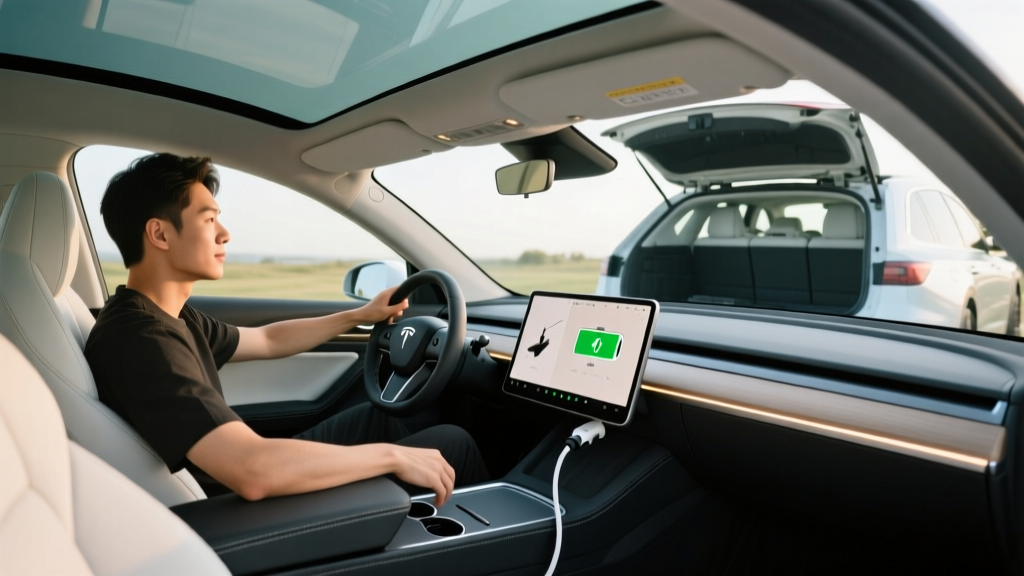
- 15.4-inch center touchscreen with native Netflix, YouTube, Arcade, and Spotify — no Apple CarPlay or Android Auto (by design).
- Over-the-air updates that add features post-purchase (new UI layouts, efficiency improvements, entertainment apps).
- Autopilot (standard) — adaptive cruise + lane centering on highways. Competent for SAE Level 2 driver assistance.
- Full Self-Driving (Supervised) — $8,000 option or $99/month subscription. Handles city streets, stop signs, and traffic lights but requires constant driver supervision. This is not autonomous driving — it remains SAE Level 2.
- Sentry Mode / Dashcam — built-in security recording using the vehicle's external cameras.
- Frunk + liftgate — 4.1 cu ft front trunk plus 30.2 cu ft rear cargo.
Notable drawbacks:
- No Apple CarPlay or Android Auto — a dealbreaker for some smartphone-dependent users.
- Minimalist interior lacks physical buttons for climate, mirrors, and glovebox (all screen-controlled).
- No heads-up display or traditional instrument cluster.
- Rear visibility is limited; reliance on cameras and the center screen for backing up.
- Panel gap quality and paint consistency remain inconsistent across Fremont and Austin builds.
Is the Model Y Worth It vs. Key Competitors?
At ~$41,490 after the full federal credit, the Model Y Long Range competes directly with vehicles that now match or exceed it in specific categories. Here's how it stacks up:
| Attribute | Tesla Model Y LR AWD | Hyundai Ioniq 5 Limited AWD | Ford Mustang Mach-E Ext. Range AWD |
|---|---|---|---|
| EPA Range | 320 mi | 290 mi | 312 mi |
| Max DC Charge | 250 kW | 238 kW (350 kW capable) | 150 kW |
| 10–80% Time | ~27 min | ~18 min | ~36 min |
| 0–60 mph | 4.8 sec | 4.5 sec | 5.1 sec |
| Cargo (rear up) | 30.2 cu ft | 27.2 cu ft | 29.7 cu ft |
| CarPlay / Android Auto | No | Yes | Yes |
| Charging Network | Supercharger (native) | NACS adapter for Supercharger access | NACS adapter for Supercharger access |
| Price After $7,500 Credit | ~$41,490 | ~$43,990 | ~$40,490 |
Where the Model Y wins: Supercharger network reliability (native, no adapter needed), software ecosystem, energy efficiency (30 kWh/100 mi vs. Ioniq 5's 33), and cargo space. The Tesla app and remote preconditioning remain best-in-class.
Where competitors win: The Ioniq 5 charges faster on 350 kW-capable chargers (18 min vs. 27 min 10–80%). The Mach-E offers CarPlay and a more traditional interior layout. Both Hyundai and Ford now have NACS adapters granting Supercharger access, eroding Tesla's once-exclusive charging advantage.
Choose the Ioniq 5 if: Fastest possible DC charging matters, you want CarPlay/Android Auto, and you prefer a more conventional cabin with physical controls.
Choose the Mach-E if: You want the lowest effective price after credit, prefer Ford's dealer service network, and value a driver-focused cockpit layout.
Who the Model Y Suits Best
Ideal for: Tech-forward commuters who charge at home, families needing cargo flexibility (stroller + groceries + road-trip luggage), and road-trippers who value Supercharger reliability across all 48 states. The 320-mile EPA range covers most daily needs with a substantial buffer.
Less ideal for: Buyers without home charging access (public charging costs 2–3× more per mile than home Level 2), those who need Apple CarPlay for work-related navigation or messaging, and cold-climate drivers who regularly face sub-zero temperatures (consider the Model Y with the heat pump — now standard — but budget for 25–30% winter range loss).
Towing note: The Model Y is rated for 3,500 lbs of towing capacity. Adequate for a small utility trailer or a pair of dirt bikes, but not for a camper or boat. If towing is a priority, look at the Rivian R1S or Ford F-150 Lightning.
Pros and Cons at a Glance
- Class-leading energy efficiency (30 kWh/100 mi)
- Native Supercharger access — most reliable U.S. DC network
- 320-mile EPA range covers most use cases
- OTA updates continuously add features
- Strong cargo versatility (30.2 cu ft + frunk)
- Eligible for up to $7,500 federal credit (verify sourcing)
- No Apple CarPlay or Android Auto
- Minimalist interior frustrates some buyers
- No physical buttons — all controls via touchscreen
- FSD ($8,000) remains Level 2, not autonomous
- DC charging slower than Ioniq 5 on 350 kW chargers
- Build quality inconsistency across factories
Frequently Asked Questions
Does Tesla offer an employee discount to the public?
No. Tesla does not run a public employee discount, friends-and-family, or supplier pricing program. Tesla employees receive internal purchase benefits that are non-transferable. The best ways to reduce your Tesla purchase price are the federal §30D tax credit, state rebates, Tesla's referral program (when active), and monitoring inventory page price reductions.
What is the real-world range of the 2026 Model Y Long Range?
The EPA rates it at 320 miles. In real-world highway driving at 70–75 mph, expect 270–290 miles. In winter conditions below freezing, plan for 230–250 miles. Preconditioning and using seat heaters instead of cabin heat can recover some of that loss.
How fast does the Model Y charge at home and on the road?
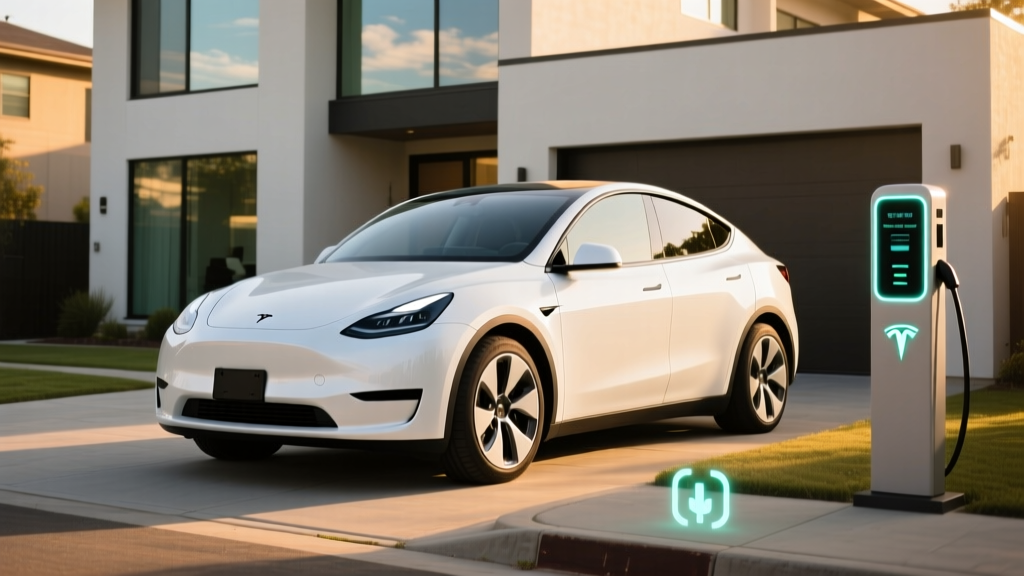
On a 48-amp Level 2 home charger (240V), the Model Y adds approximately 44 miles of range per hour, fully charging overnight in 7–8 hours. On a V3 Supercharger (250 kW DC), it charges from 10–80% in roughly 27 minutes. Always precondition the battery by navigating to the Supercharger in the car's navigation system for maximum charge speed.
Does the 2026 Model Y qualify for the $7,500 federal EV tax credit?
The Model Y Long Range AWD ($48,990 MSRP) falls under the $80,000 SUV cap and is eligible in principle. However, the full $7,500 credit depends on meeting both critical-minerals and battery-component sourcing requirements, which tighten annually. Your buyer income must also fall under IRS thresholds ($150K single / $300K joint). Verify current eligibility on irs.gov and confirm with a tax professional before purchasing.
Is the Model Y better than the Hyundai Ioniq 5 or Ford Mach-E?
It depends on your priorities. The Model Y wins on efficiency, cargo space, and native Supercharger access. The Ioniq 5 charges faster on 350 kW stations and offers CarPlay. The Mach-E is often the lowest-priced option after credits and has a more traditional cabin. All three now access Superchargers via NACS adapters, narrowing Tesla's charging-network advantage.
What's the biggest mistake first-time Tesla buyers make?
Skipping home charger installation. Relying solely on public DC fast charging costs roughly 2–3× more per mile and adds significant time to your routine. Budget $500–$2,000 for a Level 2 home charger installation (equipment + electrician) — it pays for itself within the first year for most drivers. Also: don't buy FSD expecting self-driving capability. It's a Level 2 assist system that still requires your full attention.
Bottom Line: How to Actually Save on a Tesla in 2026
There is no employee discount Tesla program — but informed buyers routinely save $8,000–$15,000 off the effective cost through a combination of the federal tax credit ($7,500), state rebates ($1,000–$7,500 depending on jurisdiction), referral credits ($500–$1,000 when available), and strategic inventory monitoring. The Model Y Long Range AWD at ~$41,490 after the full federal credit remains one of the most efficient, practical, and well-supported electric SUVs on the market — provided you have home charging access and don't require CarPlay.
Before ordering, verify your §30D eligibility on the IRS website, confirm your state's current rebate programs, and check Tesla's inventory page for any price reductions on existing vehicles. That combination — not a mythical employee discount — is how Tesla buyers actually pay less in 2026.