When headlines announce that Elon buys Tesla stock, it's usually a signal worth watching — not just for investors, but for EV shoppers. Insider purchases often precede major product pushes, pricing adjustments, or confidence in upcoming platform efficiencies. For buyers evaluating a Tesla in 2026, the real question isn't about stock movements; it's whether the current Model 3, Model Y, Cybertruck, and refreshed Model S/X lineup delivers measurable value against an increasingly crowded field of competitors.
This review breaks down the 2026 Tesla lineup with exact specs — EPA range, battery chemistry, DC fast-charge curves, real-world efficiency, pricing after federal tax credits, and where each model stands against rivals from Hyundai, Ford, BMW, and Rivian. If Elon buys Tesla stock, he's betting on this product matrix. Here's whether you should bet your garage on it too.
2026 Tesla Model 3: The Volume Play
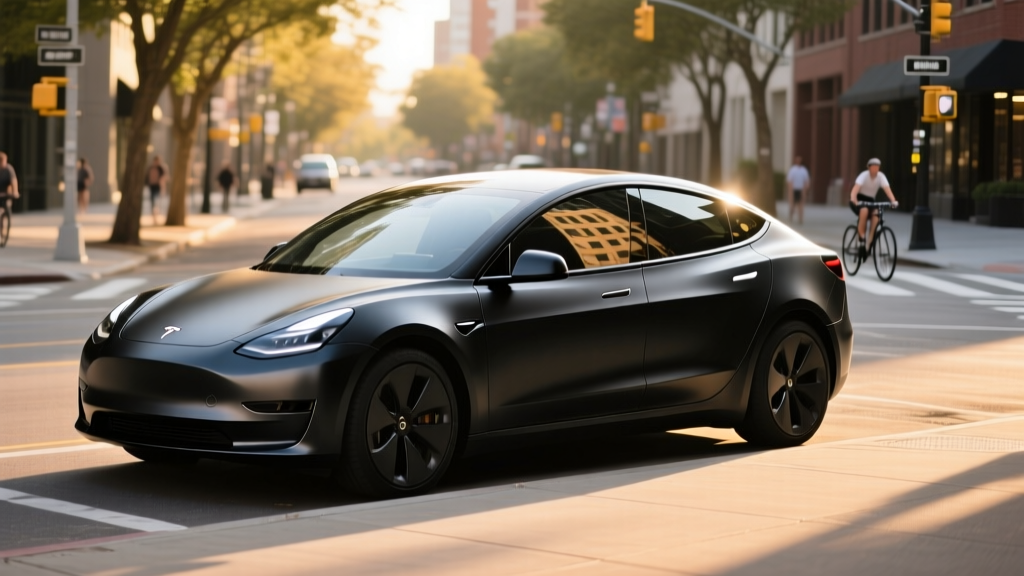
The refreshed Model 3 (internally called "Highland" and now in its second iteration for 2026) remains Tesla's entry point and the highest-volume EV sedan in the U.S. market. It competes directly with the Hyundai Ioniq 6, BMW i4, and the upcoming next-gen Chevrolet Bolt.
| Spec | RWD Long Range | AWD Long Range | Performance |
|---|---|---|---|
| EPA Range | 363 mi | 341 mi | 315 mi |
| Battery (usable) | 79 kWh (NMC) | 79 kWh (NMC) | 79 kWh (NMC) |
| 0-60 mph | 5.8 sec | 4.2 sec | 3.1 sec |
| Horsepower | 283 hp | 346 hp | 510 hp |
| Drivetrain | RWD | Dual-Motor AWD | Dual-Motor AWD |
| MPGe (combined) | 132 MPGe | 125 MPGe | 115 MPGe |
| Efficiency | 25 kWh/100mi | 27 kWh/100mi | 29 kWh/100mi |
| Base MSRP | $38,990 | $44,990 | $52,990 |
Charging: Model 3
| Level | Max Rate | Speed |
|---|---|---|
| Level 1 (120V) | 1.4 kW | ~4 mi/hr |
| Level 2 (240V, 48A) | 11.5 kW | ~36 mi/hr |
| DC Fast Charge | 250 kW peak | 10–80% in ~25 min |
The 250 kW peak on V3 Superchargers is strong, but the charge curve tapers noticeably above 60% state of charge. Sustained rate from 10–60% averages around 190 kW, then drops to roughly 90 kW from 60–80%. For road-trippers, this means planning stops around the 50–60% mark for maximum throughput.
Tax Credit Eligibility
The Model 3 RWD and Long Range AWD qualify for the full $7,500 federal tax credit under IRS §30D as of early 2026, provided the buyer meets income caps ($150K single / $300K joint) and the vehicle MSRP is under $55,000 (sedan cap). The Performance trim at $52,990 squeaks under the cap. Battery sourcing and critical-mineral requirements are met via Tesla's U.S. and allied-nation supply chain. Always verify current eligibility on fueleconomy.gov before purchasing, as rules shift with supply-chain changes.
2026 Tesla Model Y: The Family Default
The Model Y continues as America's best-selling EV. The 2026 "Juniper" refresh brought a quieter cabin, revised suspension, ambient lighting, and a rear-seat touchscreen. It competes with the Ford Mustang Mach-E, Hyundai Ioniq 5, Kia EV6, and Rivian R1S (at a higher price point).
| Spec | Long Range RWD | Long Range AWD | Performance |
|---|---|---|---|
| EPA Range | 320 mi | 308 mi | 285 mi |
| Battery (usable) | 78 kWh (NMC) | 78 kWh (NMC) | 78 kWh (NMC) |
| 0-60 mph | 6.5 sec | 4.8 sec | 3.5 sec |
| Horsepower | 295 hp | 384 hp | 456 hp |
| Cargo (rear seats up) | 30 cu ft | 30 cu ft | 30 cu ft |
| Cargo (seats folded) | 72 cu ft | 72 cu ft | 72 cu ft |
| Rear Legroom | 40.5 in | 40.5 in | 40.5 in |
| Base MSRP | $44,990 | $48,990 | $54,990 |
Who the Model Y Suits Best
Families needing 30+ cu ft of cargo without stepping to a three-row SUV. Daily commuters with home Level 2 charging who want minimal public-charging dependency. Road-trippers willing to plan around the Supercharger network (now open to NACS adapters for non-Tesla EVs, but still the most reliable U.S. DC network). It is not ideal for towing — the 3,500-lb tow rating trails the Rivian R1S and Ford F-150 Lightning significantly.
2026 Cybertruck: The Polarizing Pickup
Now in its third model year, the Cybertruck has stabilized production and addressed early build-quality complaints. It competes with the Ford F-150 Lightning, Rivian R1T, and Chevrolet Silverado EV.
| Spec | AWD | Beast (Tri-Motor) |
|---|---|---|
| EPA Range | 340 mi | 320 mi |
| Battery (usable) | 123 kWh (NMC) | 123 kWh (NMC) |
| 0-60 mph | 3.9 sec | 2.6 sec |
| Horsepower | 600 hp | 845 hp |
| Tow Rating | 11,000 lbs | 11,000 lbs |
| Bed Length | 6 ft | 6 ft |
| Base MSRP | $79,990 | $99,990 |
Tax credit note: The Cybertruck qualifies as a truck under §30D (MSRP cap of $80,000). The AWD at $79,990 barely qualifies; the Beast at $99,990 does not. Buyer income caps still apply.
Cybertruck Charging & Efficiency
Peak DC fast charge: 350 kW on V4 Superchargers, 10–80% in approximately 22 minutes. Level 2 at 19.2 kW (80A) adds roughly 52 miles per hour — necessary given the massive 123 kWh pack. Efficiency is the Cybertruck's weakness: at 48 kWh/100mi (combined), it consumes nearly double the Model 3 per mile driven. Towing a 7,000-lb trailer drops real-world range to approximately 170–200 miles.
2026 Model S and Model X: The Legacy Flagships
Both models received minor updates for 2026 but face existential pressure from the Lucid Air, BMW iX, and Mercedes EQS. Production volumes remain low, and Tesla has signaled these may be the final model years without a ground-up redesign.
| Spec | Model S LR | Model S Plaid | Model X LR | Model X Plaid |
|---|---|---|---|---|
| EPA Range | 402 mi | 359 mi | 348 mi | 320 mi |
| 0-60 mph | 3.1 sec | 1.99 sec | 3.8 sec | 2.5 sec |
| Base MSRP | $79,990 | $94,990 | $84,990 | $99,990 |
Neither qualifies for the federal tax credit — both exceed the $55,000 sedan / $80,000 SUV MSRP caps under §30D. They remain compelling for performance enthusiasts and buyers who prioritize range (the Model S LR's 402 miles is still the highest EPA figure of any production EV), but the value proposition narrows each year.
Autopilot & FSD: What You Actually Get
FSD (Supervised) costs $8,000 as a one-time purchase or $99/month in 2026. It handles highway lane changes, traffic-light recognition, and city-street navigation with impressive fluidity in well-mapped areas, but struggles in construction zones, unmapped rural roads, and heavy rain. NHTSA continues to investigate Tesla's Autopilot crash data — buyers should treat FSD as a convenience layer, not a replacement for attention.
Competitive Positioning: Is Tesla Still the Default?
- Supercharger network: still the most reliable U.S. DC fast-charge infrastructure
- Class-leading efficiency (Model 3 at 25 kWh/100mi)
- Over-the-air updates that meaningfully improve the vehicle post-purchase
- Strong resale value relative to legacy-brand EVs
- Heat pump standard on all models (cold-weather advantage)
- Minimalist interior isn't for everyone (no physical stalks on refreshed models)
- Panel gaps and service-center wait times still lag luxury competitors
- FSD promises have repeatedly outpaced delivery timelines
- No Apple CarPlay / Android Auto — Tesla's ecosystem is closed
- Cybertruck efficiency and polarizing design limit mainstream appeal
Decision Framework
- Choose Model 3 if you want the best efficiency-per-dollar EV sedan and commute under 60 miles daily with home charging.
- Choose Model Y if you need family cargo space, want Supercharger access, and value one-pedal simplicity.
- Choose Cybertruck if you need 11,000-lb towing and accept the efficiency penalty of a stainless-steel exoskeleton.
- Choose Model S LR if 400+ mile range is non-negotiable and budget allows $80K+.
- Look at Hyundai Ioniq 5/6 or Ford Mach-E if you want physical controls, CarPlay, and competitive pricing without Tesla's brand controversy.
Frequently Asked Questions
What is the real-world range of the 2026 Tesla Model 3?
The EPA rates the Model 3 RWD Long Range at 363 miles. In real-world highway driving at 70 mph, expect 300–320 miles. In freezing temperatures, plan for 250–280 miles. Preconditioning the battery before departure (automatic when navigation is set) helps recover 5–10% of cold-weather loss.
How fast does a Tesla charge at home and on the road?
At home on a 240V/48A Level 2 circuit, the Model 3 and Model Y add approximately 36 miles per hour (11.5 kW). A full overnight charge from 20% to 80% takes roughly 4 hours. On V3 Superchargers (250 kW DC), expect 10–80% in about 25 minutes, with the charge curve tapering significantly above 60% SoC.
How much does a Tesla cost after the federal tax credit?
The Model 3 RWD Long Range at $38,990 drops to approximately $31,490 after the $7,500 §30D credit (if buyer income is under $150K single / $300K joint). The Model Y Long Range AWD at $48,990 drops to ~$41,490. The point-of-sale transfer option lets dealers apply the credit directly at purchase rather than waiting for a tax refund. Verify eligibility on IRS.gov — battery-sourcing rules change periodically.
Does the Tesla Model Y qualify for the federal EV tax credit?
Yes, the Model Y Long Range RWD ($44,990) and Long Range AWD ($48,990) qualify for the full $7,500 credit under the $80,000 SUV/truck MSRP cap. The Performance trim at $54,990 also qualifies. All current Model Y variants meet critical-mineral and battery-component sourcing requirements as of 2026, but confirm on fueleconomy.gov before purchasing.
Is Tesla still worth buying versus competitors in 2026?
For buyers who prioritize charging infrastructure, software updates, and efficiency, Tesla remains the default. For buyers who want physical controls, Apple CarPlay, or a more traditional dealership/service experience, the Hyundai Ioniq 5, Kia EV6, and Ford Mustang Mach-E are strong alternatives — often at lower prices with equivalent or better interior quality.
What are the biggest pros and cons of buying a Tesla?
Pros: Supercharger reliability, class-leading efficiency, OTA improvements, strong resale, heat pump standard. Cons: Minimalist interior controversy, service-center capacity, no CarPlay, FSD overpromising, brand polarization affecting resale in some markets.
Warranty & Long-Term Ownership
Tesla's battery and drive-unit warranty covers 8 years / 120,000 miles (whichever comes first) on the Model 3 and Model Y, with a guaranteed minimum 70% capacity retention over that period. The Model S and X receive 8 years / 150,000 miles. This is competitive with Hyundai's 10-year/100,000-mile battery warranty and slightly behind Rivian's 8-year/175,000-mile coverage.
Battery degradation data from Tesla's 2025 Impact Report shows Model 3/Y packs retaining approximately 85% capacity at 150,000 miles — well within the warranty threshold. NMC chemistry in Tesla's U.S.-spec vehicles shows slightly faster calendar degradation than LFP packs used in some base-model vehicles sold in other markets. If longevity is your top priority, the LFP-equipped Model 3 RWD (available in select configurations) offers slower degradation and a 100% daily charge recommendation, versus NMC's 80% daily limit for optimal lifespan.
When headlines note that Elon buys Tesla stock, the underlying message is confidence in the product roadmap. For 2026 buyers, that roadmap delivers strong but not unassailable products — the Model 3 and Model Y remain category benchmarks in efficiency and charging, while the Cybertruck and legacy flagships face stiffer competition than ever. Your purchase decision should rest on specs, real-world usability, and total cost of ownership — not stock movements.