ELI Electric: The Short Answer
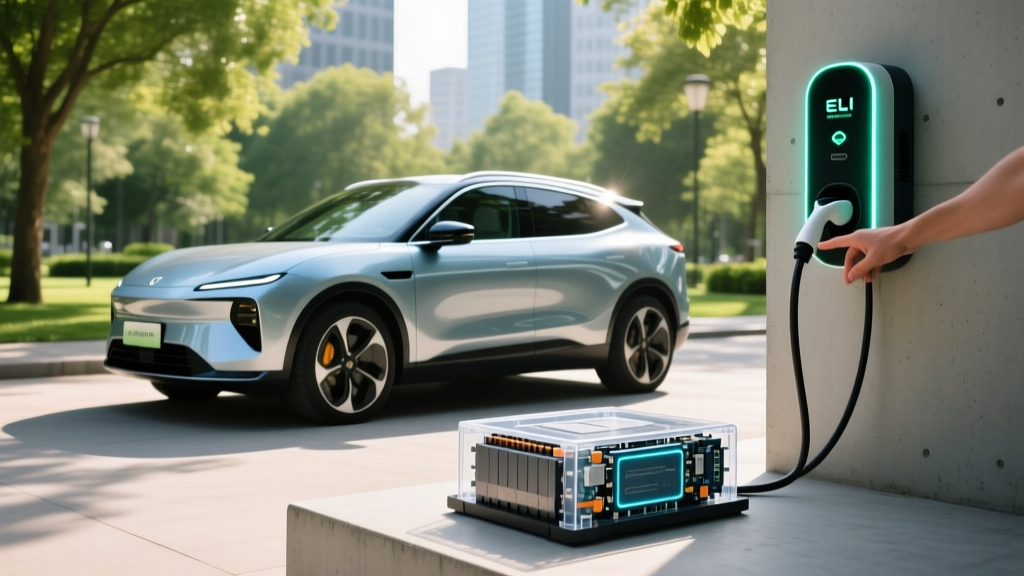
ELI (Explain Like I'm new) Electric means stripping away the jargon and answering the practical questions every first-time EV buyer actually has. An electric vehicle stores energy in a battery measured in kilowatt-hours (kWh) — think of it as the "gallon" equivalent — and recharges using power measured in kilowatts (kW), the speed of refueling. A typical 2026 EV delivers 250–350 miles of EPA range, costs roughly $0.04–$0.06 per mile to charge at home (versus $0.12–$0.18 per mile for gas), and qualifies for up to $7,500 in federal tax credits if income, MSRP caps, and battery-sourcing rules are met. The real decision hinges on three things: your daily mileage, whether you can install a Level 2 home charger, and your local climate.
How EVs Actually Work — No Jargon, Just Numbers
An electric vehicle replaces the gas tank with a lithium-ion battery pack and the engine with one or more electric motors. The battery's usable capacity is listed in kWh (energy). A 2026 Hyundai Ioniq 5, for example, carries about 84 kWh of usable capacity in its Long Range trim. The motor converts that stored energy into motion with roughly 85–90% efficiency — compared to about 20–30% for a gasoline engine, which wastes most of its fuel as heat.
Efficiency is measured in MPGe (miles per gallon equivalent) or kWh per 100 miles. The EPA rates many mainstream EVs between 100–130 MPGe combined, meaning they travel the same distance on the energy equivalent of one gallon of gas but use far less of it. A more intuitive metric: most EVs consume 25–35 kWh per 100 miles of mixed driving. At a national average residential electricity rate of roughly $0.17/kWh in 2026, that translates to about $0.04–$0.06 per mile.
Charging speed is where the kW vs kWh distinction matters most. Your battery holds, say, 75 kWh of energy. A Level 2 home charger delivers 7–11 kW of power, adding roughly 25–40 miles of range per hour. A DC fast charger at a highway stop can peak at 150–350 kW, potentially adding 150–250 miles in 15–25 minutes — but only up to about 80% state of charge, after which the charge curve tapers sharply to protect the battery.
EV vs Gas vs Hybrid: The Cost Showdown
The headline advantage of an EV is fuel-cost savings, but the full picture includes purchase price, maintenance, insurance, and depreciation. Here's how a representative 2026 EV stacks up against a comparable gas sedan and a hybrid over five years and 75,000 miles:
| Category | EV (e.g., Tesla Model 3 RWD) | Gas Sedan (e.g., Toyota Camry LE) | Hybrid (e.g., Toyota Camry Hybrid) |
|---|---|---|---|
| Base MSRP | $38,990 | $28,400 | $30,900 |
| Fed. Tax Credit (§30D) | −$7,500* | $0 | $0 |
| Effective Purchase Price | $31,490 | $28,400 | $30,900 |
| Fuel/Energy (75k mi) | $3,750 (home charging) | $9,375 ($3.50/gal, 28 MPG) | $6,000 ($3.50/gal, 44 MPG) |
| Maintenance (5 yr) | $1,500 | $3,500 | $3,200 |
| Insurance (5 yr avg) | $9,500 | $7,000 | $7,200 |
| Est. Depreciation | $15,000 | $12,000 | $13,500 |
| Total 5-Yr Cost | $61,240 | $60,275 | $60,800 |
*§30D credit eligibility depends on buyer income caps ($150k single / $300k joint), MSRP limits ($55k sedans / $80k SUVs/trucks), and battery critical-mineral sourcing requirements. Verify current rules at IRS.gov. Point-of-sale transfer is available at participating dealers.
The EV's higher insurance premiums and steeper depreciation narrow the gap, but its energy and maintenance savings widen it if you drive more than 15,000 miles annually or if gas prices rise above $4/gallon. Home charging is the linchpin: public DC fast charging at $0.35–$0.50/kWh erases most of the fuel-cost advantage.
Real-World Range: What the EPA Sticker Doesn't Tell You
The EPA range estimate is tested under controlled conditions that don't fully reflect highway speeds, cold weather, or mountain driving. In real-world testing by multiple outlets, expect the following adjustments:
- Highway driving (70–80 mph): Subtract 10–15% from the EPA figure. Aerodynamic drag scales with the square of speed, and EVs have no multi-gear transmission to compensate.
- Cold weather (below 32°F): Subtract 20–35%. Battery chemistry slows, cabin heating draws significant energy (unless the vehicle has a heat pump, which cuts losses to ~15–20%).
- Mountain/towing: Subtract 25–40% depending on grade and load.
- Optimal conditions (55 mph, 65°F, flat terrain): You may exceed EPA by 5–10%.
A vehicle rated at 310 miles EPA might deliver 250–270 miles on a 75°F highway day, and as little as 200–220 miles on a 20°F winter commute. Always plan road trips around the worst-case scenario for your climate and route.
| Metric | EV (310 mi EPA) | Gas Car (400 mi tank) | PHEV (30 mi electric + 400 mi gas) |
|---|---|---|---|
| Real-world highway range | ~260 mi | ~360 mi | ~25 mi electric + ~360 mi gas |
| Refuel/recharge time | 18–30 min (10–80% DC fast) | 3–5 min | 2.5 hr (L2) / 3–5 min (gas) |
| Cost per mile | $0.05 (home) / $0.14 (public DC) | $0.13 | $0.05 (electric) / $0.13 (gas) |
| Home "refueling" possible? | Yes (Level 2) | No | Yes (Level 2 for electric portion) |
Charging at Home: Access, Costs, and Gotchas
Home charging is the single biggest factor in EV satisfaction. If you can install a Level 2 (240V) charger, you'll start every morning with a full battery and rarely visit a public station except on road trips.
| Item | Low End | High End | Notes |
|---|---|---|---|
| Level 2 charger unit (32–48A) | $350 | $700 | Hardwired or NEMA 14-50 plug |
| Electrical panel upgrade (if needed) | $0 | $3,000 | Required if panel is 100A or near capacity |
| Wiring & conduit (50-ft run) | $400 | $1,500 | Cost increases with distance from panel |
| Electrician labor | $500 | $2,000 | Varies by region; licensed electrician required |
| Permit & inspection | $50 | $300 | Required in most jurisdictions |
| Total | $1,300 | $7,500 | Average install: $2,000–$3,500 |
Key gotcha: Older homes with 100-amp electrical panels may need a $1,500–$3,000 panel upgrade to 200A to safely support a 48A EV charger alongside existing loads like an electric dryer and oven. Get a load calculation from a licensed electrician before purchasing equipment. Some utilities offer rebates of $250–$1,000 for charger installation — check with your local provider.
If you cannot install a home charger (apartment, street parking), your EV ownership experience will depend entirely on public charging infrastructure. Research your nearest reliable DC fast-charging stations and your workplace charging options before committing. In many metro areas, public charging costs $0.35–$0.50/kWh, which can approach or exceed gasoline costs per mile.
Federal Tax Credits and Incentives: What You Actually Qualify For
The §30D Clean Vehicle Credit offers up to $7,500 for new EVs, but qualifying is not automatic. The rules as of 2026 include multiple layers of eligibility:
- Buyer income caps: Modified AGI must not exceed $150,000 (single), $225,000 (head of household), or $300,000 (joint filers).
- MSRP caps: Vehicle base price must be ≤$55,000 for sedans/wagons, ≤$80,000 for SUVs/pickups/vans.
- Battery sourcing: At least 80% of critical minerals must be sourced from the U.S. or a free-trade-agreement partner; 100% of battery components must be manufactured or assembled in North America. These thresholds tighten annually.
- Final assembly: Must occur in North America.
- Point-of-sale transfer: You can transfer the credit to the dealer at purchase for an immediate price reduction, even if you owe less than $7,500 in tax.
Because sourcing requirements shift and vary by model, always verify eligibility for a specific vehicle at fueleconomy.gov before signing a purchase agreement. Many popular models — including several Tesla, GM, and Hyundai/Kia trims — currently qualify for the full $7,500, while others may qualify for $3,750 or nothing, depending on battery supply-chain changes.
Common EV Misconceptions — Fact-Checked
| Myth | Fact |
|---|---|
| "EV batteries need replacing every 5 years." | Most 2026 EV batteries are warrantied for 8 years/100,000 miles at ≥70% capacity retention. Real-world degradation averages 1–2% per year, meaning a battery should retain 85–90% capacity after 100,000 miles. Full replacement (rare) costs $8,000–$18,000 depending on pack size. |
| "EVs are worse for the environment because of electricity generation." | Even on the most coal-heavy U.S. grids, an EV produces fewer lifetime CO₂ emissions than a comparable gas car after ~15,000–25,000 miles of driving, per EPA analysis. On cleaner grids, the breakeven is under 10,000 miles. |
| "Charging takes too long for road trips." | A 2026 EV with 200+ kW DC fast-charging capability adds ~150–200 miles in 15–20 minutes (10–80%). Most road-trip charging stops align with rest breaks. Plan around networks like Tesla Supercharger, Electrify America, or EVgo. |
| "I need a Tesla to use Superchargers." | As of 2026, most major automakers have adopted the NACS (North American Charging Standard) connector. Tesla Superchargers are increasingly open to non-Tesla EVs via adapter or native NACS port, though availability varies by station. |
| "EVs can't handle cold weather." | EVs lose 20–35% range in sub-freezing temperatures, but preconditioning (warming the battery while plugged in) recovers much of the charging-speed loss. Owners in Minnesota, Norway, and Canada drive EVs year-round — they just plan for reduced range. |
Decision Framework: Should You Go EV, Hybrid, or Stick With Gas?
Use This If/Then Framework
Choose a full EV if:
- You can install a Level 2 charger at home or have reliable workplace charging.
- Your daily commute is under 80 miles round-trip (covers >90% of U.S. drivers).
- You qualify for the §30D tax credit, bringing effective price near a comparable gas car.
- You want minimal maintenance (no oil changes, fewer brake replacements due to regenerative braking).
Choose a PHEV (plug-in hybrid) if:
- You want electric-only commuting (25–50 miles) but need gas-engine range for frequent long trips.
- You have home charging but live in an area with sparse public DC fast-charging infrastructure.
- You're not ready to fully commit to battery-only driving in extreme cold.
Choose a conventional hybrid if:
- You have no access to home or workplace charging.
- You want maximum fuel efficiency with zero plug-in behavior change.
- Your budget is tighter and you want to avoid EV insurance premiums.
Stick with gas (for now) if:
- You regularly tow heavy loads (>5,000 lbs) over long distances — EV range drops 30–40% while towing.
- You live in a rural charging desert with no reliable DC fast-charging within 50 miles.
- Your annual mileage is very low (<5,000 mi/yr), making fuel savings negligible against the EV price premium.
First-Time Buyer Checklist: Before You Sign
- Test the real-world range. Take the EV on a highway-speed test drive of at least 30 miles and check the trip computer's kWh/mile consumption. Multiply by your typical trip distance.
- Verify your electrical panel. Have a licensed electrician assess whether your home can support a 40–48A Level 2 circuit before you buy the car.
- Confirm tax credit eligibility. Check the specific VIN's qualification at fueleconomy.gov and verify your income against IRS caps.
- Research insurance costs. Get quotes before purchasing — EV insurance averages 15–25% higher than equivalent gas models, though the gap is narrowing.
- Map your charging options. Download apps for ChargePoint, EVgo, and Electrify America. Confirm that at least one reliable DC fast charger exists on your most common road-trip route.
- Understand the battery warranty. Federal law mandates a minimum 8-year/100,000-mile warranty on EV batteries. Some automakers extend this to 10 years/150,000 miles. Know the capacity-retention threshold (typically 70%).
Frequently Asked Questions
What's the difference between kW and kWh?
kW (kilowatts) measures power — the rate at which energy flows, like water pressure from a hose. kWh (kilowatt-hours) measures energy — the total amount stored or consumed, like gallons in a bucket. A 75 kWh battery charged at 11 kW takes roughly 7 hours from empty. A 200 kW DC fast charger can refill that same battery to 80% in about 20–25 minutes (the charge curve slows above 80% to protect cell health).
How long do EV batteries actually last?
Data from high-mileage fleets and owner reports show most NMC and LFP battery packs retain 85–92% of original capacity after 100,000 miles. LFP (lithium iron phosphate) chemistry, used in many standard-range Teslas and some Ford/Hyundai models, tends to degrade more slowly and can tolerate regular 100% charging. NMC packs benefit from staying between 20–80% for daily use. Full battery replacement is uncommon and typically costs $8,000–$18,000 out of warranty.
Is a used EV a smart buy?
A used EV can be excellent value, especially with the §25E used clean vehicle credit (up to $4,000 or 30% of sale price, whichever is less, for vehicles under $25,000 with income caps of $75k single / $150k joint). Check the battery's State of Health (SoH) via the vehicle's diagnostics or a third-party scan tool before purchasing. Avoid EVs with degraded batteries and no remaining warranty coverage.
Do I really need a Level 2 home charger?
Level 1 charging (standard 120V outlet) adds about 3–5 miles of range per hour — roughly 30–50 miles overnight. That's sufficient if your daily driving is under 30 miles and you're patient. For most owners, a Level 2 charger (240V, 32–48A) adding 25–40 miles per hour is the practical minimum for stress-free ownership, ensuring a full battery every morning regardless of yesterday's driving.
What happens if I run out of charge on the road?
Unlike a gas car, you can't walk to a station with a jerrycan. Most EVs provide aggressive low-battery warnings and will reduce power to preserve enough energy to reach a charger. Roadside-assistance services (AAA, manufacturer programs) increasingly offer mobile charging or flatbed towing to the nearest station. The practical solution is trip planning: use your vehicle's built-in navigation or apps like A Better Routeplanner to pre-map charging stops on any trip exceeding ~80% of your real-world range.