Quick Answer: Is an Electric Yard Truck Worth It?
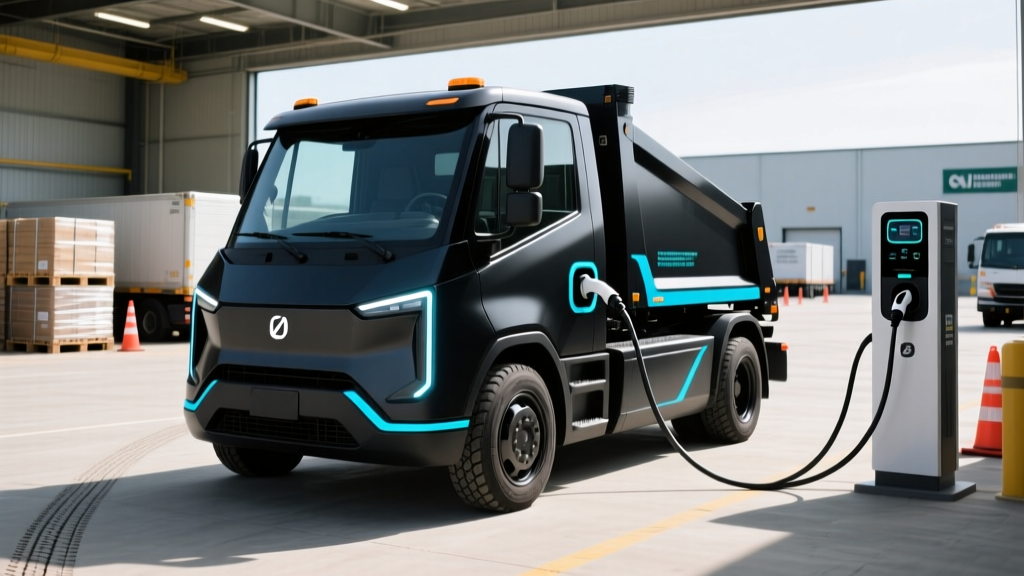
An electric yard truck (also called an electric yard tractor, spotter truck, or terminal tractor) is a purpose-built, low-speed vehicle designed to move trailers within distribution centers, ports, and freight yards. In 2026, models like the Orange EV E-Series, Kalmar Ottawa EV, and Volvo VNR Electric (for heavier yard-adjacent work) offer 80–150 miles of real-world range on battery packs ranging from 110 to 300 kWh, with Level 2 AC charging completing overnight and DC fast charging hitting 10–80% in roughly 60–90 minutes depending on pack size. The upfront cost runs $150,000–$250,000 per unit versus $80,000–$120,000 for a diesel equivalent, but total cost of ownership (TCO) typically breaks even within 3–5 years thanks to diesel displacement ($4.50–$5.50/gal in 2026), lower maintenance (no engine oil, DPF, DEF, or transmission fluid), and available federal/state incentives including the IRS §45W Commercial Clean Vehicle Credit (up to $40,000 for vehicles over 14,000 lbs GVWR).
What Is an Electric Yard Truck and Who Needs One?
A yard truck is not a highway tractor. It operates at speeds of 25–40 mph max, pulls trailers across paved lots, and idles extensively while drivers hook and unhook loads. That duty cycle — heavy stop-and-go, long idle periods, predictable routes, and a return-to-base pattern — is almost perfectly matched to electric drivetrains.
Regenerative braking recovers significant energy during frequent deceleration. Zero idle emissions matter in enclosed or semi-enclosed yards where diesel particulate exposure is a regulatory and worker-safety concern. And the single-speed, direct-drive architecture of most electric yard tractors eliminates the transmission and clutch wear that plagues diesel spotters.
Primary use cases in 2026:
- Warehouse distribution centers (Walmart, Amazon, XPO, Ryder fleets)
- Intermodal rail yards and port terminals
- Manufacturing plant trailer shunting
- Less-than-truckload (LTL) cross-dock facilities
- Municipal and postal sorting facilities
If your operation moves 50+ trailers per day within a defined perimeter and vehicles return to a central depot for charging, an electric yard truck is a strong candidate.
2026 Electric Yard Truck Specs: Range, Battery, and Charging
Unlike consumer EVs rated by the EPA, yard trucks don't appear on fueleconomy.gov. Range and efficiency are measured in hours of operation or kWh consumed per shift, not miles per gallon equivalent. That said, manufacturers publish battery capacity, motor output, and charging specs. Here's what the leading 2026 models deliver:
| Model | Battery (kWh) | Chemistry | Motor Output | Est. Range (mi) | DC Fast Charge (kW peak) | 10–80% Time | Base MSRP |
|---|---|---|---|---|---|---|---|
| Orange EV E-Series (T-Series Pure Electric) | 110–220 kWh | LFP | 150 kW / 201 HP | 80–150 | 60–120 kW | ~60–90 min | $150,000–$190,000 |
| Kalmar Ottawa EV2 | 150–225 kWh | LFP | 160 kW / 215 HP | 100–140 | 120 kW | ~70 min | $200,000–$240,000 |
| Capacity Electric Yard Truck (TJ 4x2 EV) | 110 kWh | LFP | 140 kW / 188 HP | 70–100 | 60 kW | ~80 min | $160,000–$185,000 |
| BYD 8TT (Class 8 Yard Tractor) | 180–282 kWh | LFP | 180 kW / 241 HP | 100–150 | 150 kW | ~60 min | $180,000–$220,000 |
Key technical notes:
- LFP chemistry dominates the yard truck segment because fleet buyers prioritize cycle life (3,000–5,000+ full cycles to 80% capacity retention) and thermal stability over energy density. These trucks don't need 300+ miles of range, so the heavier weight of LFP is acceptable.
- kWh is energy capacity (how much fuel is in the tank); kW is power (how fast you can charge or how hard the motor pulls). A 220 kWh battery charged at 120 kW peak will theoretically fill in under 2 hours, but the charge curve tapers significantly above 80% state of charge (SoC), so real-world full charges take longer.
- Range varies enormously by duty cycle. A truck doing 200 trailer moves in freezing weather with a heavy fifth-wheel load will consume 30–40% more energy than the same truck on a mild day with lighter loads. Plan for worst-case shift energy consumption, not best-case.
Real-World Range Reality Check
Manufacturer range claims for yard trucks often assume moderate temperatures, flat terrain, and typical trailer weights. In real fleet operations:
- Cold weather (below 32°F): Expect 20–35% range reduction due to battery internal resistance and cabin/heater draw.
- High-intensity shifts (200+ moves): Plan for 2.0–3.5 kWh per mile equivalent, depending on trailer weight and stop frequency.
- Opportunity charging: Many fleets install 60–120 kW DC chargers at the yard and top up during driver breaks, effectively extending shift range without needing a larger battery.
Electric vs Diesel Yard Truck: Cost Comparison
The upfront price gap is real — electric yard trucks cost roughly 1.5x to 2x what a comparable diesel Kalmar Ottawa or Capacity spotter costs. But the operating cost equation flips hard once fuel, maintenance, and incentives enter the picture.
| Cost Category | Electric Yard Truck | Diesel Yard Truck |
|---|---|---|
| Purchase Price (base) | $185,000 | $100,000 |
| Federal §45W Tax Credit | −$40,000 | $0 |
| State/Voucher Incentives (e.g., CARB HVIP) | −$20,000–$60,000 | $0 |
| Net Acquisition Cost | $85,000–$125,000 | $100,000 |
| Fuel/Energy (5 years) | $12,000–$18,000 (electricity @ $0.10–0.15/kWh) | $65,000–$85,000 (diesel @ $4.50–5.50/gal, ~6 MPG) |
| Maintenance (5 years) | $5,000–$8,000 | $20,000–$30,000 |
| DEF Fluid (5 years) | $0 | $2,500–$4,000 |
| Estimated 5-Year TCO | $102,000–$151,000 | $187,500–$219,000 |
The takeaway: After incentives, the net acquisition cost of an electric yard truck can be lower than a diesel equivalent, and the fuel and maintenance savings widen the gap every year. Fleets running two or three shifts should model opportunity charging infrastructure costs but will still see strong TCO advantages.
On the maintenance side, electric yard trucks eliminate:
- Engine oil changes (diesel: every 15,000–25,000 miles)
- Diesel particulate filter (DPF) cleaning and replacement ($3,000–$7,000 per event)
- Diesel exhaust fluid (DEF) refills
- Transmission fluid and filter service
- Fan belts, coolant flushes, and EGR system maintenance
What remains: brake inspections (though regenerative braking extends pad life significantly), tire rotation, hydraulic fifth-wheel maintenance, cabin HVAC service, and battery thermal management system checks.
Charging Infrastructure: What Your Yard Actually Needs
This is where most first-time electric fleet buyers underestimate complexity. A single electric yard truck drawing 120 kW at a DC fast charger is equivalent to the electrical load of roughly 10–15 average American homes simultaneously.
Charging levels for yard trucks:
- Level 2 AC (19–25 kW): Ideal for overnight depot charging. A 220 kWh battery charges from 10–100% in roughly 9–11 hours. This is the baseline for single-shift operations. Requires a 480V three-phase circuit and a commercial AC charger (Clipper Creek, BTC Power, or similar). Installed cost: $8,000–$20,000 per stall including electrical work, assuming adequate panel capacity.
- DC Fast Charging (60–150 kW): Needed for multi-shift operations or opportunity charging during breaks. A 150 kW CCS or NACS charger can add 50–80 miles of range in 30 minutes. Installed cost: $40,000–$120,000 per stall, heavily dependent on utility service upgrades, trenching, and switchgear.
Critical infrastructure considerations:
- Utility lead time: Requesting a new 480V service or transformer upgrade from your utility can take 6–18 months. Start this process before ordering trucks.
- Demand charges: Commercial electricity billing includes demand charges ($10–$25/kW of peak draw) in addition to energy charges ($/kWh). Smart charging software that staggers truck charging can cut demand charges by 30–50%.
- Charger compatibility: Most 2026 yard trucks use CCS1 connectors for DC fast charging. Some newer models are adopting NACS. Confirm connector spec before purchasing chargers.
- Panel capacity: A fleet of five trucks charging simultaneously at Level 2 (25 kW each = 125 kW total) plus one DC fast charger (120 kW) requires roughly 250 kW of continuous electrical capacity — a significant commercial service upgrade for many facilities.
Federal and State Incentives: §45W and Beyond
Unlike consumer EVs, which fall under the IRS §30D consumer credit (capped at $7,500 with income and MSRP limits), commercial electric yard trucks qualify for the §45W Commercial Clean Vehicle Credit. Here's how it works in 2026:
- Credit amount: Up to $40,000 for vehicles with GVWR over 14,000 lbs (virtually all yard tractors qualify).
- Calculation: The lesser of (a) 30% of the vehicle's purchase price, or (b) the incremental cost of the EV over a comparable diesel vehicle. For a $185,000 electric yard truck that costs $85,000 more than its diesel equivalent, 30% of $185,000 = $55,500, but the credit is capped at the $40,000 maximum.
- No per-manufacturer cap: Unlike the consumer credit, §45W has no manufacturer sales cap.
- Transferability: The credit can be transferred to the dealer/lessor for a point-of-sale price reduction, or claimed on the business's tax return.
- Prevailing wage and domestic content bonus: Additional credit percentages may apply if manufacturing meets certain domestic-content and labor-standard thresholds.
State and regional incentives can stack on top of §45W:
- California CARB HVIP: Vouchers of $20,000–$60,000+ for commercial EVs, depending on vehicle class and fleet size.
- New York Truck Voucher Incentive Program: Up to $40,000–$85,000 for Class 8 vehicles.
- Texas TERP: Rebates for heavy-duty EV replacements in designated air quality areas.
- Utility make-ready programs: Many utilities (PG&E, SCE, ConEdison, National Grid) cover 50–100% of charging infrastructure installation costs for commercial fleet customers.
Consult a tax professional for your specific eligibility. Incentive programs change annually and have application deadlines, funding caps, and geographic restrictions.
Common Misconceptions About Electric Yard Trucks
| Myth | Fact |
|---|---|
| "The battery won't last a full shift." | A typical single-shift yard operation (8–10 hours, 100–200 moves) consumes 80–180 kWh. A 220 kWh battery covers this with margin. Multi-shift fleets use opportunity charging or spec larger packs. |
| "Electric yard trucks can't pull loaded trailers." | Electric motors deliver peak torque at 0 RPM. A 150–180 kW electric yard tractor pulls 70,000+ lb GCWR loads without issue — often with smoother, more controllable low-speed movement than diesel. |
| "Cold weather makes them unusable." | LFP batteries lose 20–35% capacity in sub-freezing temperatures. Fleets in Minnesota or Maine spec larger battery packs (220+ kWh) and use battery thermal preconditioning. It's a real cost factor, not a dealbreaker. |
| "Charging takes too long for fleet operations." | Overnight Level 2 charging (8–10 hours) covers single-shift needs. DC fast charging at 120–150 kW adds 40+ miles in 20 minutes — enough for a driver break top-up on double shifts. |
| "The battery replacement will cost more than the truck." | LFP packs in yard truck duty cycles typically retain 80%+ capacity after 8–10 years. Warranty coverage is generally 5–7 years / 300,000+ miles. Replacement cost in 2026 is approximately $20,000–$45,000 for a 150–220 kWh LFP pack — significant but far less than a new truck. |
Decision Framework: Should Your Fleet Go Electric?
If-Then Guide for Fleet Managers
Choose an electric yard truck if:
- Your operation is single-shift or 1.5-shift with predictable return-to-base patterns
- You move 50+ trailers per day within a defined yard perimeter
- You have (or can get) 480V three-phase electrical service at your depot
- You operate in a state with strong commercial EV incentives (CA, NY, NJ, TX, WA)
- Diesel fuel costs in your area exceed $4.00/gal
- Your yard has enclosed or semi-enclosed areas where diesel exhaust is a health concern
- You plan to hold the vehicle 5+ years (maximizing TCO advantage)
Stick with diesel (or wait) if:
- You run continuous 3-shift operations with no downtime for opportunity charging and cannot install DC fast chargers
- Your utility cannot provide adequate electrical service within your timeline (18+ month upgrade lead times are real)
- You operate in extreme cold (sustained below 0°F) and cannot spec a large enough battery to absorb 35% capacity loss
- Your yard trucks occasionally need to drive on public roads at highway speeds for repositioning (most yard tractors are not highway-rated above 40–45 mph)
- Your operation is highly seasonal and trucks sit idle for months — battery storage management adds complexity
First-Time Buyer Checklist: What to Know Before You Order
If this is your fleet's first electric yard truck, work through these items before signing a purchase order:
- Audit your duty cycle: Log actual trailer moves per shift, average distance per move, trailer weights, and shift duration for 30 days. This data determines battery size.
- Energy model: Multiply moves × average kWh/move (typically 1.5–3.0 kWh per loaded move) to estimate daily energy consumption. Add 25–35% buffer for cold weather.
- Electrical assessment: Have a licensed commercial electrician evaluate your facility's panel capacity, transformer size, and service entrance. Request a utility service upgrade quote early.
- Charger selection: Match charger kW to your operational pattern. Single-shift: Level 2 (19–25 kW) per truck. Multi-shift: at least one 60–120 kW DC fast charger plus Level 2 for overnight.
- Incentive applications: Apply for state vouchers and utility make-ready programs BEFORE purchasing — many require pre-approval.
- Telematics and software: Spec fleet management software that tracks battery SoC, energy consumption per move, charger utilization, and maintenance intervals. Geotab, Samsara, and Fleet Complete all support commercial EV telematics.
- Driver training: Yard drivers need 2–4 hours of training on regenerative braking behavior, charging procedures, SoC monitoring, and cold-weather preconditioning.
- Warranty review: Confirm battery warranty terms — specifically the capacity retention threshold (typically 70–80% at 5–7 years) and what voids coverage.
Frequently Asked Questions
What is the real-world range of an electric yard truck on a full charge?
Most 2026 electric yard trucks with 150–220 kWh LFP battery packs deliver 80–150 miles of range in moderate temperatures under typical yard duty cycles. In practice, fleet managers should plan around kWh consumed per shift rather than miles — expect 100–200 kWh per 8–10 hour shift depending on move count and trailer weights.
How long does it take to charge an electric yard truck?
On a Level 2 AC charger (19–25 kW), a full charge of a 220 kWh battery takes 9–12 hours — ideal for overnight depot charging. On a 120 kW DC fast charger, 10–80% takes approximately 60–80 minutes, with the charge rate tapering significantly above 80% SoC to protect battery longevity.
Do electric yard trucks qualify for the $7,500 federal EV tax credit?
No. The $7,500 §30D consumer credit applies to light-duty personal vehicles. Commercial yard trucks qualify for the §45W Commercial Clean Vehicle Credit, which provides up to $40,000 for vehicles over 14,000 lbs GVWR. Consult a tax professional for eligibility specifics.
How does cold weather affect electric yard truck performance?
LFP batteries lose 20–35% of usable capacity in sustained sub-freezing temperatures. Cabin heating (if equipped) adds energy draw. Fleets in cold climates should spec 20–30% more battery capacity than warm-climate equivalents and use battery thermal preconditioning before shifts. Battery thermal management systems (liquid heating/cooling) are standard on most 2026 models.
What is the battery replacement cost for an electric yard truck?
In 2026, LFP battery pack replacement for a 150–220 kWh yard truck runs approximately $20,000–$45,000 including labor. However, LFP chemistry typically retains 80%+ capacity after 3,000–5,000 full charge cycles — translating to 8–12 years in most yard duty cycles. Many fleets will retire the truck before needing a full pack replacement.
Can an electric yard truck operate on public roads?
Most purpose-built yard tractors (Orange EV, Kalmar Ottawa, Capacity) are rated for a maximum speed of 25–40 mph and are not intended for highway use. If your operation requires occasional public-road repositioning, verify the specific model's road-legal speed rating and DOT compliance. The Volvo VNR Electric or similar Class 8 day-cab tractors can serve dual yard/short-haul roles at highway speeds but cost significantly more.