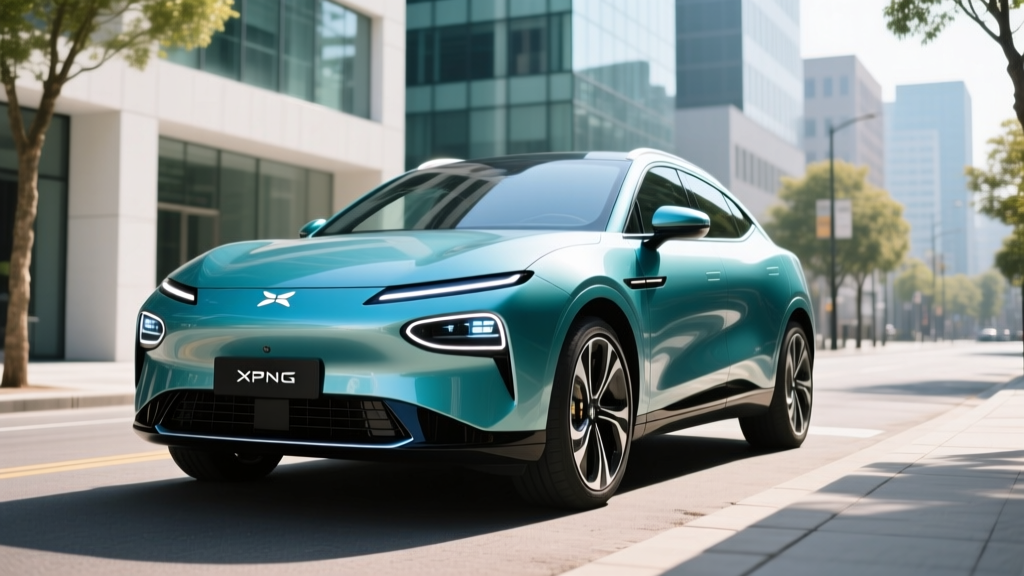
What Is the Electric XP4?
The electric XP4 (officially the XPeng G6 in international markets, sometimes referenced as the XP4 in early leaks and enthusiast forums) is a compact electric crossover from Chinese automaker XPeng. As of early 2026, XPeng has not officially launched a model badged "XP4" in the United States. The closest equivalent in XPeng's lineup is the XPeng G6, a midsize electric SUV built on the company's 800-volt SEPA 2.0 platform, which has been available in Europe and Asia since 2024 and continues to expand globally.
If you're researching the "electric XP4" because you've seen it discussed online, here's what matters: XPeng's compact-to-midsize EVs in this segment deliver roughly 280–350 miles of range (WLTP), use lithium iron phosphate (LFP) or NMC battery packs ranging from approximately 66–87 kWh, and support DC fast charging up to 280 kW on compatible chargers. US availability remains unconfirmed, so any pricing or EPA figures discussed below are based on the G6's known specs and estimated US-market translations.
XPeng G6 / "XP4" Segment: Spec Snapshot
Because the exact "XP4" badge may represent a future US-market variant or a community shorthand for the G6, the table below reflects the XPeng G6's confirmed specifications, which define what buyers should expect from this class of XPeng electric SUV.
| Specification | Standard Range (RWD) | Long Range (RWD) | Performance (AWD) |
|---|---|---|---|
| Battery Capacity (usable) | ~66 kWh (LFP) | ~87 kWh (NMC) | ~87 kWh (NMC) |
| WLTP Range | ~280 mi | ~354 mi | ~325 mi |
| Estimated EPA Range | ~240–260 mi | ~300–320 mi | ~280–300 mi |
| Peak DC Fast Charge | Up to 215 kW | Up to 280 kW | Up to 280 kW |
| 10–80% DCFC Time (est.) | ~22 min | ~20 min | ~20 min |
| Level 2 AC Charge Rate | 11 kW | 11 kW | 11 kW |
| 0–60 mph (est.) | ~6.6 sec | ~6.9 sec | ~3.9 sec |
| Horsepower | ~258 hp | ~286 hp | ~480 hp |
| Platform | SEPA 2.0, 800V architecture | ||
| Estimated US MSRP (if launched) | $38,000–$52,000 | ||
Real-World Range vs. Sticker
EPA estimates (when available) tend to run 10–15% below WLTP figures. For the Long Range G6, expect roughly 300–320 miles EPA. In real-world highway driving at 70+ mph, plan for 250–275 usable miles in moderate temperatures. In cold weather (below 32°F), LFP packs in particular can lose 20–30% of range, dropping the Standard Range variant to as low as 175–190 miles on a full charge. Always precondition the battery before fast charging in cold conditions — the 800V architecture supports rapid thermal conditioning, which helps sustain peak charge rates.
How Does It Compare to Gas and Hybrid Alternatives?
Buyers cross-shopping an electric compact SUV like the XP4/G6 are typically comparing it against the Toyota RAV4 Hybrid, Honda CR-V Hybrid, or gas-only equivalents. Here's how the numbers stack up on an annual basis, assuming 12,000 miles driven per year.
| Metric | XPeng G6 LR (est.) | Toyota RAV4 Hybrid | Toyota RAV4 (Gas) |
|---|---|---|---|
| EPA Efficiency | ~110 MPGe / 30 kWh/100mi | 39 MPG combined | 30 MPG combined |
| Annual Energy Cost | ~$540 (home charging at $0.15/kWh) | ~$1,230 ($3.50/gal) | ~$1,400 ($3.50/gal) |
| Annual Maintenance | ~$300–$400 | ~$600–$800 | ~$700–$900 |
| 5-Year Fuel/Energy Cost | ~$2,700 | ~$6,150 | ~$7,000 |
| 5-Year Maintenance | ~$1,750 | ~$3,500 | ~$4,000 |
| CO₂ Emissions (tailpipe) | 0 g/mi | ~227 g/mi | ~296 g/mi |
Energy and maintenance savings over five years total roughly $6,000–$7,500 compared to a gas RAV4. However, the EV's higher purchase price, potentially higher insurance premiums (typically 10–20% more for EVs), and uncertain resale value for a newer brand partially offset those gains. The break-even point typically lands between years 3 and 5 depending on local electricity rates and annual mileage.
Total Ownership Cost Breakdown
| Cost Category | XPeng G6 LR (est. US) | Toyota RAV4 Hybrid | Notes |
|---|---|---|---|
| Purchase Price (MSRP) | $44,000 | $33,000 | XPeng pricing estimated; final US MSRP TBD |
| Federal Tax Credit (§30D) | $0–$7,500 (see below) | $0 | Eligibility depends on battery sourcing & assembly |
| Home Charger Install (Level 2) | $500–$2,000 | $0 | Varies by panel capacity; 240V/40A circuit typical |
| 5-Year Energy/Fuel | $2,700 | $6,150 | Assumes 80% home charging at $0.15/kWh |
| 5-Year Maintenance | $1,750 | $3,500 | No oil changes, fewer brake replacements (regen) |
| 5-Year Insurance (est.) | $9,000–$11,000 | $6,500–$8,000 | EV premiums run 10–20% higher on average |
| Estimated Depreciation (5yr) | ~50–55% | ~35–40% | New-brand EVs depreciate faster than established hybrids |
| 5-Year Total Cost of Ownership | ~$48,000–$55,000 | ~$42,000–$47,000 | Heavily dependent on credit eligibility & depreciation |
The tax credit is the swing factor. Under current IRS §30D rules, eligibility requires final assembly in North America, battery-component and critical-mineral sourcing thresholds, an MSRP cap ($80,000 for SUVs), and buyer income limits ($150K single / $300K joint). If XPeng manufactures a US-bound variant outside North America — which is likely for a Chinese-brand vehicle — the $7,500 credit may not apply. Always verify current-year rules on irs.gov or consult a tax professional before purchasing.
Charging Reality: Home and Public
XPeng's 800V SEPA 2.0 platform is one of the fastest-charging architectures in this segment. At a compatible 350 kW DC fast charger (such as Electrify America or Ionity stations), the Long Range pack can peak at 280 kW, adding roughly 185 miles of range in 15 minutes under ideal conditions. However, real-world charging curves taper significantly above 80% state of charge — the 10–80% sprint takes about 20 minutes, but 80–100% can add another 15–20 minutes. For road-trip planning, plan stops around the 10–80% window.
Home Charging Setup
At 11 kW AC (Level 2, 240V/48A), a full charge from 10% takes approximately 7–8 hours for the 87 kWh pack. This is sufficient for overnight replenishment. Most buyers will need:
- A NEMA 14-50 outlet or hardwired Level 2 station (e.g., ChargePoint Home Flex, Wallbox Pulsar Plus)
- A 50-amp or 60-amp dedicated circuit
- Electrician installation: $500–$1,500 if your panel has capacity; $2,000–$4,000+ if a panel upgrade to 200A is needed
If you live in an apartment or lack dedicated parking, public charging becomes your primary fuel source. At fueleconomy.gov rates, DC fast charging at $0.35–$0.50/kWh raises your per-mile cost to roughly $0.10–$0.15/mile — closer to a hybrid's fuel cost and eroding the EV savings advantage.
Common Misconceptions About the Electric XP4
| Myth | Fact |
|---|---|
| "The XP4 is available to buy in the US right now." | As of 2026, XPeng has not officially launched any model in the US market. The G6 (sometimes called XP4 informally) is sold in Europe, China, and select Asian markets. |
| "It qualifies for the full $7,500 federal tax credit." | §30D credit requires North American final assembly and battery-sourcing compliance. A China-built XPeng would likely not qualify. Check IRS rules for current eligibility. |
| "800V charging means it always charges at 280 kW." | Peak rate of 280 kW requires a compatible 350 kW charger and optimal battery temperature. Most public chargers deliver 50–150 kW, and the charge curve tapers above 80% SoC. |
| "LFP batteries don't degrade." | LFP chemistry offers better cycle life (~3,000+ cycles) and thermal stability than NMC, but still degrades ~10–15% over 8–10 years depending on usage patterns and thermal management. |
| "EVs cost nothing to maintain." | No oil changes, but tires wear 15–20% faster due to vehicle weight and instant torque. Cabin air filters, brake fluid, wiper blades, and suspension components still need service. |
Decision Framework: Should You Wait for the XP4 or Buy Now?
Choose to Wait for an XPeng US Launch If:
- You want 800V fast-charging architecture at a sub-$45,000 price point
- You have reliable home charging and drive under 300 miles/day
- You're comfortable with a newer brand that may have limited US service infrastructure initially
- You value XPeng's XNGP driver-assist system (SAE Level 2 — not self-driving; requires full driver attention at all times)
Buy an Available EV or Hybrid Now If:
- You need a vehicle within the next 3–6 months
- You want established US dealer/service networks (Tesla Model Y, Hyundai Ioniq 5, Ford Mustang Mach-E)
- You want confirmed §30D tax credit eligibility on a US-assembled vehicle
- You lack home charging access and need proven public-charging compatibility (NACS/CCS network access)
- You're concerned about long-term parts availability and resale value from a brand new to the US market
Battery Longevity and Warranty
XPeng typically offers an 8-year / 100,000-mile battery warranty (or 8 years / 160,000 km in European markets) guaranteeing a minimum of 70% capacity retention. The LFP pack in the Standard Range variant is particularly robust — LFP chemistry tolerates regular 100% charging better than NMC, meaning daily full charges are less harmful to long-term health. For the NMC Long Range pack, keeping daily charges to 80% and using 100% only for road trips will maximize lifespan.
If the battery ever needs out-of-warranty replacement, industry estimates for a pack of this size (66–87 kWh) range from $8,000–$15,000 depending on labor and sourcing — a significant cost, though battery prices continue declining year over year.
Frequently Asked Questions
Is the XPeng XP4 the same as the XPeng G6?
The "XP4" name has appeared in enthusiast forums and early media reports, but XPeng's official global model in this segment is the G6. The XP4 designation may represent a future US-specific badge or trim, but no official confirmation exists as of 2026.
What connector does the XPeng G6 use?
In European markets, the G6 uses a CCS2 connector. If XPeng enters the US market, it would likely adopt either CCS1 or NACS (Tesla's North American Charging Standard), which is rapidly becoming the dominant connector for 2025–2026 model-year vehicles. Adapters are available for cross-compatibility.
How does XPeng's XNGP driver assist compare to Tesla Autopilot?
XNGP is an SAE Level 2 driver-assistance system offering adaptive cruise control, lane centering, and automated lane changes on mapped highways — similar in capability to Tesla's Autopilot or Ford's BlueCruise. It is not a self-driving system. The driver must remain attentive with hands on or near the wheel at all times. XPeng has demonstrated strong ADAS performance in Chinese and European testing, but US-spec validation is pending.
Can I charge a XPeng at Tesla Superchargers?
Only if the vehicle is equipped with a NACS port or you use a CCS-to-NACS adapter. Tesla has opened portions of its Supercharger network to non-Tesla EVs with adapters, but compatibility varies by station. Check the Tesla app for station-level access before relying on Superchargers for a non-Tesla vehicle.
What's the real cost per mile to drive the G6?
At an average efficiency of 30 kWh/100 miles and a home electricity rate of $0.15/kWh, your cost is approximately $0.045 per mile. Compare that to a 30 MPG gas car at $3.50/gallon: $0.117 per mile. The EV saves roughly $0.07/mile, or about $840 per year at 12,000 miles driven annually.
Will XPeng come to the United States?
XPeng has signaled international expansion ambitions, but US market entry faces regulatory, tariff, and geopolitical hurdles. As of 2026, there is no confirmed timeline for US sales. Buyers interested in the brand should monitor XPeng's official announcements and NHTSA filings for any homologation progress.