The Quick Answer: Does an EV Owner Need an Electric Wrench?
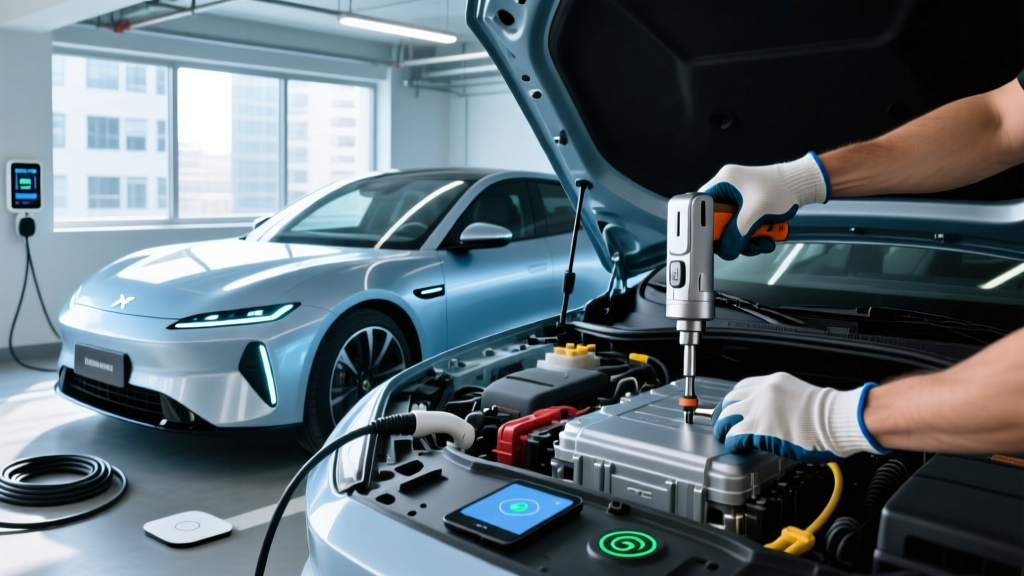
Short answer: Most EV owners rarely need an electric wrench—or any wrench at all. Battery electric vehicles (BEVs) have roughly 20 moving parts in their drivetrain versus 2,000+ in an internal combustion engine. That means no oil changes, no spark plugs, no timing belts, and no exhaust system work. Where an electric wrench (a battery-powered impact wrench delivering 150–1,000 ft-lbs of torque) does come in handy for EV owners is tire rotation, brake caliper service, and the occasional suspension or underbody panel job. If you're a DIY-minded owner, a mid-range ½-inch cordless impact wrench ($120–$250) covers 90% of what you'll actually touch on a modern EV.
Let's put that in real ownership context. According to fueleconomy.gov, the average BEV owner spends roughly $0.061 per mile on energy (at $0.16/kWh national average) versus $0.14/mile on gasoline for a comparable 28 MPG sedan. Maintenance savings stack on top: Consumer Reports' long-term data shows EV owners spend about $0.03/mile on maintenance versus $0.06–$0.10/mile for gas vehicles. Over five years and 75,000 miles, that's $2,250–$5,250 in maintenance savings alone—enough to buy a very nice cordless tool set and still come out ahead.
What EV Owners Actually Wrench On (And What They Don't)
The maintenance profile of a 2026 BEV like the Tesla Model Y, Hyundai IONIQ 5, or Ford Mustang Mach-E looks radically different from the gas car it replaced. Here's what you'll realistically encounter as an owner:
Common DIY-Friendly EV Service Items
- Tire rotation and replacement: EVs eat tires 20–30% faster than gas cars due to instant torque and heavier curb weight (a Model Y Long Range tips the scales at 4,398 lbs). Rotation every 6,250 miles is standard. Lug nuts on most EVs require 85–120 ft-lbs—easily handled by a ½-inch electric impact wrench.
- Cabin air filter replacement: Typically every 15,000–20,000 miles. Usually a clip-and-slide job requiring no tools or a basic Torx driver.
- Brake fluid flush: Every 2–3 years. Requires a basic wrench set and brake bleeder kit—no impact tools needed.
- Wiper blade and washer fluid: Zero tools. Takes 60 seconds.
- 12V auxiliary battery replacement: Yes, EVs still have a 12V battery for accessories. Swap interval is 3–5 years. Usually a 10mm socket job.
What You Will NOT Be Doing
- No oil changes (no engine oil exists)
- No transmission fluid swaps (most BEVs use a single-speed reduction gear with sealed, lifetime fluid)
- No coolant flushes on the schedule you're used to (EV thermal management coolant is typically replaced at 100,000+ miles)
- No exhaust, catalytic converter, or muffler work
- No spark plugs, ignition coils, or fuel injectors
- No timing belt or chain service
The high-voltage traction battery (typically 58–100 kWh, using NMC or LFP chemistry) and the drive unit(s) are sealed, warrantied for 8 years/100,000 miles minimum under federal mandate, and not owner-serviceable. Attempting to open the battery pack is dangerous—DC voltages inside run 350–800V and can be lethal.
Electric Wrench Specs That Matter for EV Work
If you've decided a cordless impact wrench belongs in your EV garage toolkit, here's what to prioritize. EV fasteners aren't fundamentally different from gas-car fasteners, but the heavier vehicle weight means suspension and wheel hardware often sit at the upper end of common torque ranges.
| Spec | Recommended for EV DIY | Why It Matters |
|---|---|---|
| Drive Size | ½ inch | Handles lug nuts (85–150 ft-lbs) and most suspension bolts |
| Max Torque | 300–700 ft-lbs (breakaway) | Enough for seized lug nuts; avoid 1,000+ ft-lbs on alloy wheels |
| Voltage | 18V–20V brushless | Best power-to-weight; 12V models lack torque for stubborn fasteners |
| Weight | Under 5 lbs (bare tool) | You'll be working overhead and in tight wheel wells |
| Speed Settings | 3+ speed/torque modes | Low-torque mode prevents over-tightening delicate EV underbody panels |
| Battery Ecosystem | Match your existing cordless tools | DeWalt 20V, Milwaukee M18, Makita 18V LXT are the big three |
| Price Range | $120–$350 (bare tool to kit) | Mid-range brushless models last years under home-shop use |
A critical note on torque: always use a calibrated torque wrench for final tightening of lug nuts, suspension components, and any safety-critical fastener. An electric impact wrench is for removal and initial installation—it is not a precision instrument. Overtorqued lug nuts warp brake rotors and crack alloy wheels, a costly mistake on EV-specific wheels that can run $400–$800 each.
EV vs. Gas: The Real Maintenance Cost Breakdown
Let's run five-year ownership numbers comparing a 2026 Hyundai IONIQ 5 SEL (BEV, 77.4 kWh battery, EPA 303 miles range, $46,700 MSRP) against a comparably equipped 2026 Toyota RAV4 XLE AWD (gas, EPA 29 MPG combined, ~$36,500 MSRP). Both driven 15,000 miles/year.
| Cost Category (5 yr / 75k mi) | IONIQ 5 (BEV) | RAV4 (Gas) | Difference |
|---|---|---|---|
| Energy/Fuel | $3,850 (home L2, $0.16/kWh avg) | $9,100 ($3.50/gal avg) | EV saves $5,250 |
| Maintenance | $2,100 | $4,800 | EV saves $2,700 |
| Tires (heavier EV wear) | $2,800 (2 sets) | $1,900 (1.5 sets) | Gas saves $900 |
| Insurance (avg) | $9,500 | $7,800 | Gas saves $1,700 |
| Federal Tax Credit (§30D) | Up to $7,500 (eligibility varies) | $0 | EV saves up to $7,500 |
| Purchase Price (base) | $46,700 | $36,500 | Gas saves $10,200 |
| Net 5-Year Position | EV net advantage: ~$2,650–$10,150 depending on credit eligibility | ||
The maintenance line item is where the electric wrench question lives. The IONIQ 5's $2,100 five-year maintenance budget covers tire rotations (~$250), cabin filters (~$200), brake fluid (~$300), wiper blades and fluid (~$150), and a 12V battery replacement (~$200), plus a buffer for unexpected items like a 12V system diagnostic. The RAV4's $4,800 adds oil changes (5–7 over 75k miles, ~$450), engine air filters (~$200), transmission fluid (~$250), and higher probability of wear items like belts, gaskets, or ignition components as mileage climbs.
Per IRS §30D guidelines, the IONIQ 5's tax credit eligibility depends on the buyer's modified adjusted gross income (AGI limits: $150K single / $300K joint), vehicle MSRP caps ($55K for sedans, $80K for SUVs/vans/pickups), and battery critical-mineral and component sourcing requirements that tighten annually. The credit can now be transferred to the dealer at point of sale, reducing your out-of-pocket price on day one—check current-year eligibility on the IRS site or with a tax professional before assuming the full $7,500.
When a Gas Car Still Demands More Tools (And More of Your Time)
For context on why the electric wrench question even exists: internal combustion engines are essentially controlled explosion machines with hundreds of precision-machined parts operating under extreme heat and pressure. That mechanical complexity is what fills your Saturday mornings with wrench work. A quick comparison:
| Service Item | Gas Vehicle Interval | BEV Equivalent | Tools Needed (Gas → BEV) |
|---|---|---|---|
| Engine Oil | Every 5,000–10,000 mi | None | Socket set, drain pan, filter wrench → N/A |
| Spark Plugs | 30,000–100,000 mi | None | Spark plug socket, gap tool → N/A |
| Transmission Fluid | 30,000–60,000 mi | Sealed, ~100,000+ mi | Socket set, fluid pump → Dealer service |
| Brake Pads | 30,000–70,000 mi | 80,000–150,000 mi (regen extends life) | Same tools, less frequent |
| Tires | 40,000–60,000 mi | 25,000–45,000 mi (heavier, torque) | Same tools, more frequent |
| Coolant | 30,000–50,000 mi | 100,000+ mi | Drain/fill tools → Rarely needed |
| Exhaust System | Repair as needed | None | Wrenches, jack stands → N/A |
The data is clear: BEVs shift your tool needs away from powertrain work and toward tires, brakes, and cabin maintenance. An electric wrench is useful but not essential for most EV owners—it's a convenience upgrade for tire work, not a necessity for keeping the car running.
Real-World Ownership Considerations Before You Buy In
The electric-wrench-as-tool question is really a proxy for the larger question: how hands-on can I be with an EV? Here's what shapes the answer in practice:
Home Charging Access Changes Everything
If you have a garage or dedicated parking spot with a 240V circuit, a Level 2 home charger (7.2–11.5 kW) delivers 25–44 miles of range per hour of charging. A full overnight charge from 20% to 80% takes roughly 5–7 hours depending on battery size and charger output. This is the scenario where EV ownership is cheapest and most convenient—and where DIY maintenance (including tire rotation with your electric wrench) makes the most sense because you're already saving on fuel.
If you rely entirely on public charging, your "fueling" cost rises to $0.30–$0.50/kWh at DC fast chargers (Electrify America, EVgo, Tesla Superchargers), narrowing the cost advantage and making dealer-service maintenance packages more appealing since you're already paying a premium for convenience.
Climate and Range Reality
EPA range ratings are tested at moderate temperatures. In real-world cold-weather driving (below 30°F), expect 20–35% range reduction depending on whether the vehicle has a heat pump. The IONIQ 5's EPA 303-mile rating becomes roughly 200–240 miles in a Midwestern winter. This doesn't affect your wrench needs, but it does affect whether you're the type of owner who plans road trips meticulously (and might enjoy DIY prep) or one who'd rather hand the car to a service center.
Driving Patterns
High-mileage drivers (20,000+ miles/year) see the biggest maintenance and fuel savings from EV ownership, but they also wear tires faster and may hit brake-fluid service intervals sooner. Low-mileage drivers (under 8,000 miles/year) save less in absolute dollars and may find that the higher purchase price and insurance premiums outweigh the operational savings—making a hybrid or PHEV a more rational choice.
Common EV Maintenance Myths vs. Facts
| Myth | Fact |
|---|---|
| "EV batteries need to be replaced every 5–7 years like a phone." | Modern NMC and LFP batteries degrade roughly 1–2% per year under normal use. At 10 years, expect 80–90% of original capacity. Federal warranty mandates 8 years/100,000 miles with at least 70% capacity retention. Many packs outlast the vehicle. |
| "You need special high-voltage tools to work on an EV." | For owner-serviceable items (tires, filters, wipers, 12V battery), standard automotive tools work fine. The high-voltage system is sealed and dealer-only—and should stay that way unless you're a certified HV technician. |
| "EVs are maintenance-free." | They're maintenance-reduced, not maintenance-free. Tires, cabin filters, brake fluid, wipers, and the 12V battery all need regular attention. Neglecting tire rotation on a heavy, torque-rich EV leads to premature and uneven wear. |
| "Regenerative braking means you never replace brake pads." | Regen dramatically extends pad life (80,000–150,000 miles is common), but pads and rotors still wear and brake fluid still absorbs moisture over time. Calipers can also seize from underuse—periodic friction-brake application is recommended. |
| "Any mechanic can service an EV." | Many independent shops are not yet equipped or trained for high-voltage systems. For HV-related work, stick with the dealer or an EV-certified shop. For tires, brakes, and filters, any competent shop (or your own garage) is fine. |
The Decision Framework: Should You Buy an Electric Wrench for Your EV?
Buy a ½-inch cordless impact wrench ($120–$250) if:
- You rotate your own tires (saves $50–$100 per visit, 3–4 times over 5 years)
- You already own into a cordless tool ecosystem (DeWalt 20V, Milwaukee M18, Makita LXT) and can share batteries
- You live in an area with limited or expensive tire shop access
- You plan to do basic suspension or underbody panel work
- You simply enjoy working on your car and want the right tools
Skip it and use a torque wrench + breaker bar if:
- You have a trusted local tire shop that rotates for $20–$40
- You lease the vehicle and plan to return it within 3 years
- Your only planned DIY task is cabin filter and wiper swaps (no impact wrench needed)
- You don't already own a cordless battery platform—buying into one just for occasional lug nut work is hard to justify
Do NOT buy one if:
- You think you'll be servicing the high-voltage battery or drive unit yourself (you won't, and shouldn't)
- You're looking for a specialty "EV-only" tool—there is no such thing at the consumer level
Frequently Asked Questions
Can I use an electric impact wrench on EV lug nuts?
Yes. Most EVs use standard M12 or M14 lug nuts torqued to 85–140 ft-lbs depending on the model. A mid-range ½-inch cordless impact wrench handles this easily. Always finish-tighten with a calibrated torque wrench to the manufacturer's spec (check your owner's manual or the sticker inside the driver's door jamb) to avoid warping rotors or cracking alloy wheels.
Do EVs require special tires that need special tools?
Many EVs use tires with higher load ratings (XL or HL), foam noise-reduction inserts, and low-rolling-resistance compounds. The mounting and balancing process is the same, but foam-lined tires require care during dismounting to avoid damaging the foam. A standard tire changer works; the tools don't change, but the technique does slightly. An impact wrench for removal is fine.
How much does an EV owner actually spend on tools over 5 years?
A basic EV DIY toolkit—torque wrench ($60–$120), socket set ($40–$80), tire pressure gauge ($15–$30), OBD2 scanner with EV capability ($50–$200), and optionally a cordless impact wrench ($120–$250)—totals $285–$680. This one-time investment can save $500–$1,500 in shop labor over five years if you handle tire rotations, filter swaps, and basic inspections yourself.
Is it safe to work under an EV?
For standard mechanical work (tires, brakes, filters), yes—use proper jack stands rated for the vehicle's weight (remember, EVs are heavier; a Model Y is 4,398 lbs, so use 3-ton stands minimum). Never cut into, puncture, or open the orange-sheathed high-voltage cabling or the battery pack enclosure. That work requires certified HV technicians with insulated tools and PPE. Per NHTSA safety guidance, the HV system is designed to be safe in normal operation and collision, but improper handling of exposed HV components carries serious risk.
What about PHEVs—do they need more tools than a BEV?
Yes, somewhat. A plug-in hybrid like the Toyota RAV4 Prime or Jeep Wrangler 4xe retains an internal combustion engine, meaning you'll still need oil-change tools, engine air filters, and eventually ignition and exhaust service. The maintenance profile sits between a pure BEV and a gas car. If you own a PHEV, a full socket set and oil-filter wrench remain relevant; the electric wrench is still useful for tire and brake work.
Does the federal EV tax credit cover home charging equipment?
Separately from the §30D new-vehicle credit, the §30C Alternative Fuel Vehicle Refueling Property Credit covers up to 30% of home charger equipment and installation costs, capped at $1,000, subject to census-tract eligibility requirements. This is the credit that can help offset a Level 2 home charger install ($500–$2,000 all-in, depending on panel capacity and run length). Consult a tax professional for eligibility.
Bottom Line: The Electric Wrench Is Optional, Not Essential
For the vast majority of EV owners in 2026, an electric wrench is a nice-to-have convenience tool, not a maintenance necessity. The vehicles simply don't demand the wrench-heavy service schedule of their gas predecessors. Where the tool earns its keep is in tire rotation—a job EVs need more often due to weight and torque—and in any suspension or underbody work you choose to tackle yourself.
The smarter framing is this: the money you save on EV maintenance ($2,000–$5,000 over five years compared to gas) gives you the budget to buy quality tools if you enjoy DIY, or to simply hand the car to a shop and still come out ahead. Either way, the EV ownership model rewards you with fewer garage weekends and more driving—and that's the real calculation worth making.