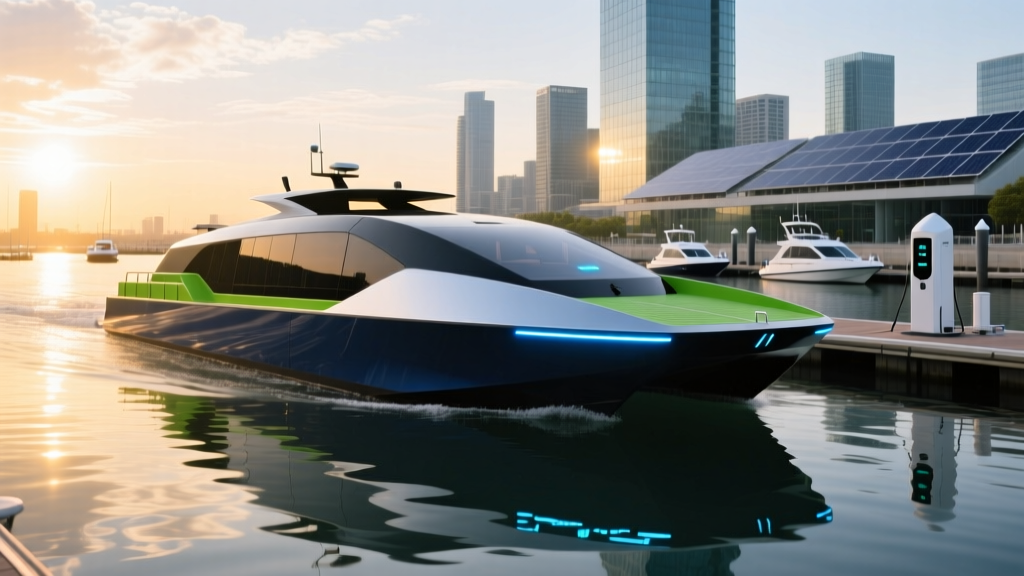
Electric water taxis are moving from pilot projects to commercial ferry routes, and fleet operators are asking the same question every EV buyer asks: what does ownership actually cost? Unlike passenger cars, electric water taxis occupy a niche where marine regulations, commercial-use incentive structures, and high daily mileage create a very different total cost of ownership (TCO) equation. This guide breaks down the real numbers — purchase price, energy costs, maintenance, insurance, depreciation, and the incentives that can swing the math.
A note on scope: AutoEdgeView typically covers road-going EVs, but the electrification of short-route marine transit shares the same battery chemistry (LFP and NMC packs), charging infrastructure (DC fast charging at dock), and incentive frameworks (§30D commercial credits, state clean-fleet grants) that our readers navigate daily. If you're a fleet manager or municipal planner evaluating electric water taxi procurement, this analysis applies directly.
How Much Does an Electric Water Taxi Really Cost Over 5 Years?
Most electric water taxis in commercial service in 2026 are 40–70 foot vessels carrying 30–150 passengers on short harbor or river routes. Purchase prices range from roughly $3.5 million for a 40-foot commuter vessel to over $12 million for a 150-passenger ferry with redundant battery systems. For this analysis, we'll use a representative 50-passenger, 50-foot electric water taxi with a ~600 kWh LFP battery pack, priced at approximately $5.2 million.
| Category | Electric Water Taxi | Diesel Equivalent |
|---|---|---|
| Purchase Price | $5,200,000 | $3,800,000 |
| Federal Tax Credit / Incentive | −$520,000 (10% commercial clean vehicle credit) | $0 |
| State/Local Fleet Grant (typical) | −$400,000 | $0 |
| Energy/Fuel (5 years, 300 days/yr) | $315,000 | $890,000 |
| Maintenance (5 years) | $125,000 | $380,000 |
| Insurance (5 years) | $475,000 | $395,000 |
| Dock Charging Infrastructure | $280,000 | $0 |
| Depreciation (5 years) | $1,950,000 | $1,520,000 |
| Net 5-Year Cost | $6,525,000 | $6,985,000 |
Sources: Manufacturer pricing (e.g., Maid of the Mist electric fleet data, Washington State Ferries electrification reports, Argonne National Laboratory TCO models). Actual costs vary by operator, route, and jurisdiction.
The takeaway: despite a purchase premium of roughly $1.4 million before incentives, the electric water taxi reaches cost parity or advantage within 5 years, driven primarily by energy and maintenance savings. The breakeven point accelerates further on high-utilization routes (6+ operating hours daily).
Federal Tax Credits and Commercial Clean Vessel Incentives
Consumer EV buyers know IRS §30D, but commercial fleet operators — including water taxi companies — access a different credit structure. The Commercial Clean Vehicle Credit (§45W) applies to qualified commercial electric vehicles, including certain marine vessels used in commercial transport. Here is the current framework as of 2026:
- Credit amount: Up to $40,000 for vehicles over 14,000 lbs GVWR (which covers virtually all commercial water taxis), calculated as 15% of basis (or 30% if not claiming bonus depreciation), capped at the incremental cost over a comparable diesel vessel.
- No MSRP cap: Unlike §30D for consumer cars, §45W has no MSRP ceiling — critical for multi-million-dollar vessels.
- No buyer income cap: Commercial entities, municipalities, and tax-exempt organizations all qualify.
- Battery sourcing: Critical mineral and battery component sourcing requirements apply to the traction battery pack. Operators should verify compliance with the manufacturer before purchase.
- Point-of-sale transfer: Not available for §45W — the credit is claimed on the fleet operator's tax return (or as a direct payment for tax-exempt entities under §6417).
- Stacking: §45W can sometimes be combined with state clean-fleet grants and utility rebates, but not with §30D on the same vessel. Consult a tax professional for your specific situation.
For a $5.2 million electric water taxi, the incremental cost over a diesel equivalent might be $1.4 million, yielding a potential federal credit of up to $420,000 (30% of incremental cost). Always verify current-year rules at IRS.gov's commercial clean vehicle credit page, as sourcing requirements and phase-down schedules change.
State, Local, and Utility Incentives Vary Widely
Beyond federal credits, electric water taxi operators may access:
- State clean-transportation grants: California's Hybrid and Zero-Emission Truck and Bus Voucher Incentive Project (HVIP) and similar programs in New York, Washington, and Massachusetts have funded marine electrification pilots.
- Port authority subsidies: Major ports (Port of Seattle, Port of New York/New Jersey) increasingly offer dock-side charging infrastructure grants.
- Utility demand-charge credits: Some utilities offer reduced commercial EV charging rates or infrastructure rebates for high-power DC marine chargers.
- EPA Clean Ports Program: Federal funding under the Inflation Reduction Act has allocated billions to zero-emission port equipment, which can include passenger ferries.
Always check your state energy office, port authority, and local utility for current program availability. These programs change annually and often have application deadlines.
Charging vs. Diesel: The Per-Mile Cost Reality
This is where electric water taxis create their strongest economic case. A 50-passenger electric water taxi on a 3-nautical-mile harbor route typically consumes 1.5–2.5 kWh per nautical mile, depending on vessel design, passenger load, and sea state. At a commercial electricity rate of $0.14/kWh (a reasonable 2026 blended rate for dock-side charging in many metro areas), the energy cost is approximately $0.28–$0.35 per nautical mile.
| Metric | Electric Water Taxi | Diesel Water Taxi |
|---|---|---|
| Energy Consumption | ~2.0 kWh/nm | ~0.8 gal diesel/nm |
| Energy Unit Cost | $0.14/kWh (commercial rate) | $4.15/gal (marine diesel, 2026 avg) |
| Cost Per Nautical Mile | $0.28 | $3.32 |
| Annual Energy Cost (300 days, 60 nm/day) | $5,040 | $59,760 |
| 5-Year Energy Cost | $25,200 | $298,800 |
Assumes 18,000 nautical miles per year. Diesel price based on EIA marine diesel averages; electricity rate based on commercial dock-side charging. Actual costs vary by route, vessel efficiency, and local rates.
The energy cost advantage is roughly 10:1 in favor of electric. Over a 5-year operational period on a busy route, energy savings alone can exceed $1.3 million — enough to offset most of the purchase premium before any incentives are applied.
A few operational realities to factor in:
- Demand charges: High-power DC marine chargers (typically 250–500 kW) can trigger utility demand charges. Operators should negotiate commercial EV tariffs with their utility.
- Charging time: A 600 kWh pack at 350 kW DC takes roughly 10–80% in about 90 minutes. Most operators charge during off-peak hours or between scheduled route blocks.
- Opportunity charging: Some routes use 5–10 minute high-power top-ups at the dock between crossings, keeping the battery in the 30–80% state of charge window for optimal longevity.
Maintenance Savings: Where Electric Really Shines on the Water
Marine diesel engines operate in one of the harshest environments for any powertrain — saltwater exposure, constant vibration, and high load factors accelerate wear. Electric drivetrains eliminate most of these failure points.
| Maintenance Item | Electric Water Taxi | Diesel Water Taxi |
|---|---|---|
| Engine Oil & Filters | $0 (no engine oil) | $8,500–$12,000/yr |
| Transmission/Reduction Gear | Minimal (direct-drive common) | $4,000–$6,000/yr |
| Cooling System | Closed-loop, low maintenance | Raw-water pump, impeller, heat exchanger — $6,000–$9,000/yr |
| Exhaust/Emissions Systems | $0 | SCR catalyst, DPF, DEF fluid — $5,000–$8,000/yr |
| Propulsion Motor Overhaul | Every 20,000+ hrs | Engine rebuild every 8,000–12,000 hrs |
| Regenerative Braking (regen on prop reversal) | Reduces mechanical brake/clutch wear | N/A |
| Hull & Running Gear (both) | $15,000–$20,000/yr | $15,000–$20,000/yr |
| Estimated Annual Maintenance Total | $20,000–$28,000 | $60,000–$80,000 |
Electric water taxis also benefit from fewer vibration-induced hull fastener failures, no fuel-system algae or contamination, and no risk of diesel spills during refueling — a meaningful environmental and liability advantage in sensitive waterways.
Battery replacement is the major long-term cost. A 600 kWh LFP pack may need replacement at 10–15 years depending on cycle count and degradation. At current LFP pricing (~$110/kWh for marine-grade packs in 2026), a replacement would cost approximately $66,000–$85,000 including installation. Most manufacturers warrant marine traction batteries for 8–10 years or a specified cycle count (typically 4,000–6,000 cycles to 80% state of health).
Insurance Costs: The Honest Premium
Electric water taxis typically cost 15–25% more to insure than their diesel counterparts, at least in the current market. The reasons are familiar from road-going EVs:
- Higher replacement value: The battery pack alone represents $60,000–$100,000+ of insured value.
- Specialized repair: Marine electric drivetrain repair requires technicians with both marine and high-voltage certifications — a smaller pool than diesel mechanics.
- Liability uncertainty: Insurers are still building actuarial data on lithium battery fire risk in marine environments (though LFP chemistry significantly reduces thermal runaway risk compared to NMC).
- Charging infrastructure: Dock-side chargers add insured property and potential liability exposure.
For a $5.2 million vessel, annual hull and P&I (protection and indemnity) insurance might run $85,000–$105,000 for electric versus $70,000–$85,000 for diesel. That's an additional $15,000–$20,000 per year, or $75,000–$100,000 over 5 years. This premium is real and should be factored into any TCO model — but it is typically overwhelmed by the energy and maintenance savings.
Depreciation and Resale Value Trends
Electric water taxis are early enough in commercial adoption that resale data is limited, but emerging patterns from early deployments (e.g., Washington State Ferries electrification program, Nordic electric ferry operators) suggest:
- First-generation risk: Vessels from early manufacturers that have since exited the market face steeper depreciation due to parts and support uncertainty — similar to discontinued consumer EV brands.
- Battery state of health (SoH) drives value: As with road EVs, a documented battery SoH above 85% at the 5-year mark supports stronger resale. Operators who maintain charge logs and avoid frequent 100% SoC storage see better outcomes.
- Regulatory tailwinds: As ports and cities implement zero-emission requirements for harbor vessels (e.g., California's commercial harbor craft regulation), demand for used electric water taxis is likely to increase, supporting residual values.
- Estimated 5-year depreciation: 35–45% for a well-maintained electric water taxi from an established builder, versus 35–40% for diesel. The gap is narrowing as the market matures.
On a $5.2 million vessel, 40% depreciation over 5 years equals $2.08 million in lost value. After accounting for $920,000 in combined federal and state incentives, the net acquisition cost drops to $4.28 million, making effective depreciation closer to $1.95 million — competitive with diesel.
Frequently Asked Questions
Do I qualify for federal tax credits on an electric water taxi?
Commercial operators generally qualify under IRS §45W (Commercial Clean Vehicle Credit), not the consumer §30D credit. There is no MSRP cap and no buyer income limit, but the vessel must meet battery-sourcing requirements, and the credit is calculated on the incremental cost over a comparable diesel vessel. Tax-exempt entities (municipalities, port authorities) can receive the credit as a direct payment under §6417. Always consult a tax professional and check current rules at IRS.gov.
How much do I really save on fuel and maintenance over 5 years?
Based on typical harbor-route operations (18,000 nautical miles/year), expect roughly $1.3 million in energy savings and $255,000 in maintenance savings over 5 years compared to a diesel water taxi. Combined savings of ~$1.55 million typically exceed the purchase premium after incentives.
Are electric water taxis more expensive to insure?
Yes, typically 15–25% more expensive than diesel equivalents due to higher replacement values, specialized repair requirements, and the insurance industry's still-developing actuarial data on marine battery systems. Budget an additional $15,000–$20,000 per year in hull and P&I premiums.
How well do electric water taxis hold their value?
Current data suggests 35–45% depreciation over 5 years, slightly higher than diesel equivalents but narrowing as zero-emission port regulations increase demand for used electric vessels. Battery state of health at resale is the primary value driver.
What charging infrastructure does a dock need?
Most 50-passenger electric water taxis require 250–500 kW DC fast chargers at the dock, supplied by 480V three-phase power. Installation costs vary widely ($150,000–$400,000+ depending on existing electrical capacity, cable runs, and permitting). Many port authorities and utilities now offer infrastructure grants to offset this cost. Always engage a marine electrical contractor and your utility early in the planning process.
Is LFP or NMC battery chemistry better for water taxis?
For commercial water taxi service, LFP (lithium iron phosphate) is generally preferred due to its superior cycle life (4,000–6,000+ cycles to 80% SoH vs. 1,500–2,500 for NMC), lower thermal runaway risk (critical in marine environments), and lower per-kWh cost. The trade-off is lower energy density, meaning a heavier battery pack — but for short-route harbor service where weight sensitivity is lower than in road vehicles, this is rarely a concern.