Quick Answer: Are Electric Water Crafts Worth It?
Electric water crafts—electric boats, personal watercraft (PWC), and pontoon vessels powered by battery-electric drivetrains—are a niche but rapidly maturing segment. For lake-home owners, marina dwellers, and eco-conscious boaters, they offer silent operation, zero local emissions, and dramatically lower per-hour "fuel" costs. However, unlike road-going EVs, electric water crafts in 2026 still face significant limitations: typical ranges of 20–60 nautical miles depending on speed, long charge times (8–14 hours on Level 2-equivalent marine shore power), high upfront costs ($30,000–$150,000+), and minimal federal incentive support compared to the automotive §30D tax credit. If your use case is day-cruising on a calm lake with home-dock charging, an electric watercraft can make financial and experiential sense. For offshore use, long passages, or watersports requiring sustained high-speed runs, internal combustion marine engines remain the pragmatic choice.
What Exactly Are Electric Water Crafts?
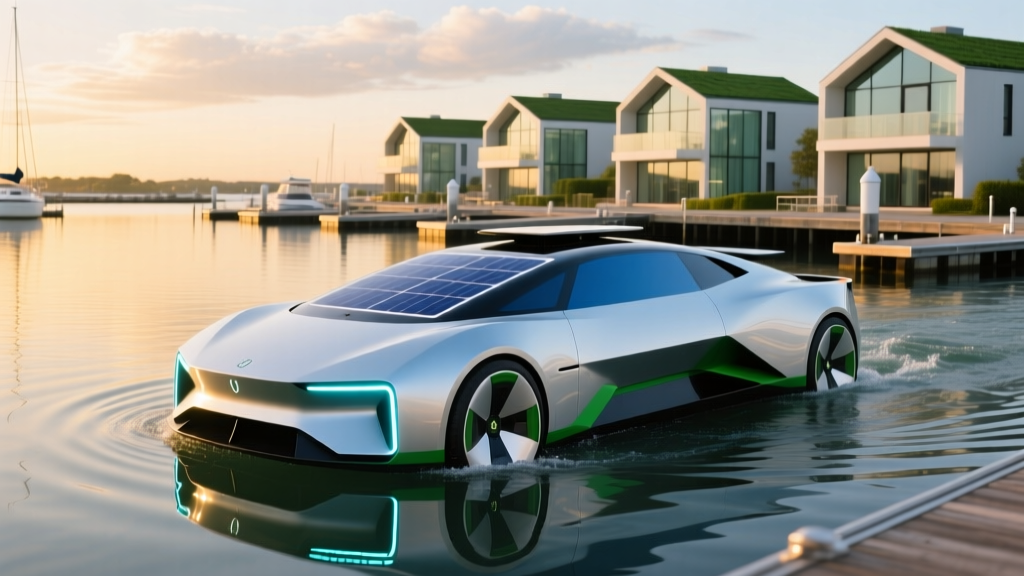
Electric water crafts encompass any battery-electric propulsion vessel: from compact electric kayaks and stand-up PWCs to full-size electric pontoons and day cruisers. The segment in 2026 includes established players like Arc Boats (the Arc One and Arc Sport), Candela (hydrofoiling C-8), Pure Watercraft (pontoon and fishing platforms), and Vision Marine Technologies (the E-Motion outboard system retrofittable to existing hulls). Unlike automotive EVs, where platforms are standardized, electric boats vary enormously in hull design, battery chemistry, and propulsion architecture.
Propulsion typically comes from permanent-magnet synchronous motors ranging from 10 kW (small runabouts) to 300+ kW (performance craft). Energy storage uses marine-grade NMC (nickel manganese cobalt) lithium-ion packs, chosen for energy density over the LFP chemistry common in budget road EVs, because weight and volume are at a premium on water. Pack sizes in 2026 range from roughly 20 kWh in personal watercraft to 120+ kWh in larger cruisers.
Electric Water Crafts vs. Gas Boats: The Numbers
The most useful comparison for an EV-minded buyer is cost-per-hour of operation and total cost of ownership (TCO). Gasoline marine engines are notoriously inefficient compared to automotive engines—a 150 HP gas outboard at cruising speed burns roughly 8–12 gallons per hour (GPH). At $3.80/gallon (2026 national average for marine-grade ethanol-free fuel), that's $30–$46/hour in fuel alone. Electric water crafts drawing 20–40 kW at cruising speed consume roughly $2.50–$6.00/hour in electricity at $0.14/kWh (national average residential rate).
| Metric | Electric (Arc Sport-class) | Gas Equivalent (150 HP outboard) |
|---|---|---|
| Upfront Cost (MSRP) | $85,000–$95,000 | $35,000–$55,000 |
| Battery / Tank Capacity | ~70 kWh NMC | 24-gallon fuel tank |
| Range (cruising speed ~20 mph) | 40–55 miles (~35–48 NM) | 120–180 miles |
| Energy/Fuel Cost per Hour | $3.50–$5.50 | $30–$46 |
| Annual Maintenance | $200–$500 | $1,200–$2,500 |
| Noise Level at Cruise | ~55 dB (conversation-level) | ~80–85 dB |
| Refuel/Recharge Time | 8–12 hours (shore power, 7.2 kW) | 5–10 minutes |
| Estimated Lifespan (propulsion) | 3,000–5,000 hours | 1,500–2,500 hours (before major rebuild) |
The range gap is stark. A gas boat can cruise all day and refuel in minutes at any marina. An electric watercraft in 2026 is best understood as a day vessel: you leave the dock, cruise for 3–5 hours, and return to charge overnight. This mirrors early road EV adoption—and the same rule applies: if your typical use fits within the battery envelope, range is a non-issue; if it doesn't, no amount of planning fixes it mid-trip.
Real Costs: Purchase, Charging, Maintenance, and Insurance
Electric water crafts carry a significant upfront premium—often 1.5× to 2.5× the cost of a comparable gas-powered vessel. But operating costs collapse once you own the boat.
| Cost Category | Electric ($90,000 MSRP) | Gas ($45,000 MSRP) |
|---|---|---|
| Purchase Price | $90,000 | $45,000 |
| 5-Year Fuel/Energy (100 hrs/yr) | $2,250 | $19,000 |
| 5-Year Maintenance | $2,000 | $10,000 |
| 5-Year Insurance (est.) | $9,000 | $6,000 |
| Shore Power Install (dock) | $2,500–$5,000 | N/A |
| Depreciation (est. 5-yr) | ~45% | ~50% |
| 5-Year Total (pre-depreciation) | ~$105,750 | ~$80,000 |
Even with $14,000 in fuel and maintenance savings over five years, the electric watercraft's higher purchase price and insurance premiums (insurers are still building actuarial data on marine battery packs) mean the TCO gap persists. The breakeven point typically arrives around year 7–9 at 100 hours/year, or sooner if you boat more frequently. Electric water crafts are not a money-saving proposition in the short term—they're a quality-of-experience purchase (silent operation, no exhaust fumes, instant torque, minimal maintenance) that happens to save money over a long ownership horizon.
Federal tax credits: Unlike road-going EVs, electric water crafts do not qualify for the IRS §30D Clean Vehicle Credit. That credit applies to highway-capable vehicles meeting specific MSRP, income, and battery-sourcing thresholds. Boats are excluded. Some states and local utility districts offer marine electrification rebates (California's CARB programs and certain TVA-served marinas, for example), but these vary by jurisdiction and change frequently. Check your state energy office and local utility for current programs.
Charging Electric Water Crafts: What Dock Owners Need to Know
This is where the EV-to-boat analogy both helps and breaks down. Electric water crafts charge via marine shore-power connections—typically 30-amp or 50-amp AC connections already present at most private docks and marinas.
Level-equivalent charging speeds:
- Standard dock outlet (120V/20A): ~1.9 kW — adds roughly 3–4 miles of range per hour. Full charge in 30–40+ hours. Essentially trickle charging.
- 30-amp shore power (120V/30A): ~3.3 kW — adds ~6–8 miles of range per hour. Full charge in 18–24 hours. Adequate for overnight if you use less than half your battery.
- 50-amp shore power (240V/50A): ~7.2–10 kW — adds ~14–20 miles per hour. Full charge in 8–12 hours. This is the practical minimum for daily-use electric boaters.
- DC fast charging (marine CCS/proprietary): 25–50 kW on select 2026 models. 20–80% in roughly 45–75 minutes. Currently available only at a handful of equipped marinas—primarily in California, Florida, and the Pacific Northwest.
Home-dock charging installation mirrors home EV charger installation: expect $2,500–$5,000 for a licensed marine electrician to run a dedicated 240V/50A circuit to your dock, including a marine-grade GFCI breaker and weatherproof connector. If your dock panel needs upgrading from 100A to 200A service, add $1,500–$3,500. Always use a licensed marine electrician—dock wiring must comply with ABYC (American Boat & Yacht Council) standards, which differ from residential NEC code.
Cold-water and cold-weather caveat: Just like road EVs, marine battery packs lose efficiency in cold temperatures. Expect 15–25% range reduction when water temperatures drop below 50°F. Most 2026 electric water crafts include battery thermal management (liquid cooling/heating), but preconditioning the pack before departure—just as you would with an EV on a cold morning—remains important for preserving range.
Real-World Ownership: Who Should (and Shouldn't) Buy
Electric water crafts in 2026 serve a specific use profile well and fail others entirely. Here's how to self-assess:
Decision Framework: Is an Electric Water Craft Right for You?
Choose electric if:
- You boat primarily on a single lake, calm bay, or protected waterway
- Your typical outing is under 4 hours at moderate speed (15–25 mph)
- You have a private dock or deeded slip with access to 240V shore power
- You value silence, zero exhaust fumes, and instant throttle response
- You boat 80+ hours per year (accelerating the TCO breakeven)
- You're in a no-wake or emission-sensitive zone (some lakes restrict gas engines)
Stick with gas (or wait) if:
- You regularly cruise more than 50 miles from your home dock
- You need sustained high-speed operation (watersports, offshore fishing)
- Your marina lacks 240V shore power and won't permit installation
- You trailer your boat to different waterways frequently (charging infrastructure is essentially nonexistent at public ramps)
- Your budget is under $50,000 total
Common Misconceptions About Electric Water Crafts
| Myth | Fact |
|---|---|
| "Electric boats are slow." | The Arc Sport delivers 0–30 mph in under 4 seconds with 226 kW (303 HP). Top speeds of 40–55 mph are typical in performance models. Instant electric torque actually makes them feel faster off the line than gas equivalents. |
| "You'll get stranded on the water." | Range planning matters, but marine GPS and battery management systems in 2026 provide accurate remaining-range estimates accounting for current, wind, and speed. Most electric boaters charge nightly at their dock—just like EV owners charge at home. |
| "Battery replacement will cost a fortune." | Marine NMC packs in 2026 are warrantied for 8–10 years or 2,500–3,500 charge cycles (roughly 80% capacity retention). Full replacement runs $15,000–$35,000 depending on pack size—significant, but comparable to a gas engine rebuild and occurring far less frequently. |
| "You can't use them in saltwater." | Modern electric water crafts use fully sealed, IP67-rated battery enclosures and corrosion-resistant drivetrains. Saltwater use is standard for brands like Candela and Arc. Post-use freshwater rinsing is still recommended, just as with any vessel. |
| "They qualify for the $7,500 EV tax credit." | They do not. The IRS §30D credit applies to on-road vehicles only. Some state and utility rebates exist, but there is no federal purchase incentive for electric boats as of 2026. |
The Bottom Line for EV-Minded Buyers
If you've already adopted an EV for your daily driving and are now looking at the water, the mental model transfers well: home-base charging, lower operating costs, quieter operation, and range planning for longer trips. But the infrastructure gap is far wider on water than on land. There's no marine equivalent of the Supercharger or Electrify America network—public dock charging remains rare, concentrated in a few progressive marinas in coastal California, the Great Lakes region, and parts of Scandinavia.
Electric water crafts in 2026 are best understood as a premium experience upgrade for a specific boating lifestyle, not a mass-market replacement for gas boats. If your use case fits the battery envelope and you can charge at your dock, the ownership experience is transformative. If you need the flexibility to go anywhere, anytime, at any speed—combustion still rules the waterways.
Can I retrofit my existing gas boat with an electric motor?
Yes, in some cases. Companies like Vision Marine Technologies (E-Motion outboard, ~$25,000–$40,000 for motor and battery pack) and Elco Motor Yachts offer electric repower kits. However, the hull must be compatible, and the total cost of repower often approaches 60–80% of a new electric vessel. Weight distribution and battery placement also require professional naval-architecture assessment.
How long do electric boat batteries last?
Marine-grade NMC packs in 2026 are rated for 2,500–3,500 full charge cycles to 80% State of Health (SoH). At 100 outings per year with one full cycle each, that's 25–35 years of calendar life before significant degradation. Warranties typically cover 8–10 years. Real-world data is still accumulating—the oldest modern electric boat packs (from early 2018–2019 models) are showing 88–92% SoH at 5–6 years.
Is an electric watercraft safe in a storm or heavy seas?
Electric propulsion systems are sealed and submersible—there's no risk of engine flooding the way a gas outboard can be swamped. However, all small vessels (electric or gas) should avoid heavy weather. The ABYC and U.S. Coast Guard Boating Safety division recommend the same weather-avoidance practices regardless of propulsion type.
What about towing a tube or wakeboarding?
Performance electric water crafts like the Arc Sport (303 HP) can tow tubes, wakeboarders, and skiers. However, sustained high-speed towing (25–35 mph for extended runs) dramatically reduces range—expect to use 50–70% of your battery in 1.5–2 hours of active towing. Plan accordingly.
Where can I test-drive an electric watercraft?
As of 2026, demo rides are available through manufacturer-direct showrooms (Arc in Los Angeles and Tampa, Candela in Stockholm and Miami), select marine dealerships in coastal and Great Lakes markets, and boat shows (Miami International Boat Show, Annapolis Sail Boat Show). Availability is still limited compared to gas boats—call ahead and reserve a demo slot.