Quick Answer: Can You Buy an Electric VW Bug?
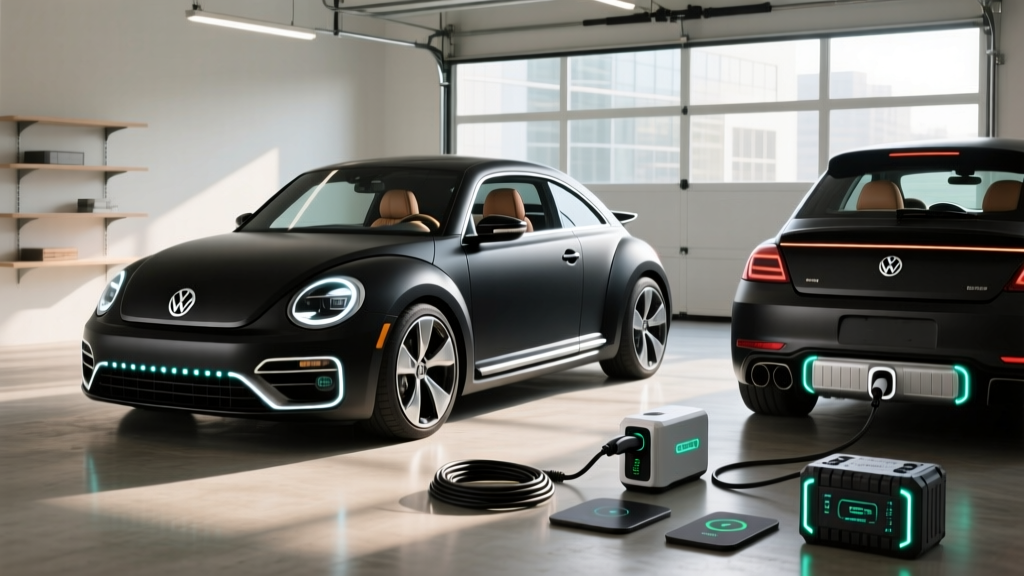
Volkswagen does not manufacture a factory-new electric VW Bug in 2026 — the original Beetle ended production in 2003 (Mexico), and the New Beetle/Beetle A5 ended in 2019 with no battery-electric variant ever produced. However, the classic Beetle is one of the most popular platforms for aftermarket EV conversions. A professional electric VW Bug conversion typically costs between $25,000 and $55,000 on top of a donor car ($5,000–$20,000), yielding 80–150 miles of EPA-equivalent range, 100–200 hp, and DC fast charging on higher-end builds. DIY kits start around $12,000 for basic components. If you want a factory-backed electric retro, the closest alternatives are the VW ID. Buzz (electric microbus) or a third-party restomod from shops like Zelectric Motors or EV West.
Why the Electric VW Bug Is a Conversion, Not a Factory Car
Volkswagen's current electric lineup — the ID.3, ID.4, ID.5, ID.7, and ID. Buzz — sits on the MEB platform. None carry the Beetle nameplate. VW has shown concepts like the ID. Buggy (2019 Geneva Motor Show), but these remain design studies with no production commitment as of 2026.
The original air-cooled Beetle (Type 1) is mechanically ideal for electrification: it's lightweight (roughly 1,800–2,200 lbs depending on year), has a simple rear-engine/rear-wheel-drive layout, and the flat-four engine plus fuel tank create natural spaces for battery modules and an electric motor. This is why shops like Zelectric Motors (San Diego), EV West (Vista, CA), and Sacramento's EV Works have built dozens of electric Beetles over the past decade.
If you're searching for an "electric VW Bug" in 2026, you're looking at one of three paths:
- Turnkey conversion from a specialist shop ($35,000–$55,000 + donor car)
- DIY conversion using a kit ($12,000–$25,000 in parts + your labor)
- Buying a pre-converted electric Beetle on the secondary market ($30,000–$75,000)
Electric VW Bug Conversion: Spec Breakdown
Conversion specs vary widely by budget and component selection. Below is a realistic range for a well-executed 2026-spec build using modern lithium modules and a CCS or NACS charge port.
| Spec | Budget Build | Mid-Range Build | Premium Build |
|---|---|---|---|
| Battery Capacity (usable) | 20–25 kWh (LFP) | 30–40 kWh (NMC) | 45–60 kWh (NMC) |
| Real-World Range | 60–80 mi | 100–130 mi | 140–180 mi |
| Motor Power | 50–75 kW (67–100 hp) | 80–120 kW (107–160 hp) | 120–180 kW (160–240 hp) |
| 0–60 mph | 10–14 sec | 6–9 sec | 4–6 sec |
| Level 2 Charging (kW) | 3.3–6.6 kW | 7.2 kW | 11–19.2 kW |
| DC Fast Charge | None (AC only) | 50 kW CCS | 50–100 kW CCS/NACS |
| 10–80% DC Charge Time | N/A | ~35–45 min | ~25–35 min |
| Weight Added | ~400 lbs | ~550 lbs | ~700 lbs |
| Estimated Component Cost | $12,000–$18,000 | $22,000–$35,000 | $38,000–$55,000 |
A key distinction for conversion buyers: kW measures power (motor output and charge rate), while kWh measures energy (battery capacity). A 40 kWh battery charged at 7.2 kW takes roughly 5.5 hours from empty to full on Level 2 — the math is straightforward division.
Electric VW Bug vs. Gas Beetle: Cost & Ownership Comparison
To evaluate whether an electric conversion makes financial sense, compare it against keeping a gas Beetle running or restoring one. The 1970s Beetle got roughly 25–30 MPG combined with its 1.6L flat-four; modern fuel prices and maintenance costs change the equation.
| Category | Gas Beetle (Restored) | Electric Conversion (Mid-Range) |
|---|---|---|
| Vehicle/Conversion Cost | $15,000–$25,000 | $40,000–$55,000 |
| Fuel/Energy (5 years) | $6,750 ($3.75/gal, 27 MPG) | $2,700 ($0.15/kWh, 3.5 mi/kWh) |
| Maintenance (5 years) | $3,500–$5,000 | $500–$1,000 |
| Insurance (5 years) | $4,500 ($900/yr) | $5,500–$7,000 ($1,100–$1,400/yr) |
| Estimated Resale Value | $12,000–$20,000 | $25,000–$45,000 |
| Net 5-Year Cost | $17,750–$28,750 | $23,700–$43,300 |
The electric conversion rarely wins on pure economics. You're paying a premium for the driving experience, elimination of carburetor tuning and exhaust work, and the novelty factor. Where the EV conversion saves money is in ongoing maintenance — no oil changes, no timing adjustments, no fuel system rebuilds, and regenerative braking extends brake life significantly.
Real-World Ownership: What Conversion Buyers Must Plan For
Home Charging Access Is Non-Negotiable
A converted electric Beetle with a 6.6 kW onboard charger adds roughly 25–30 miles of range per hour on a 240V Level 2 home charger. Without home charging, relying on public infrastructure is impractical for a car with 100–130 miles of range and potentially no DC fast-charge capability on budget builds. A Level 2 home installation typically costs $800–$2,500 including a quality EVSE (ChargePoint Home Flex, Emporia Level 2) and electrician labor, assuming your panel has capacity. Older homes may need a $1,500–$3,500 panel upgrade to support a 40A or 50A circuit.
Cold Weather Cuts Range 20–35%
Most conversion shops use battery modules without the sophisticated thermal management found in factory EVs. In freezing temperatures, expect a 40 kWh pack that delivers 120 miles at 70°F to drop to 80–95 miles at 25°F. If you live in the upper Midwest or Northeast and commute more than 60 miles round-trip, a premium build with battery heating or a larger pack is essential.
Registration, Titling, and Inspection Vary by State
Converted EVs must be re-titled in most states, and the process ranges from straightforward (California's SB 100 program and BAR referee inspection) to nearly impossible (some states lack a legal pathway for engine-swap vehicles). Before purchasing a conversion kit or donor Beetle, confirm your state DMV's process for registering an EV conversion. States like California, Oregon, Washington, and Colorado have established procedures; others may require specialty or kit-car titling.
Insurance Requires Specialty Carriers
Standard insurers like Geico or Progressive often won't cover a converted EV at its actual value. You'll likely need a specialty classic-car or modified-vehicle policy from companies like Hagerty, Grundy, or American Collectors. Agreed-value policies are common, and premiums for a $50,000 electric Beetle typically run $1,100–$1,800 annually depending on mileage limits and storage.
Federal Tax Credit Eligibility for EV Conversions
Under current IRS §30D rules, the federal clean vehicle credit of up to $7,500 applies only to new vehicles purchased from a manufacturer with a valid VIN and MSRP. An aftermarket EV conversion of a classic Beetle does not qualify for the federal tax credit, regardless of the battery sourcing or component cost.
However, some states offer incentives for EV conversions. California's Clean Cars 4 All program and certain air-district incentives have included conversion grants in the past. Check your state and local air-quality management district for current programs, as these change annually.
Common Misconceptions About Electric VW Bug Conversions
| Myth | Fact |
|---|---|
| "VW makes an electric Beetle you can buy new" | VW has no production electric Beetle as of 2026. The ID. Buggy concept was never greenlit. All electric Beetles are aftermarket conversions. |
| "Conversions always have less than 50 miles of range" | Budget builds may, but premium conversions with 45–60 kWh packs routinely achieve 140–180 miles real-world — enough for most daily driving. |
| "You'll need a new battery in 5 years" | Modern LFP and NMC modules from suppliers like CATL, EVE, or recycled Tesla modules retain 80%+ capacity after 1,000–2,000 charge cycles. At 12,000 miles/year with a 120-mile range, that's 8–15+ years before significant degradation. |
| "A converted Beetle is slow" | Even a mid-range 100 kW (134 hp) motor in a 2,600-lb Beetle delivers 0–60 in 6–8 seconds — faster than most new gas compact cars. Premium builds with 180 kW hit 0–60 in under 5 seconds. |
| "Any mechanic can service it" | EV conversions require high-voltage competency. Most general mechanics won't touch them. Plan to maintain a relationship with your conversion shop or a qualified EV technician. |
Decision Framework: Is an Electric VW Bug Right for You?
Choose an Electric VW Bug Conversion If:
- You already own or can source a solid Beetle donor car (rust-free body, clean title) for under $15,000
- You have reliable Level 2 home charging and your daily driving is under 80 miles round-trip
- You value the classic aesthetic but want modern reliability, instant torque, and zero tailpipe emissions
- You have a total budget of $40,000–$65,000 (donor + conversion) and understand this is a passion purchase, not a pure economic play
- You live in a state with a clear titling pathway for EV conversions
Choose a Factory EV Instead (ID.4, ID. Buzz, or Similar) If:
- You need 250+ miles of EPA range for road trips without route-planning headaches
- You want DC fast charging at 150–175+ kW for highway travel (10–80% in 25–30 minutes)
- You need a warranty — factory EVs include 8-year/100,000-mile battery coverage; conversions typically offer 1–3 years on components
- You want eligibility for the federal §30D tax credit (up to $7,500 on qualifying new EVs, subject to MSRP caps and income limits)
- You want Level 2 ADAS features (adaptive cruise, lane-keep) — classic Beetles have none, even after conversion
Choose a Restored Gas Beetle If:
- Your budget is under $25,000 total and you want a drivable classic now
- You drive less than 3,000 miles per year and want a weekend cruiser, not a daily driver
- You enjoy the mechanical hobby aspect — carburetor tuning, valve adjustments, and air-cooled wrenching
- Authenticity and originality matter to you (concorse judging, classic car shows)
Where to Source Conversion Kits and Components
If you're pursuing a DIY or shop-assisted conversion, the primary suppliers in 2026 include:
- EV West (Vista, CA) — Complete bolt-in kits for Type 1 Beetles using NetGain Hyper9 or Tesla drive units. Kits range $14,000–$32,000 depending on battery selection.
- Zelectric Motors (San Diego, CA) — Turnkey restomod conversions. Builds typically start at $65,000+ for a fully sorted, show-quality electric Beetle with 100+ mile range.
- Cascade EV and Thunderstruck Motors — Component suppliers for controllers, chargers, and BMS systems used in custom builds.
- Recycled Tesla modules — Many builders source 5.2 kWh modules from salvaged Model S packs. A 10-module configuration yields ~52 kWh usable for under $8,000 in cells, though integration complexity is higher.
Frequently Asked Questions
How much does an electric VW Bug conversion cost in 2026?
A professional conversion ranges from $35,000 to $55,000 in labor and parts, plus $5,000–$20,000 for the donor Beetle. DIY kits start around $12,000–$18,000 for components, but require significant electrical and fabrication skill. Total project cost for most buyers falls between $40,000 and $75,000.
What is the real-world range of a converted electric Beetle?
Range depends on battery size and driving conditions. A 30 kWh pack delivers roughly 85–100 miles in mixed driving. A 45–60 kWh pack achieves 140–180 miles. Highway driving at 70 mph reduces range by 15–20% compared to city driving due to the Beetle's poor aerodynamics (drag coefficient ~0.48). Cold weather (below 32°F) further reduces range by 20–35% in conversions without battery thermal management.
Can I fast-charge an electric VW Bug conversion?
Only if your build includes a DC fast-charge system. Budget conversions often use AC-only charging (Level 2, 6.6–7.2 kW max). Mid-range and premium builds can include CCS or NACS ports with 50–100 kW DC capability, enabling 10–80% charges in 25–45 minutes. Adding DC fast charging adds $2,000–$5,000 to the build cost and requires compatible battery modules that can handle the charge rate.
Does an electric VW Bug conversion qualify for the federal EV tax credit?
No. The IRS §30D clean vehicle credit applies only to new vehicles purchased from a qualified manufacturer. Aftermarket conversions of existing vehicles do not qualify. Some state and local incentive programs may offer partial rebates — check your state energy office or air-quality district for current offerings.
Is a converted electric Beetle safe to drive daily?
Structurally, a classic Beetle lacks modern crash protection — no crumple zones, airbags, or electronic stability control. The conversion itself, if done properly with secure battery mounting and proper high-voltage isolation, does not introduce new safety risks. However, the vehicle's fundamental crashworthiness is that of a 1960s–1970s car. Most owners treat electric Beetles as secondary vehicles, not primary daily drivers in mixed high-speed traffic.
How long will the battery last in an EV conversion?
Modern lithium modules (LFP or NMC) from reputable suppliers retain 80% of original capacity after 1,000–2,000 full charge cycles. At 100 miles per cycle and 12,000 miles driven annually, that translates to 8–16+ years before the battery degrades to a point where range becomes noticeably reduced. LFP chemistry generally offers longer cycle life but lower energy density; NMC offers more range per pound but slightly fewer cycles.