Quick Answer: What Are Electric VTOL Aircraft and Should EV Buyers Care?
Electric VTOL (vertical takeoff and landing) aircraft — commonly called eVTOLs — are battery-powered flying vehicles designed for short urban air-taxi routes. As of 2026, no eVTOL is available for private purchase. Companies like Joby Aviation and Archer Aviation have begun limited commercial air-taxi operations in select cities, while others remain in testing. For EV buyers, eVTOLs share lithium-ion battery architecture, charging infrastructure concepts, and electric drivetrain logic with ground vehicles — but they are not cars that fly. You cannot buy one, park one in your garage, or charge one on a home Level 2 station. Think of eVTOLs as a future ride-hailing option, not a vehicle purchase decision.
What Is an Electric VTOL Aircraft? The Basics for EV Enthusiasts
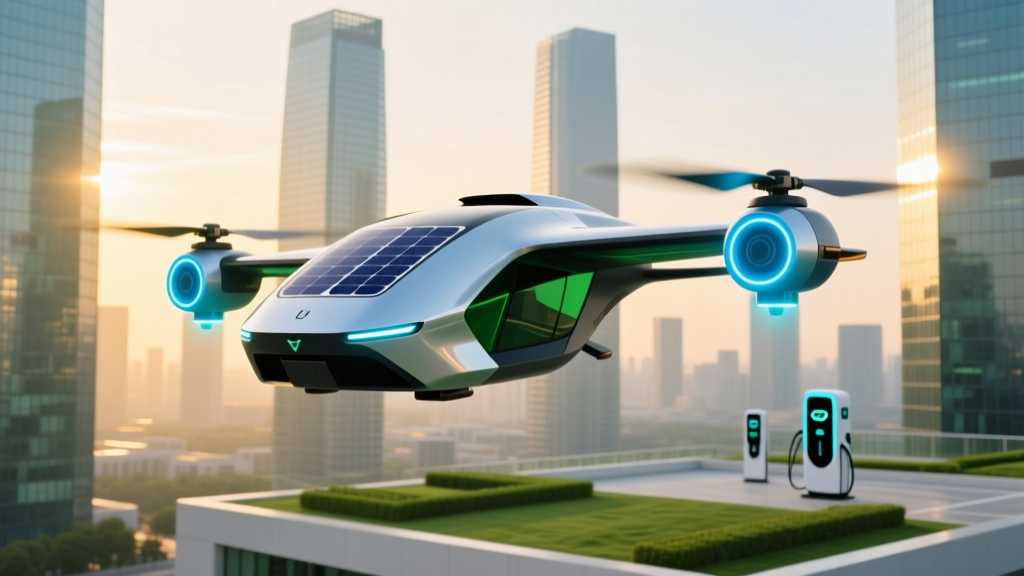
An electric VTOL aircraft uses multiple electric motors and battery packs to take off vertically — like a helicopter — then transition to forward flight using fixed wings for lift. This eliminates the need for runways. The "e" in eVTOL stands for electric, meaning the propulsion is fully battery-electric (no turbine or combustion engine), similar to a BEV on the road.
The key components mirror ground EVs but operate under far stricter constraints:
- Battery packs: Typically NMC (nickel manganese cobalt) lithium-ion cells, chosen for energy density over cycle life. Current eVTOL packs range from roughly 60–100 kWh usable capacity.
- Electric motors: Multiple distributed propulsion motors (usually 6–12), providing redundancy. Combined output ranges from 400–1,200+ kW.
- Charging: High-power DC charging at dedicated vertiports, typically 350–600 kW, designed for rapid turnaround between flights.
- Range: Typically 80–150 miles per charge, depending on payload and flight profile — far less than ground EVs due to the energy cost of sustained flight.
The Federal Aviation Administration (FAA) classifies these as a new category of aircraft, and certification under Part 21.17 special conditions is ongoing for most manufacturers.
Leading eVTOL Models: 2026 Specs and Status
Below is a snapshot of the most prominent eVTOL programs and where they stand in 2026. All specs are manufacturer-published and subject to FAA certification adjustments.
| Manufacturer | Model | Battery (est.) | Range | Cruise Speed | Passengers | 2026 Status |
|---|---|---|---|---|---|---|
| Joby Aviation | S4 | ~100 kWh (NMC) | ~100 mi | ~200 mph | 4 + pilot | FAA type certification in progress; limited commercial ops announced |
| Archer Aviation | Midnight | ~60 kWh (NMC) | ~80 mi (with reserves) | ~150 mph | 4 + pilot | FAA certification testing; partnership with United Airlines |
| Lilium | Lilium Jet | ~90 kWh (NMC) | ~100 mi | ~175 mph | 6 | EASA certification in progress; financial restructuring in 2025 |
| Volocopter | VoloCity | ~70 kWh (NMC) | ~22 mi | ~68 mph | 2 + pilot | EASA certification nearing completion; short urban hops only |
Key takeaway: None of these aircraft are available for consumer purchase. They are being built for fleet operators — the air-taxi equivalent of a Waymo robotaxi, not a personal vehicle.
eVTOL vs. Ground EV: A Reality Check on Cost and Practicality
It's tempting to compare eVTOLs to ground EVs, but the economics and use cases are fundamentally different. Here's how they stack up for a typical urban commuter scenario:
| Factor | Ground BEV (e.g., Tesla Model Y) | eVTOL Air Taxi (e.g., Joby S4) |
|---|---|---|
| Purchase price | ~$44,990 MSRP (2026) | Not available for purchase (est. $1.0–1.5M per unit for fleet operators) |
| Cost per trip (20 mi) | ~$1.50 (electricity at $0.15/kWh) | ~$50–$100 (estimated per-seat air-taxi fare) |
| Range per charge | 280–320 mi (EPA) | 80–100 mi |
| Charge time (10–80%) | ~18–25 min at 250 kW DC | ~10–15 min at 350+ kW (vertiport only) |
| Home charging? | Yes — Level 2 (7–11 kW) | No — vertiport infrastructure only |
| Weather limitations | Minor range loss in cold; drivable in most conditions | Grounded in high winds, icing, low visibility |
| Tax credit (§30D) | Up to $7,500 (income/MSRP/sourcing rules apply) | Not applicable — aircraft, not a road vehicle |
The eVTOL is not competing with your EV purchase. It's competing with a helicopter ride, a premium Uber Black trip to the airport, or a short regional flight — at a fraction of helicopter noise and operating cost, but still at a steep premium over driving yourself.
Real Ownership Costs: Why You Won't Be Buying an eVTOL (Yet)
Let's address the most common question EV enthusiasts ask: "When can I buy one?"
The short answer: not for personal use, and likely not before the 2030s at the earliest. Here's why:
Purchase Cost
Current eVTOL unit costs are estimated at $1.0–$1.5 million per aircraft — comparable to a light helicopter. Even if prices drop with scale, FAA certification for private-owner operation (Part 91) is a separate, lengthy process beyond fleet-operator certification.
Charging Infrastructure
eVTOLs require dedicated vertiports with 350–600 kW DC charging — far beyond any residential electrical service. A typical home has a 200-amp panel delivering roughly 48 kW maximum. You cannot charge an eVTOL at home, at a Tesla Supercharger, or at a standard Electrify America station.
Maintenance and Insurance
Aircraft maintenance follows FAA-mandated inspection schedules far more rigorous than automotive service. Insurance for a privately operated eVTOL would likely exceed $30,000–$50,000 annually — if it were available at all from underwriters.
Pilot Certification
Flying an eVTOL will require a pilot's license with specific type ratings. This is not autonomous flight in the Level 4 robotaxi sense — current eVTOLs require a human pilot, with autonomous operations still years from FAA approval.
Common eVTOL Misconceptions vs. Facts
| Myth | Fact |
|---|---|
| "eVTOLs are flying cars I can buy and drive." | eVTOLs are certified aircraft requiring pilot licensing, FAA oversight, and vertiport infrastructure. None are available for consumer purchase in 2026. |
| "They use the same batteries as my EV." | They use similar NMC lithium-ion chemistry, but eVTOL packs require much higher discharge rates (C-rates of 5C–10C vs. 1C–2C in cars) and extreme weight optimization. They are not interchangeable. |
| "They'll replace my commute." | Initial routes target airport-to-downtown corridors (e.g., LAX to Manhattan Beach, JFK to Midtown). They won't serve suburban door-to-door trips. |
| "They're self-flying." | All current certified eVTOL operations require a human pilot onboard. Autonomous eVTOL flights remain in development and face significant FAA regulatory hurdles. |
| "eVTOLs are zero-emission." | Like ground EVs, emissions depend on the electricity source. Vertiports drawing from fossil-heavy grids shift emissions upstream rather than eliminating them. |
What eVTOL Battery Tech Means for Ground EVs
The most tangible benefit eVTOLs bring to EV buyers is battery technology spillover. The extreme energy-density demands of flight are accelerating development in several areas:
- Higher energy-density NMC cells: eVTOL manufacturers are pushing cell suppliers toward 300+ Wh/kg at the cell level, compared to ~250–270 Wh/kg in current automotive cells. As these cells scale, they'll eventually lower costs and increase range for ground EVs.
- Solid-state batteries: Companies like Toyota and Factorial Energy are targeting solid-state cells partly because aviation demands the safety and energy density they promise. Automotive applications are expected by 2028–2030.
- High C-rate charging: eVTOL turnaround requires 5C+ charge rates, pushing development of cells that can accept ultra-fast charging without degradation — a direct benefit for ground EV fast-charging speeds.
If you're buying an EV today, you won't see eVTOL-derived batteries in your car for several years. But the R&D investment is real, and the trickle-down effect will eventually reach automotive applications.
Decision Framework: Should You Wait for eVTOLs or Buy an EV Now?
Choose a Ground EV Now If:
- You need daily reliable transportation for commuting, errands, and road trips
- You want to reduce fuel costs today (electricity at $0.15/kWh vs. gas at $3.50/gallon saves ~$1,500–$2,500/year for a 12,000-mile driver)
- You qualify for the §30D federal tax credit (up to $7,500, subject to income caps, MSRP limits, and battery-sourcing requirements)
- You have access to home Level 2 charging or reliable public charging
Watch eVTOLs Develop If:
- You're interested in future air-taxi services for airport runs in major metro areas
- You work in aviation, aerospace, or battery tech and want to track the industry
- You're considering investment in eVTOL companies (Joby, Archer, Lilium are publicly traded — but carry significant risk as pre-revenue or early-revenue startups)
Frequently Asked Questions
Can I buy an electric VTOL aircraft in 2026?
No. All current eVTOL programs are designed for fleet operators (air-taxi services). Private purchase is not available, and FAA certification for personal operation is years away.
How much will an eVTOL air-taxi ride cost?
Early estimates from Joby and Archer suggest per-seat fares of $50–$100 for 15–20 mile routes — competitive with Uber Black or helicopter shuttles, but far more expensive than driving a ground EV.
What battery chemistry do eVTOLs use?
Primarily NMC (nickel manganese cobalt) lithium-ion, chosen for high energy density and high discharge rates. LFP chemistry is generally too heavy for aviation applications. Solid-state batteries are a future target.
Will eVTOLs reduce my EV's environmental impact?
Not directly. eVTOLs and ground EVs use separate infrastructure and electricity sources. However, eVTOL investment is accelerating battery R&D that will eventually benefit ground EVs through higher energy density and faster charging.
Are eVTOLs safe compared to helicopters?
Manufacturers claim distributed electric propulsion provides redundancy that single-rotor helicopters lack — if one motor fails, others compensate. However, FAA certification is still in progress, and large-scale safety data does not yet exist. Check the FAA for certification updates.
Do eVTOLs qualify for any EV tax credits?
No. The §30D federal tax credit applies to qualified clean vehicles for road use. Aircraft do not qualify, regardless of their electric powertrain.