Quick Answer: Is the Electric Volvo XC60 Right for You?
The 2026 Volvo XC60 Recharge is a plug-in hybrid (PHEV), not a fully electric vehicle. It delivers 35 miles of EPA-rated electric-only range, 63 MPGe combined, and 455 horsepower from its turbocharged 2.0L engine paired with an electric motor. Starting at $59,050 MSRP (Core Plus trim), it qualifies for a $7,500 federal tax credit under current IRS §30D rules if your income and the vehicle's battery sourcing meet requirements. It's best suited for buyers who want daily electric commuting under 35 miles with gas-engine flexibility for longer road trips — not for those seeking a zero-tailpipe-emission BEV.
What Exactly Is the Volvo XC60 Recharge?
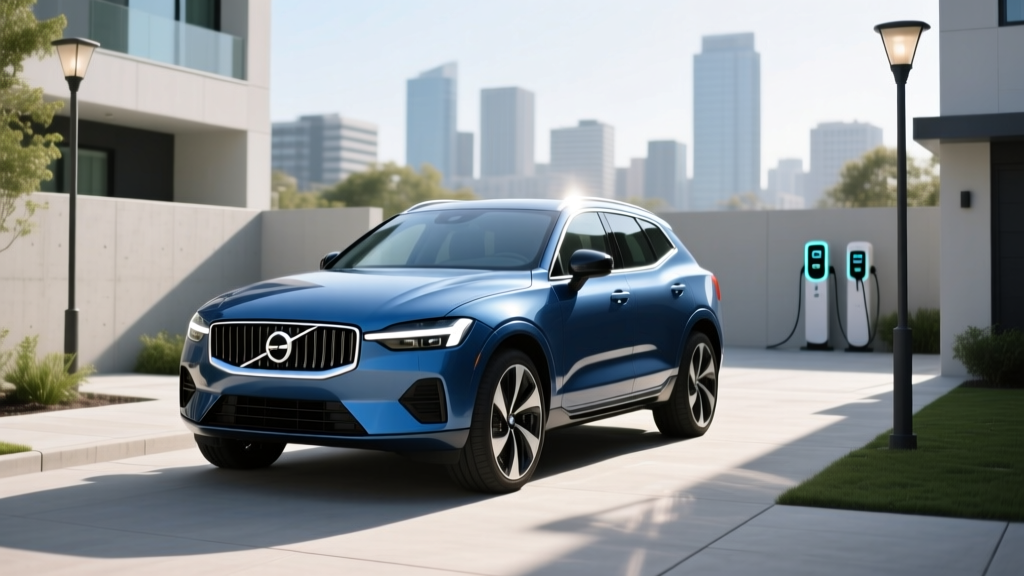
The XC60 Recharge is Volvo's plug-in hybrid variant of its midsize luxury SUV. Unlike a battery-electric vehicle (BEV) that runs solely on electricity, the XC60 Recharge pairs an 18.8 kWh lithium-ion battery (NMC chemistry) with a 2.0-liter turbocharged four-cylinder engine. You can drive on pure electricity for short trips, then the gas engine kicks in for highway cruising or when the battery depletes.
For 2026, Volvo continues to offer the Recharge powertrain across Core Plus, Plus, and Ultra trims. The fully electric equivalent in Volvo's lineup is the EX60 (announced, expected late 2026/2027), which will be a dedicated BEV on the new SPA3 platform. Until that arrives, the XC60 Recharge remains Volvo's electrified midsize SUV offering.
| Spec | Value |
|---|---|
| Powertrain | 2.0L Turbo PHEV (T8) |
| Combined HP / Torque | 455 hp / 523 lb-ft |
| Battery Capacity | 18.8 kWh (NMC, ~14.9 kWh usable) |
| EPA Electric-Only Range | 35 miles |
| EPA MPGe (Electric + Gas) | 63 MPGe combined |
| Gas-Only MPG (After Depletion) | 28 MPG combined |
| 0–60 mph | 4.5 seconds |
| Max DC Fast Charge | Not available (AC only) |
| Level 2 Charge Rate | 3.7 kW ( onboard charger) |
| Level 2 Charge Time (0–100%) | ~5 hours |
| Level 1 Charge Time (120V) | ~12–14 hours |
| Drivetrain | AWD (eAWD — electric rear axle) |
| Battery Warranty | 8 years / 100,000 miles |
| Base MSRP (Core Plus) | $59,050 |
| Ultra Trim MSRP | $67,450 |
Source: fueleconomy.gov — EPA estimates. Real-world electric range varies with temperature, terrain, and driving style.
Real-World Range vs. EPA Sticker: What to Expect
EPA Electric-Only Range: 35 miles
Real-World Expectation: In mild weather (60–75°F) with city driving, expect 32–38 miles on a full charge. On highway trips at 70+ mph, that drops to 25–28 miles. In freezing temperatures (below 32°F), battery efficiency loss and cabin heating can reduce electric range to 20–24 miles.
The XC60 Recharge does not have a heat pump — it uses resistive heating and engine waste heat, which impacts electric-only range in winter. Preconditioning while plugged in helps mitigate this.
Once the battery depletes, the XC60 Recharge operates as a conventional hybrid, delivering 28 MPG combined (26 city / 30 highway per EPA). That's competitive with the gas-only XC60 B5 mild-hybrid, which returns 26 MPG combined. The real efficiency win comes from using the battery for daily commutes under 35 miles, where you may go weeks without visiting a gas station.
Charging the XC60 Recharge: Home Setup and Costs
A critical ownership reality: the XC60 Recharge does not support DC fast charging. Its 3.7 kW onboard AC charger means charging is strictly a Level 1 (120V) or Level 2 (240V) affair. This is typical for PHEVs — the battery is small enough that overnight home charging suffices for most owners.
| Level | Voltage | Power (kW) | Time to Full (18.8 kWh) | Miles of EV Range Added/Hour |
|---|---|---|---|---|
| Level 1 | 120V | ~1.4 kW | 12–14 hours | ~3 miles |
| Level 2 | 240V | 3.7 kW (limited by onboard charger) | ~5 hours | ~7 miles |
| DC Fast | N/A | N/A | N/A | N/A |
Home Level 2 Installation Cost Breakdown:
| Item | Estimated Cost |
|---|---|
| Level 2 Charger (e.g., ChargePoint Home Flex, Emporia Vue) | $350–$700 |
| Electrician Labor (240V/50A circuit, ~40 ft run) | $800–$2,000 |
| Permit & Inspection | $100–$300 |
| Electrical Panel Upgrade (if needed, 200A service) | $1,500–$3,500 |
| Total (no panel upgrade) | $1,250–$3,000 |
| Total (with panel upgrade) | $2,750–$6,500 |
Because the XC60 Recharge's onboard charger caps at 3.7 kW, even a 48-amp Level 2 charger won't charge it faster than a 16-amp unit. A basic Level 2 station is sufficient — no need to overspend on high-amperage hardware.
Cost to Charge vs. Fuel:
At the U.S. average electricity rate of ~$0.17/kWh (per EIA 2025 data), a full charge of the XC60 Recharge's usable 14.9 kWh costs approximately $2.53. That gives you 35 miles of electric driving — roughly $0.072 per mile.
Compare that to the gas-only XC60 B5 at 26 MPG combined with premium fuel at $3.90/gallon: $0.15 per mile. If you drive 12,000 miles per year and 70% of those are within electric range (~8,400 miles), your annual fuel/energy cost drops from ~$1,800 (gas only) to approximately $960 — a savings of ~$840/year.
XC60 Recharge vs. Gas XC60 vs. Competing PHEVs
| Model | Type | EV Range | MPG/MPGe | 0–60 | Base MSRP | Fed. Credit |
|---|---|---|---|---|---|---|
| Volvo XC60 Recharge | PHEV | 35 mi | 63 MPGe / 28 MPG | 4.5s | $59,050 | $7,500* |
| Volvo XC60 B5 | Mild Hybrid | 0 mi | 26 MPG | 6.5s | $48,250 | None |
| BMW X3 xDrive30e | PHEV | 36 mi | 60 MPGe / 27 MPG | 6.0s | $58,200 | $7,500* |
| Mercedes GLC 350e | PHEV | 39 mi | 66 MPGe / 28 MPG | 6.2s | $61,550 | $7,500* |
| Lexus NX 450h+ | PHEV | 37 mi | 84 MPGe / 36 MPG | 6.0s | $59,605 | $7,500* |
* Federal tax credit eligibility depends on buyer income, MSRP caps, and battery critical-mineral sourcing per IRS §30D rules. Always verify current eligibility with a tax professional.
The XC60 Recharge stands out for its 455 horsepower — far more than any competitor here. The Lexus NX 450h+ leads in overall efficiency (84 MPGe, 36 MPG gas-only) and reliability reputation, but lacks the Volvo's performance punch. The BMW X3 xDrive30e is the closest rival in character, though it trails on power.
Total Cost of Ownership: 5-Year Breakdown
| Category | XC60 Recharge (PHEV) | XC60 B5 (Gas) |
|---|---|---|
| Purchase Price (after $7,500 credit) | $51,550 | $48,250 |
| Fuel / Energy (5 years) | $4,800 | $9,000 |
| Maintenance (5 years) | $3,200 | $3,800 |
| Insurance (5 years, est.) | $11,500 | $9,800 |
| Depreciation (est. 5-yr) | $24,000 | $22,000 |
| Total 5-Year Cost | $95,050 | $92,850 |
| Cost Per Mile | $1.58 | $1.55 |
The XC60 Recharge costs roughly $2,200 more over 5 years than the gas B5 after accounting for the federal tax credit, lower fuel costs, and slightly higher insurance premiums. The gap narrows significantly if you maximize electric-only driving (short commutes, regular charging). If your state offers additional PHEV incentives (e.g., California's CVRP, Colorado's innovative motor vehicle credit), the Recharge can break even or come out ahead.
Key cost factors:
- Insurance: PHEVs typically carry 10–18% higher premiums than gas equivalents due to higher repair costs and battery replacement risk.
- Maintenance: The PHEV has both an engine and electric drivetrain, but regenerative braking reduces brake wear. Oil changes are still required but may be less frequent if most miles are electric.
- Home charger: Add $1,250–$3,000 upfront if you need a Level 2 installation (not included in the table above).
Federal Tax Credit: Do You Qualify for $7,500?
The Volvo XC60 Recharge currently qualifies for the full $7,500 federal tax credit under IRS §30D, but eligibility is not automatic. You must meet all of the following:
- Income Cap: Modified AGI ≤ $150,000 (single), $225,000 (head of household), or $300,000 (married filing jointly)
- MSRP Cap: SUVs must have an MSRP ≤ $80,000 (all XC60 Recharge trims qualify)
- Battery Sourcing: Critical minerals and battery components must meet phased-in percentage thresholds (increasing annually through 2032)
- Point-of-Sale Transfer: You can apply the credit at purchase to reduce the dealer price — no need to wait for tax filing
- One Credit Per VIN: The vehicle must be new, purchased for personal use, and primarily used in the U.S.
Myth vs. Fact:
| Myth | Fact |
|---|---|
| "Every EV buyer gets $7,500" | Income caps, MSRP caps, and battery-sourcing rules filter eligibility. Some buyers get $0. |
| "PHEVs don't qualify for the EV credit" | Qualifying PHEVs with ≥4 kWh batteries (XC60 Recharge has 18.8 kWh) are eligible under §30D. |
| "I need to wait until tax season to claim it" | Since 2024, you can transfer the credit to the dealer at point of sale for an immediate price reduction. |
| "The credit is going away soon" | §30D is authorized through 2032, but battery-sourcing rules tighten annually. Verify current-year rules at irs.gov. |
First-Time PHEV Buyer: What You Must Know
If this is your first plug-in vehicle, here are the ownership realities that spec sheets don't emphasize:
1. You must charge daily to see savings. The XC60 Recharge's 35-mile electric range is consumed quickly. If you don't plug in nightly, you're essentially driving a heavier, more expensive gas hybrid at 28 MPG. The financial and environmental case for a PHEV collapses without regular charging discipline.
2. No DC fast charging means road trips are gas-only. On long highway drives, the battery depletes within ~25 miles, and you'll rely on the 2.0L turbo at 28 MPG. There's no option to quick-charge at a rest stop. For frequent road-trippers, this is fine — for those hoping to drive electric on highways, a BEV with 200+ miles of range is the answer.
3. Cold weather hits the battery hard. Expect 30–40% electric range loss below freezing. If your commute is 30 miles round-trip, that's manageable in summer but may require gas supplementation in January.
4. The eAWD system is a real advantage. The electric rear axle provides instant torque to the rear wheels, giving the XC60 Recharge confident traction in rain and snow without the efficiency penalty of a mechanical AWD system.
5. Battery degradation is minimal but real. Volvo warrants the high-voltage battery for 8 years / 100,000 miles at 70% capacity retention. Real-world data from earlier T8 PHEVs shows ~5–8% degradation over 5 years — far less concerning than early BEVs, given the smaller battery and lower cycle counts.
Decision Framework: Should You Buy the XC60 Recharge?
Choose the XC60 Recharge if:
- Your daily round-trip commute is under 35 miles and you have reliable home charging
- You want luxury SUV refinement with 455 hp performance
- You take 3+ road trips per year and need gas-engine flexibility
- You qualify for the $7,500 federal tax credit
- You value Volvo's safety reputation (IIHS Top Safety Pick+ expected for 2026)
Choose the gas XC60 B5 if:
- You cannot install a home charger (apartment, no garage, HOA restrictions)
- Your daily driving exceeds 50+ miles regularly
- You want the lowest purchase price and don't care about electric commuting
- You don't qualify for the federal tax credit due to income limits
Wait for a fully electric Volvo (EX60 or EX90) if:
- You want zero tailpipe emissions and 250+ miles of electric range
- You have access to reliable DC fast charging (home or public)
- You want to eliminate gas station visits entirely
- You're willing to pay a higher upfront price ($70,000+) for a dedicated BEV platform
Frequently Asked Questions
Is the Volvo XC60 Recharge fully electric?
No. The XC60 Recharge is a plug-in hybrid (PHEV) that combines a 2.0L turbocharged gas engine with an 18.8 kWh battery and electric motor. It can drive up to 35 miles on electricity alone, then operates as a conventional hybrid. Volvo's fully electric midsize SUV will be the upcoming EX60, expected in late 2026 or 2027.
Can I charge the XC60 Recharge at a public fast charger?
No. The XC60 Recharge does not have a DC fast-charging port. It uses a J1772 connector for Level 1 (120V) and Level 2 (240V) AC charging only. The onboard charger caps at 3.7 kW, so even a 48-amp Level 2 station will only deliver 3.7 kW to the vehicle.
How long will the XC60 Recharge battery last?
Volvo warranties the high-voltage battery for 8 years or 100,000 miles (whichever comes first), guaranteeing at least 70% capacity retention. Based on data from earlier T8 PHEV models, owners typically see 5–8% degradation over 5 years. Replacement cost, if out of warranty, is estimated at $8,000–$12,000 including labor.
Does the XC60 Recharge qualify for the $7,500 tax credit?
The XC60 Recharge is currently eligible for the full $7,500 federal clean vehicle credit under IRS §30D, provided you meet income thresholds (≤$300K joint, ≤$150K single), the vehicle MSRP is under $80,000 (all trims qualify), and battery-sourcing requirements are met. You can apply the credit at point of sale. Verify current eligibility at irs.gov or with a tax professional.
What happens if I never plug in the XC60 Recharge?
If you never charge the battery, the XC60 Recharge operates as a conventional hybrid at 28 MPG combined — about 2 MPG better than the gas-only XC60 B5 (26 MPG), but you forfeit the entire efficiency and cost advantage of the PHEV system. You'd be paying a premium for electric capability you're not using.
Is the XC60 Recharge good in snow and winter conditions?
Yes. The eAWD system sends power to the rear axle via the electric motor, providing confident all-wheel-drive traction. However, expect electric-only range to drop to 20–24 miles in sub-freezing temperatures due to battery chemistry limitations and cabin heating demands. Preconditioning the cabin while plugged in helps preserve range.