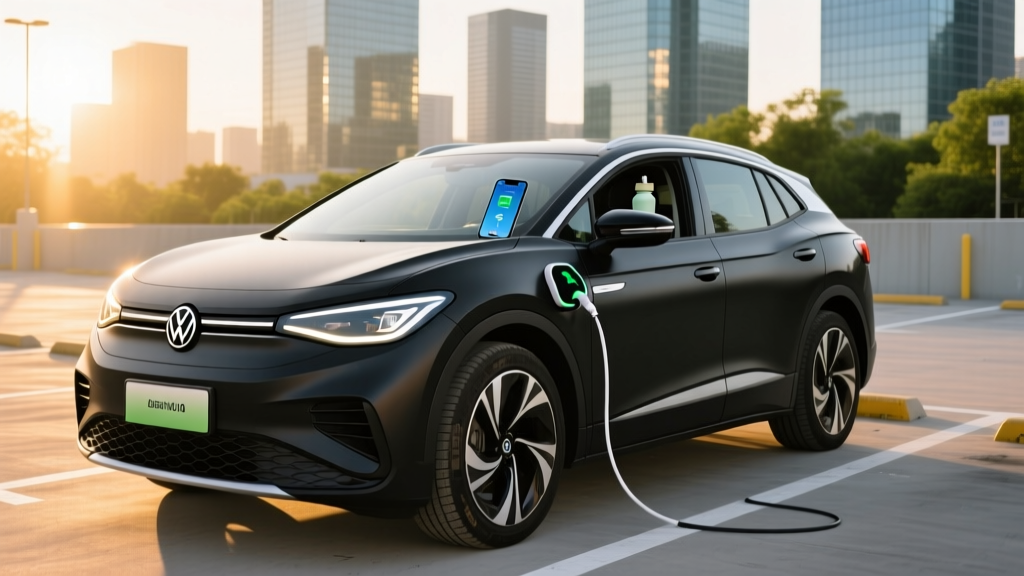
If you're researching an electric Volkswagen car, the 2026 Volkswagen ID.4 is VW's primary all-electric offering in the U.S. market. Here's what matters: it delivers an EPA-estimated 291 miles of range (Pro S RWD), starts around $44,190 before incentives, charges at up to 170 kW DC fast charging (10–80% in ~30 minutes), and qualifies for a partial or full $7,500 federal tax credit under current IRS §30D rules depending on battery sourcing and your income. For most suburban and urban drivers with home charging access, the ID.4 offers lower per-mile fueling costs and reduced maintenance compared to a comparable gas compact SUV like the VW Tiguan — but highway-heavy commuters and those in extreme cold climates should plan for 15–30% real-world range reduction.
Quick Answer: Is an Electric Volkswagen Car Right for You?
The 2026 VW ID.4 makes the most sense if: (1) you can install a Level 2 home charger, (2) your daily commute is under 80 miles round-trip, (3) you want a practical compact EV SUV with competitive range, and (4) your household income falls under the IRS §30D caps ($150K single / $300K joint). If you regularly drive 200+ highway miles in freezing temperatures or lack home charging access, consider a PHEV like the VW Tiguan eHybrid (where available) or wait for VW's upcoming ID.7 sedan with improved efficiency.
2026 VW ID.4: Range, Battery, and Charging Specs That Matter
Volkswagen offers the ID.4 in several trims with two battery configurations for 2026. The standard Pro trim uses a 62 kWh (usable) NMC lithium-ion pack, while the Pro S and AWD Pro S trims step up to an 82 kWh (usable) NMC battery. Range varies significantly by drivetrain and wheel size.
| Spec | Pro (RWD) | Pro S (RWD) | AWD Pro S |
|---|---|---|---|
| Usable Battery | 62 kWh (NMC) | 82 kWh (NMC) | 82 kWh (NMC) |
| EPA Range | 206 mi | 291 mi | 263 mi |
| Combined MPGe | 104 MPGe | 107 MPGe | 98 MPGe |
| Horsepower | 201 hp | 282 hp | 335 hp |
| 0–60 mph | 7.7 sec | 7.0 sec | 5.4 sec |
| Peak DC Charge Rate | 140 kW | 170 kW | 170 kW |
| 10–80% DC Fast Charge | ~28 min | ~30 min | ~30 min |
| Level 2 Charge Rate | 11 kW | 11 kW | 11 kW |
| Base MSRP (2026) | $39,735 | $44,190 | $48,590 |
| Battery Warranty | 8 years / 100,000 miles (70% capacity retention) | ||
Sources: fueleconomy.gov, Volkswagen of America official specs.
Real-World Range Reality Check
EPA Sticker: 291 miles (Pro S RWD, 19" wheels)
Expect in practice: ~240–260 miles at sustained 70 mph highway speeds in mild weather. In sub-freezing temperatures (below 32°F), plan for 200–230 miles due to battery chemistry limitations and cabin heating demands. The ID.4's optional heat pump (standard on Pro S trims) mitigates some cold-weather loss compared to resistive heating, but NMC batteries inherently lose efficiency in the cold. City driving with regenerative braking recovers more energy and can approach or slightly exceed the EPA estimate.
Charging an Electric Volkswagen Car: Home, Public, and Cost
Understanding the difference between kW (power, or charge speed) and kWh (energy, or battery capacity) is essential. The ID.4's 82 kWh battery holds energy; a 170 kW DC fast charger delivers power to refill it. Think of kW as the hose diameter and kWh as the bucket size.
| Charging Level | Power (kW) | Voltage | Miles Added/Hour | Best For |
|---|---|---|---|---|
| Level 1 (120V outlet) | ~1.4 kW | 120V | ~3–4 mi/hr | Emergency/overnight trickle |
| Level 2 (240V home) | 7.7–11 kW | 240V | ~22–32 mi/hr | Daily home charging |
| DC Fast Charge | Up to 170 kW | 400V | ~180+ mi in 30 min | Road trips |
Home charging setup: A Level 2 home charger on a 48-amp circuit delivers roughly 11 kW to the ID.4, fully replenishing the 82 kWh battery in about 7.5–8 hours. Installation typically runs $800–$2,500 depending on your electrical panel capacity, run length, and local permit fees. Homes with older 100-amp panels may need a $2,000–$4,000 panel upgrade to support a dedicated 50-amp EV circuit alongside existing loads.
Charging network compatibility: The 2026 ID.4 uses the CCS1 connector for DC fast charging natively. Volkswagen has partnered with Electrify America (which VW owns), and new ID.4 purchases include a complimentary charging credit (typically 3 years of free 30-minute sessions or a kWh allotment). VW has also announced NACS adapter availability for Tesla Supercharger access — confirm adapter inclusion at purchase, as availability varies by model year and region.
Cost to charge vs. fuel: At the U.S. average residential electricity rate of ~$0.17/kWh (EIA 2025 data), fully charging the 82 kWh ID.4 Pro S costs about $13.94, yielding roughly $0.048/mile. A comparable gas SUV (VW Tiguan at 26 MPG combined) at $3.40/gallon costs $0.131/mile — nearly three times the per-mile fuel cost. Over 15,000 annual miles, that's roughly $1,245 in electricity vs. $1,965 in gasoline, saving about $720/year in fuel alone.
Cost Breakdown: ID.4 vs. Gas SUV Over 5 Years
Comparing the 2026 VW ID.4 Pro S (RWD) to the 2026 VW Tiguan SE (2.0T, FWD) over 5 years and 75,000 miles reveals the total cost of ownership (TCO) picture. These figures use national averages — your local electricity rates, gas prices, and insurance premiums will shift the numbers.
| Cost Category | ID.4 Pro S (EV) | Tiguan SE (Gas) | Difference |
|---|---|---|---|
| MSRP (before incentives) | $44,190 | $34,490 | +$9,700 (ID.4) |
| Federal Tax Credit (§30D) | –$7,500* | $0 | –$7,500 (ID.4) |
| Effective Purchase Price | $36,690 | $34,490 | +$2,200 (ID.4) |
| Fuel/Energy (5 yr / 75K mi) | $6,225 | $9,825 | –$3,600 (ID.4 saves) |
| Maintenance (5 yr) | ~$1,800 | ~$4,200 | –$2,400 (ID.4 saves) |
| Insurance (5 yr avg) | ~$9,500 | ~$7,800 | +$1,700 (ID.4) |
| Home Charger Install | ~$1,500 | $0 | +$1,500 (ID.4) |
| Est. Depreciation (5 yr) | ~$18,000 | ~$14,500 | +$3,500 (ID.4) |
| 5-Year Total Cost | ~$73,715 | ~$70,815 | +$2,900 (ID.4) |
*Federal tax credit eligibility under IRS §30D requires: buyer income below $150K (single) or $300K (joint), vehicle MSRP under $80,000 (SUVs), and compliance with battery component and critical mineral sourcing rules. The ID.4's credit eligibility has fluctuated as VW adjusts battery supply chains — verify current eligibility at the point of sale or via the IRS clean vehicle credit lookup tool. Credit can be transferred to the dealer as a point-of-sale discount as of 2024+.
Key takeaway: The ID.4 costs roughly $2,900 more over 5 years in this scenario, primarily due to higher depreciation and insurance. However, if you qualify for the full $7,500 credit AND your state offers additional rebates (e.g., California's CVRP, Colorado's state credit), the ID.4 can break even or come out ahead. Your actual TCO depends heavily on local incentives, electricity rates, and how long you hold the vehicle — longer ownership amplifies the fuel and maintenance savings.
Tax Credits and Incentives for an Electric Volkswagen Car
Federal, state, and utility incentives can dramatically change the purchase math. Here's a checklist of what to verify before buying:
- IRS §30D Federal Credit: Up to $7,500. Requires MSRP under $80,000 for SUVs (ID.4 qualifies), buyer AGI under $150K single / $225K HOH / $300K joint, and battery sourcing compliance. Check the latest eligibility list on fueleconomy.gov or the IRS portal — sourcing rules tighten annually.
- Point-of-Sale Transfer: Since 2024, you can transfer the credit to the dealer for an immediate price reduction at purchase rather than waiting to claim it on your tax return.
- State Incentives: Vary widely. California offers up to $2,000 (CVRP, income-dependent), Colorado offers up to $5,000, and many states offer $1,000–$3,000 rebates. Check your state energy office or DSIRE database.
- Utility Rebates: Many utilities offer $250–$1,000 for EV purchase and $200–$500 for Level 2 charger installation. Check with your local provider.
- HOV Lane Access: Several states (CA, CO, FL, GA, MD, NJ, NY, VA) grant solo HOV lane access to EVs — a significant time-savings perk for commuters.
Note: Tax credit eligibility is subject to change as battery sourcing requirements tighten under the Inflation Reduction Act. Always verify current status with a tax professional and the IRS before purchase.
Common EV Misconceptions: Myth vs. Fact
| Myth | Fact (with Data) |
|---|---|
| "EV batteries need replacing every few years." | The ID.4's NMC battery is warrantied for 8 years/100,000 miles with a 70% capacity retention guarantee. Industry data from Recurrent Auto shows average degradation of ~12% at 100,000 miles for liquid-cooled NMC packs. Full battery replacement (if needed out of warranty) runs $10,000–$16,000, but most packs outlast the vehicle. |
| "Charging takes too long for road trips." | At 170 kW peak DC fast charging, the ID.4 adds ~180 miles in 30 minutes (10–80%). Plan stops around meal or restroom breaks. The charge curve tapers above 80% — charging from 80–100% can take as long as 10–80%, so road-trip strategy is to charge to 80% and drive on. |
| "EVs are worse in the cold." | Range drops 15–30% below freezing (verified by AAA and Consumer Reports cold-weather testing), but preconditioning (warming the battery while plugged in) recovers much of this loss. The ID.4's heat pump on Pro S trims reduces cabin heating energy draw by ~30% vs. resistive heating. |
| "EVs cost more to insure." | Generally true — EV insurance premiums run 15–25% higher than equivalent gas vehicles due to higher repair costs and parts pricing. Shop multiple carriers; some (like GEICO and Progressive) offer specific EV discounts. |
| "The power grid can't handle EVs." | Most EV charging happens overnight during off-peak hours when grid capacity is underutilized. Smart chargers and utility time-of-use rates incentivize off-peak charging, and grid upgrades are ongoing. A single Level 2 home charger draws about the same as an electric dryer. |
Decision Framework: Should You Buy an Electric Volkswagen Car?
Buy the ID.4 If:
- You have (or can install) a Level 2 home charger on a 240V circuit
- Your daily driving is under 100 miles and you take road trips 2–4 times per year
- You qualify for the $7,500 federal credit and/or state incentives that close the price gap with gas SUVs
- You value low per-mile fueling costs (~$0.05/mi) and reduced maintenance (no oil changes, fewer brake replacements due to regen braking)
- You want a practical, mainstream-brand EV with a large dealer network for service
Consider a PHEV or Gas Vehicle Instead If:
- You lack home charging access and your area has limited public DC fast charging infrastructure
- You regularly tow heavy loads (the ID.4 is rated for only 2,700 lbs with the factory tow package)
- You drive 200+ miles daily in extreme cold without time to charge mid-route
- Your household income exceeds the §30D caps and your state offers no EV incentives
- You need maximum cargo space — the ID.4 offers 30.3 cu ft behind the rear seats (64.2 cu ft folded), which is competitive but not class-leading
Frequently Asked Questions
What electric Volkswagen cars are available in the U.S.?
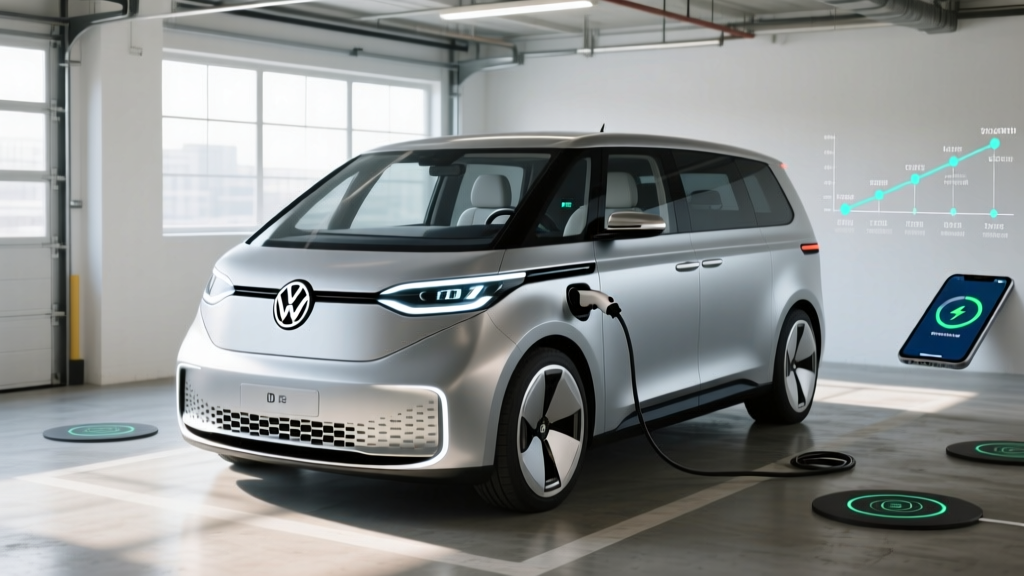
As of 2026, the Volkswagen ID.4 compact SUV is VW's only mass-market all-electric vehicle sold in the United States. The ID. Buzz electric minivan launched in late 2024 and continues for 2026 in limited trims. VW has announced the ID.7 sedan for global markets, but U.S. availability remains uncertain. The discontinued ID.3 and ID.5 were never officially sold in the U.S.
How long does the VW ID.4 battery last?
Volkswagen warranties the ID.4's high-voltage battery for 8 years or 100,000 miles against degradation below 70% of original capacity. Real-world data from fleet operators and services like Recurrent Auto suggests NMC batteries with active liquid cooling (like the ID.4's) typically retain 85–90% capacity at 100,000 miles when properly maintained — avoiding frequent 100% charges and extreme heat exposure extends longevity. VW recommends daily charging to 80% and using 100% only for long trips.
Does the VW ID.4 qualify for the $7,500 federal tax credit?
Eligibility under IRS §30D depends on current battery sourcing compliance, your income, and the vehicle's MSRP. The ID.4's MSRP falls well under the $80,000 SUV cap. However, critical mineral and battery component sourcing requirements have tightened since 2023, and VW has been adjusting its supply chain. Check the latest eligibility on fueleconomy.gov before purchasing, and ask the dealer for the IRS clean vehicle credit report at point of sale.
How much does it cost to charge the ID.4 at home?
At the national average electricity rate of ~$0.17/kWh, a full 0–100% charge of the 82 kWh battery costs approximately $13.94. Most drivers charge from 20–80% daily, costing about $8.36 per session. Over 15,000 annual miles, expect roughly $1,200–$1,300 in home electricity costs for fueling. Public DC fast charging is more expensive — Electrify America charges $0.31–$0.48/kWh depending on plan and region, bringing road-trip fueling costs closer to gasoline on a per-mile basis.
Is the ID.4 good for road trips?
Yes, with planning. At 170 kW peak DC charge rate, the ID.4 adds roughly 180 miles in a 30-minute stop (10–80%). Electrify America's network (which VW ID.4 owners get complimentary access to) covers major U.S. highway corridors. Use the in-dash navigation's route planner or apps like A Better Routeplanner to pre-plan charging stops. The main limitation is charge curve taper above 80% — don't wait until the battery is nearly empty; charge at 15–20% SoC for the fastest charging speeds.
How does the ID.4 compare to the Tesla Model Y?
The Tesla Model Y Long Range offers more EPA range (~320 miles), faster DC charging (~250 kW peak, 10–80% in ~20 min), access to the Supercharger network natively (NACS connector), and a lower starting price (~$44,990 for Long Range AWD). The ID.4 counters with a more traditional driving feel, VW dealer service network, competitive interior build quality, and complimentary Electrify America charging. If Supercharger access and maximum range are priorities, the Model Y leads. If you prefer a mainstream brand with dealer support and don't mind slightly slower charging, the ID.4 is a strong alternative.