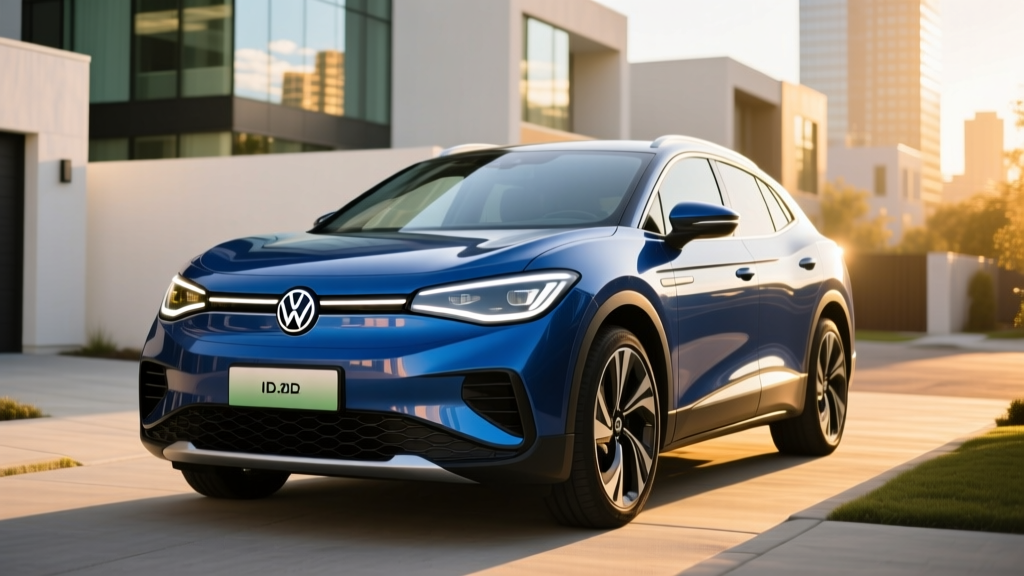
If you're researching an electric Volkswagen, the 2026 ID.4 is your primary option — a compact electric SUV starting at $39,735 with an EPA-estimated 291 miles of range, 170 kW DC fast charging, and available all-wheel drive. It qualifies for a portion of the federal §30D tax credit depending on your income, the vehicle's MSRP, and battery sourcing requirements. For most buyers, the ID.4 offers competitive range and practical cargo space, though real-world highway and cold-weather driving will reduce that EPA figure by 15-25%. This guide breaks down the exact specs, ownership economics, and decision factors you need before committing.
Quick Answer: Is an Electric Volkswagen Right for You?
The 2026 Volkswagen ID.4 works best if you have Level 2 home charging access, drive under 250 miles daily, and want a practical family SUV with lower operating costs than gas. Expect $4,500-$6,000 in fuel savings over 5 years compared to a comparable gas SUV, but factor in higher insurance premiums ($150-$300/year more) and potential home charger installation costs ($500-$2,000). If you lack home charging or regularly drive 300+ miles in cold weather, consider a plug-in hybrid instead.
2026 Volkswagen ID.4: Complete Specifications
| Specification | ID.4 Standard Range | ID.4 Pro (AWD) |
|---|---|---|
| EPA Range | 291 miles | 263 miles |
| Real-World Range (highway/cold) | 230-250 miles | 210-230 miles |
| Battery Capacity | 82 kWh (usable: 77 kWh, NMC chemistry) | 82 kWh (usable: 77 kWh, NMC chemistry) |
| DC Fast Charging (peak) | 170 kW | 170 kW |
| 10-80% DC Fast Charge Time | ~30 minutes | ~30 minutes |
| Level 2 Charging Rate | 11 kW (~37 miles/hour) | 11 kW (~37 miles/hour) |
| 0-60 mph | 7.7 seconds (RWD) | 5.4 seconds (AWD) |
| Horsepower | 282 hp (RWD) | 335 hp (AWD) |
| Cargo Volume | 30.3 cu ft (rear seats up) / 64.2 cu ft (folded) | 30.3 cu ft / 64.2 cu ft |
| Base MSRP | $39,735 | $47,735 |
| Battery/Powertrain Warranty | 8 years / 100,000 miles (70% capacity retention) | 8 years / 100,000 miles |
| MPGe (combined) | 104 MPGe | 93 MPGe |
Real-World Range Reality Check: The EPA's 291-mile estimate assumes mixed driving at moderate temperatures. On highway trips at 70+ mph, expect 240-250 miles. In freezing weather (below 32°F), range drops 20-30% due to battery chemistry and cabin heating demands — plan for 200-220 miles in winter conditions. The ID.4's heat pump (standard on Pro trims) helps but doesn't eliminate cold-weather loss.
Electric Volkswagen vs Gas SUV: 5-Year Cost Comparison
Let's compare the 2026 ID.4 Pro against a similarly sized gas SUV like the 2026 Honda CR-V AWD (28 MPG combined, $35,000 MSRP). This analysis assumes 15,000 miles/year, $0.13/kWh home electricity, $3.50/gallon gas, and 80% home charging / 20% public DC fast charging.
| Cost Category | VW ID.4 Pro (5 years) | Honda CR-V AWD (5 years) |
|---|---|---|
| Purchase Price (MSRP) | $47,735 | $35,000 |
| Federal Tax Credit (§30D) | -$3,750 to -$7,500 (varies by eligibility) | $0 |
| Home Charger Installation | $1,200 (Level 2, 240V/48A) | $0 |
| Fuel/Energy (5 years, 75,000 miles) | $4,875 (electricity) | $9,375 (gasoline) |
| Maintenance (5 years) | $1,500 (no oil changes, brake wear reduced) | $3,500 (oil, filters, brake pads) |
| Insurance (5 years) | $9,750 ($1,950/year avg) | $8,250 ($1,650/year avg) |
| Total 5-Year Cost | $61,310 (with $3,750 credit) | $56,125 |
| Total 5-Year Cost | $57,560 (with $7,500 credit) | $56,125 |
Key Takeaway: With the full $7,500 federal tax credit, the ID.4 breaks even or slightly undercuts the gas CR-V over 5 years. Without the credit (due to income limits, MSRP caps, or battery sourcing rules), the ID.4 costs $5,000-$6,000 more. Your actual savings depend on local electricity rates, driving patterns, and whether you qualify for the credit.
Federal Tax Credit Eligibility (§30D): The ID.4's credit eligibility is complex and subject to change. As of 2026, requirements include:
- Buyer income caps: $150,000 (single), $225,000 (head of household), $300,000 (joint)
- Vehicle MSRP cap: $80,000 for SUVs (ID.4 qualifies)
- Battery sourcing: Critical minerals and battery components must meet North American sourcing thresholds (Volkswagen has worked to comply, but verify current-year status on IRS.gov)
- Point-of-sale transfer: You can transfer the credit to the dealer for an immediate price reduction
Consult a tax professional and check fueleconomy.gov for the latest eligibility status before purchasing.
Charging the ID.4: Home, Public, and Road Trips
The ID.4 supports three charging levels, each with different use cases:
| Charging Level | Power (kW) | Miles Added per Hour | Best Use Case |
|---|---|---|---|
| Level 1 (120V household outlet) | 1.4 kW | ~4-5 miles/hour | Overnight top-ups, low daily mileage |
| Level 2 (240V home/public) | 11 kW (ID.4 max) | ~37 miles/hour | Daily home charging, overnight full recharge |
| DC Fast Charging | 170 kW (peak) | ~200 miles in 30 min (10-80%) | Road trips, rapid top-ups |
Home Charging Setup: Most ID.4 owners install a Level 2 wallbox (240V, 48A circuit) for $500-$2,000 total (equipment + electrician + permit). This delivers a full charge overnight (~8 hours from 10% to 100%). If your electrical panel lacks capacity (common in older homes), a panel upgrade adds $1,500-$3,000.
Public Charging Reality: The ID.4 uses the CCS1 connector (standard for non-Tesla EVs). Volkswagen includes 3 years of unlimited 30-minute DC fast charging sessions at Electrify America stations. On road trips, expect 170 kW peak charging that tapers above 80% state of charge — a 10-80% charge takes ~30 minutes, but 80-100% adds another 20+ minutes. Plan stops around 200-220 miles to stay in the fast-charging sweet spot.
Charging Curve Insight: The ID.4's 170 kW peak rate only holds from ~5% to ~35% state of charge. From 35-80%, it averages 100-120 kW. This is typical for NMC batteries but slower than competitors like the Hyundai Ioniq 5 (240 kW peak, 10-80% in 18 minutes). For frequent road-trippers, this 30-minute charge time is a trade-off.
Real Ownership Considerations: What First-Time EV Buyers Need to Know
Common EV Myths vs Facts
| Myth | Fact |
|---|---|
| "EVs don't have enough range for road trips." | The ID.4's 291-mile EPA range covers most daily driving. For road trips, 30-minute DC fast charges every 200 miles are manageable with planning. |
| "Batteries need frequent replacement." | Volkswagen warranties the ID.4 battery for 8 years/100,000 miles with 70% capacity retention. Real-world data shows most EV batteries retain 90%+ capacity after 5 years. |
| "EVs are worse in cold weather." | Range drops 20-30% in freezing temps, but the ID.4's heat pump and preconditioning mitigate this. You'll still have 200+ miles of range in most winter conditions. |
| "Public charging is unreliable." | Networks like Electrify America and ChargePoint have improved uptime to 90%+, but 10% failure rates are real. Always have backup charging options on road trips. |
Home Charging Access is Critical: If you can't install a Level 2 charger at home (apartment living, street parking, HOA restrictions), EV ownership becomes significantly harder. Public Level 2 charging is slower and more expensive ($0.25-$0.49/kWh vs $0.13/kWh at home). Before buying, confirm you have a garage, driveway, or dedicated parking spot with 240V access.
Climate and Driving Patterns Matter: The ID.4 excels in moderate climates with mostly city/suburban driving. If you live in extreme cold (Minnesota, Maine) or regularly tow/haul heavy loads, expect 30-40% range reduction. For 300+ mile daily commutes or frequent road trips in charging deserts (rural Southwest, Mountain West), a plug-in hybrid like the Toyota RAV4 Prime may be more practical.
Insurance Costs: EVs typically cost 15-25% more to insure than gas equivalents due to higher repair costs and specialized parts. Get quotes before purchasing — some insurers (Geico, Progressive, State Farm) offer EV discounts, but premiums still average $1,800-$2,200/year for the ID.4.
Decision Framework: Should You Buy an Electric Volkswagen?
Choose the VW ID.4 If:
- You have Level 2 home charging access (garage/driveway with 240V)
- Your daily driving is under 200 miles (95% of Americans)
- You want lower operating costs and qualify for the federal tax credit
- You prioritize cargo space (30.3 cu ft) and practical SUV utility
- You're willing to plan 30-minute charging stops on road trips
Consider Alternatives If:
- You lack home charging access (apartment, street parking)
- You regularly drive 300+ miles in cold weather or tow heavy loads
- You live in a charging desert with sparse DC fast charger coverage
- You want faster charging — Hyundai Ioniq 5 charges 10-80% in 18 minutes vs ID.4's 30 minutes
- You need third-row seating — consider the VW ID.Buzz (starting at $59,995) or Kia EV9
Consider a Plug-in Hybrid If:
- You want electric-only driving for short commutes (30-40 miles) but gas flexibility for road trips
- You can't install home charging but have access to Level 1 (120V) overnight
- You frequently drive in extreme cold or tow trailers
- The Toyota RAV4 Prime (42-mile electric range, 38 MPG gas) or Ford Escape PHEV are strong options
Frequently Asked Questions
How long does the ID.4 battery last?
Volkswagen warranties the battery for 8 years or 100,000 miles, guaranteeing 70% capacity retention. Real-world data from similar NMC batteries shows 90-95% capacity after 5 years and 100,000 miles. Replacement costs (rare before 150,000+ miles) run $15,000-$20,000, but most owners trade or sell before needing this.
Does the ID.4 qualify for the $7,500 federal tax credit?
Eligibility depends on your income (under $150k single / $300k joint), the vehicle's MSRP (under $80k for SUVs — ID.4 qualifies), and battery sourcing compliance. As of 2026, the ID.4 qualifies for a partial or full credit, but verify current-year status on IRS.gov and consult a tax professional. You can transfer the credit to the dealer for an immediate price reduction at purchase.
Can I charge the ID.4 at Tesla Superchargers?
As of 2026, the ID.4 uses the CCS1 connector and cannot natively charge at Tesla Superchargers (which use NACS). Tesla is opening some Superchargers to non-Tesla EVs via adapters, but availability is limited. Volkswagen is expected to adopt NACS for future models, but the current ID.4 relies on Electrify America, ChargePoint, and other CCS networks.
What's the real-world range in winter?
In freezing temperatures (below 32°F), expect 20-30% range loss due to battery chemistry and cabin heating. The ID.4's 291-mile EPA range drops to 200-230 miles in winter. Preconditioning the battery while plugged in (via the VW app) helps recover 10-15% of that loss. If you live in extreme cold climates, factor this into your daily driving calculations.
How does the ID.4 compare to the Tesla Model Y?
The Model Y Long Range ($47,990, 330-mile EPA range, 250 kW peak charging) offers longer range and faster charging than the ID.4, plus access to the Tesla Supercharger network. The ID.4 counters with a lower starting price, more traditional SUV styling, and potentially better tax credit eligibility. If Supercharger access and range are priorities, the Model Y wins. If you prefer VW's interior quality and want to avoid Tesla's brand controversies, the ID.4 is a solid alternative.
Is the ID.4 good for road trips?
Yes, with planning. The 291-mile range means stops every 200-220 miles (3-4 hours of driving). DC fast charging takes ~30 minutes (10-80%), which aligns with meal/rest breaks. Use apps like PlugShare or A Better Routeplanner to map Electrify America and ChargePoint stations. The included 3 years of free Electrify America sessions reduces road-trip fuel costs significantly.
Final Verdict: Is the Electric Volkswagen ID.4 Worth It?
The 2026 ID.4 is a competent, practical electric SUV that works well for buyers with home charging, moderate daily mileage, and access to the federal tax credit. Its 291-mile range, 30-minute fast charging, and 30.3 cu ft of cargo space make it a viable gas-SUV replacement for most households. However, it's not the fastest-charging or longest-range option in its class — the Hyundai Ioniq 5 and Tesla Model Y outperform it in those metrics.
If you qualify for the full $7,500 tax credit and have Level 2 home charging, the ID.4's 5-year ownership costs are competitive with gas SUVs. If you lack home charging, drive 300+ miles daily, or live in extreme cold, consider a plug-in hybrid or wait for next-generation EVs with faster charging and better cold-weather performance. Test drive the ID.4, get insurance quotes, verify your tax credit eligibility, and confirm your home electrical setup before committing.