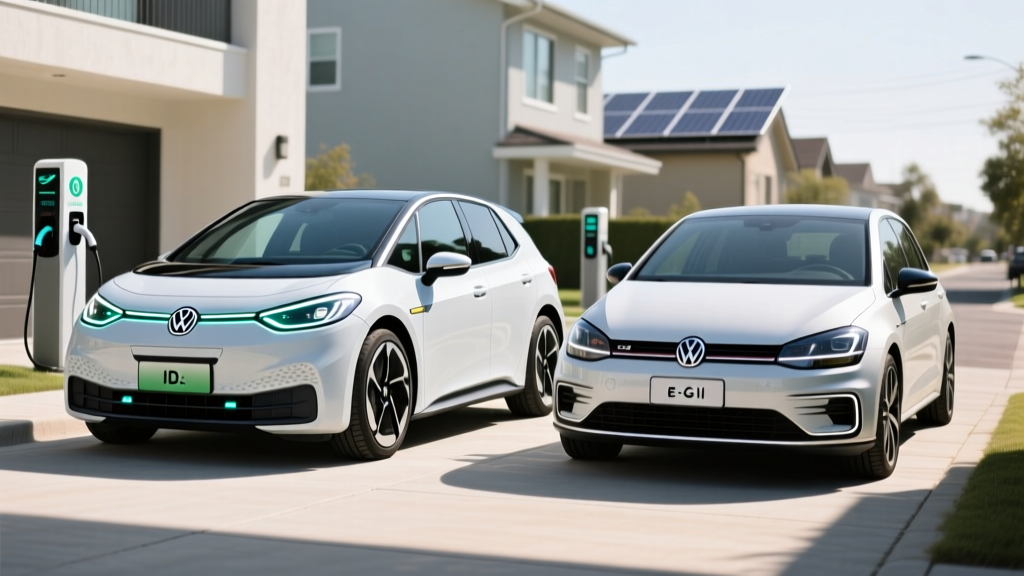
The electric Volkswagen Golf nameplate has evolved. While the original e-Golf was discontinued after the 2019 model year in the U.S., Volkswagen's global electric hatchback strategy continues through the ID.3 (sold in Europe and select markets) and the upcoming next-generation electric hatchbacks expected to carry the Golf's spirit forward. If you're searching for an electric Volkswagen Golf in 2026, here's what you need to know right now.
Quick Answer: Can You Buy an Electric Volkswagen Golf in 2026?
In the United States, Volkswagen does not currently sell a new electric Golf-badged vehicle. The e-Golf ended U.S. sales in 2019. VW's electric hatchback globally is the ID.3, but it is not officially sold in the U.S. market as of 2026. American buyers seeking a VW electric vehicle can choose the ID.4 crossover (starting around $39,995 MSRP) or explore the used e-Golf market (2015–2019 models). If you're in Europe, the ID.3 is readily available with up to ~348 miles of WLTP range.
The e-Golf Legacy: What U.S. Buyers Should Know
The Volkswagen e-Golf was VW's first serious electric offering in America, and it retains a loyal following on the used market. Understanding its specs helps set expectations if you're considering one today or waiting for a future electric Golf successor.
The 2017–2019 e-Golf featured a 35.8 kWh battery pack (NMC chemistry) with an EPA-estimated range of 125 miles. Earlier 2015–2016 models carried a smaller 24.2 kWh pack rated at just 83 miles. The electric motor produced 134 horsepower and 214 lb-ft of torque, delivering a 0–60 mph time of approximately 9.6 seconds — adequate for city driving but not sporty by modern EV standards.
| Specification | Value |
|---|---|
| Battery Capacity (Usable) | 35.8 kWh (NMC) |
| EPA Range | 125 miles |
| Real-World Range (Highway/Cold) | ~90–110 miles |
| Motor Output | 134 hp / 214 lb-ft |
| 0–60 mph | ~9.6 seconds |
| DC Fast Charge (Peak) | 50 kW (CCS) |
| 10–80% DC Charge Time | ~36 minutes |
| Level 2 Charge Rate | 7.2 kW |
| EPA Efficiency | 119 MPGe combined |
| Current Used Market Price (2026) | $12,000–$18,000 |
Real-World Range Reality
The e-Golf's 125-mile EPA sticker drops noticeably in practice. Expect ~100–110 miles on mild-weather highway drives at 70 mph, and as low as 80–90 miles in freezing temperatures with cabin heat running. The 35.8 kWh battery lacks active liquid thermal management — it relies on air cooling, which further limits cold-weather performance and sustained fast-charging speeds. This is a commuter car, not a road-trip EV.
VW ID.3: The Global Electric Golf Successor
For buyers outside the U.S. — or those tracking VW's future electric hatchback plans — the ID.3 represents what an electric Golf would be today. Built on VW's MEB platform, the 2026 ID.3 is available in multiple battery configurations:
- ID.3 Pro (58 kWh usable, NMC): ~265 miles WLTP range, 201 hp, 0–62 mph in 7.3 seconds
- ID.3 Pro S (77 kWh usable, NMC): ~348 miles WLTP range, 201 hp, 0–62 mph in 7.1 seconds
WLTP range figures are typically 15–20% higher than EPA equivalents. A U.S.-spec ID.3 Pro S would likely earn an EPA estimate around 280–295 miles if sold here. DC fast charging peaks at 135 kW on the Pro S, enabling a 10–80% charge in approximately 30 minutes — a substantial improvement over the e-Golf's 50 kW ceiling.
Volkswagen has hinted at a next-generation electric hatchback for North America, potentially wearing a Golf-related nameplate, but as of early 2026 no official U.S. launch date or pricing has been confirmed. We'll update this guide when VW makes an announcement.
EV vs. Gas Golf: Cost Comparison
To give U.S. buyers a meaningful comparison, let's stack the used 2019 e-Golf against a comparable used 2019 gas Golf, and also include the current 2026 VW ID.4 as the closest new VW electric option.
| Cost Factor | 2019 e-Golf (Used) | 2019 Golf 1.4T (Used) | 2026 ID.4 Pro S (New) |
|---|---|---|---|
| Purchase Price | $15,000 | $16,500 | $46,495 |
| Federal Tax Credit | Up to $4,000 (used EV)* | $0 | Up to $7,500 (§30D)* |
| Fuel/Energy (60k mi) | $2,880 (home charging) | $7,200 (gas at $3.60/gal, 30 MPG) | $3,240 (home charging) |
| Maintenance (5 yr) | $1,200 | $3,500 | $1,400 |
| Insurance (5 yr avg) | $7,500 | $6,500 | $8,400 |
| Est. Depreciation | $5,000 | $6,500 | $16,000 |
| Total 5-Year Cost | ~$21,580 | ~$33,700 | ~$53,535 |
*Federal tax credit eligibility depends on income caps, vehicle MSRP limits, battery sourcing requirements, and — for used EVs — a maximum sale price of $25,000. Always verify current rules at IRS.gov or consult a tax professional.
The e-Golf's low purchase price and minimal maintenance costs make it one of the cheapest ways to drive electric in 2026 — if the 125-mile range fits your daily routine. The gas Golf costs significantly more to fuel and maintain over five years. The new ID.4 offers modern range and fast charging but at a premium entry price.
Real-World Ownership: Who Should Buy an Electric Golf?
Buying any EV — including a used e-Golf — requires honest self-assessment about your driving patterns, charging access, and climate. Here's what matters most:
Home Charging Access
The e-Golf thrives when charged overnight on a Level 2 home charger (240V, 7.2 kW), which fully replenishes the 35.8 kWh battery in about 5 hours. Without home or workplace charging, the 125-mile range becomes a daily constraint. Public DC fast charging is limited to 50 kW, meaning a 10–80% session takes roughly 36 minutes — tolerable occasionally but frustrating as a daily routine. If you lack reliable Level 2 access, the e-Golf is not practical.
Climate Considerations
The e-Golf's air-cooled battery and resistive cabin heater (no heat pump) make cold weather particularly punishing. In sub-freezing conditions, expect 25–35% range loss compared to the EPA sticker. Owners in northern states like Minnesota, Michigan, or Maine should budget for 80–90 miles of real winter range. The ID.3 and ID.4 feature liquid-cooled batteries and available heat pumps, significantly reducing cold-weather penalties to roughly 15–20%.
Driving Patterns
If your daily round-trip commute is under 80 miles with occasional errands, the e-Golf covers it easily and cheaply. If you regularly drive 150+ miles, take road trips, or need highway-passing power, you'll want the ID.4 or a longer-range EV. The e-Golf is a dedicated city and suburban commuter — excellent in that role, inadequate outside it.
Common Misconceptions About the Electric Volkswagen Golf
| Myth | Fact |
|---|---|
| "The e-Golf battery will need expensive replacement soon." | VW's NMC packs have shown moderate degradation. Most 2017–2019 e-Golfs retain 85–92% of original capacity at 60,000–80,000 miles. Replacement costs $6,000–$9,000 if needed, but most packs outlast the car's economic life. |
| "I can fast-charge the e-Golf quickly on road trips." | The e-Golf tops out at 50 kW DC fast charging, and charging slows significantly above 80% SoC. Road trips require planning around 35–40 minute stops every ~90 miles. |
| "The ID.3 is available in the U.S." | As of 2026, Volkswagen does not sell the ID.3 in the United States. The ID.4 is VW's only current U.S. electric model. A future electric hatchback may arrive but is unconfirmed. |
| "Electric Golfs qualify for the full $7,500 federal tax credit." | The new-car §30D credit applies to new qualifying EVs — the used e-Golf is eligible for the used clean vehicle credit (up to $4,000, capped at 30% of sale price), subject to income limits and the $25,000 maximum vehicle price. Check IRS used EV credit rules before purchasing. |
| "EVs don't save money because electricity is expensive." | At the U.S. average residential rate of ~$0.16/kWh, charging the e-Golf costs about $0.048 per mile — roughly one-third the per-mile cost of a 30 MPG gas car at $3.60/gallon ($0.12/mile). Savings compound over years of ownership. |
Decision Framework: Is an Electric Volkswagen Golf Right for You?
Choose the Used e-Golf If:
- Your daily driving is under 80 miles round-trip
- You have home Level 2 charging or reliable workplace charging
- You live in a mild-to-moderate climate (rare sub-20°F winters)
- You want the lowest possible entry cost into EV ownership ($12,000–$18,000)
- You value VW's build quality and hatchback practicality over cutting-edge range
Choose the VW ID.4 (or Another Modern EV) If:
- You need 240+ miles of EPA range for road trips or long commutes
- You want DC fast charging above 130 kW for practical travel
- You live in a cold climate and need a heat pump and liquid-cooled battery
- You want a new vehicle with full factory warranty (8 years/100,000 miles on battery)
- You qualify for the §30D federal tax credit on a new EV purchase
Wait for a Future Electric Golf Successor If:
- You specifically want a compact hatchback form factor (not a crossover like the ID.4)
- You're willing to wait 1–3 years for VW's potential North American electric hatchback launch
- You want MEB-platform efficiency with U.S. market support and warranty coverage
What First-Time EV Buyers Should Know
If the electric Volkswagen Golf — whether a used e-Golf or a future model — is your entry point into EV ownership, keep these practical realities in mind:
1. Budget for a home charger installation. A Level 2 charger (like a ChargePoint Home Flex or Emporia Vue) costs $400–$700 for the unit, plus $500–$2,000 for professional electrical installation depending on your panel capacity and run distance. If your home has a 200-amp panel with spare capacity, expect the lower end. Older 100-amp panels may require a $1,500–$3,000 upgrade. Always get a quote from a licensed electrician before committing.
2. Understand the charging curve. Peak kW ratings are not sustained speeds. The e-Golf's 50 kW peak only applies between roughly 10–60% State of Charge (SoC). Above 80%, charging slows dramatically to protect the battery — a 60–100% session can take as long as the 10–60% session. Modern EVs like the ID.4 (peak 170 kW) handle this taper much better.
3. Check battery health before buying used. Request a State of Health (SoH) report from a VW dealer or use an OBD-II dongle with an app like Carista or OBDeleven to read the battery's actual capacity versus original. An SoH below 85% on a 2017–2019 e-Golf is a negotiation point or walk-away signal.
4. Factor in insurance differences. EVs typically cost 15–25% more to insure than comparable gas cars due to higher repair costs and specialized parts. Get quotes before purchasing — the e-Golf's low purchase price can be offset by higher premiums in some states.
Frequently Asked Questions
Is Volkswagen bringing back the electric Golf to the U.S.?
Volkswagen has not confirmed a U.S.-market electric Golf or ID.3 as of early 2026. The ID.4 crossover remains VW's sole electric offering in America. Industry reports suggest VW is evaluating a compact electric hatchback for North America, potentially arriving in the 2027–2028 timeframe, but nothing is official.
How much does it cost to charge an e-Golf at home?
At the U.S. average electricity rate of $0.16/kWh, fully charging the e-Golf's 35.8 kWh battery costs approximately $5.73. That delivers about 100–110 real-world miles, or roughly $0.05–$0.06 per mile — compared to $0.12 per mile for a 30 MPG gas car at $3.60/gallon.
What is the e-Golf's battery warranty?
Volkswagen provided an 8-year/100,000-mile battery warranty on the e-Golf, covering defects and capacity loss below 70% of original capacity. For 2017 models, this warranty expires in 2025. For 2019 models, coverage extends through 2027. Check your specific VIN with a VW dealer for remaining warranty status.
Can I use the e-Golf for road trips?
Technically yes, but it requires significant planning. With ~100 miles of real highway range and 50 kW DC fast charging, you'll stop every 80–90 miles for 35–40 minutes. A 300-mile trip takes 5–6 hours including charging. Most e-Golf owners use it as a commuter and keep a gas car or rent for road trips.
Does the used e-Golf qualify for any tax credits?
Under the IRS used clean vehicle credit, you may qualify for up to $4,000 (30% of the sale price, capped at $25,000 maximum vehicle price). Eligibility requires income below $75,000 (single) or $150,000 (joint), purchasing from a licensed dealer, and the vehicle must be at least two model years old. Consult a tax professional to confirm your eligibility.
Sources: EPA fuel economy data via fueleconomy.gov, IRS clean vehicle credit guidelines via irs.gov, Volkswagen of America official specifications.