Quick Answer: Does an Electric Volkswagen Beetle Exist?
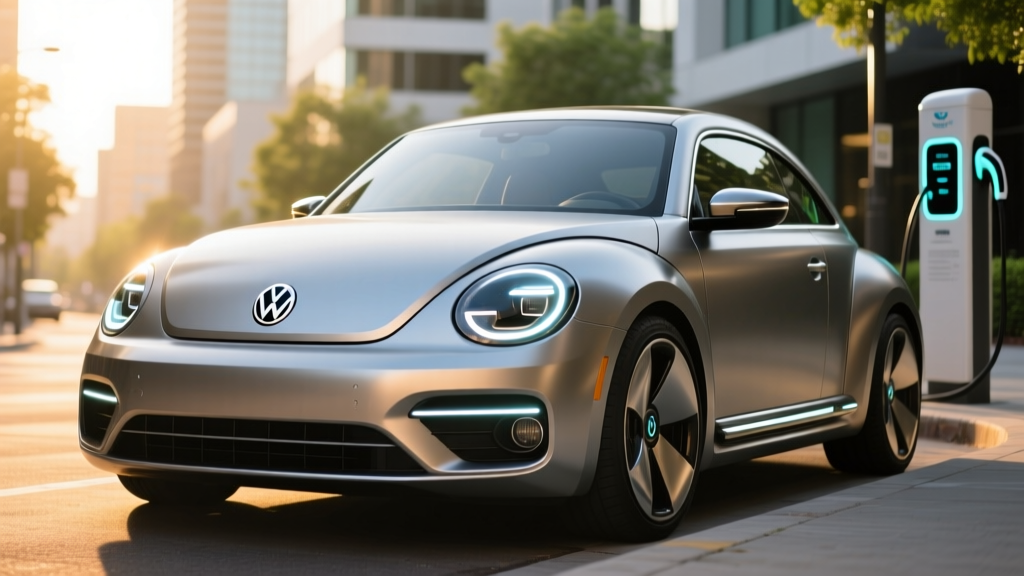
As of 2026, Volkswagen does not sell a new electric Beetle in the United States or any global market. The Beetle nameplate was discontinued after the 2019 model year, and VW has not announced a production electric Beetle revival. VW executives have floated the idea of an electric Beetle concept based on the MEB or SSP platform, but no confirmed timeline, pricing, or specs exist.
If you want a retro-styled VW electric vehicle today, the closest production option is the VW ID. Buzz (the electric Microbus revival), which starts at approximately $59,995 for the 2025/2026 model year with an EPA-estimated range of around 234 miles. For buyers specifically seeking a compact, retro-designed EV with Beetle-like character, alternatives include the Fiat 500e (~$36,095, 149-mile range) or the Mini Cooper SE (~$30,900, 114-mile range).
Why Volkswagen Hasn't Revived the Beetle as an EV
Volkswagen's electric strategy has focused on high-volume segments: compact crossovers (ID.4), sedans (ID.7), and now the ID. Buzz van. The Beetle, despite its iconic status, presents challenges for an EV revival:
- Platform packaging: The Beetle's rear-engine heritage and compact proportions don't translate cleanly to VW's current MEB skateboard platform, which is optimized for flat-floor crossovers and sedans with longer wheelbases.
- Market positioning: VW's ID. lineup targets mainstream buyers seeking practicality. A niche retro coupe would compete against VW's own ID.3 (Europe) and ID.4, cannibalizing sales without expanding the customer base significantly.
- Regulatory and cost pressures: VW is investing heavily in its next-generation SSP (Scalable Systems Platform) and battery cell production through PowerCo. Capital is directed toward vehicles with the highest volume potential to meet EU and US emissions targets.
VW design chief Klaus Zyciora confirmed in past interviews that an electric Beetle is "imaginable" but has not committed to production. The Volkswagen Newsroom lists no electric Beetle in the current product roadmap through 2028.
The ID. Buzz: VW's Retro EV That Actually Exists
For buyers drawn to VW heritage design, the ID. Buzz is the only production retro-styled electric VW available. Here's how it stacks up with concrete 2026 data:
| Spec | Value |
|---|---|
| EPA Range (est.) | 234 miles (RWD); ~220 miles (AWD) |
| Battery (usable) | 86 kWh, NMC chemistry |
| DC Fast Charge (peak) | 175 kW (10–80% in ~26 minutes) |
| Level 2 Charge Rate | 11 kW (~7 hours 10–100%) |
| Power (RWD) | 282 hp |
| 0–60 mph | ~7.9 seconds (RWD) |
| Starting MSRP | $59,995 (Pro S RWD) |
| Federal Tax Credit (§30D) | Up to $7,500 (subject to income, sourcing rules) |
| Battery Warranty | 8 years / 100,000 miles (70% capacity retention) |
Real-World Range Note: The ID. Buzz's EPA estimate of 234 miles reflects mixed driving. Expect ~190–210 miles on sustained highway driving at 70+ mph due to the van's tall, boxy aerodynamics. In cold weather (below 32°F), range can drop 20–30%, yielding roughly 160–185 miles without preconditioning.
Electric Retro EVs vs. Gas Equivalents: Cost Comparison
Let's compare what a hypothetical electric Beetle might cost against a gas-powered compact car in its spirit — using the VW Jetta (starting ~$22,995) as a baseline — alongside real retro EVs available today.
| Vehicle | Purchase Price | Fuel/Charging | Maintenance | Est. Insurance | 5-Yr Total |
|---|---|---|---|---|---|
| VW Jetta 1.5T (gas) | $22,995 | $6,840 (gas @ $3.40/gal, 34 MPG) | $3,200 | $7,500 | $40,535 |
| Fiat 500e (EV) | $36,095 | $2,880 (electric @ $0.16/kWh) | $1,400 | $7,800 | $48,175 |
| Mini Cooper SE (EV) | $30,900 | $2,640 | $1,500 | $7,200 | $42,240 |
| VW ID. Buzz (EV) | $59,995 | $4,320 | $1,800 | $9,600 | $75,715 |
Key takeaways: Electric retro compacts like the Fiat 500e and Mini Cooper SE cost more upfront but save $3,000–$4,000 in fuel and maintenance over five years. The ID. Buzz, as a larger family vehicle, carries a significant premium. A hypothetical electric Beetle priced around $30,000–$35,000 would land between the Mini and Fiat in total cost, making it competitive with gas compacts once fuel savings are factored in.
What a First-Time EV Buyer Should Know Before Chasing a Retro EV
If the idea of an electric Beetle appeals to you, here are the practical ownership realities that apply to any compact retro EV you might consider instead:
Home Charging Is Essential for Daily Convenience
Compact EVs like the Fiat 500e and Mini Cooper SE have smaller batteries (42 kWh and 54 kWh usable, respectively). On a standard 120V Level 1 outlet, you'll recover only about 3–5 miles of range per hour — not enough to fully recharge overnight from a low state of charge. A Level 2 home charger (240V, 7–11 kW) is strongly recommended:
| Level | Power (kW) | Miles Added/Hour | Full Charge Time |
|---|---|---|---|
| Level 1 (120V) | 1.2–1.4 kW | 3–5 mi/hr | 12–18 hours |
| Level 2 (240V, 32A) | 7.7 kW | 22–28 mi/hr | 5–7 hours |
| Level 2 (240V, 48A) | 11.5 kW | 33–40 mi/hr | 3.5–5 hours |
| DC Fast Charge | 50–95 kW (peak) | ~150–200 mi in 30 min | 10–80% in ~30–36 min |
Level 2 installation typically costs $800–$2,500 depending on panel capacity, conduit run length, and local permit requirements. If your home has a 200-amp electrical panel with spare capacity, expect the lower end. A panel upgrade to 200A can add $1,500–$3,000.
Range Expectations: Sticker vs. Reality
Compact retro EVs prioritize style and city driving over range. The Fiat 500e's EPA rating of 149 miles and the Mini Cooper SE's 114 miles are honest numbers for mixed driving, but:
- Highway driving at 75 mph reduces range by 15–25% due to aerodynamic drag.
- Cold weather (below freezing) can reduce range by 20–35% without battery preconditioning. A 149-mile Fiat 500e may deliver only 100–115 miles in January in Minnesota.
- DC fast charging tapers above 80% SoC — the last 20% of a charge can take as long as the first 80%. Plan road-trip stops to charge from 10–80% and move on.
Federal Tax Credit: Don't Assume You Qualify
The IRS §30D clean vehicle credit offers up to $7,500 for qualifying new EVs, but eligibility is complex:
- Income caps: Modified AGI must not exceed $150,000 (single), $225,000 (head of household), or $300,000 (joint).
- MSRP caps: Vans/SUVs/pickups capped at $80,000; sedans and other vehicles capped at $55,000.
- Battery sourcing: Increasing percentages of critical minerals and battery components must be sourced from the US or FTA partners — rules tighten annually through 2032.
- Point-of-sale transfer: Since 2024, buyers can transfer the credit to the dealer for an upfront price reduction, but the dealer must be registered with the IRS.
Consult a tax professional before assuming eligibility. State incentives vary widely — check fueleconomy.gov for current federal details and your state DMV for local rebates.
Myths vs. Facts: The Electric Beetle and Retro EVs
| Myth | Fact |
|---|---|
| "VW is releasing an electric Beetle in 2026." | No production electric Beetle has been announced. VW's confirmed EV roadmap includes the ID.2all (Europe, ~2026) and ID. family, but no Beetle. |
| "Retro EVs are just as practical as crossovers." | Compact retro EVs sacrifice cargo space and rear-seat room for style. The Fiat 500e offers just 8.5 cu ft of cargo space vs. 30+ cu ft in a VW ID.4. |
| "Small EV batteries degrade faster." | Battery degradation depends on chemistry and thermal management, not size. Modern NMC and LFP packs are warrantied for 8 years/100,000 miles with 70%+ capacity retention thresholds. |
| "You can't road-trip a short-range EV." | You can, but it requires planning. A Fiat 500e with DC fast charging can add ~80 miles in 20 minutes. Road trips are viable with 2–3 stops on a 300-mile route. |
| "EVs cost more to insure." | Sometimes. EV insurance premiums average 10–20% higher than gas equivalents due to repair costs, but this varies by model, driver profile, and insurer. Get quotes before buying. |
Decision Framework: What Should You Actually Buy?
If you want a retro-styled EV today:
- Choose the Fiat 500e if you want an affordable city commuter with Italian style, 149 miles of range, and a starting price around $36,095 (potentially ~$28,595 after the $7,500 federal credit, if eligible).
- Choose the Mini Cooper SE if you prioritize driving dynamics and want the lowest entry price (~$30,900) in a retro EV, accepting the trade-off of 114-mile range.
- Choose the VW ID. Buzz if you need a family vehicle with heritage VW design, 234 miles of range, three rows of seating, and are willing to pay a $60K+ premium.
If you specifically want a Beetle:
- Consider a used 2017–2019 VW Beetle (gas) — reliable, affordable ($12,000–$18,000 used), and available in turbo and convertible trims. Not electric, but satisfies the Beetle desire now.
- Wait and monitor VW announcements — an electric Beetle on the SSP platform is theoretically possible post-2028, but there are zero commitments. Don't delay a purchase on speculation.
- Explore EV conversion shops — companies like Zelectric Motors convert classic air-cooled Beetles to electric drivetrains. Costs range from $30,000–$60,000+ for the conversion alone (on top of a donor car), yielding 80–120 miles of range. This is a passion project, not a practical daily driver.
Frequently Asked Questions
Will Volkswagen ever make an electric Beetle?
VW executives have said an electric Beetle is "imaginable" on a future platform, but no production model has been confirmed through 2028. VW's current priority is scaling the ID. family and launching the more affordable ID.2all in Europe. US buyers should not expect an electric Beetle before 2029 at the earliest, and likely later.
What's the cheapest retro-styled EV I can buy in 2026?
The Mini Cooper SE starts at approximately $30,900 before incentives. With the full $7,500 federal tax credit (if eligible), the effective price drops to around $23,400 — making it one of the most affordable new EVs on the market, though its 114-mile EPA range limits it to city and suburban use.
How much does it cost to charge a compact EV at home?
At the US average residential electricity rate of ~$0.16/kWh (per EIA data), fully charging a Fiat 500e's 42 kWh battery costs about $6.72. Over a year of 12,000 miles, home charging costs roughly $500–$600 — compared to $1,200–$1,400 for gasoline in a comparable compact car at $3.40/gallon.
Are classic Beetle EV conversions worth it?
For collectors and enthusiasts, a professionally converted electric Beetle is a unique, low-maintenance classic. However, total costs (donor car + conversion) often exceed $50,000–$80,000, range is typically 80–120 miles, and DC fast charging is rarely available. It's a hobby vehicle, not a practical commuter. You'll also need to verify your state's registration requirements for converted vehicles.
Does the VW ID. Buzz qualify for the $7,500 federal tax credit?
The ID. Buzz may qualify for up to $7,500 under IRS §30D, but eligibility depends on your income, the vehicle's battery component sourcing, and MSRP (the Buzz starts under the $80,000 van cap). Battery sourcing requirements tighten each year. Always verify current eligibility on irs.gov before purchasing.
What compact EV has the best range in 2026?
Among retro-styled compacts, the Fiat 500e leads with 149 EPA miles. If you broaden to all compact EVs, the Chevrolet Equinox EV offers up to 319 miles of EPA range starting around $33,000 — but it's a crossover, not a retro design. The Hyundai Kona Electric offers 261 miles starting near $32,975.