Quick Answer: Yes, Electric Vehicles Are Fully Street Legal
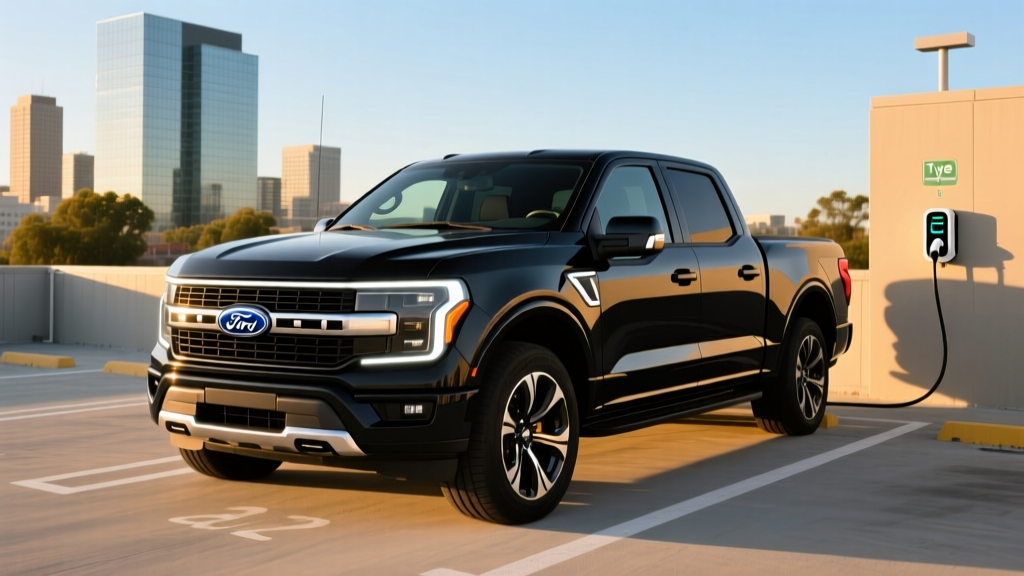
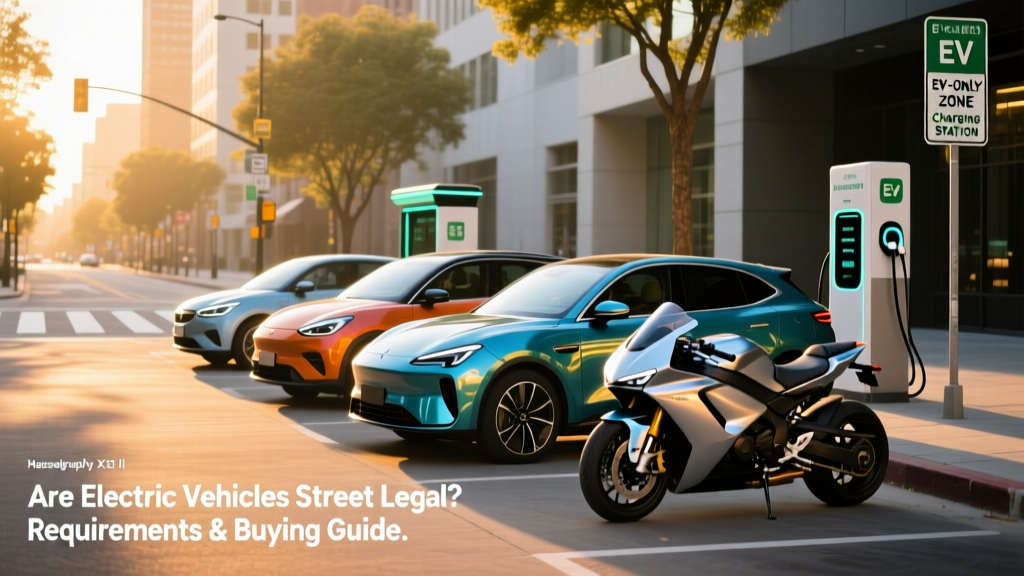
Every mass-produced electric vehicle sold in the United States — from the Tesla Model 3 to the Ford F-150 Lightning — is fully street legal and meets all Federal Motor Vehicle Safety Standards (FMVSS) enforced by the National Highway Traffic Safety Administration (NHTSA). EVs undergo the same crash testing, lighting requirements, braking standards, and registration processes as gasoline vehicles. If you can buy it from a licensed dealer, it's street legal in all 50 states.
The confusion around EV street legality typically stems from three areas: low-speed electric vehicles (LSVs/NEVs), DIY electric conversions, and imported models. This guide clarifies what's legal, what isn't, and what first-time EV buyers actually need to know before purchasing.
What Makes an Electric Vehicle Street Legal?
Street legality for any vehicle in the U.S. comes down to compliance with FMVSS regulations, state registration requirements, and insurance mandates. Battery-electric vehicles (BEVs) from established manufacturers satisfy all three without exception.
Here's what every street-legal EV must have:
- FMVSS compliance: Crash structures, airbags, seatbelts, lighting, mirrors, windshield wipers, and braking systems meeting federal standards
- VIN (Vehicle Identification Number): A 17-character VIN assigned by the manufacturer, traceable through NHTSA's database
- EPA certification: While EVs don't produce tailpipe emissions, they still receive EPA efficiency ratings (MPGe) documented at fueleconomy.gov
- State registration: Title, registration, and license plates issued by your state DMV — the process is identical to a gas car
- Insurance: Minimum liability coverage as required by your state, with EV-specific policies available from most major insurers
Every 2026 model-year EV sold by Tesla, Hyundai, Ford, Chevrolet, BMW, Rivian, and other major automakers checks every box. There is no separate "EV license" or special registration category for standard electric vehicles.
Where Confusion Arises: LSVs, Conversions, and Imports
The question "are electric vehicles street legal" usually comes from people encountering one of these edge cases:
Low-Speed Vehicles (LSVs) and Neighborhood Electric Vehicles (NEVs)
These small, slow electric carts — like the GEM e2 or Club Car Onward — are technically street legal but with severe restrictions. Under FMVSS 500, LSVs are limited to a top speed of 25 mph and may only be driven on roads with speed limits of 35 mph or less (some states allow 45 mph). They lack airbags, crash structures, and the safety systems of a full-size EV. They require a VIN, registration, and insurance, but they are not substitutes for a highway-capable vehicle.
DIY Electric Conversions
Converting a gas car to electric is legal in most states, but the process requires passing state-specific inspections to verify braking, lighting, and structural integrity. States like California have a "Special Construction" vehicle process, while others may require a bonded title or referee station inspection. A converted vehicle is not automatically street legal — the owner must proactively certify it.
Grey-Market Imports
Electric vehicles built for the Chinese or European market (such as certain BYD or NIO models not sold in the U.S.) are generally not street legal unless they pass federalization through a Registered Importer approved by NHTSA. This process is expensive and rarely undertaken for individual vehicles.
EV vs. Gas Car: Street Legality and Ownership Compared
Once registered, an EV and a gas car carry identical legal standing on public roads. The differences lie in operating costs, maintenance, and infrastructure needs.
| Factor | 2026 EV (e.g., Hyundai Ioniq 6 SE) | 2026 Gas Car (e.g., Honda Accord LX) |
|---|---|---|
| Street Legal? | Yes — all 50 states | Yes — all 50 states |
| EPA Range / Tank | 361 mi (EPA); ~290-310 mi highway real-world | ~490 mi (14.8 gal × 33 MPG combined) |
| Energy Cost per Mile | ~$0.04-$0.06 (home charging at $0.13/kWh, 27 kWh/100mi) | ~$0.11-$0.14 (at $3.50/gal, 33 MPG) |
| Annual Fuel/Energy (12,000 mi) | ~$520-$720 | ~$1,320-$1,680 |
| Annual Maintenance | ~$300-$500 (no oil, fewer brakes) | ~$800-$1,200 (oil, filters, brakes) |
| Registration Fees | Higher in some states (EV surcharge: $50-$225/yr) | Standard state fees |
| Federal Tax Credit | Up to $7,500 (subject to §30D sourcing, income, and MSRP caps) | None |
| Insurance (avg. annual) | ~$1,800-$2,400 | ~$1,400-$1,900 |
Key takeaway: EVs cost more upfront and to insure, but save $800-$1,200+ annually on fuel and maintenance. Break-even typically occurs within 3-5 years depending on your electricity rates, driving mileage, and whether you qualify for the federal tax credit under current IRS §30D rules.
The Real Costs of EV Ownership in 2026
Street legality is the easy part. The decision that matters is whether an EV makes financial sense for your situation. Here's a realistic 5-year cost breakdown comparing a popular EV against its gas equivalent, assuming 12,000 miles/year and home Level 2 charging.
| Cost Category (5 Years) | 2026 Tesla Model 3 RWD | 2026 Toyota Camry LE (Gas) |
|---|---|---|
| MSRP (before incentives) | $38,990 | $28,490 |
| Federal Tax Credit (§30D) | -$7,500 (if eligible) | $0 |
| Effective Purchase Price | $31,490 | $28,490 |
| Energy/Fuel (60,000 mi) | $2,900 (home L2) | $7,500 |
| Maintenance (5 yr) | $1,800 | $5,000 |
| Insurance (5 yr avg) | $10,500 | $8,000 |
| Home Charger Install | $1,200 (Level 2, 240V/48A) | $0 |
| 5-Year Total | $47,890 | $48,990 |
This comparison illustrates why the EV ownership conversation has shifted. With the §30D point-of-sale transfer now available, the effective price gap narrows to $3,000 at purchase — and the fuel/maintenance savings close that gap within roughly 2.5 years. However, this assumes you qualify for the full credit (income under $150K single/$300K joint, vehicle MSRP under $55K for sedans, and battery sourcing compliance).
Where EV Costs Can Surprise You
- Insurance premiums: EVs cost 15-30% more to insure on average due to higher repair costs and specialized parts. Get quotes before buying.
- State EV registration surcharges: Over 30 states impose an annual EV fee ($50-$225) to offset lost gas tax revenue. Texas charges $200/year; Colorado charges $100/year.
- Public DC fast charging: If you rely on Electrify America or EVgo instead of home charging, costs can reach $0.35-$0.55/kWh — sometimes more expensive than gas per mile.
- Tire replacement: EVs are heavier and deliver instant torque, wearing tires 20-30% faster. Budget for replacement at 25,000-35,000 miles instead of 45,000+.
Common EV Misconceptions: Myth vs. Fact
| Myth | Fact |
|---|---|
| "EVs aren't legal on highways" | All major EVs are highway-legal with top speeds of 100-155+ mph. Only LSVs/NEVs are restricted to low-speed roads. |
| "You need a special license to drive an EV" | A standard driver's license is sufficient. No EV-specific endorsement exists in any state. |
| "EVs can't pass state inspections" | EVs pass the same safety inspections as gas cars. They're exempt from emissions testing, which saves time and money. |
| "EV batteries make cars illegal after degradation" | No law prohibits driving an EV with a degraded battery. Federal warranty mandates 8 years/100,000 miles of battery coverage (minimum 70% capacity retention). |
| "You can't register an EV without a home charger" | Home charging is not a registration requirement. Many apartment dwellers use public charging exclusively. |
| "EVs are illegal in some states" | EVs are legal in all 50 states. Some states (like Texas and Florida) have restricted direct-to-consumer sales models, but ownership and registration are universal. |
What First-Time EV Buyers Should Know Before Purchasing
Street legality is settled. Here's what actually determines whether an EV will work for your life:
Home Charging Access Is the Deciding Factor
If you can install a Level 2 charger (240V, 40-48 amps, delivering 7-11.5 kW) at home, an EV becomes extraordinarily convenient — you wake up every morning with a full "tank." Installation typically costs $800-$2,000 including a hardwired wall connector and electrician labor, assuming your panel has capacity. If you need a 200-amp panel upgrade, add $1,500-$3,000.
If you cannot charge at home — you live in an apartment, park on the street, or your HOA prohibits installations — EV ownership is still possible but significantly less convenient. You'll rely on public Level 2 chargers (slower, 6-19 kW) or DC fast chargers (faster, 50-350 kW but more expensive). Plan for 1-3 public charging sessions per week at $0.30-$0.55/kWh.
Real-World Range Is Less Than the EPA Sticker
The EPA range figure is a blended estimate. In practice:
- Highway driving at 70-80 mph: Expect 80-88% of EPA range
- Cold weather (below 32°F): Expect 60-75% of EPA range due to battery chemistry and cabin heating demands
- Moderate city driving, 50-70°F: You may actually exceed EPA range thanks to regenerative braking
A 2026 Chevrolet Equinox EV with an EPA rating of 319 miles will realistically deliver 260-280 miles on a summer highway trip and 200-230 miles in a Midwestern winter. Plan your trips around the lower number.
DC Fast Charging Speeds Aren't What Advertisements Claim
When an automaker says "charges at 200 kW," that's the peak rate — not the sustained rate. A typical charge curve peaks early (10-30% SoC) then tapers significantly above 80%. A vehicle advertising 200 kW peak might average only 100-120 kW across a full 10-80% session. Look for the 10-80% charge time, not the peak kW number. For example:
- Hyundai Ioniq 5: Peaks at ~240 kW, 10-80% in ~18 minutes (800V architecture)
- Tesla Model 3: Peaks at ~170 kW, 10-80% in ~25 minutes
- Ford F-150 Lightning (extended range): Peaks at ~150 kW, 10-80% in ~38 minutes
Decision Framework: Is an EV Right for You?
Choose an EV if:
- You have access to home or workplace Level 2 charging
- Your daily driving is under 200 miles round-trip
- You qualify for the §30D federal tax credit (check income caps and vehicle eligibility at irs.gov)
- You live in a region with moderate winters, or you're willing to accept 25-35% winter range loss
- You want to minimize maintenance visits and fuel costs over 5+ years of ownership
Choose a hybrid (HEV) or plug-in hybrid (PHEV) instead if:
- You cannot install a home charger and public charging infrastructure is sparse in your area
- You regularly drive 300+ miles between charging opportunities (towing, rural routes)
- Your budget is under $30,000 and you need maximum range flexibility (a Toyota Prius HEV starts at ~$28,000 and achieves 57 MPG combined)
- You frequently drive in extreme cold (below 0°F) where EV range loss becomes severe
Wait or reconsider if:
- You live in an apartment with no charging access and no public chargers within 2 miles
- Your household has only one vehicle and you take multiple long road trips per year without planning charging stops
- You're purchasing primarily for the tax credit but don't meet the income, MSRP, or battery-sourcing requirements
Frequently Asked Questions
Do I need to register my EV differently than a gas car?
No. The registration process at your state DMV is identical: provide the title, proof of insurance, and pay registration fees. Some states add an EV-specific surcharge ($50-$225/year) to offset lost gas tax revenue, but the paperwork is the same.
Can I drive an EV across state lines?
Yes. EVs registered in any state are legal to drive in all 50 states, just like any other registered vehicle. There are no state-border restrictions on electric vehicles.
Are electric vehicles exempt from state inspections?
EVs are exempt from emissions testing in states that require it (since they produce zero tailpipe emissions). However, they still must pass safety inspections where mandated — checking brakes, lights, tires, and structural integrity. In practice, this is faster and cheaper than a gas car inspection.
What happens if my EV battery degrades — is the car still legal?
Yes. Battery degradation does not affect street legality. The vehicle remains fully legal regardless of battery State of Health (SoH). Federal law requires manufacturers to warrant the battery for at least 8 years or 100,000 miles with a minimum of 70% capacity retention. If the battery drops below that threshold within the warranty period, the manufacturer must replace or repair it at no cost.
Can I tow with a street-legal EV?
Yes, if the vehicle is rated for towing. The Ford F-150 Lightning tows up to 7,700 lbs; the Rivian R1T tows up to 11,000 lbs. However, towing reduces EV range by 40-60% — a factor gas trucks don't face as severely. Plan charging stops accordingly when towing.
Are Tesla vehicles street legal in all states?
Tesla vehicles are street legal in all 50 states. However, Tesla's direct-to-consumer sales model is restricted in some states (such as Texas), meaning you may need to take delivery in a neighboring state or through a gallery model. Ownership, registration, and driving are unrestricted everywhere.