The Short Answer: Electric Vehicles Pros and Cons
Pros: Lower fuel cost per mile (typically $0.04–$0.06/mi on home electricity vs. $0.12–$0.16/mi for gas), minimal routine maintenance (no oil changes, fewer moving parts), instant torque, home "refueling" convenience, and up to $7,500 in federal tax credits for qualifying models under IRS §30D.
Cons: Higher upfront purchase price (average EV transaction price ~$48,000 vs. ~$42,000 for gas cars), public charging reliability remains inconsistent, cold-weather range loss of 20–30%, home charger installation costs ($500–$2,500+), and insurance premiums that run 10–20% higher on average.
Bottom line: If you can charge at home, drive under 300 miles daily, and live in a moderate climate, an EV will likely save you money and hassle over five years. If you lack home charging access, regularly road-trip through rural areas, or face brutal winters, a plug-in hybrid (PHEV) may be the smarter bridge.
Real-World Range: What the EPA Sticker Doesn't Tell You
Every EV sold in the U.S. carries an EPA-estimated range, but real-world results depend heavily on speed, temperature, and terrain. Here's how three popular 2026 models stack up:
| Model | EPA Range | Real-World Highway (70 mph) | Cold Weather (20°F) | Battery (usable kWh) |
|---|---|---|---|---|
| 2026 Tesla Model Y Long Range | 320 mi | ~270–285 mi | ~220–240 mi | 75 kWh (NMC) |
| 2026 Hyundai Ioniq 5 SEL | 303 mi | ~255–270 mi | ~210–230 mi | 77.4 kWh (NMC) |
| 2026 Chevrolet Equinox EV 3LT | 319 mi | ~265–280 mi | ~215–235 mi | 85 kWh (NMC) |
Highway driving at 70+ mph reduces range by roughly 10–15% versus the EPA combined cycle, because aerodynamic drag increases with the square of speed. Cold weather compounds this: lithium-ion cells face higher internal resistance below freezing, and cabin heating draws 3–5 kW continuously — energy that a gas car gets "free" from waste engine heat. Models equipped with a heat pump (standard on the Model Y and Ioniq 5) recover 1–2 kW of that penalty, narrowing cold-weather loss to roughly 20% instead of 30%.
Charging Speed and Infrastructure: The Practical Picture
Charging is where the EV ownership experience diverges most sharply from gas cars — for better or worse, depending on your setup.
| Level | Power (kW) | Miles Added/Hour | Typical Use Case |
|---|---|---|---|
| Level 1 (120V outlet) | 1.2–1.9 kW | 3–5 mi/hr | Overnight top-up, low-mileage drivers |
| Level 2 (240V home/public) | 7.2–11.5 kW | 25–40 mi/hr | Daily home charging, workplace |
| DC Fast Charge | 50–350 kW | 150–1,000+ mi/hr | Road trips, quick stops |
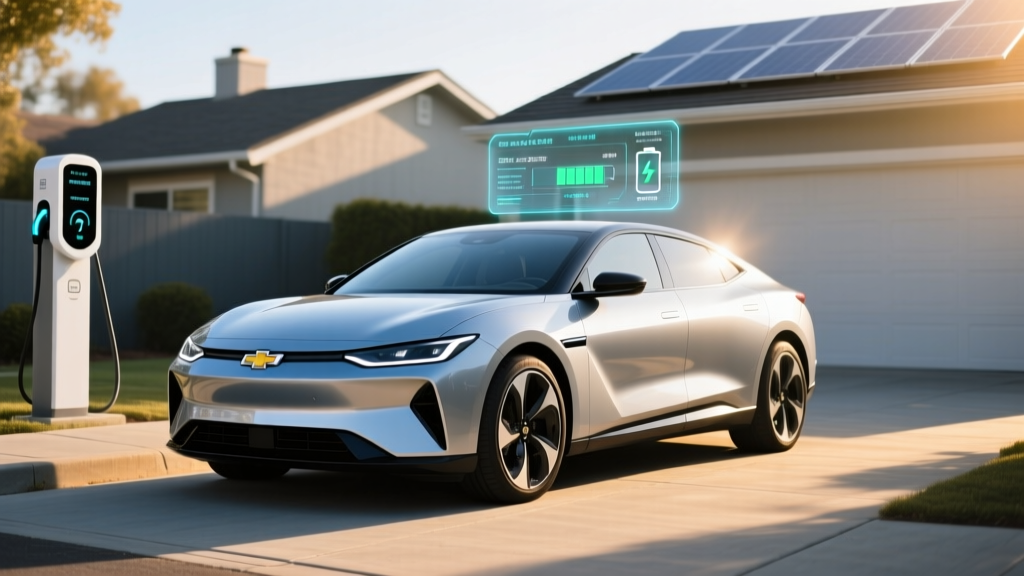
Home Level 2 charging is the backbone of convenient EV ownership. A typical installation — 40-amp hardwired charger on a dedicated 50-amp circuit — costs between $800 and $2,500 depending on panel proximity and local permit fees. If your home has a 200-amp electrical panel with spare capacity, expect the lower end. Older homes with 100-amp service may need a $2,000–$5,000 panel upgrade, which is the single biggest surprise cost for new EV buyers.
DC fast charging has improved dramatically, but the peak kW number on the spec sheet is misleading. A 2026 Hyundai Ioniq 5 peaks at 238 kW on a 350-kW charger, but that rate only holds between roughly 10–55% State of Charge (SoC). Above 80%, charging slows to under 50 kW to protect battery health — a phenomenon called charge-curve taper. Real-world 10–80% sessions take about 18–22 minutes for most modern EVs with preconditioning enabled. Plan road-trip stops around 20–25 minutes, not the "15 minutes!" marketing claim.
The public charging network has expanded significantly. As of early 2026, the U.S. has over 75,000 public charging ports across networks like Tesla Supercharger, Electrify America, EVgo, and ChargePoint. Tesla's NACS connector has been adopted by Ford, GM, Hyundai, Rivian, and most major automakers for 2025+ models, meaning non-Tesla EVs can now access Supercharger stations with a factory adapter. However, PlugShare user reviews still report 5–10% downtime at some non-Tesla DC fast chargers — a reliability gap that remains a legitimate con for apartment dwellers and road-trippers alike.
Cost Breakdown: EV vs. Gas Over Five Years
This is the comparison most buyers need, and the numbers often surprise people. Below is a five-year total cost of ownership (TCO) estimate for a 2026 Tesla Model Y Long Range (~$44,990 MSRP) versus a comparably equipped 2026 Toyota RAV4 AWD gas model (~$35,000 MSRP), assuming 15,000 miles/year, $3.50/gal gas, and $0.14/kWh home electricity.
| Category | Tesla Model Y (EV) | Toyota RAV4 (Gas) |
|---|---|---|
| Purchase Price (MSRP) | $44,990 | $35,000 |
| Federal Tax Credit (§30D) | −$7,500* | $0 |
| Effective Purchase Price | $37,490 | $35,000 |
| Fuel/Energy (5 yr, 75k mi) | $3,675 | $8,750 |
| Maintenance (5 yr) | $1,200 | $3,500 |
| Insurance (5 yr avg.) | $9,500 | $7,500 |
| Home Charger Install | $1,200 | $0 |
| 5-Year Total Cost | $53,065 | $54,750 |
*Federal §30D credit eligibility depends on MSRP caps ($55,000 for SUVs), buyer income limits ($300k joint / $150k single), and battery mineral sourcing requirements. Verify current rules at IRS.gov and confirm point-of-sale transfer availability with your dealer. State incentives vary — check AFDC for your area.
The EV wins on five-year TCO by roughly $1,700 in this scenario, primarily through fuel and maintenance savings. The gap widens further if gas prices rise above $4/gallon or if your utility offers off-peak EV rates (some as low as $0.08–$0.10/kWh). But note the insurance premium: EVs cost 10–20% more to insure on average due to higher repair costs for battery packs and specialized body structures. Get quotes before buying.
Maintenance and Longevity: What Actually Wears Out
EVs have dramatically fewer moving parts than internal-combustion vehicles — no engine oil, no transmission fluid, no spark plugs, no exhaust system. Routine maintenance is largely limited to cabin air filters, wiper fluid, tire rotations, and brake fluid checks. Regenerative braking significantly extends pad and rotor life; many EV owners report original brake pads at 80,000+ miles.
The big-ticket concern is battery degradation. Modern NMC (nickel-manganese-cobalt) and LFP (lithium iron phosphate) packs are engineered for longevity. Data from long-term fleet studies and owner reports show average degradation of 8–12% over 100,000 miles for liquid-cooled packs — meaning a 300-mile EV might offer ~265–275 miles of range at that point. LFP chemistry (used in the standard-range Tesla Model 3/Y and some Chinese-market models) trades slightly lower energy density for longer cycle life and the ability to charge routinely to 100% without accelerated wear.
Federal law mandates that EV battery packs carry a warranty of at least 8 years / 100,000 miles (10 years / 150,000 miles in CARB states like California). Most manufacturers warrant against capacity loss below 70% of original. Full battery replacement outside warranty remains expensive — $8,000 to $20,000 depending on pack size — but catastrophic failures are rare in modern liquid-cooled systems. According to fueleconomy.gov, the long-term cost-per-mile advantage of EVs holds up when you factor in these reduced maintenance intervals.
Common EV Myths vs. Facts
| Myth | Fact |
|---|---|
| "EV batteries need replacing every few years." | Modern packs lose ~1–2% capacity per year on average. Most will retain 85–90% at 100,000 miles and last the life of the vehicle. |
| "EVs are worse for the environment because of electricity generation." | Even on a coal-heavy U.S. grid, EVs produce 50–60% fewer lifecycle emissions than equivalent gas cars (EPA data). As the grid decarbonizes, that advantage grows. |
| "You can't drive an EV in winter." | You can, but expect 20–30% range reduction. Preconditioning while plugged in and using seat/steering-wheel heaters (which draw far less energy than cabin air heating) mitigate the loss significantly. |
| "Charging takes forever." | Home Level 2 charging happens while you sleep — 8 hours adds 200+ miles. DC fast charging adds 150–200 miles in ~20 minutes on modern 800V architectures. |
| "EVs are all expensive luxury cars." | The 2026 Chevrolet Equinox EV starts at ~$33,600 before credits. The Nissan Leaf starts under $30,000. Several models qualify for the full $7,500 §30D credit, bringing effective prices below comparable gas crossovers. |
| "The grid can't handle everyone driving EVs." | Most charging happens overnight when grid demand is lowest. Utilities increasingly offer time-of-use rates that incentivize off-peak charging and reduce strain. |
Who Should Buy an EV — and Who Should Consider a Hybrid Instead
Choose a Battery-Electric Vehicle (BEV) If:
- You have access to home or workplace Level 2 charging (or can install it).
- Your daily driving is under 250 miles round-trip.
- You want the lowest per-mile operating cost and minimal maintenance.
- You qualify for federal and/or state EV incentives that narrow the upfront price gap.
- You value instant torque, quiet operation, and one-pedal driving.
Choose a Plug-In Hybrid (PHEV) If:
- You can charge at home but frequently take road trips beyond ~300 miles.
- You live in an area with sparse DC fast-charging infrastructure.
- You want electric-only commuting (25–45 miles) with gas-engine flexibility for longer drives.
- You're not ready to commit fully to electric but want to reduce fuel consumption by 60–80% on daily trips.
Stick With a Gas Car or Standard Hybrid (HEV) If:
- You have no access to any charging — no home outlet, no workplace charger, no reliable public infrastructure nearby.
- Your budget is strictly under $28,000 and you need a new vehicle (used EVs can be an option here with the $4,000 used-EV credit).
- You regularly tow heavy loads over long distances, where EV range drops 40–50%.
What First-Time EV Buyers Must Know Before Signing
1. Test the charging situation first. Before delivery day, confirm your home electrical panel can support a Level 2 charger. Hire a licensed electrician for a load calculation — this $150–$300 inspection can prevent a $3,000 surprise.
2. Understand kW vs. kWh. Kilowatts (kW) measure power — how fast energy flows, like water pressure. Kilowatt-hours (kWh) measure energy capacity — the total amount stored, like the size of a tank. A 77 kWh battery charged at 11 kW takes about 7 hours from empty. This distinction matters when comparing chargers and vehicles.
3. Precondition before DC fast charging. Most modern EVs warm the battery to optimal temperature (~95–105°F) before a fast-charge session if you navigate to the charger in the car's navigation system. Skipping this can cut your peak charge rate by 30–50%, especially in cold weather.
4. Check the connector. As of 2026, Tesla uses NACS natively. Ford, GM, Hyundai, Rivian, and others have adopted NACS for new models. Some 2024–2025 models shipped with CCS1 ports and include a NACS adapter. Verify what your specific model year and trim include — adapters cost $200–$400 if purchased separately.
5. Factor in insurance early. Get quotes from at least three insurers before committing. EV insurance varies widely — some companies offer EV-specific discounts, while others charge premiums for high-repair-cost models like luxury EVs with aluminum-intensive bodies.
6. Verify tax credit eligibility yourself. Don't rely solely on dealer claims. The IRS §30D credit has specific requirements around vehicle MSRP caps, buyer modified adjusted gross income, and battery critical-mineral sourcing that change annually. Use the fueleconomy.gov tax credit lookup and cross-reference with IRS guidance before signing a purchase agreement. The point-of-sale transfer option (effective 2024) lets you apply the credit as a down-payment reduction at the dealer, but you must still meet all eligibility criteria at tax-filing time.
Frequently Asked Questions
How long do EV batteries really last?
Based on fleet data and manufacturer testing, modern liquid-cooled EV batteries retain 85–92% of original capacity after 100,000 miles and 80–88% after 150,000 miles. Most will outlast the vehicle's useful life. LFP chemistry batteries (used in some standard-range models) show even slower degradation and can be charged to 100% daily without the same wear concerns as NMC packs.
Is home charging really cheaper than gas?
Yes, substantially. At the U.S. average residential electricity rate of ~$0.16/kWh and an EV efficiency of 3–4 miles/kWh, you're paying roughly $0.04–$0.05 per mile. A gas car averaging 28 MPG at $3.50/gallon costs ~$0.125 per mile — about 2.5 to 3 times more. Off-peak utility EV rates can push home-charging costs below $0.03/mile.
What happens if I run out of charge on the road?
The same thing that happens if you run out of gas: you call for roadside assistance. Most EV roadside services offer a flatbed tow to the nearest charger (towing with wheels on the ground can damage regenerative braking systems). Modern EVs provide accurate range estimates and will route you to chargers well before you reach zero. Running out is almost always a planning failure, not a technology failure.
Can I install a Level 2 charger in an apartment or condo?
It depends on your building's electrical infrastructure and HOA rules. Many states now have "right to charge" laws that prevent HOAs from unreasonably blocking charger installation, but you may need to pay for the electrical work and a dedicated meter. Portable Level 1 chargers that plug into standard 120V outlets are a fallback, adding 3–5 miles per hour — sufficient if you drive under 40 miles daily and park for 10+ hours.
Do EVs hold their resale value?
EV depreciation has been steeper than gas cars in recent years, partly due to rapid technology advancement and price cuts by manufacturers. However, as the market matures and more buyers seek used EVs, depreciation curves are stabilizing. Models from established brands with strong charging networks (Tesla, Hyundai/Kia) have held value better. The federal used-EV tax credit (up to $4,000 for vehicles under $25,000) has also boosted demand in the secondary market.