Quick Answer: Why Does the 6,000-Lb Threshold Matter?
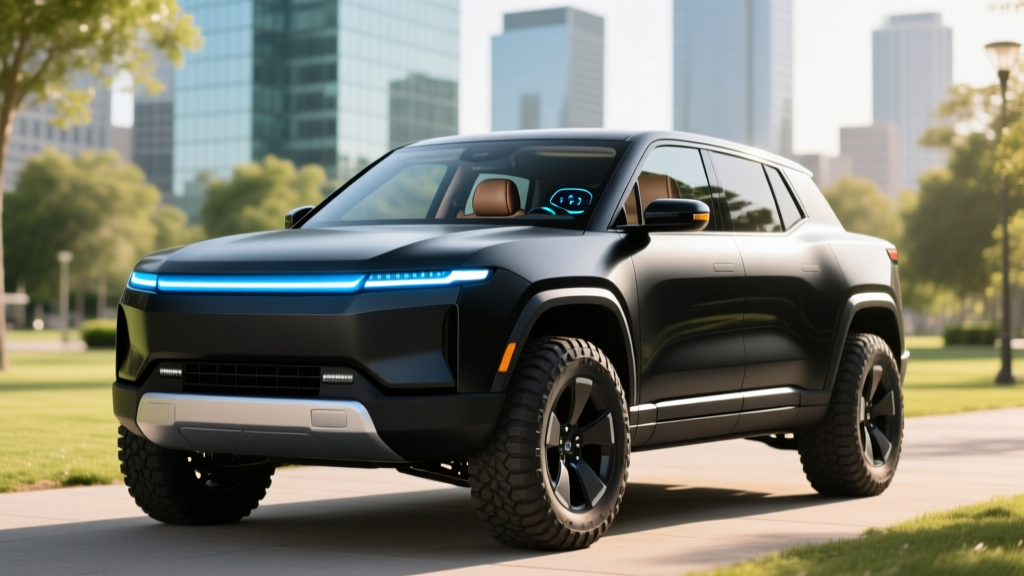
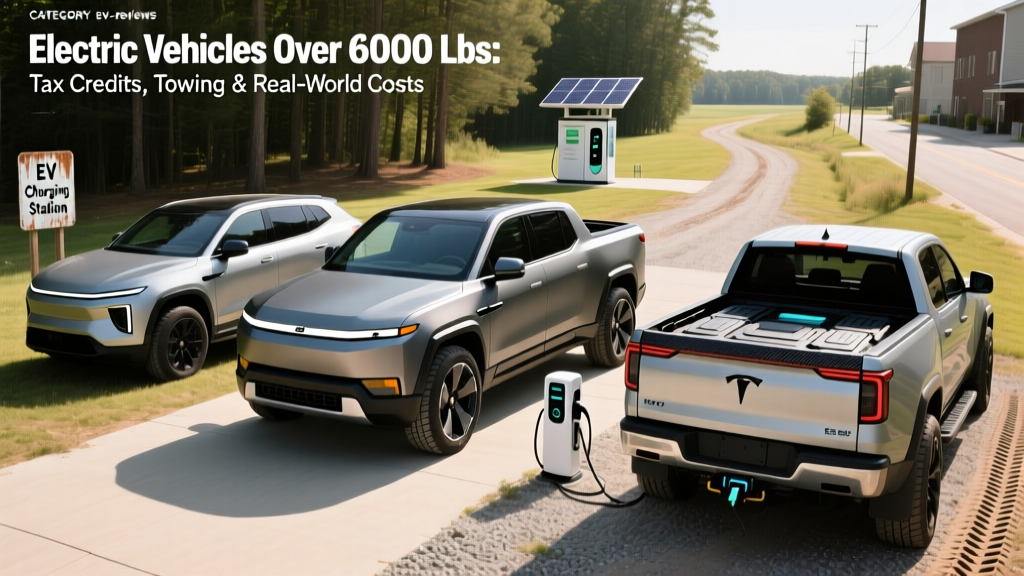
The 6,000-pound Gross Vehicle Weight Rating (GVWR) line matters for two reasons: (1) vehicles rated over 6,000 lbs GVWR can qualify for the commercial clean vehicle credit (§45W) instead of the consumer §30D credit — potentially worth up to $7,500 for vehicles under 14,000 lbs and up to $40,000 for heavier classes — and (2) the IRS treats them differently for business-use bonus depreciation. Most full-size electric trucks and large SUVs (Rivian R1T, Ford F-150 Lightning, Chevrolet Silverado EV, Tesla Cybertruck, Rivian R1S, Cadillac Escalade IQ, GMC Hummer EV) exceed this threshold. If you're buying one of these for personal use, you may still qualify for the §30D consumer credit up to $7,500 — but the MSRP, income, and battery-sourcing rules still apply. If you're buying for business, the §45W commercial credit opens different doors. Read on for the full breakdown.
Which Electric Vehicles Exceed 6,000 Lbs GVWR?
Not every EV crosses the 6,000-lb GVWR line. Most midsize sedans and crossovers sit well below it. The vehicles that do are overwhelmingly full-size trucks, large SUVs, and heavy luxury models — the segments where battery mass and towing capacity push curb weights high. Here's a snapshot of the major players as of the 2026 model year:
| Vehicle | GVWR (lbs) | Curb Weight (lbs) | EPA Range (mi) | Battery (kWh) | Base MSRP |
|---|---|---|---|---|---|
| Ford F-150 Lightning (Lariat) | ~8,250 | ~6,171 | 320 (Ext. Range) | 131 (usable, NMC) | $62,995 |
| Rivian R1T Dual-Motor | ~8,532 | ~7,148 | 352 (Max Pack) | 149 (usable, NMC) | $79,900 |
| Chevrolet Silverado EV (4WT) | ~9,200 | ~8,300 | 492 (4WT Max Range) | 200 (est., NMC) | $74,900 |
| Tesla Cybertruck (AWD) | ~8,908 | ~6,843 | 340 | 123 (usable, NMC) | $79,990 |
| Rivian R1S Tri-Motor | ~8,646 | ~7,250 | 371 (Max Pack) | 149 (usable, NMC) | $99,900 |
| GMC Hummer EV Pickup | ~10,400 | ~9,063 | 314 | 212 (usable, NMC) | $98,845 |
| Cadillac Escalade IQ | ~8,900 | ~8,200 | 460 (est.) | 200 (usable, NMC) | $129,990 |
Sources: fueleconomy.gov, manufacturer press sites. GVWR figures vary by trim and configuration. EPA range is for the longest-range available trim.
Tax Credits Explained: §30D vs. §45W for Heavy EVs
This is where the 6,000-lb line gets consequential. The IRS splits clean-vehicle credits into two buckets:
§30D — Consumer Clean Vehicle Credit (up to $7,500)
Available to individuals buying for personal use. The vehicle must meet all of these requirements:
- MSRP cap: Vans, SUVs, and pickups — $80,000. Sedans and other body styles — $55,000.
- Buyer income cap: AGI ≤ $150K single / $225K head of household / $300K joint.
- Battery sourcing: Critical minerals and battery components must meet phased-in percentages from U.S. or FTA partners (increasing yearly through 2029).
- FEOC restriction: Battery components cannot come from a "foreign entity of concern" (primarily Chinese supply chains).
- Point-of-sale transfer: You can transfer the credit to the dealer for an upfront price reduction.
See current rules at IRS.gov §30D.
§45W — Commercial Clean Vehicle Credit
Available to businesses and tax-exempt organizations purchasing qualified vehicles for business use. Key differences:
- No MSRP cap.
- No buyer income cap.
- Credit amount: Up to $7,500 for vehicles under 14,000 lbs GVWR; up to $40,000 for vehicles ≥ 14,000 lbs.
- Requires business use — typically the vehicle must be used predominantly in a trade or business.
- Battery-sourcing rules are less restrictive than §30D (no FEOC exclusion currently).
For fleet operators, contractors, and small-business owners, this means a $79,900 Rivian R1T or a $74,900 Silverado EV could net a $7,500 credit even if it fails §30D sourcing rules or exceeds the consumer MSRP cap.
Common Misconceptions About Heavy EVs and Tax Credits
| Myth | Fact |
|---|---|
| "All EVs over 6,000 lbs automatically get the $7,500 credit." | No. §30D still requires MSRP caps, income limits, and battery sourcing. The 6,000-lb threshold matters for §45W commercial credits and bonus depreciation, not automatic consumer credit eligibility. |
| "I can buy any heavy EV for my business and write off the full cost." | Bonus depreciation for vehicles over 6,000 lbs GVWR can be significant (60% in 2026 under current phase-down), but it must be used predominantly for business. Consult a tax professional. |
| "Heavy EVs get worse tax treatment than gas trucks." | In many cases, heavy electric trucks qualify for both the §45W credit and bonus depreciation, potentially making the after-tax cost lower than a comparable diesel or gas truck. |
Real-World Range, Towing, and Efficiency
Heavy electric vehicles carry massive battery packs — 130 to 212 kWh usable — but that mass cuts both ways. You get enormous range on paper, but towing a trailer or driving at highway speeds in cold weather erodes it significantly.
Real-World Range Reality Check
Ford F-150 Lightning Extended Range (EPA: 320 mi): Expect ~250–270 mi in mixed highway driving at 70 mph. Towing a 5,000-lb trailer? Plan for 150–180 mi before needing a charge. In sub-30°F weather without preconditioning, subtract another 20–30%.
Rivian R1T Max Pack (EPA: 352 mi): Highway real-world ~280–300 mi. Towing a 7,000-lb camper: ~160–190 mi. Rivian's tri-motor efficiency is better than dual-motor at highway speeds due to front-axle disconnect.
Chevrolet Silverado EV 4WT (EPA: 492 mi): The longest-range electric truck on sale. Mixed real-world: ~380–420 mi. But this is a work truck — at max payload and towing, expect ~250–300 mi.
Tesla Cybertruck AWD (EPA: 340 mi): Real-world highway ~270–290 mi. The stainless-steel exoskeleton is heavy, and the 6,843-lb curb weight works against efficiency at speed.
Towing and Payload: Where Heavy EVs Shine and Struggle
Electric trucks deliver instant torque — the F-150 Lightning produces 580 hp and 775 lb-ft, and the Hummer EV pushes 1,000 hp. Towing acceleration is genuinely impressive compared to gas equivalents. But:
- Range while towing drops 40–55% versus unladen EPA estimates. This is physics — moving 12,000+ lbs combined weight at highway speeds demands enormous energy.
- Charging infrastructure for trailers remains limited. Most DC fast-charging stalls aren't designed for pull-through access. You may need to unhitch or find dedicated truck-friendly stations (Pilot/Flying J with Electrify America chargers are expanding pull-through stalls).
- Regenerative braking helps on downhill grades, potentially recovering 10–15% of energy on mountain routes — an advantage gas trucks can't match.
Cost Breakdown: Purchase, Charging, Maintenance, and Insurance
Heavy EVs cost more upfront but can save significantly on fuel and maintenance over time. Here's a 5-year ownership comparison using a Ford F-150 Lightning Lariat vs. a comparably equipped F-150 Lariat 3.5L EcoBoost:
| Cost Category | F-150 Lightning (EV) | F-150 EcoBoost (Gas) | Notes |
|---|---|---|---|
| Base MSRP | $62,995 | $52,500 | EV premium: ~$10,495 |
| §30D / §45W Credit | -$7,500 (if eligible) | $0 | Subject to income/MSRP/sourcing rules |
| Effective Purchase Price | $55,495 | $52,500 | EV premium after credit: ~$2,995 |
| 5-Year Fuel/Energy | $3,800 (home L2, $0.14/kWh) | $11,200 (15K mi/yr, 20 MPG, $3.75/gal) | EV saves ~$7,400 |
| 5-Year Maintenance | $1,800 | $3,500 | No oil changes, fewer moving parts |
| 5-Year Insurance (avg) | $12,500 | $9,800 | EV premiums ~25–30% higher on average |
| Home Charger Install | $1,200–$2,500 | $0 | Level 2, 48A, 240V; panel upgrade may add $1,500+ |
| 5-Year Total Cost | $74,795 | $77,000 | EV saves ~$2,205 net |
Assumptions: 15,000 miles/year, 80% home charging at $0.14/kWh, 20% public DCFC at $0.40/kWh. Gas prices and electricity rates vary by region. Source: fueleconomy.gov for MPG/kWh data.
Key Cost Variables
- Home charging access is the single biggest cost lever. Charging at home on Level 2 at utility rates ($0.10–$0.18/kWh) costs 3–5¢ per mile. Relying entirely on public DC fast charging ($0.35–$0.55/kWh) pushes it to 10–16¢ per mile — erasing most savings vs. gas.
- Insurance is consistently higher for heavy EVs. Repair costs after collisions are elevated due to battery-pack proximity, specialized body panels (Cybertruck's stainless steel), and limited certified body shops. Budget $200–$400/year more than a gas equivalent.
- Tire wear is accelerated. A 7,000-lb EV with instant torque wears tires 15–25% faster. Budget for a replacement set of EV-rated tires (e.g., Michelin Defender LTX M/S or Hankook iON evo AS) every 30,000–40,000 miles at $1,200–$1,800 per set.
Charging Heavy EVs: Speed, Infrastructure, and Home Setup
Massive batteries mean long charge times if your equipment isn't up to the task. Here's what charging looks like across levels for a typical 131-kWh pack (F-150 Lightning Extended Range):
| Charging Level | Power (kW) | Miles Added per Hour | 10–80% Time | Typical Use |
|---|---|---|---|---|
| Level 1 (120V, 12A) | 1.4 kW | ~3 mi/hr | ~85 hours | Emergency/top-up only |
| Level 2 (240V, 48A) | 11.5 kW | ~25 mi/hr | ~10 hours | Overnight home charging |
| Level 2 (240V, 80A) | 19.2 kW | ~42 mi/hr | ~6 hours | F-150 Lightning Pro/Charge Station Pro |
| DC Fast Charge | Peak 150–170 kW | ~200 mi in 20 min | ~41 min (150 kW) | Road trips; tapers above 80% |
Home Charging Installation: What to Budget
Heavy EVs with 130+ kWh batteries practically require a high-amperage Level 2 charger. A 48A unit (11.5 kW) is the minimum for overnight full charges; an 80A unit (19.2 kW) is ideal if your panel supports it.
| Item | Cost Range | Notes |
|---|---|---|
| Level 2 Charger (48A–80A) | $400–$1,200 | ChargePoint Home Flex, Emporia Vue, Ford Charge Station Pro |
| Electrical Permit | $50–$300 | Varies by municipality |
| Electrician Labor (standard run) | $600–$1,500 | Panel within 30 ft of garage; conduit, wiring, outlet/hardwire |
| Panel Upgrade (if needed) | $1,500–$4,000 | Upgrading from 100A to 200A service for 80A charger |
| Total (no panel upgrade) | $1,050–$3,000 | Most common scenario |
| Total (with panel upgrade) | $2,550–$7,000 | Older homes with 100A service |
Always hire a licensed electrician. Get quotes from 2–3 firms and confirm they understand EVSE load calculations per NEC Article 625. Final specs depend on your home's electrical panel capacity.
The Charging-Desert Problem for Towing
If you plan to tow frequently, map your routes carefully. Pull-through DC fast-charging stalls remain scarce. Networks like Electrify America and Tesla Superchargers are adding truck-friendly stations, but coverage is concentrated along major interstates. Rural towing routes (national parks, remote job sites) may require planning around destination chargers or RV parks with 240V/50A outlets.
Decision Framework: Is a Heavy EV Right for You?
Choose a Heavy Electric Truck/SUV If:
- You have home charging (garage or driveway with 240V access) — this is non-negotiable for cost-effective ownership.
- Your daily driving is under 200 miles, and you tow occasionally rather than daily.
- You're a business owner or contractor who can leverage §45W credits and bonus depreciation.
- You value instant torque for towing acceleration and quiet, vibration-free operation on job sites.
- You live in a mild-to-moderate climate, or you're willing to accept 20–30% winter range loss and plan accordingly.
Stick with Gas or Consider a Hybrid If:
- You tow heavy loads (8,000+ lbs) daily over long distances — the charging logistics and range penalty make gas or diesel more practical today.
- You lack home charging and rely on street parking or apartment living — public charging costs erase fuel savings.
- Your budget is under $50,000 — there are no new heavy EVs at this price point yet.
- You frequently drive in extreme cold (below 0°F) and can't precondition in a garage — range loss compounds with towing.
- You need maximum payload capacity — battery weight reduces payload. The F-150 Lightning's max payload is ~2,235 lbs vs. ~3,325 lbs for the gas F-150.
First-Time Heavy-EV Buyer Checklist
- Verify your home electrical panel. A 200A panel with spare capacity handles a 48A charger. A 100A panel likely needs an upgrade for anything above 32A.
- Check §30D eligibility on IRS.gov before committing. Battery-sourcing rules change yearly, and a vehicle that qualified in 2025 may not in 2026.
- Test-charge before you buy. Visit a local DC fast charger and practice with the network app (Tesla, Electrify America, EVgo). Understand plug-in, authentication, and payment.
- Budget for tires. Heavy EVs eat tires. Get a quote for EV-rated replacement rubber before purchase.
- Get insurance quotes early. Some carriers surcharge heavy EVs significantly. Shop 3–4 carriers before signing the purchase agreement.
- Understand the charge curve. Peak DC charging speed (e.g., 170 kW) is not sustained. Most heavy EVs taper sharply above 80% SoC. Plan road-trip stops around 10–80% charges, not 0–100%.
- Precondition before fast charging. Heavy EVs with large packs take longer to reach optimal battery temperature. Use the vehicle's navigation-routed preconditioning (available on Tesla, Rivian, Ford) to warm the pack en route to a charger — this can cut 10–80% charge time by 5–10 minutes.
Frequently Asked Questions
Do electric vehicles over 6,000 lbs GVWR get a bigger tax credit?
Not automatically under the consumer §30D credit — the maximum remains $7,500 regardless of weight. However, vehicles over 6,000 lbs GVWR purchased for business use may qualify for the §45W commercial credit (up to $7,500 for under 14,000 lbs) and may be eligible for heavier bonus depreciation schedules. Consult a tax professional for your specific situation.
Can I tow a camper with an electric truck on a road trip?
Yes, but plan conservatively. Expect 40–55% range reduction while towing. A Ford F-150 Lightning with 320 mi EPA range will deliver roughly 150–180 mi while towing a 5,000-lb trailer at highway speeds. Map charging stops at truck-friendly pull-through stations, and allow 40–50 minutes per charge stop (10–80%).
How long do heavy EV batteries last?
Most manufacturers warranty their battery packs for 8 years/100,000 miles with a minimum 70% capacity retention. Real-world degradation data from early F-150 Lightnings and Rivians suggests 5–8% loss over the first 100,000 miles with normal use. Large packs (130–200 kWh) degrade more gracefully in percentage terms because daily driving uses a smaller fraction of total capacity.
Is a heavy EV practical without home charging?
It's possible but expensive. Public DC fast charging at $0.35–$0.55/kWh costs roughly $0.10–$0.16 per mile in a heavy EV — comparable to or exceeding a gas truck's fuel cost. Without home charging, the economic case for a heavy EV largely disappears. If you're in an apartment or lack a dedicated parking spot with electrical access, a hybrid or gas truck is likely more practical.
What's the cheapest electric vehicle over 6,000 lbs I can buy in 2026?
The Ford F-150 Lightning Pro (fleet-oriented, starting around $54,995) is currently the most affordable new electric vehicle exceeding 6,000 lbs GVWR. For consumer trims with more features, the Lariat starts at ~$62,995. After a potential $7,500 credit, effective pricing drops to $47,495–$55,495.