Electric Vehicle Sales Review Q1 2025: Market Trends, Top Sellers & What Buyers Need to Know
The electric vehicle market continues to evolve at a breakneck pace, and the first quarter of the year delivered some of the most compelling data points yet for industry watchers and prospective buyers alike. From record-breaking deliveries for legacy automakers to aggressive price cuts that reshuffled the competitive landscape, the Q1 2025 sales period offered a comprehensive snapshot of where the EV revolution stands today. Whether you are researching your first electric car or tracking the pulse of the broader automotive market, this in-depth sales review breaks down every critical trend, top-selling model, and ownership insight you need to make an informed decision.
In this analysis, we examine manufacturer-reported sales figures, EPA efficiency ratings, independent testing data, and real-world ownership costs to paint a complete picture of the EV market. We also connect the dots between sales momentum and the vehicles that deserve a spot on your shortlist. For a broader look at how today's top EVs stack up, check out our best electric vehicles roundup and our head-to-head EV comparison guide.
Vehicle & Market Overview: The Q1 2025 EV Landscape
The first quarter of the year confirmed what many analysts had predicted: electric vehicles are no longer a niche segment. Global EV sales continued their upward trajectory, with the United States market posting strong year-over-year growth driven by an expanding lineup of affordable models, improved charging infrastructure, and sustained consumer interest. According to data compiled by industry trackers, plug-in electric vehicles (including battery-electric and plug-in hybrid models) captured a growing share of total new-vehicle registrations in key markets across North America, Europe, and Asia.
Several factors converged to make this quarter particularly noteworthy. First, Tesla continued to lead pure battery-electric vehicle (BEV) deliveries globally, though its market share faced mounting pressure from rivals. Second, Hyundai Motor Group — encompassing Hyundai, Kia, and Genesis — solidified its position as a formidable EV powerhouse with strong sales across the Ioniq and EV6 lineups. Third, Ford and General Motors reported meaningful gains in their electric portfolios, buoyed by the Ford Mustang Mach-E, F-150 Lightning, and the expanding Chevrolet Equinox EV and Blazer EV families.
Chinese manufacturers also made headlines, with BYD continuing to challenge Tesla for the global sales crown when combining BEVs and plug-in hybrids. The competitive intensity among these giants has produced a buyer-friendly environment characterized by aggressive incentives, lease deals, and feature-rich vehicles at increasingly accessible price points.
For a closer look at the models driving these numbers, explore our top-selling electric vehicles list and our detailed best electric SUVs guide.
Real-World Range & Efficiency: What the Sales Leaders Deliver
Range anxiety remains one of the most frequently cited barriers to EV adoption, yet the vehicles topping the sales charts in Q1 demonstrate that the industry has made remarkable strides in addressing this concern. The current generation of best-selling EVs routinely offers between 250 and 350 miles of EPA-estimated range, with several flagship models pushing well past the 300-mile mark.
The Tesla Model Y, perennially one of the world's best-selling vehicles, continues to offer up to approximately 310 miles of EPA-estimated range in its Long Range configuration. Independent testing by organizations such as Edmunds has confirmed that real-world highway range closely tracks EPA estimates under moderate driving conditions, though cold-weather performance can reduce range by 15 to 30 percent depending on ambient temperatures and cabin heating usage.
The Hyundai Ioniq 5 and Kia EV6, both built on the E-GMP platform, deliver EPA-estimated ranges of approximately 260 to 310 miles depending on trim and drivetrain. Their efficiency figures — often exceeding 3.5 miles per kWh in mixed driving — make them among the most energy-efficient crossover SUVs on the market. The Ford Mustang Mach-E, another strong seller, offers up to roughly 320 miles in its extended-range rear-wheel-drive configuration.
Newer entrants are pushing boundaries even further. The Lucid Air Grand Touring boasts an EPA-estimated range exceeding 500 miles, setting a benchmark that few competitors can match. Meanwhile, the Chevrolet Equinox EV has attracted attention for offering over 300 miles of estimated range at a significantly lower price point, contributing to strong early sales figures.
Efficiency matters not just for range but for long-term cost savings. Vehicles that consume less energy per mile translate directly into lower electricity costs over the life of the vehicle. Our EV range comparison tool lets you see how the top sellers stack up mile for mile.
Charging Speed & Infrastructure: The Fast-Charging Revolution
Sales data from Q1 underscored a clear consumer preference for vehicles equipped with fast-charging capability, and automakers have responded with increasingly impressive charging architectures. The shift toward 800-volt platforms — pioneered by the Hyundai Motor Group's E-GMP and adopted by Porsche, Audi, and others — has become a significant differentiator in the marketplace.
The Hyundai Ioniq 5 and Kia EV6 can charge from 10 to 80 percent in approximately 18 minutes when connected to a 350 kW DC fast charger, thanks to their 800V electrical architecture. This capability has been a major selling point, and dealers report that charging speed is now one of the top three questions buyers ask during the sales process. The Porsche Taycan and Audi e-tron GT, both on 800V systems, offer similarly rapid charging times and continue to attract premium buyers.
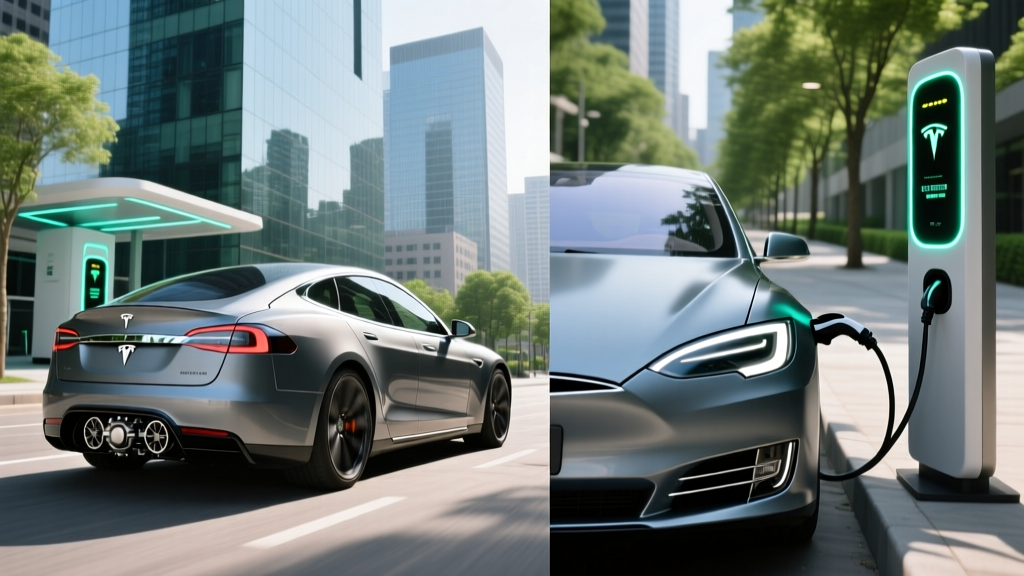
Tesla's Supercharger network remains the gold standard for charging infrastructure, with over 50,000 Superchargers globally. The opening of the Supercharger network to non-Tesla vehicles through the NACS (North American Charging Standard) connector has been one of the most significant industry developments in recent memory. Nearly every major automaker — including Ford, GM, Rivian, Hyundai, and BMW — has committed to adopting the NACS connector or providing adapters, effectively unifying the North American charging ecosystem.
For home charging, most EV owners install Level 2 (240-volt) chargers that deliver between 30 and 45 miles of range per hour of charging. This setup allows the vast majority of daily driving needs to be met with overnight charging, reducing reliance on public infrastructure. According to the U.S. Department of Energy, over 80 percent of EV charging occurs at home.
The expanding public charging network — now exceeding 180,000 charging ports across the United States — has been a tailwind for EV sales. Buyers in markets with robust charging infrastructure consistently show higher EV adoption rates. For a complete breakdown, see our comprehensive EV charging guide and our best home EV charger recommendations.
Interior & Technology: The Digital Cockpit Wars
One of the most visible battlegrounds in the EV sales race is interior technology. The top-selling EVs of Q1 showcase a wide spectrum of approaches, from Tesla's minimalist single-screen philosophy to the multi-display extravaganzas found in the Mercedes-Benz EQS and Lucid Air. Consumer surveys consistently rank infotainment usability, smartphone integration, and driver-assistance features among the top purchase motivators.
Tesla's Model Y and Model 3 continue to feature the brand's signature 15.4-inch central touchscreen (updated in the latest refresh), which handles everything from climate controls to navigation and entertainment. The latest software iterations have improved responsiveness and added features like automatic blind-spot camera views and enhanced voice commands. Tesla's Full Self-Driving (FSD) capability, while still classified as a Level 2 driver-assistance system, remains a significant draw for tech-oriented buyers despite ongoing regulatory scrutiny.
The Hyundai Ioniq 5 and Kia EV6 take a different approach with dual 12.3-inch displays housed under a single curved glass panel. Both vehicles support wireless Apple CarPlay and Android Auto, a feature that resonates strongly with buyers who prefer familiar smartphone interfaces. The Ioniq 5's interior has been widely praised for its spacious, lounge-like cabin made possible by the flat floor of the E-GMP platform, and its use of sustainable materials — including recycled plastics and eco-processed leather — appeals to environmentally conscious consumers.
In the luxury segment, the BMW iX and Mercedes-Benz EQS set the bar with augmented-reality head-up displays, hyperscreen dashboards spanning the full width of the instrument panel, and advanced ambient lighting systems. The Rivian R1T and R1S have earned praise for their adventure-oriented interiors, featuring rugged yet refined materials, a removable Bluetooth speaker, and an integrated camp kitchen option.
Over-the-air (OTA) software updates have become table stakes for competitive EVs, with nearly every top-selling model offering the ability to add features, improve performance, and fix bugs without a dealership visit. This capability has been shown to improve long-term owner satisfaction and is increasingly cited as a key factor in purchase decisions. Explore our best EV technology features guide for more on what to look for.
Driving Dynamics & Performance: Beyond Straight-Line Speed
The performance credentials of electric vehicles have been a major driver of sales growth, and Q1's top sellers demonstrate that EVs can excel across the full spectrum of driving dynamics. Instant torque delivery, low centers of gravity from floor-mounted battery packs, and sophisticated torque-vectoring systems give modern EVs handling characteristics that rival — and often surpass — their internal-combustion counterparts.
The Tesla Model 3 Performance continues to be a benchmark in the sport sedan category, delivering 0-60 mph acceleration in approximately 2.9 seconds while maintaining a usable EPA-estimated range exceeding 300 miles. Independent track testing by Car and Driver has confirmed that the latest Model 3 refresh offers improved ride quality and steering feel, addressing longstanding criticisms about the platform's comfort on rough roads.
The Porsche Taycan remains the enthusiast's choice, with its two-speed rear axle transmission providing both explosive acceleration and relaxed highway cruising. The Taycan Turbo GT variant has set lap records at multiple circuits worldwide, reinforcing Porsche's commitment to performance credibility in the electric era. Sales of the Taycan have remained strong despite its premium pricing, suggesting that driving enthusiasts are willing to pay for dynamics that match the brand's legacy.
On the more practical end of the spectrum, the Ford Mustang Mach-E GT and Hyundai Ioniq 5 N have demonstrated that mainstream electric crossovers can deliver genuine thrills. The Ioniq 5 N, in particular, has been a revelation — featuring simulated gear shifts, adjustable regenerative braking profiles, and a N e-Shift mode that mimics the feel of a dual-clutch transmission. Automotive journalists have widely praised it as one of the most engaging EVs ever built, and its buzz has contributed to increased showroom traffic for Hyundai's entire EV lineup.
Ride comfort and noise isolation have also improved dramatically. The absence of engine noise places greater emphasis on wind and road noise suppression, and automakers have responded with acoustic glass, active noise cancellation, and carefully tuned suspension systems. For a deeper dive into performance-oriented electric vehicles, visit our fastest electric cars list and our best electric SUVs for families guide.
Ownership Costs & Total Cost of Ownership
One of the most compelling arguments for electric vehicle adoption — and a key driver of Q1 sales — is the favorable total cost of ownership (TCO) compared to gasoline-powered alternatives. Multiple studies, including analyses by Consumer Reports and the U.S. Department of Energy, have demonstrated that EVs can save owners thousands of dollars over the life of the vehicle through reduced fuel and maintenance costs.
Fuel costs: The average U.S. electricity price of approximately $0.16 per kWh translates to a per-mile energy cost of roughly $0.04 to $0.05 for a typical EV. Compare this to the $0.12 to $0.15 per mile that a gasoline vehicle averaging 25 mpg requires at $3.50 per gallon, and the savings become substantial. Over 15,000 miles of annual driving, an EV owner might spend $600 to $750 on electricity versus $1,800 to $2,250 on gasoline — a difference of $1,000 to $1,500 per year.
Maintenance costs: Electric vehicles have far fewer moving parts than internal-combustion vehicles. There are no oil changes, spark plugs, timing belts, or exhaust systems to maintain. Regenerative braking significantly extends brake pad life, with many EV owners reporting original brake pads lasting well beyond 100,000 miles. Consumer Reports estimates that EV owners save an average of $4,600 in maintenance and repair costs over the life of the vehicle compared to gasoline car owners.
Insurance costs: One area where EVs can carry a premium is insurance. Average EV insurance rates tend to be 15 to 25 percent higher than comparable gasoline vehicles, primarily due to higher repair costs for battery packs and specialized body structures. However, as the EV fleet grows and repair expertise becomes more widespread, insurance premiums are expected to moderate.
Depreciation: Historically, EVs depreciated faster than gasoline vehicles due to concerns about battery longevity and rapid technology obsolescence. However, improved battery warranties (typically 8 years/100,000 miles), growing consumer confidence, and strong used-EV demand have narrowed this gap considerably. Models like the Tesla Model 3 and Porsche Taycan have shown strong residual values in recent assessments.
Tax credits and incentives: Federal and state incentives continue to play a significant role in EV purchase decisions. The federal clean vehicle credit of up to $7,500 (subject to income and vehicle eligibility requirements) can substantially reduce the effective purchase price of qualifying models. Many states offer additional rebates, HOV lane access, and reduced registration fees. Our EV tax credits and incentives guide provides a comprehensive breakdown of current eligibility requirements.
Pros & Cons: The Q1 2025 EV Market at a Glance
Based on our analysis of sales data, owner feedback, and independent testing, here is a summary of the key advantages and challenges facing the EV market as reflected in Q1 trends:
Pros
- Expanding model diversity: Buyers now have access to EVs across nearly every vehicle category — from compact hatchbacks and midsize sedans to full-size trucks and three-row SUVs.
- Improving range: The 300-mile range threshold has become commonplace, with several models exceeding 350 or even 400 miles on a single charge.
- Faster charging: 800V architectures and expanding 350 kW charging networks are making road trips increasingly practical.
- Lower operating costs: Electricity and maintenance savings continue to provide a compelling financial case for EV ownership.
- Strong performance: Instant torque and low centers of gravity deliver driving experiences that rival or exceed ICE vehicles.
- Growing charging infrastructure: The adoption of NACS and expanding public networks are reducing range anxiety for prospective buyers.
Cons
- Charging deserts persist: Rural areas and multi-unit housing residents still face significant charging access challenges.
- Higher upfront costs: Despite price reductions, many EVs still carry a purchase-price premium over comparable gasoline vehicles.
- Cold-weather range loss: Battery efficiency drops in freezing temperatures, reducing range by 15 to 30 percent in harsh winters.
- Insurance premiums: Higher repair costs continue to push EV insurance rates above the industry average.
- Charger reliability: Public charging networks outside of Tesla's Supercharger system still face criticism for inconsistent uptime and payment fragmentation.
- Resale value uncertainty: Rapid technology evolution and price cuts by manufacturers can accelerate depreciation for early adopters.
Key Specifications Comparison: Top-Selling EVs
The following table summarizes key specifications for the top-selling and most talked-about electric vehicles that shaped the Q1 market. All range and efficiency figures are based on EPA estimates where available.
| Vehicle | Starting Price (MSRP) | EPA Est. Range | 0-60 mph | Max Charging Speed | 10-80% Charge Time | Drivetrain |
|---|---|---|---|---|---|---|
| Tesla Model Y Long Range | ~$44,990 | ~310 mi | 4.8 sec | 250 kW | ~27 min | AWD |
| Tesla Model 3 Long Range | ~$42,490 | ~341 mi | 4.2 sec | 250 kW | ~25 min | AWD |
| Hyundai Ioniq 5 Long Range | ~$42,600 | ~303 mi | 5.1 sec | 350 kW | ~18 min | RWD/AWD |
| Kia EV6 Long Range | ~$42,900 | ~310 mi | 5.2 sec | 350 kW | ~18 min | RWD/AWD |
| Ford Mustang Mach-E Ext. Range | ~$42,995 | ~320 mi | 5.6 sec | 150 kW | ~36 min | RWD/AWD |
| Chevrolet Equinox EV 3RS | ~$43,400 | ~319 mi | ~6.0 sec | 150 kW | ~32 min | FWD/AWD |
| Rivian R1S Dual Motor | ~$75,900 | ~316 mi | 4.5 sec | 220 kW | ~30 min | AWD |
| BMW iX xDrive50 | ~$87,250 | ~324 mi | 4.4 sec | 200 kW | ~31 min | AWD |
| Porsche Taycan 4S | ~$103,800 | ~246 mi | 3.8 sec | 270 kW | ~22 min | AWD |
| Lucid Air Grand Touring | ~$125,600 | ~516 mi | 3.0 sec | 300 kW | ~20 min | AWD |
Note: Prices and specifications reflect manufacturer data and EPA ratings available at the time of publication. Actual results may vary based on trim, options, and driving conditions. Visit our EV comparison tool for a customizable side-by-side analysis.
Market Trends Shaping the Future of EV Sales
Beyond the raw sales numbers, several macro trends emerged during Q1 that will shape the EV market for years to come:
Price compression: Aggressive price competition — led by Tesla's repeated price adjustments and the influx of more affordable models like the Chevrolet Equinox EV and Hyundai Kona Electric — has narrowed the price gap between EVs and gasoline vehicles. This trend is expected to accelerate as battery costs continue to decline and manufacturing efficiencies improve.
The rise of the electric truck and SUV: The Ford F-150 Lightning, Rivian R1T, and Chevrolet Silverado EV have proven that electric trucks can serve both work and lifestyle needs. The three-row electric SUV segment is also heating up with strong sales for the Kia EV9 and growing interest in the upcoming refreshes of the Rivian R1S and Tesla Model X.
Leasing dominance: A significant portion of EV transactions continue to be leases rather than purchases, driven by attractive lease deals that allow manufacturers to pass along tax credits as lease incentives. This trend has made EVs accessible to a broader audience while mitigating depreciation risk for consumers.
Global competition intensifies: Chinese EV manufacturers, led by BYD, NIO, and XPeng, continue to expand internationally. While their direct presence in the U.S. market remains limited by tariffs and regulatory hurdles, their impact on global pricing and technology benchmarks is undeniable. European and Korean automakers are responding with accelerated product launches and platform investments.
For ongoing coverage of these trends, bookmark our EV news and analysis hub and our best electric vehicles guide, which we update regularly to reflect the latest market developments.
Frequently Asked Questions
What was the best-selling electric vehicle in Q1?
The Tesla Model Y continued to lead global EV sales in the first quarter, maintaining its position as one of the best-selling vehicles of any powertrain type in multiple markets. In the United States, the Model Y was followed by the Tesla Model 3, Ford Mustang Mach-E, and Hyundai Ioniq 5 among the top-selling battery-electric vehicles. The Model Y's combination of range, Supercharger access, and relatively competitive pricing has kept it at the forefront of buyer preference. For a complete ranking, see our top-selling EVs list.
Are electric vehicles cheaper to own than gasoline cars?
Over the full ownership cycle, most EVs offer a lower total cost of ownership compared to comparable gasoline vehicles. The savings come primarily from lower fuel costs (electricity versus gasoline) and reduced maintenance requirements (no oil changes, fewer brake replacements, and fewer mechanical components that can fail). Studies by Consumer Reports and the Department of Energy estimate lifetime savings of $6,000 to $10,000 for a typical EV owner. However, the upfront purchase price of many EVs remains higher, and insurance costs can offset some savings. The break-even point typically occurs within three to five years of ownership depending on driving patterns and local electricity rates.
How long do EV batteries last, and are they expensive to replace?
Modern EV batteries are designed to last the lifetime of the vehicle. Most manufacturers provide battery warranties covering at least 8 years or 100,000 miles, and many warrant that the battery will retain at least 70 to 80 percent of its original capacity during that period. Real-world data from Tesla, Nissan, and other early EV adopters shows that battery degradation is typically modest — often losing only 10 to 15 percent of capacity over 150,000 miles. If a battery replacement is needed outside of warranty, costs can range from $5,000 to over $20,000 depending on the vehicle, though these prices are declining as battery technology improves and the supply of refurbished packs grows.
Is it better to buy or lease an electric vehicle?
Leasing has become an increasingly popular path to EV ownership for several reasons. First, many lease deals allow the federal tax credit to be applied as a capitalized cost reduction, effectively lowering monthly payments even for buyers who might not qualify for the credit through a direct purchase due to income limitations. Second, leasing protects against the rapid depreciation that can affect EVs as technology advances and prices fluctuate. Third, lease terms of 24 to 36 months allow drivers to upgrade to newer models with improved range and features more frequently. However, buying may be preferable for high-mileage drivers who would exceed lease mileage limits or for those who plan to keep their vehicle for many years. Our EV buying guide covers this decision in detail.
What should I look for when test-driving an electric vehicle?
When test-driving an EV, pay attention to several factors unique to electric vehicles. First, evaluate the regenerative braking feel — some vehicles offer aggressive one-pedal driving modes while others mimic the coasting behavior of a traditional automatic transmission. Second, assess cabin noise levels at highway speeds, as the absence of engine noise can make wind and tire noise more noticeable. Third, test the infotainment system's responsiveness and ease of use, since many EVs route critical functions like climate control through touchscreens. Fourth, check visibility and camera systems, as some EV designs prioritize aerodynamics at the expense of rearward visibility. Finally, if possible, test the vehicle's charging speed at a public fast charger to get a sense of real-world charging times. Our EV test-drive checklist provides a comprehensive guide to making the most of your dealership visit.
Final Thoughts
The Q1 2025 EV sales data tells a clear story: the electric vehicle market is maturing rapidly, and the benefits for consumers have never been more tangible. With more models offering 300-plus miles of range, faster charging times, competitive pricing, and lower operating costs, the barriers to EV adoption continue to fall. Whether you are drawn to the tech-forward appeal of a Tesla, the value proposition of a Hyundai or Chevrolet, or the performance pedigree of a Porsche or Lucid, there has never been a better time to make the switch to electric.
As always, we recommend test-driving multiple vehicles, researching ownership costs specific to your region, and exploring available incentives before making a purchase decision. Our team at AutoEdgeView is committed to providing the most thorough, data-driven EV analysis available. Explore our full library of EV reviews, best-pick lists, and comparison tools to find the perfect electric vehicle for your lifestyle and budget.