Finding reliable electric car reviews Australia buyers can trust requires filtering through global specifications to focus on local driving realities. For Australian households and fleet managers transitioning from internal combustion engines to battery electric vehicles, the 2026 market offers over 85 distinct models. The top-rated electric vehicles in Australia right now are the Tesla Model Y for overall SUV utility, the BYD Dolphin for budget-conscious urban commuters, and the Hyundai Ioniq 6 for long-range highway driving. This guide evaluates local range testing, Australian charging infrastructure compatibility, and current drive-away pricing to help you make an informed purchase.
Key Takeaways
- The Tesla Model Y leads Australian electric SUV sales with a certified 455 km WLTP range.
- The BYD Dolphin remains the most accessible EV, starting at $42,990 AUD drive-away.
- Australia public charging network surpassed 4,500 fast-charging locations in early 2026.
Top Electric Car Reviews in Australia for 2026
Best Overall Electric SUV: Tesla Model Y
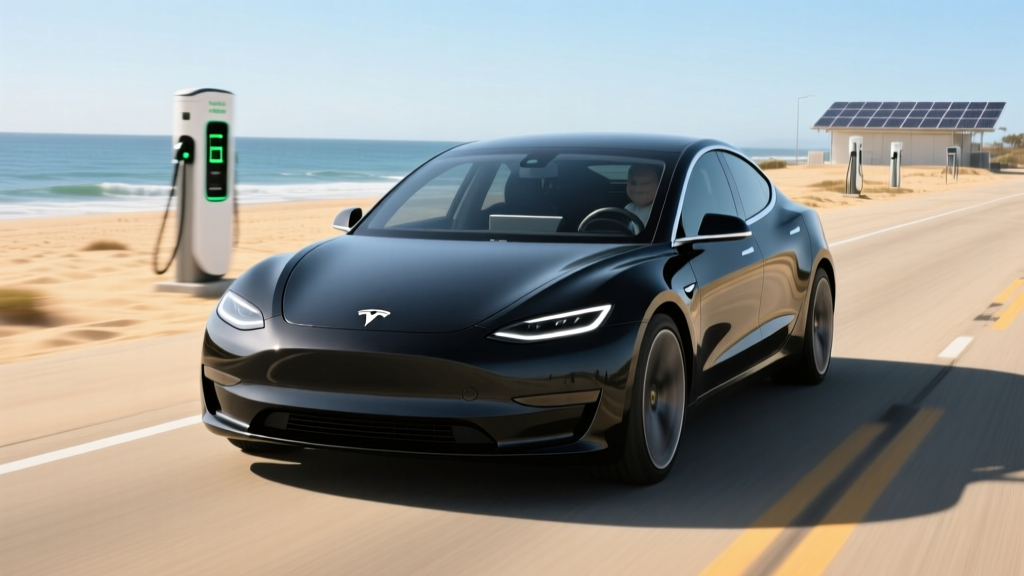
The Tesla Model Y continues to dominate Australian delivery charts due to its balance of interior space, software integration, and Supercharger network access. The 2026 Rear-Wheel Drive variant offers a certified 455 km WLTP range, which translates to approximately 380 km in real-world Australian highway conditions at 110 km/h.
Cabin space is exceptional, with 854 litres of rear cargo capacity. The suspension tuning on the latest Australian-delivered models specifically addresses local corrugated road surfaces, providing a noticeably softer ride than previous iterations.
Best Budget Electric Vehicle: BYD Dolphin
The BYD Dolphin establishes the entry point for new electric vehicles in Australia, starting at $42,990 AUD drive-away. It utilizes a 60.4 kWh Blade battery that delivers a practical 427 km WLTP range, making it ideal for metropolitan commuting and suburban school runs.
While the infotainment system features a unique rotating screen, the physical climate controls and spacious rear legroom outclass many internal combustion hatchbacks in the same price bracket. DC charging peaks at 88 kW, taking the battery from 10% to 80% in roughly 35 minutes.
Best Long-Range Electric Sedan: Hyundai Ioniq 6
For drivers frequently traveling between capital cities, the Hyundai Ioniq 6 Dynamiq AWD offers exceptional efficiency. Its aerodynamic teardrop shape enables an official 614 km WLTP range from an 82 kWh battery pack, achieving an energy consumption figure as low as 14.3 kWh/100 km on the highway.
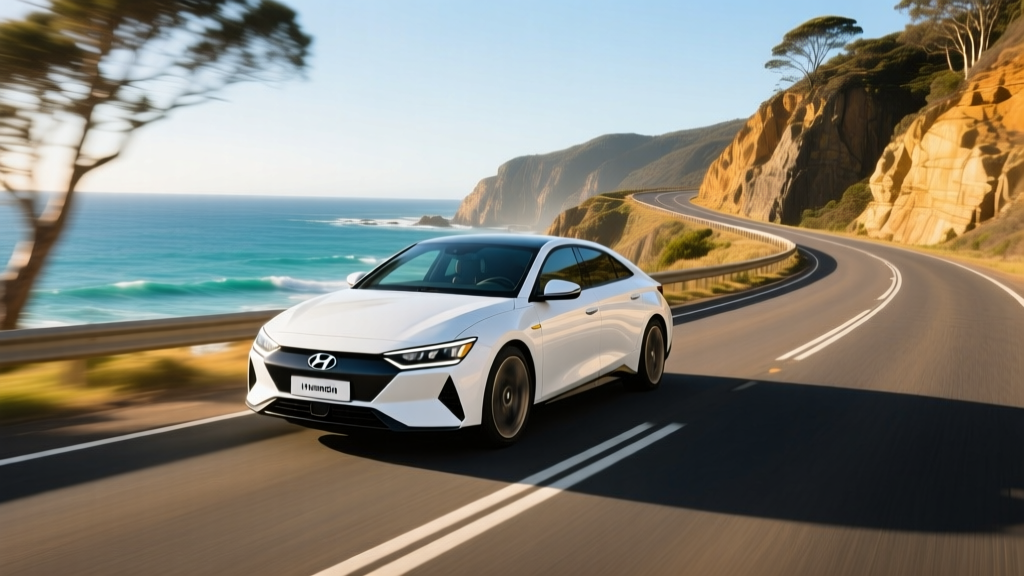
The 800-volt electrical architecture allows for ultra-rapid charging speeds up to 350 kW on compatible infrastructure. This capability replenishes 300 km of driving range in just 12 minutes when connected to a high-power charger.
Australian EV Market Data and Infrastructure
Battery electric vehicle adoption in Australia accelerated significantly over the last 24 months. According to sales data tracked by the Federal Chamber of Automotive Industries, zero-emission vehicles captured 14.2% of all new car sales in the first quarter of 2026.
Range anxiety is rapidly decreasing as charging infrastructure expands. The Electric Vehicle Council reports that Australia now hosts over 4,500 public fast-charging locations nationwide. Networks like Chargefox and Evie Networks have prioritized regional highway corridors, ensuring that 95% of major national highways now feature charging stations spaced no more than 150 km apart.
EV Buyer Decision Framework
Use the comparison matrix below to align your specific driving requirements with the most suitable electric vehicle currently available in the Australian market.
| Vehicle Model | Best Use Case | WLTP Range | Drive-Away Price (AUD) | Max DC Charge Rate |
|---|---|---|---|---|
| Tesla Model Y RWD | Family hauling and road trips | 455 km | $61,900 | 170 kW |
| BYD Dolphin Premium | Urban commuting and city parking | 427 km | $42,990 | 88 kW |
| Hyundai Ioniq 6 AWD | Interstate highway touring | 614 km | $83,000 | 350 kW |
Key Electric Vehicle Terminology
Regenerative Braking
Regenerative braking is an energy recovery mechanism that slows down a moving electric vehicle by converting its kinetic energy into electrical energy. This captured electricity is then routed back into the high-voltage battery pack, extending the overall driving range and reducing mechanical brake pad wear.
State of Charge
State of Charge represents the current level of energy stored in an electric vehicle battery relative to its maximum capacity, expressed as a percentage. Monitoring this metric is critical for Australian drivers planning long regional trips, as it dictates remaining range and necessary charging stops.
Frequently Asked Questions
What is the cheapest electric car in Australia?
As of 2026, the BYD Dolphin is the cheapest new electric car in Australia, priced at $42,990 AUD drive-away. The MG4 Excite closely follows at $43,990 AUD, offering slightly more rear-wheel-drive performance but a marginally smaller battery capacity.
Which electric SUV has the best range in Australia?
The Tesla Model X Plaid and the Mercedes-Benz EQS SUV lead the SUV segment with WLTP ranges exceeding 600 km. However, for mainstream pricing, the Hyundai Ioniq 5 and Kia EV9 offer the most practical long-range capabilities for large Australian families.
Are electric cars worth it in regional Australia?
Electric vehicles are highly viable in regional Australia provided the buyer installs a home solar charging setup. Daily regional driving distances rarely exceed 200 km, which is well within the real-world range of modern EVs. The primary consideration remains ensuring your specific highway route has operational public fast-charging infrastructure for longer interstate journeys.
Final Recommendations
Selecting the right electric vehicle depends entirely on your specific household mileage, budget, and access to home charging. The Australian market now offers highly capable options across every major vehicle segment, eliminating the compromises that existed in previous generations. Your next step should be to shortlist two models from the decision framework above and book back-to-back test drives at your local dealership to evaluate real-world visibility and software ergonomics.