The Short Answer on Electric Vehicle Minivans
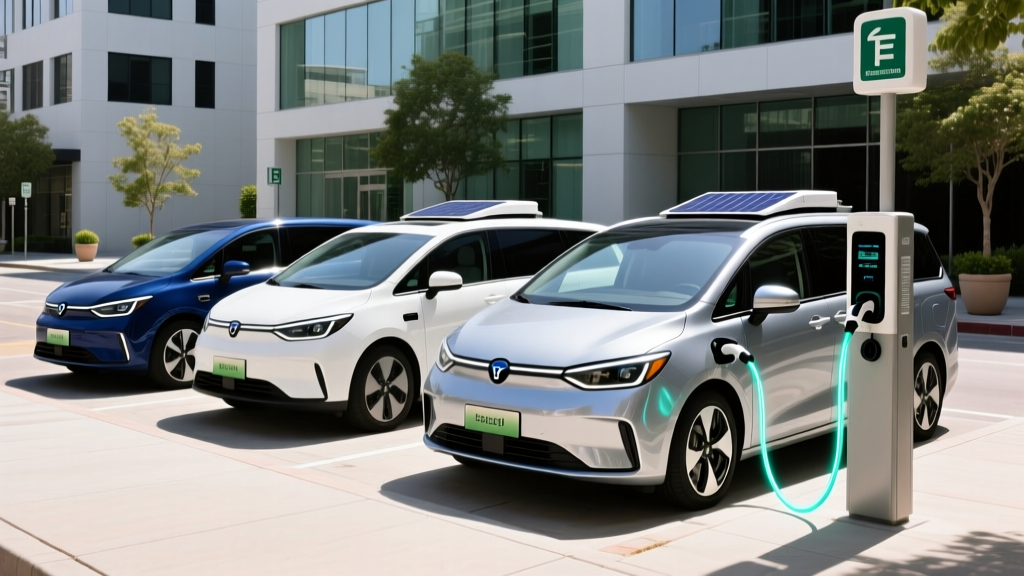
As of early 2026, the only production electric vehicle minivan available in the U.S. is the Chrysler Pacifica Hybrid — technically a plug-in hybrid (PHEV), not a battery-electric vehicle (BEV). It offers 32 miles of electric-only range before the gas engine engages. No fully electric minivan from a major automaker is currently on sale in North America. Several concepts and announcements exist (notably from Kia and Chrysler's parent company Stellantis), but none have reached dealer floors. If you need a three-row electric family hauler today, you'll need to look at three-row electric SUVs like the Kia EV9, Hyundai Ioniq 9, or Tesla Model X instead.
Why the Electric Minivan Segment Is So Thin
The minivan segment has always been a low-volume, high-utility niche. Automakers prioritize SUVs for electrification because that's where buyer demand and margins align. Minivans like the Honda Odyssey, Toyota Sienna (which is a hybrid, not a PHEV or BEV), and Chrysler Pacifica sell roughly 400,000 units combined annually in the U.S. — compared to over 2.5 million midsize SUVs. That thin market makes the billion-dollar investment in a dedicated EV minivan platform harder to justify.
The physics also work against it. Minivans are large, heavy, and boxy — all enemies of electric range. A fully electric minivan would need a battery pack in the 100-120 kWh range to deliver competitive 300+ mile range, adding significant cost and weight. Current platforms optimized for SUVs are being adapted, but a ground-up electric minivan remains a tough business case for most OEMs.
What's Available Now: Chrysler Pacifica Hybrid Deep Dive
The Chrysler Pacifica Hybrid is the closest thing to an electric minivan you can buy today. It's a plug-in hybrid, meaning it has both a battery/electric motor and a 3.6L V6 gas engine.
| Spec | Value |
|---|---|
| Electric-Only Range (EPA) | 32 miles |
| Battery Capacity | 16.0 kWh (usable ~14.0 kWh) |
| Battery Chemistry | NMC lithium-ion |
| Combined Gas+Electric Range | ~520 miles |
| MPGe (electric mode) | 82 MPGe |
| MPG (gas-only, combined) | 30 MPG |
| Level 2 Charge Time (0-100%) | ~2 hours at 7.2 kW |
| Level 1 Charge Time (120V) | ~14 hours |
| 0-60 mph | ~7.1 seconds |
| Horsepower (combined) | 260 hp |
| Starting MSRP | ~$51,095 |
| Battery Warranty | 10 years / 100,000 miles |
Real-world expectation: The 32-mile EPA electric range holds up reasonably well in moderate temperatures with city driving. Expect 24-28 miles in highway driving or in cold weather (below 40°F), where the cabin heater and battery conditioning draw additional power. For daily school runs and grocery trips under 25 miles, many owners report running almost entirely on electricity.
EV Minivan vs. Gas Minivan vs. Hybrid Minivan: Cost Comparison
Let's compare five-year ownership costs across the three minivan powertrain types available today. This analysis assumes 15,000 miles/year, a national average electricity rate of $0.16/kWh, and gas at $3.40/gallon.
| Cost Factor | Pacifica Hybrid (PHEV) | Toyota Sienna (HEV) | Honda Odyssey (Gas) |
|---|---|---|---|
| Purchase Price (base MSRP) | $51,095 | $39,485 | $40,635 |
| Fuel/Energy Cost (5 yrs) | ~$4,800 | ~$7,100 | ~$10,900 |
| Maintenance (5 yrs est.) | ~$3,200 | ~$3,800 | ~$4,500 |
| Insurance (5 yrs avg) | ~$11,500 | ~$9,800 | ~$10,200 |
| Fed. Tax Credit (§30D) | Check current eligibility* | $0 (HEV ineligible) | $0 |
| Estimated 5-Yr Total | ~$70,595 | ~$60,185 | ~$66,235 |
*The §30D federal tax credit for PHEVs requires meeting battery sourcing, MSRP caps (vans capped at $80,000), and buyer income limits ($150K single / $300K joint). Pacifica Hybrid eligibility has varied year-to-year based on battery component sourcing. Always verify current status at IRS.gov or via the point-of-sale dealer transfer option.
The Pacifica Hybrid's higher sticker price is the biggest hurdle. Even with fuel savings of $2,300-$6,100 over five years compared to the Sienna or Odyssey, the ~$12,000-$20,000 premium over a gas/hybrid minivan takes years to recoup. The PHEV makes the most financial sense for families who can charge at home nightly and whose daily driving stays within the 32-mile electric envelope.
Three-Row Electric SUVs: The Practical Alternative
If you're committed to a fully electric three-row family vehicle, the current market pushes you toward SUVs. Here's how the leading options compare as minivan substitutes:
| Vehicle | EPA Range | Battery | DC Fast Charge | 10-80% Time | Starting MSRP | Third Row? |
|---|---|---|---|---|---|---|
| Kia EV9 (LR AWD) | 270 mi | 100 kWh NMC | 236 kW peak | ~24 min | $59,900 | Yes |
| Hyundai Ioniq 9 (LR) | 311 mi | 110.3 kWh NMC | 250 kW peak | ~22 min | $56,400 | Yes |
| Tesla Model X (LR) | 335 mi | 100 kWh NMC | 250 kW peak | ~20 min | $79,990 | Yes |
| Rivian R1S (Dual Max) | 352 mi | 149 kWh NMC | 200 kW peak | ~30 min | $83,900 | Yes |
Real-world range caveat: EPA estimates assume mixed driving at moderate temperatures. Expect 15-25% range reduction on sustained highway trips at 75+ mph, and 20-35% loss in sub-freezing weather. The Ioniq 9's 311-mile EPA figure, for example, translates to roughly 240-265 miles on a cold-weather highway trip. Source: fueleconomy.gov.
None of these SUVs match a minivan's low step-in height, sliding doors, or maximum cargo volume behind the third row. The Kia EV9 and Hyundai Ioniq 9 come closest in terms of interior space and family utility, and both support NACS charging natively for access to Tesla Supercharger stations. If sliding doors and a flat load floor are non-negotiable, you'll need to wait — or consider the Pacifica Hybrid as a bridge vehicle.
Real-World Ownership Considerations for Families
Before committing to any electrified minivan or three-row EV, honestly assess these factors:
Home Charging Access
A Level 2 home charger (240V, 32-48 amps) is essential for daily PHEV or BEV use. For the Pacifica Hybrid, a Level 2 station fully replenishes the battery in about 2 hours — plug in when you get home, and you're full by morning. Installation costs range from $500 (simple outlet near the panel) to $2,500+ if you need a panel upgrade from 100A to 200A service. Without home charging, a PHEV minivan becomes a heavy, less-efficient gas minivan — defeating the purpose.
Driving Patterns
If your typical day involves under 30 miles of local driving (school drop-offs, errands, commuting) with occasional road trips, the Pacifica Hybrid's PHEV setup is ideal. If you regularly drive 60+ miles daily, the electric-only benefit shrinks dramatically and the gas Sienna hybrid (36 MPG combined) may save you more money at a lower purchase price.
Climate Impact
Cold weather reduces electric range by 20-35% in BEVs and 15-25% in PHEVs. Families in northern states should plan for 22-25 miles of real electric range from the Pacifica Hybrid in winter, not the EPA-rated 32. BEV alternatives like the EV9 and Ioniq 9 use heat pumps to mitigate this, but the loss is still significant.
Charging on Road Trips
The Pacifica Hybrid sidesteps range anxiety entirely — when the battery depletes, the V6 takes over seamlessly, and you refuel at any gas station. Full BEVs require route planning around DC fast chargers. For family road trips with young children, the ability to refuel in 5 minutes vs. stopping for 20-30 minutes to charge is a meaningful convenience difference.
Common Misconceptions About Electric Minivans
| Myth | Fact |
|---|---|
| "There are plenty of electric minivans to choose from." | There is exactly one: the Chrysler Pacifica Hybrid (a PHEV). No fully electric minivan is sold in the U.S. |
| "PHEVs don't really save fuel." | If you charge nightly and drive under 32 miles daily, you may use almost zero gasoline for months. The Pacifica Hybrid averages 82 MPGe in electric mode vs. 22 MPG for the gas Pacifica. |
| "The tax credit makes it cheaper than a gas minivan." | The §30D credit (up to $7,500) reduces the gap but doesn't close it. The Pacifica Hybrid starts ~$12,000 above a Sienna. Even with a full $7,500 credit, you're still paying $4,500+ more upfront. |
| "A three-row electric SUV is the same as a minivan." | SUVs have higher step-in heights, hinged rear doors (not sliding), less cargo volume behind the third row, and typically less passenger headroom. They're alternatives, not equivalents. |
| "Battery replacement will cost $20,000+." | The Pacifica Hybrid's 16 kWh battery is far smaller than a BEV pack. Chrysler warranties it for 10 years/100,000 miles. Replacement estimates range from $5,000-$8,000 — significant, but not BEV-scale. |
Decision Framework: Which Electrified Family Hauler Is Right for You?
If/Then Buying Guide
- IF you need sliding doors, a flat load floor, and maximum passenger space AND you can charge at home → Chrysler Pacifica Hybrid is your only electrified minivan option. Use it in electric mode daily and enjoy 30+ MPG on road trips.
- IF you want a fully electric three-row vehicle and can accept SUV compromises → Hyundai Ioniq 9 offers the best range-to-price ratio (311 mi EPA, ~$56K starting) with strong DC fast charging.
- IF budget is the top priority and you just want low running costs → Toyota Sienna Hybrid (36 MPG combined, ~$39K starting) is the most cost-effective family hauler, even though it has no electric-only mode.
- IF you can wait 2-3 years for a true electric minivan → Monitor announcements from Stellantis (Chrysler/Jeep EV platforms) and Kia (who has teased an electric minivan concept). Do not pre-order or commit deposits until production specs and pricing are confirmed.
- IF you lack home charging access → A PHEV or BEV minivan is not practical. Go with the Sienna Hybrid or Odyssey. Public charging alone is too slow and expensive for daily minivan use.
What First-Time EV Buyers Should Know
If the Pacifica Hybrid or a three-row EV SUV will be your first electrified vehicle, keep these practical points in mind:
kW vs. kWh matters. kWh measures battery capacity (how much energy is stored — like gallons in a tank). kW measures charging power (how fast energy flows — like gallons per minute at the pump). The Pacifica Hybrid has a 16 kWh battery and accepts up to 7.2 kW of Level 2 charging power.
Charge curves taper above 80%. DC fast charging speeds peak between 10-50% state of charge and slow significantly past 80%. A vehicle that claims "250 kW charging" may only sustain that rate for a few minutes. This is why we cite 10-80% charge times — they reflect real-world road-trip charging behavior.
Preconditioning improves charging speed. If you navigate to a DC fast charger using the vehicle's built-in navigation, most modern EVs will warm or cool the battery to optimal temperature before you arrive, enabling faster charging. This matters especially in cold weather.
Federal tax credits have strict rules. The §30D credit for new clean vehicles requires that the vehicle be assembled in North America, meet critical mineral and battery component sourcing thresholds, fall under MSRP caps ($80,000 for vans/SUVs/trucks), and that the buyer's adjusted gross income not exceed limits ($150,000 single / $300,000 married filing jointly). As of 2026, the credit can be transferred to the dealer at point of sale as an immediate discount. Always verify current eligibility at IRS.gov before relying on it in your budget.
Frequently Asked Questions
Will Chrysler or Kia release a fully electric minivan soon?
Stellantis (Chrysler's parent) has discussed electric minivans on its STLA Large platform, and Kia has shown the PV5 concept that could evolve into an electric minivan. However, neither has confirmed U.S. production specs, pricing, or a firm on-sale date. Treat any "2027 electric minivan" headlines as preliminary announcements, not confirmed products. We'll update our coverage when production models are confirmed with EPA data.
Is the Pacifica Hybrid worth it over the gas Pacifica?
If you charge nightly and your daily driving stays under 32 miles, yes — the fuel savings are substantial (roughly $1,200-$1,500/year in avoided gasoline). The $8,000-$10,000 price premium over a gas Pacifica takes 5-7 years to recoup through fuel savings alone. If you qualify for the §30D credit, the payback period shortens considerably.
Can I tow with an electric minivan or electric SUV?
The Pacifica Hybrid is rated for 1,750 lbs of towing — adequate for a small utility trailer but not a boat or camper. Three-row EV SUVs do better: the Kia EV9 tows up to 5,000 lbs and the Rivian R1S up to 7,700 lbs. Note that towing reduces electric range by 30-50% in any EV.
What happens if the Pacifica Hybrid battery degrades?
Chrysler warranties the high-voltage battery for 10 years or 100,000 miles against defects and excessive capacity loss (typically below 70% state of health). PHEV batteries are smaller and experience less stress than BEV batteries because they cycle through a narrower state-of-charge window. Real-world degradation data from Pacifica Hybrid owners shows modest capacity loss of 5-10% over the first 5 years — not enough to meaningfully reduce the 32-mile electric range.
Should I wait for a true BEV minivan or buy now?
If your current vehicle is unreliable or you need a minivan within the next 12 months, buy now — the Pacifica Hybrid is a proven, practical PHEV and three-row EV SUVs are strong alternatives. If your current car is fine and you can wait 2-4 years, the electric minivan market will likely expand. But waiting always carries the risk of delayed launches, higher-than-expected pricing, or shifting tax credit rules.
Sources: EPA fuel economy data via fueleconomy.gov, IRS clean vehicle credit rules at IRS.gov, manufacturer specifications from Chrysler and Hyundai press sites.