Quick Answer: Is a Mercedes EV Worth It in 2026?
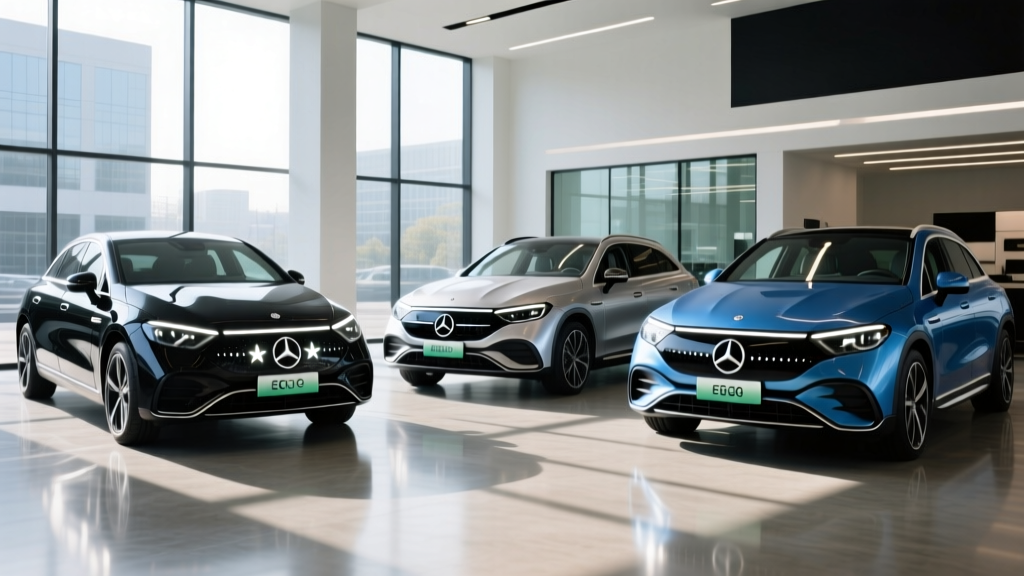
Mercedes-Benz currently sells three fully electric models in the U.S. — the EQE Sedan, EQE SUV, and EQS Sedan — with EPA ranges spanning 230 to 352 miles and base MSRPs from $74,900 to $104,400. None qualify for the federal §30D new-EV tax credit because they exceed the IRS vehicle MSRP cap or fail critical-mineral sourcing requirements. They compete best against other premium EVs (BMW i5, Lucid Air, Tesla Model S) rather than gas equivalents, offering superior cabin quietness and ride quality but trailing rivals in range-per-dollar and DC fast-charge speed. Buy one if you prioritize luxury isolation and already have reliable Level 2 home charging; skip it if maximizing range or minimizing cost is your top priority.
The 2026 Mercedes EV Lineup at a Glance
Mercedes consolidated its electric naming strategy for the 2026 model year, but the three EQ models remaining in U.S. showrooms are built on the dedicated EVA2 platform. Here are the exact figures you need to compare them.
| Model | Trim | Usable Battery (kWh) | EPA Range (mi) | Peak DC Charge (kW) | 10–80% Time | 0–60 mph | Base MSRP |
|---|---|---|---|---|---|---|---|
| EQE Sedan | 350+ | 90.6 (NMC) | 308 | 170 kW | ~32 min | 6.2 sec | $74,900 |
| EQE Sedan | AMG 43 | 90.6 (NMC) | 230 | 170 kW | ~32 min | 4.2 sec | $106,900 |
| EQE SUV | 350 4MATIC | 90.6 (NMC) | 279 | 170 kW | ~32 min | 6.4 sec | $77,900 |
| EQS Sedan | 450+ | 108.4 (NMC) | 352 | 200 kW | ~31 min | 5.9 sec | $104,400 |
| EQS Sedan | AMG 53 | 108.4 (NMC) | 277 | 200 kW | ~31 min | 3.4 sec | $147,900 |
Real-world range caveat: Expect to lose 10–15% on sustained highway driving at 75 mph, and up to 25–30% in sub-freezing winter conditions. The EQS 450+ sticker of 352 miles realistically delivers 280–310 miles on a road trip, while the EQE 350+ will net roughly 250–270 miles in mixed real-world use. Source: fueleconomy.gov.
Mercedes EV vs Gas Equivalent: Cost & Efficiency Data
The natural comparison for a luxury sedan buyer is the Mercedes E-Class (gas) versus the EQE Sedan, or the S-Class versus the EQS. Let's run the numbers with concrete data rather than marketing claims.
| Metric | EQE 350+ Sedan | E 350 Sedan (Gas) | EQS 450+ Sedan | S 500 Sedan (Gas) |
|---|---|---|---|---|
| Base MSRP | $74,900 | $62,300 | $104,400 | $118,300 |
| EPA Efficiency | 87 MPGe combined | 28 MPG combined | 89 MPGe combined | 23 MPG combined |
| Annual Fuel/Energy (15k mi) | ~$620 | ~$1,875 | ~$605 | ~$2,310 |
| Annual Maintenance (est.) | ~$350 | ~$900 | ~$400 | ~$1,200 |
| 5-Year Energy + Maint. | ~$4,850 | ~$13,875 | ~$5,025 | ~$17,550 |
Energy cost assumes $0.16/kWh for home Level 2 charging (the national residential average per the EIA) and $3.50/gallon premium unleaded. The EQE saves roughly $1,800/year in operating costs over the gas E-Class, but the ~$12,600 higher purchase price means the break-even point on fuel and maintenance alone stretches to approximately 7 years — longer than most luxury buyers keep a vehicle.
The EQS actually undercuts the S 500 on MSRP, making it the one Mercedes EV that can genuinely compete on total cost from day one, saving an estimated $2,500/year in energy and maintenance.
Charging Reality: Home Setup and Public Network Experience
Every Mercedes EQ model uses NMC (nickel manganese cobalt) chemistry and ships with an 11 kW onboard AC charger for Level 2 charging. DC fast-charge speeds are the lineup's most notable competitive weakness.
| Level | Power | Connector | Speed (EQE) | Speed (EQS) |
|---|---|---|---|---|
| Level 1 | 1.4 kW (120V) | J1772 / NACS adapter | ~4 mi/hr | ~5 mi/hr |
| Level 2 | 11 kW (240V/48A) | J1772 / NACS | ~34 mi/hr | ~42 mi/hr |
| DC Fast | 170–200 kW peak | CCS1 (native) or NACS adapter | 10–80% in ~32 min | 10–80% in ~31 min |
What this means practically: A Hyundai Ioniq 6 peaks at 240 kW and does 10–80% in 18 minutes. A Tesla Model S at a V3 Supercharger does it in roughly 25 minutes. The Mercedes EQ lineup's 170–200 kW peak and sustained curve taper (dropping sharply above 80% SoC) means road-trip charging stops take noticeably longer than key competitors. Plan for 35–40 minute stops, not 20-minute dashes.
Home charging installation: Most EQ owners will need a 240V/48A Level 2 home charger (like a ChargePoint Home Flex or Mercedes-branded wallbox). Expect $1,200–$2,800 total for the unit plus licensed electrician labor and permits, assuming your electrical panel has capacity. If your home needs a 200-amp panel upgrade, add $1,500–$3,000. Always have a licensed electrician assess your panel before committing to equipment.
Total Cost of Ownership: The Honest 5-Year Picture
Luxury EV ownership costs go well beyond the sticker price. Here is a realistic 5-year/75,000-mile breakdown for the EQE 350+ versus the gas E 350, based on current data.
| Cost Category | EQE 350+ (5 yr) | E 350 Gas (5 yr) |
|---|---|---|
| Purchase Price (base) | $74,900 | $62,300 |
| Federal Tax Credit (§30D) | $0 (MSRP/sourcing fail) | N/A |
| Insurance (avg annual × 5) | $13,500 | $10,750 |
| Energy/Fuel | $3,100 | $9,375 |
| Maintenance | $1,750 | $4,500 |
| Home Charger Install | $2,000 | $0 |
| Estimated Depreciation | $37,450 (50%) | $28,035 (45%) |
| 5-Year Total Cost | $132,700 | $114,960 |
The EQE costs approximately $17,740 more to own over 5 years, driven primarily by higher purchase price, steeper depreciation (a persistent issue for luxury EVs), and elevated insurance premiums. The energy and maintenance savings ($9,025 combined) only partially offset the gap.
Depreciation warning: Luxury EVs have depreciated faster than their gas counterparts in recent years, with some models losing 50–60% of value in 3 years. This is the single largest hidden cost and the reason total cost of ownership rarely favors premium EVs over premium gas cars, despite fuel savings.
Federal Tax Credit & Incentive Eligibility
Under current IRS §30D rules, the Mercedes EQ lineup faces multiple disqualifying hurdles for the new-vehicle federal tax credit:
- MSRP Cap: Sedans must be under $55,000; SUVs/vans under $80,000. The EQS Sedan ($104,400+) and AMG variants are disqualified. The EQE SUV ($77,900 base) clears the SUV cap, but...
- Critical Minerals & Battery Sourcing: The EVA2 platform batteries do not currently meet the escalating critical-minerals and battery-component sourcing thresholds required for 2026. This eliminates the EQE SUV's eligibility even though it clears the MSRP cap.
- Income Caps: Even if a model qualified, buyer AGI must be ≤$150,000 (single) or ≤$300,000 (joint) — check IRS.gov §30D for current-year rules.
- Point-of-Sale Transfer: If you do qualify for any credit, you can transfer it to the dealer at purchase for an immediate price reduction rather than waiting for tax filing.
Used EV credit (§25E): If you find a qualifying pre-owned EQE or EQS under $25,000 from a licensed dealer, you may be eligible for up to $4,000 (30% of sale price, capped). Income limits are lower: $75,000 single / $150,000 joint. Given current luxury EV depreciation, 2–3 year old EQ models are approaching this threshold.
Common Misconceptions About Mercedes EVs
| Myth | Fact (with data) |
|---|---|
| "The EQS has 400+ miles of range" | EPA-certified max is 352 miles (EQS 450+). Real-world highway: ~280–310 mi. No U.S.-spec EQ trim exceeds 352 EPA miles. |
| "Mercedes EVs charge as fast as Tesla" | Peak 170–200 kW vs Tesla's 250 kW V3 Supercharger. 10–80% takes 31–32 min vs ~25 min for Model S. On road trips, this adds up. |
| "All EVs save money vs gas" | At luxury price points, higher purchase cost, insurance, and depreciation often negate fuel savings over a typical 5-year ownership cycle. |
| "I don't need home charging" | Public DC charging costs $0.35–$0.55/kWh (vs $0.16 at home). Without home L2, your annual energy cost roughly triples, destroying the operating-cost advantage. |
| "The battery will need replacing" | Mercedes warranties the HV battery for 10 years/155,000 miles against dropping below 70% State of Health. NMC degradation data from EVA2 vehicles shows ~8–12% capacity loss at 100,000 miles under normal use. |
Decision Framework: Should You Buy a Mercedes EV?
Choose a Mercedes EQ model if:
- You have access to Level 2 home charging (garage or dedicated parking with 240V access)
- Ride comfort, cabin isolation, and brand prestige rank above range-per-dollar in your priorities
- Your typical weekly driving is under 250 miles, meaning one home charge covers most needs
- You're cross-shopping the BMW i5, Audi e-tron GT, or Lucid Air — not the Tesla Model 3 or Hyundai Ioniq 6
- You plan to keep the car 3–4 years and accept above-average depreciation as a luxury ownership cost
Look elsewhere if:
- Maximum range is your top concern (Lucid Air Grand Touring: EPA 516 mi; Tesla Model S: EPA 402 mi)
- Fastest possible road-trip charging matters (Hyundai/Kia E-GMP platform: 10–80% in 18 min at 350 kW chargers)
- You need the $7,500 federal tax credit to make the math work — no current Mercedes EQ qualifies
- You live in an apartment or lack reliable home/workplace charging access
- You're in a region with harsh winters and no garage — expect 25–30% range loss in sub-freezing temps, turning a 308-mile EQE into a ~220-mile car
Frequently Asked Questions
Is Mercedes discontinuing the EQ name and going back to gas?
Mercedes announced in 2025 that it will unify its naming — future EVs will carry standard model names (e.g., "C-Class" for both gas and electric variants) rather than the "EQ" prefix. The current EQE and EQS models remain on sale for 2026, but expect naming changes for the next generation. This does not affect parts, service, or warranty support for existing EQ owners.
How long does the Mercedes EQ battery actually last?
The HV battery warranty covers 10 years or 155,000 miles (whichever comes first) against dropping below 70% State of Health. Real-world EVA2 fleet data suggests NMC cells in these vehicles lose approximately 8–12% capacity over 100,000 miles when charged primarily on Level 2 and kept between 20–80% SoC. Full battery replacement, if ever needed out of warranty, is estimated at $18,000–$28,000 depending on model — though this is rare within the first decade.
Can I charge a Mercedes EQ at a Tesla Supercharger?
Yes, with a NACS adapter. Mercedes EQ models ship with CCS1 connectors natively, but Mercedes provides or sells a NACS adapter that enables access to Tesla's Supercharger network (V3 and V4 stalls). Charge speeds will be limited to the car's peak acceptance rate (170–200 kW), so you won't see Tesla's full 250+ kW capability.
What's the best Mercedes EV for the money in 2026?
The EQE 350+ Sedan at $74,900 offers the strongest value proposition in the lineup: 308 miles EPA range, adequate performance, and the most accessible price point. The EQS 450+ justifies its $104,400 MSRP if you need S-Class space and 352 miles of range. Avoid the AMG variants if efficiency matters — they sacrifice 60–80 miles of range for performance gains that are rarely usable on public roads.
Do Mercedes EVs qualify for any state incentives?
State incentives vary significantly by jurisdiction. Some states (California, Colorado, Massachusetts) offer rebates of $1,000–$5,000 for EVs that don't qualify for the federal credit, often with their own income and MSRP caps. Check your state's energy office or department of environmental quality for current programs — these change frequently and may have funding limits.