Quick Answer: Who Manufactures EVs in the USA?
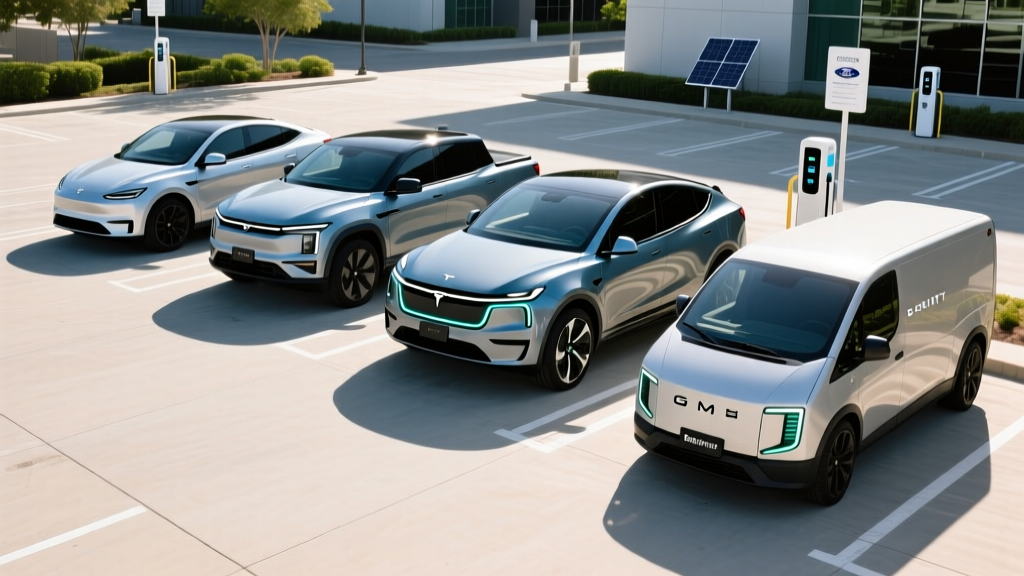
The major electric vehicle manufacturers in the USA producing vehicles on American soil in 2026 include Tesla (Fremont, CA; Austin, TX), Ford (Cuautitlán, Mexico for Mach-E; Wayne, MI for F-150 Lightning components), General Motors (Spring Hill, TN; Orion, MI; Lansing, MI), Rivian (Normal, IL), BMW (Spartanburg, SC — upcoming iX3), Hyundai (Ellabell, GA — Metaplant America), Volkswagen (Chattanooga, TN), and Lucid (Casa Grande, AZ). Several Asian and European brands now build EVs at US plants to qualify for the federal §30D tax credit's domestic battery-assembly requirements.
Why US Manufacturing Matters for EV Buyers in 2026
If you're shopping for an EV, where it's built directly affects your wallet. Under current IRS §30D rules, the up-to-$7,500 federal clean vehicle credit requires that the vehicle's battery components be manufactured or assembled in North America, with critical-mineral sourcing requirements tightening annually. Vehicles assembled outside North America are categorically ineligible.
This has triggered a manufacturing migration. Hyundai invested $7.6 billion in its Georgia Metaplant, VW retooled its Chattanooga facility for the ID.7 and ID. GTX, and GM converted Spring Hill into a dedicated Ultium EV plant. The result: more EVs now qualify for point-of-sale credit transfers than at any point since the Inflation Reduction Act took effect.
But qualifying on paper and qualifying for you are different things. Income caps ($150,000 single / $300,000 joint AGI), MSRP limits ($55,000 sedans / $80,000 SUVs, trucks, vans), and battery-sourcing rules all filter the list. Let's break down the actual vehicles, their real-world numbers, and what ownership looks like.
Major US-Built EVs: Specs, Range, and Charging Compared
Below is a spec comparison of the highest-volume electric vehicles manufactured in the USA for the 2026 model year. All range figures are EPA estimates; real-world notes reflect highway and cold-weather testing.
| Vehicle (Plant) | Battery (kWh) | EPA Range | Real-World Hwy | Peak DC kW | 10–80% | 0–60 mph | Base MSRP |
|---|---|---|---|---|---|---|---|
| Tesla Model Y (Austin, TX) | 75 (NMC) | 320 mi | ~265–280 mi | 250 kW | ~22 min | 5.0 s | $44,990 |
| Tesla Model 3 (Fremont, CA) | 60 (LFP) / 75 (NMC) | 272–341 mi | ~230–290 mi | 170–250 kW | 22–30 min | 3.1–5.8 s | $38,990 |
| Ford F-150 Lightning (Dearborn, MI) | 98 (Std) / 131 (Ext, NMC) | 240–320 mi | ~195–260 mi | 150 kW | ~41 min | 3.8–4.5 s | $54,995 |
| Cadillac Lyriq (Spring Hill, TN) | 102 (NMC, Ultium) | 314 mi | ~255–275 mi | 190 kW | ~28 min | 4.6 s | $57,795 |
| Chevrolet Equinox EV (Spring Hill, TN) | 85 (NMC, Ultium) | 319 mi | ~260–280 mi | 150 kW | ~32 min | 7.9 s | $33,600 |
| Rivian R1S (Normal, IL) | 92 (Std) / 149 (Max, NMC) | 270–410 mi | ~220–340 mi | 200 kW | ~30 min | 3.0–4.5 s | $79,900 |
| VW ID.7 (Chattanooga, TN) | 86 (NMC) | 300 mi (est.) | ~245–265 mi | 200 kW | ~26 min | 5.5 s | $49,995 |
| Hyundai Ioniq 5 (Ellabell, GA) | 84 (NMC) | 305 mi | ~250–270 mi | 240 kW | ~18 min | 5.1 s | $42,600 |
Real-World Range Reality: EPA estimates assume a mix of city regen-braking and moderate-speed highway driving. In sustained 70+ mph highway driving at 35°F, expect 20–30% range reduction versus the sticker. The F-150 Lightning Extended Range, for instance, drops from 320 EPA miles to roughly 210–230 miles in cold highway conditions — a critical factor if you're towing or commuting in northern states.
EV vs. Gas vs. Hybrid: The Real Cost Equation
The decision between an American-built EV, a conventional hybrid, and a gas vehicle hinges on your driving pattern, electricity cost, and ownership timeline. Here's a five-year cost projection for a midsize SUV comparison:
| Cost Factor (5 yr / 75,000 mi) | Tesla Model Y AWD | Toyota RAV4 Hybrid | Toyota RAV4 Gas (AWD) |
|---|---|---|---|
| Purchase Price (after credits) | $37,490* | $33,500 | $30,500 |
| Fuel / Electricity | $3,375 (home L2, $0.15/kWh) | $6,750 (39 MPG, $3.50/gal) | $9,000 (30 MPG, $3.50/gal) |
| Maintenance | $1,200 | $3,200 | $3,800 |
| Insurance (avg.) | $8,500 | $6,500 | $6,200 |
| Estimated Depreciation | $16,500 | $12,000 | $13,000 |
| 5-Year Total | $67,065 | $61,950 | $62,500 |
*Assumes full $7,500 §30D point-of-sale credit. Eligibility depends on AGI, MSRP cap, and battery sourcing — verify at fueleconomy.gov before purchasing.
The Model Y narrows the gap primarily through fuel and maintenance savings — EVs have no oil changes, no transmission fluid, and significantly less brake wear due to regenerative braking. However, higher insurance premiums (typically 20–35% above equivalent gas vehicles) and steeper depreciation partially offset those gains. The break-even point versus a gas RAV4 typically arrives around year 4–5 for drivers covering 15,000+ miles annually with home charging.
US Manufacturing Hubs: Who Builds Where
Understanding the manufacturing footprint helps when evaluating build quality, parts availability, and credit eligibility. Here's the current landscape:
Tesla — Fremont, CA & Austin, TX
Tesla remains the highest-volume US EV manufacturer. The Fremont plant produces Model 3 and Model S/X, while Giga Texas handles Model Y and Cybertruck. Tesla's vertical integration — including in-house battery cell production at the Austin 4680 cell line — gives it strong control over §30D critical-mineral compliance. The NACS connector, now adopted by nearly every major automaker for 2025+, originated here and grants Tesla owners access to 25,000+ Supercharger stalls nationwide.
General Motors — Spring Hill, TN & Lansing, MI
GM's Ultium platform underpins the Chevrolet Equinox EV, Blazer EV, Cadillac Lyriq, and upcoming Cadillac Optiq. Spring Hill is the volume leader. GM's strength is offering a $33,600 entry point (Equinox EV) with 319 miles of EPA range — the most affordable long-range EV built in America. However, real-world DC charging peaks at 150 kW, which is noticeably slower than Hyundai's 240 kW or Tesla's 250 kW on road trips.
Ford — Dearborn, MI
The F-150 Lightning is the only full-size electric pickup assembled in the US (Rivian's R1T is also US-built but positioned as a premium lifestyle truck). Ford's challenge: the Lightning's 150 kW peak charge rate and heavy curb weight (~6,500 lbs) mean highway efficiency sits around 2.0–2.2 kWh/mile — roughly 45–50 MPGe. For comparison, a Tesla Model Y achieves 3.5–3.8 mi/kWh (115–130 MPGe equivalent). The Lightning excels as a work truck with Pro Power Onboard V2L capability (up to 9.6 kW output), but it's a poor choice for frequent long-distance driving.
Rivian — Normal, IL
Rivian's R1S and R1T occupy the premium adventure segment. The Max Pack battery (149 kWh, NMC) delivers an EPA-estimated 410 miles in the R1S — the longest range of any US-built EV. However, MSRP starts at $79,900, pushing it above the §30D SUV cap in many configurations. Rivian's dual-motor and quad-motor powertrains are class-leading for off-road capability, but service-center density remains thin outside major metro areas.
Hyundai — Ellabell, GA (Metaplant America)
Hyundai's new Georgia facility began Ioniq 5 production for the US market in late 2024, resolving the model's prior §30D ineligibility (it was previously built in Korea). The 800V architecture enables 240 kW peak charging — 10–80% in approximately 18 minutes at a compatible station, the fastest in its class. This is the EV to beat for road-trip charging speed among US-built vehicles.
Common Misconceptions About American-Made EVs
| Myth | Fact |
|---|---|
| "All EVs qualify for the $7,500 tax credit." | Under §30D, the vehicle must be assembled in North America, meet battery-component and critical-mineral sourcing thresholds, fall under MSRP caps ($55K sedans / $80K SUVs/trucks), and the buyer must fall under AGI limits ($150K single / $300K joint). Many popular EVs qualify for only $3,750 or $0 depending on the model year's sourcing rules. |
| "American-built means lower quality." | Modern EV plants (Giga Texas, Metaplant Georgia, Spring Hill) use robotics and quality-control systems identical to or newer than overseas facilities. The Hyundai Ioniq 5 from Georgia matches or exceeds the build quality of its Korean predecessor. |
| "EV batteries don't last and cost $20,000 to replace." | Federal law mandates an 8-year/100,000-mile battery warranty. Real-world degradation data shows most NMC packs lose 8–12% capacity over 100,000 miles. LFP packs (Tesla Model 3 RWD) degrade even less (~5–8%). Full replacement is rare and prices have dropped — a Model 3 pack replacement runs $8,000–$12,000 in 2026, not $20,000+. |
| "I need a Tesla to use Superchargers." | Since 2024, Tesla has opened select Supercharger stalls to NACS-equipped non-Tesla EVs via the Magic Dock adapter or native NACS ports (Ford, GM, Rivian, Hyundai vehicles built for 2025+). The network is no longer Tesla-exclusive. |
| "EVs are worse in winter." | EVs lose 20–30% range in freezing temps, but they start reliably (no cold-cranking), heat instantly via heat pump, and precondition the battery while plugged in. For commutes under 60 miles round-trip, winter range loss is a non-issue with home charging. |
First-Time Buyer Decision Framework
Choose a US-Built EV If:
- You have access to Level 2 home charging (240V, 32–48A circuit) or a reliable workplace charger
- Your daily driving is under 80 miles round-trip (covers 90%+ of Americans, per FHWA data)
- You plan to keep the vehicle 5+ years (amortizes the higher upfront cost)
- Your household AGI is under §30D thresholds and the vehicle qualifies
- You value minimal maintenance and fuel-cost predictability
Choose a Hybrid (HEV/PHEV) Instead If:
- You live in an apartment or lack access to any Level 2 charging
- You regularly drive 300+ miles in a single day through charging-desert regions (rural Plains, parts of the Mountain West)
- Your budget is under $30,000 and you need a new vehicle (no new EVs exist at this price point)
- You tow frequently — hybrid trucks (Ford Maverick Hybrid, 37 MPG) outperform EVs for sustained towing range
Wait or Reconsider If:
- Your only charging option is a standard 120V outlet and your daily drive exceeds 30 miles (Level 1 adds only 3–5 miles per hour of charging)
- You're buying solely for the tax credit without running the full 5-year math — some hybrids save nearly as much with lower upfront cost
Home Charging: The Make-or-Break Factor
Among electric vehicle manufacturers in the USA, none can solve the home-charging access problem for you. Here's the reality:
| Level | Voltage / Amps | Power (kW) | Miles Added/Hour | Typical Install Cost |
|---|---|---|---|---|
| Level 1 (standard outlet) | 120V / 12A | 1.4 kW | 3–5 mi/hr | $0 (included cord) |
| Level 2 (home wall connector) | 240V / 32–48A | 7.7–11.5 kW | 25–44 mi/hr | $500–$2,500* |
| DC Fast Charging (public) | 400–800V DC | 50–350 kW | 150–800 mi/hr | Pay per use ($0.30–$0.60/kWh) |
*Level 2 installation ranges from $500 (simple NEMA 14-50 outlet near panel) to $2,500+ if a panel upgrade from 100A to 200A service is required. Always get a quote from a licensed electrician before purchasing equipment.
For a vehicle like the Chevrolet Equinox EV (85 kWh usable), a 48A Level 2 charger delivers a full 0–100% charge in roughly 9 hours — overnight, every night. This is the ownership experience that makes EVs work: plug in when you get home, wake up to a full battery, and visit a DC fast charger only on road trips.
Frequently Asked Questions
Which electric vehicle manufacturers in the USA offer the most affordable EV?
The Chevrolet Equinox EV (built in Spring Hill, TN) starts at $33,600 MSRP with 319 miles of EPA range — the lowest-priced long-range EV manufactured in the US. After a potential $7,500 §30D point-of-sale credit, the effective price drops to approximately $26,100, undercutting most gas-powered compact SUVs. Confirm credit eligibility at the point of sale, as battery-sourcing compliance varies by production batch.
Do American-made EVs charge faster than imports?
Not inherently. Charge speed depends on the vehicle's electrical architecture, not its assembly location. The Hyundai Ioniq 5 (now built in Georgia) charges at 240 kW peak thanks to its 800V platform — faster than most competitors regardless of origin. The Ford F-150 Lightning, despite being American-made, peaks at only 150 kW on a 400V architecture. Always check the peak kW rating and the 10–80% charge time, not the badge.
What happens if my EV battery degrades past the warranty threshold?
Federal law requires manufacturers to warrant the battery for at least 8 years / 100,000 miles (California-emissions states: 10 years / 150,000 miles). The warranty typically guarantees the battery retains 70% of original capacity. In practice, most modern NMC and LFP packs lose only 8–12% over 100,000 miles based on fleet data. If a pack does fall below the threshold, the manufacturer replaces or refurbishes it at no cost. Out-of-warranty replacement for a mid-size pack runs $8,000–$14,000 in 2026 — significant, but far below the $20,000+ figures often cited in outdated sources.
Can I get the federal tax credit on a used American-made EV?
Yes, under the separate §25E used clean vehicle credit. The used EV must be at least 2 model years old, sell for $25,000 or less, be purchased from a dealer, and the buyer's AGI must not exceed $75,000 (single) / $150,000 (joint). The credit is 30% of the sale price up to $4,000. This makes a 3-year-old Tesla Model 3 from Fremont an exceptional value — often under $21,000 after credit.
Are parts and service harder to find for US-built EVs from newer brands?
It depends on the brand. Tesla operates 1,300+ service centers and mobile service vans nationwide. Ford and GM leverage their existing dealer networks (3,000+ and 4,000+ locations respectively), though not all dealers are EV-certified. Rivian operates ~55 service centers and relies on mobile service vans for many markets — a real limitation in rural areas. Before purchasing from a newer manufacturer, verify the nearest authorized service location and ask about loaner-vehicle availability.
Bottom Line: Pick the Manufacturer That Fits Your Charging Reality
The landscape of electric vehicle manufacturers in the USA has matured beyond Tesla's dominance. GM offers the best value proposition (Equinox EV at $33,600 / 319 miles). Hyundai delivers the fastest charging (Ioniq 5 at 240 kW). Ford owns the electric work-truck segment (Lightning with 9.6 kW V2L). Rivian leads in range and off-road capability (R1S Max at 410 miles). Tesla remains the safest bet for charging-network access and resale liquidity.
Your optimal choice depends less on brand loyalty and more on three factors: your home charging situation, your daily mileage, and whether the vehicle clears §30D eligibility for your specific tax situation. Run the five-year cost math with your actual electricity rate, insurance quote, and annual miles — not the brochure numbers — before signing.