The Electric Vehicle Hummer EV: Quick Verdict
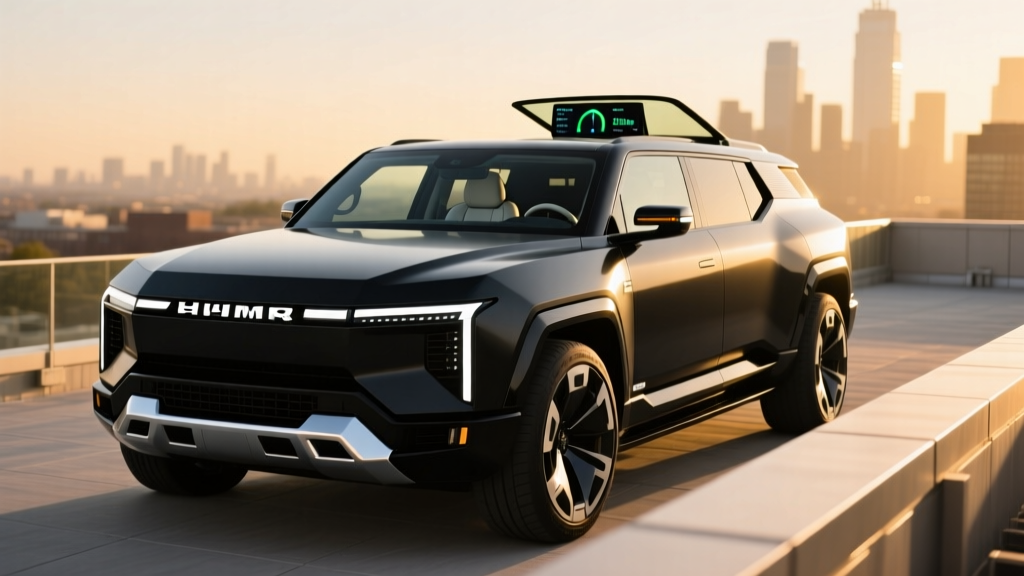
The 2026 GMC Hummer EV is the most extreme electric vehicle Hummer ever built — a 1,000-horsepower, 9,000-pound supertruck with up to 314 miles of EPA-estimated range and 350 kW DC fast-charging capability. Starting at roughly $99,000 (before any incentives), it is not an EV for efficiency seekers. It's a statement vehicle for buyers who want unmatched off-road capability, Watts to Freedom launch mode, and the sheer presence of a Hummer — now without the fuel bill of its V8 predecessors. If you have Level 2 home charging, a garage that fits a 206-inch vehicle, and the budget for premium insurance, the Hummer EV delivers a genuinely unique ownership experience. If you're cross-shopping for practicality, the Rivian R1T or Ford F-150 Lightning will serve you better at lower cost.
What Is the Electric Vehicle Hummer EV?
When GMC revived the Hummer nameplate in 2022, it did so exclusively as an electric vehicle. The 2026 GMC Hummer EV comes in two body styles: the Pickup and the SUV. Both ride on GM's Ultium battery platform and share the same core powertrain architecture. The lineup has simplified for 2026, but the engineering remains extraordinary.
The Hummer EV 2X (the volume trim) uses a dual-motor all-wheel-drive setup producing 625 horsepower. The 3X trim adds a third motor for a combined output of up to 1,000 horsepower in Watts to Freedom (WTF) mode — a launch-control feature that drops the air suspension, preconditions the battery, and delivers a 0-60 mph time of roughly 3.0 seconds in a vehicle that weighs over four tons.
| Spec | 2X (Dual Motor) | 3X (Tri Motor) |
|---|---|---|
| EPA Range (Pickup) | ~314 mi | ~292 mi |
| Usable Battery Capacity | ~212 kWh (NMC) | ~212 kWh (NMC) |
| Horsepower | 625 hp | 1,000 hp (WTF mode) |
| 0-60 mph | ~5.0 sec | ~3.0 sec (WTF mode) |
| Max DC Fast Charge Rate | 350 kW (peak) | 350 kW (peak) |
| 10-80% DC Charge Time | ~30 min (est.) | ~30 min (est.) |
| Level 2 Charge Rate | 11.5 kW | 11.5 kW |
| Towing Capacity | 7,500 lbs | 7,500 lbs |
| Ground Clearance (Max) | 15.9 in (Extract Mode) | 15.9 in (Extract Mode) |
| Base MSRP (Pickup) | ~$99,000 | ~$119,400 |
Real-World Range Reality: The EPA rates the 2X Pickup at approximately 314 miles. In real-world highway driving at 70-75 mph, expect closer to 250-270 miles. In cold weather (below 30°F), range can drop 20-30%, putting real-world winter range around 200-220 miles for the 2X. The 212 kWh battery is massive, which helps absorb the loss, but the Hummer EV's aerodynamic profile (a brick) and 9,000-pound curb weight work against efficiency. According to fueleconomy.gov, combined MPGe sits in the low-to-mid 40s — far below more streamlined EVs.
Charging the Hummer EV: What You Need to Know
The Hummer EV's 212 kWh battery pack is one of the largest ever fitted to a production passenger vehicle. That size is both its greatest strength and its biggest charging challenge.
DC Fast Charging
GMC supports up to 350 kW peak DC fast charging on 800-volt architecture. In practice, the charge curve peaks briefly and then tapers significantly to protect the enormous battery. You'll see the highest speeds between roughly 10-30% state of charge. A 10-80% session takes approximately 30 minutes at a capable 350 kW station (like Electrify America or EVgo's newest stalls). On a more common 150 kW charger, budget 50-60 minutes for that same 10-80% session. The sheer size of the battery means even at high power, you're filling a very large tank.
Level 2 Home Charging — The Real Bottleneck
This is where Hummer EV ownership requires serious planning. The onboard charger accepts up to 11.5 kW on Level 2. Here's what that means in practice:
- 0-100% on Level 2 (11.5 kW): Approximately 18-20 hours.
- Typical overnight session (10 hours): Adds roughly 115 kWh, or about 150-170 miles of range.
- Electrical requirement: A 60-amp dedicated circuit (48 amps continuous) is recommended to deliver the full 11.5 kW.
If your home electrical panel is already near capacity — common in older homes with 100-amp service — you may need a panel upgrade to 200 amps before installing a Level 2 charger. Budget $1,500-$3,000+ for a panel upgrade on top of $500-$1,500 for the charger and basic installation. Consult a licensed electrician for your specific situation.
For daily driving of 40-60 miles, overnight Level 2 charging is more than sufficient. But if you deplete the battery significantly on a road trip or towing run, a full recharge at home is a multi-day affair without DC fast-charging access nearby.
Hummer EV vs. Gas Hummer vs. Rivals: Cost & Capability
The original H2 Hummer averaged roughly 10-13 MPG combined. Let's compare the operating economics of the electric vehicle Hummer against its spiritual predecessor and its direct EV rivals.
| Metric | 2026 Hummer EV 2X | 2009 Hummer H2 (Used) | 2026 Rivian R1T Dual |
|---|---|---|---|
| Base Price | ~$99,000 | ~$15,000-$25,000 (used) | ~$79,900 |
| EPA Range / Tank Range | 314 mi | ~310 mi (35-gal tank) | ~352 mi (Max Pack) |
| Efficiency | ~47 MPGe | ~11 MPG | ~73 MPGe |
| Cost per Mile (Fuel/Energy)* | ~$0.05-$0.07 | ~$0.30-$0.38 | ~$0.04-$0.06 |
| Annual Fuel/Energy (15k mi)** | ~$800-$1,100 | ~$4,500-$5,700 | ~$650-$950 |
| Annual Maintenance (Est.) | ~$300-$500 | ~$1,500-$2,500 | ~$300-$500 |
*Based on $0.15/kWh home charging and $3.50/gal gasoline. DC fast charging at $0.35-$0.48/kWh raises the Hummer EV cost per mile to ~$0.12-$0.16. **15,000 miles/year, 80% home / 20% DC fast charging assumed for EVs.
The fuel savings versus a gas Hummer are dramatic — roughly $3,500-$4,800 per year. But compared to a more efficient EV like the Rivian R1T, the Hummer EV's energy cost is higher due to its weight and poor aerodynamics. The R1T also charges faster in practice thanks to a smaller battery and similar peak charge rate.
Real Ownership Costs: 5-Year Breakdown
Here's a realistic 5-year / 75,000-mile ownership projection for the Hummer EV 2X, compared to a gas full-size truck (the GMC Sierra 1500 Denali, a reasonable cross-shop at a similar price point).
| Category | Hummer EV 2X | GMC Sierra 1500 Denali (Gas) |
|---|---|---|
| Purchase Price (MSRP) | $99,000 | $72,000 |
| Federal Tax Credit (§30D) | Up to $7,500* | $0 |
| Energy/Fuel (75k mi) | $4,500-$5,500 | $12,000-$15,000 |
| Maintenance | $1,500-$2,500 | $4,000-$6,000 |
| Insurance (5 years) | $15,000-$20,000 | $9,000-$12,000 |
| Estimated Depreciation | $40,000-$50,000 | $25,000-$32,000 |
| Home Charger Install | $1,000-$3,500 | $0 |
| 5-Year Total (Est.) | $121,000-$150,500 | $97,000-$110,000 |
*Federal §30D tax credit eligibility depends on MSRP caps ($80,000 for trucks — the Hummer EV exceeds this cap), buyer income limits, and battery component/critical mineral sourcing requirements. As of 2026, the Hummer EV likely does NOT qualify for the full $7,500 credit due to the MSRP cap. Always verify current rules at IRS.gov and consult a tax professional.
The key takeaway: the Hummer EV saves substantially on fuel and maintenance, but higher insurance premiums (often 40-60% above comparable gas trucks), steeper depreciation on a six-figure EV, and the MSRP-cap tax-credit disqualification narrow the economic advantage considerably. This is not an EV you buy to save money — it's one you buy for the experience.
Tax Credits and Incentives: Does the Hummer EV Qualify?
This is where many buyers get tripped up. The federal §30D clean vehicle credit has strict rules that work against the Hummer EV:
- MSRP Cap: For trucks (including the Hummer EV Pickup), the cap is $80,000. The Hummer EV's starting MSRP of ~$99,000 exceeds this threshold, making it ineligible for the federal credit at current pricing.
- Buyer Income Limits: Even for qualifying vehicles, adjusted gross income must not exceed $300,000 (joint), $225,000 (head of household), or $150,000 (individual).
- Battery Sourcing Requirements: Increasingly strict critical mineral and battery component sourcing rules apply, with percentages that escalate each year.
- Point-of-Sale Transfer: For vehicles that do qualify, the credit can now be transferred to the dealer at purchase for an immediate price reduction.
Some state and local incentives may still apply regardless of MSRP caps — check your state's energy office or the Alternative Fuels Data Center for local programs. Utility companies sometimes offer rebates for home charger installation or off-peak charging credits that can offset ownership costs modestly.
Common Misconceptions About the Electric Vehicle Hummer
| Myth | Fact |
|---|---|
| "It's just as bad for the environment as a gas Hummer." | Even on the average US grid mix, the Hummer EV produces significantly fewer lifecycle emissions than a 10-MPG gas Hummer. On clean grids (hydro, wind, solar-heavy regions), the advantage is overwhelming. The large battery does mean higher manufacturing emissions upfront, but the break-even point typically arrives within 2-3 years of average driving. |
| "It charges as fast as any other EV." | While it supports 350 kW peak, the 212 kWh battery means even at peak power you're adding roughly 1.6% of capacity per minute at best. A smaller-battery EV at 250 kW fills proportionally faster. Plan for longer charging stops than an Ioniq 5 or Tesla Model Y. |
| "You can't take it off-road." | The Hummer EV's Extract Mode raises the suspension to 15.9 inches of ground clearance. It has locking differentials, underbody armor, and torque vectoring. It's genuinely capable off-road — the 9,000-pound weight is the main limitation in soft terrain. |
| "The range is over 300 miles so I'll never worry." | 314 EPA miles sounds excellent, but highway driving, cold weather, and towing can cut that by 30-50%. Towing a 5,000-lb trailer at highway speed may yield as little as 150-180 miles before needing a charge. |
| "Any home outlet will charge it." | A standard 120V outlet (Level 1) adds roughly 3-4 miles of range per hour to the Hummer EV. To fully charge from empty would take over 60 hours. A dedicated Level 2 (240V, 60A circuit) is effectively mandatory for practical ownership. |
Who Should Buy the Hummer EV — Decision Framework
Choose the Hummer EV If:
- You want a genuinely unique, head-turning EV with no direct equivalent in size, presence, and off-road capability.
- You have a garage or parking space that accommodates a vehicle over 206 inches long and 86 inches wide (mirrors out — check your space).
- You have or can install a 240V/60A Level 2 charger at home, and your electrical panel has the headroom.
- You prioritize capability and fun (Watts to Freedom, CrabWalk, Extract Mode) over efficiency and low operating cost.
- You understand this is a $100,000+ vehicle that will depreciate more steeply than mainstream EVs.
Look Elsewhere If:
- You need a practical daily-driver truck for commuting and light hauling — the Ford F-150 Lightning (from ~$55,000) or Rivian R1T (from ~$79,900) are more livable and efficient.
- You frequently tow long distances — the Hummer EV's range drops dramatically under load, and DC fast-charging a 212 kWh battery on the road is time-consuming.
- You lack reliable home or workplace Level 2 charging access. Public-charging-only Hummer EV ownership would be frustrating given the battery size.
- You're buying primarily for fuel savings — the math doesn't justify the premium over a gas truck when you factor in depreciation and insurance.
- You live in an area with sparse DC fast-charging infrastructure. The Hummer EV's battery is so large that Level 2 "top-ups" at destinations won't recover meaningful range quickly.
Battery Longevity and Warranty
GM covers the Hummer EV's Ultium battery pack with an 8-year / 100,000-mile warranty against defects and excessive capacity loss (typically defined as dropping below 60-70% of original capacity, per GM's warranty documentation). The NMC chemistry in the 212 kWh pack is proven but heavier and slightly more degradation-prone than LFP over very high cycle counts. However, the pack is so large that even 10-15% degradation over 100,000 miles would still leave 265+ miles of range — well within usable territory.
Practical battery care tips for Hummer EV owners:
- For daily driving, charge to 80-90% rather than 100% to reduce stress on the NMC cells.
- Use preconditioning (available via the MyGMC app) before DC fast charging to optimize charge speed and battery health.
- Avoid regularly sitting at 100% state of charge for extended periods, especially in hot climates.
- The massive battery means you can comfortably operate in a 20-80% window and still have 190+ miles of range — this "middle of the pack" usage pattern is ideal for long-term health.
Frequently Asked Questions
How much does it cost to charge a Hummer EV at home?
At the US average residential electricity rate of roughly $0.15/kWh, fully charging the 212 kWh battery from empty costs approximately $32. For a typical 50% recharge (adding ~106 kWh), expect about $16. Monthly home charging costs for 1,000 miles of driving run roughly $70-$90, compared to $300-$380 in gasoline for a Hummer H2.
Can the Hummer EV CrabWalk actually be useful?
CrabWalk uses four-wheel steering to move the vehicle diagonally at low speeds. It's genuinely helpful on tight off-road trails where you need to navigate around obstacles without a multi-point turn. On pavement, it's more of a party trick. The rear-wheel steering also reduces the turning circle at normal speeds, which matters in a vehicle this large.
Is the Hummer EV eligible for any tax credits in 2026?
Due to its MSRP exceeding the $80,000 truck cap under §30D, the Hummer EV is unlikely to qualify for the federal $7,500 credit. Some state incentives (like certain utility rebates or state-level EV credits) may not have MSRP caps. Always verify at IRS.gov and your state energy office before purchasing.
How does the Hummer EV handle in winter?
The dual- and tri-motor AWD systems provide excellent traction, and the 9,000-pound mass gives it stability. However, expect 20-30% range loss in sustained sub-30°F temperatures. The heat pump helps cabin efficiency, but the massive cabin volume takes energy to heat. Budget for ~200-220 real-world winter miles on the 2X, and plan charging stops accordingly.
What happens if the battery needs replacement out of warranty?
Full battery pack replacement on a 212 kWh Ultium pack would be extremely costly — estimates for packs of this size range from $25,000 to $40,000+ including labor. However, GM's modular Ultium architecture may allow individual module replacement rather than the full pack, potentially reducing costs. Battery failures within the 8-year/100,000-mile warranty period are covered. Given the pack's size, moderate degradation is unlikely to render the vehicle impractical even after significant mileage.