Quick Answer: Are Electric Vehicle Fleets Worth It in 2026?
For most commercial fleets running predictable routes under 200 miles per day with depot charging access, electric vehicle fleets now deliver a lower total cost of ownership (TCO) than gasoline or diesel equivalents. The break-even point typically arrives within 2–4 years, driven by fuel savings ($0.10–$0.14 per mile for electricity vs. $0.18–$0.25 for gas at 2026 prices), reduced maintenance (no oil changes, fewer brake replacements due to regenerative braking), and available federal tax credits up to $7,500 per vehicle under IRS §30D. The catch: fleets without reliable overnight depot charging, those operating in extreme cold climates, or those requiring long unpredictable routes will face real operational friction that can erase projected savings.
Fleet electrification has moved beyond pilot programs. By early 2026, major commercial operators from delivery services to municipal governments are scaling electric vehicle fleets past the early-adopter phase. The Ford E-Transit, Chevrolet Silverado EV, and Tesla Semi are all in active production and deployment. But the economics depend heavily on specific duty cycles, charging infrastructure investment, and local electricity rates. This guide breaks down the real numbers.
Electric Vehicle Fleet Economics: The Real Cost Breakdown
The decision to electrify a fleet comes down to total cost of ownership, not just sticker price. Electric vehicles carry higher upfront costs but dramatically lower operating expenses. Here's how the numbers stack up for a typical light-duty commercial fleet vehicle (using the Ford E-Transit cargo van as a representative example):
| Cost Category | Ford E-Transit (EV) | Ford Transit 3.5L V6 (Gas) |
|---|---|---|
| Base MSRP (2026) | $49,995 | $42,500 |
| Federal Tax Credit (§30D) | −$7,500 (if eligible) | $0 |
| Net Purchase Price | $42,495 | $42,500 |
| Fuel/Energy (5 yrs, 75k mi) | $9,375 ($0.125/mi) | $16,125 ($0.215/mi) |
| Maintenance (5 yrs) | $2,800 | $5,600 |
| Insurance (5 yrs est.) | $11,250 | $9,500 |
| Depreciation (5 yrs est.) | $18,000 | $15,000 |
| 5-Year TCO | $83,920 | $88,725 |
| Cost per mile | $1.12 | $1.18 |
The EV wins by roughly $4,800 over five years in this scenario. But note the assumptions: the fleet qualifies for the full §30D credit, has depot-level Level 2 charging installed, drives under 126 miles per day (within the E-Transit's real-world range), and operates in a moderate climate. Change any of those variables and the equation shifts.
Critical §30D caveat: The federal clean vehicle credit has MSRP caps (vans/SUVs/pickups: $80,000; sedans: $55,000), buyer income limits, and battery critical-mineral sourcing requirements that tighten annually. For commercial fleets purchasing vehicles, the §45W Commercial Clean Vehicle Credit may apply instead, offering up to $7,500 for vehicles under 14,000 lbs GVWR and up to $40,000 for heavier vehicles. Consult a tax professional to determine which credit applies to your fleet's business structure.
Fleet EV vs. Gas vs. Hybrid: Which Powertrain Fits Your Duty Cycle?
| Factor | Battery EV (BEV) | Plug-in Hybrid (PHEV) | Gasoline (ICE) |
|---|---|---|---|
| Fuel cost per mile | $0.10–$0.15 | $0.12–$0.20 (varies) | $0.18–$0.25 |
| Maintenance cost/mile | $0.04–$0.06 | $0.07–$0.10 | $0.08–$0.12 |
| Daily range (real-world) | 120–300 mi | 30–45 mi electric + gas | 350–500 mi |
| Refueling/recharging time | 6–10 hrs (L2 depot) | 2–4 hrs (L2) + gas | 5 minutes |
| Cold-weather range loss | 20–35% | Minimal (gas backup) | Minimal |
| Upfront cost premium | +$5,000–$15,000 | +$3,000–$8,000 | Baseline |
| Best duty cycle | Predictable routes, depot return | Mixed urban/highway | Long-haul, unpredictable |
BEVs dominate for last-mile delivery, municipal services, and corporate shuttle routes where vehicles return to a central depot each night. PHEVs like the Chrysler Pacifica Hybrid (32 miles electric-only EPA, 30 MPG combined on gas) serve fleets with mixed duty cycles — short urban runs on electricity, longer highway stretches on gasoline. Gasoline remains the pragmatic choice for long-haul routes exceeding 250 miles or operations in regions with limited charging infrastructure.
Charging Infrastructure: The Hidden Fleet Cost
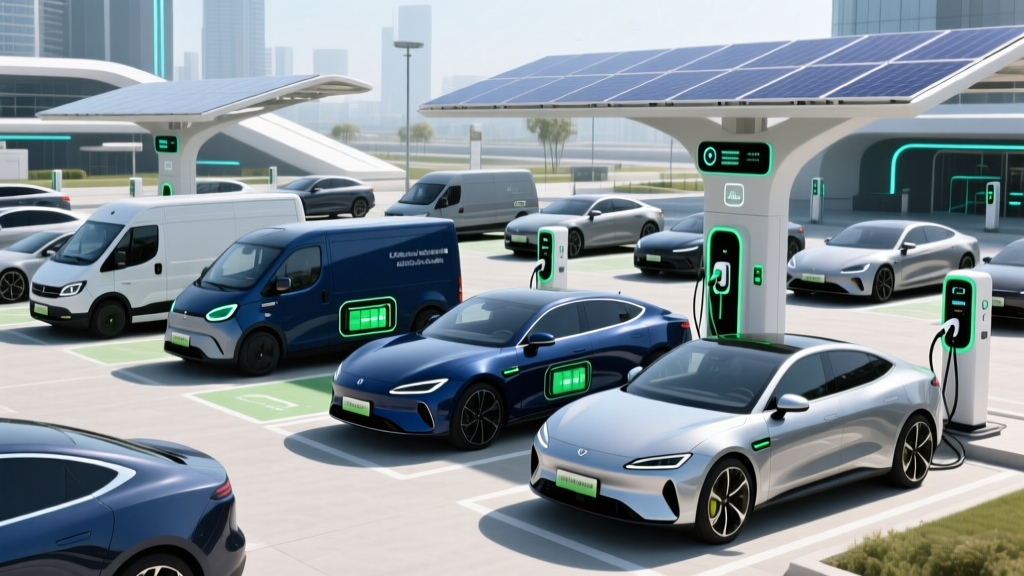
The single largest barrier to fleet electrification isn't the vehicles — it's the charging infrastructure. A 20-vehicle fleet depot needs serious electrical capacity.
Level 2 Depot Charging Costs
| Component | Cost Range |
|---|---|
| Level 2 chargers (19.2 kW each × 10) | $25,000–$45,000 |
| Electrical panel upgrade (to 400A+ service) | $8,000–$25,000 |
| Trenching, conduit, wiring | $12,000–$30,000 |
| Permits and engineering | $3,000–$8,000 |
| Load management software | $2,000–$5,000/yr |
| Total estimated install | $50,000–$113,000 |
| Per-charger cost | $5,000–$11,300 |
kW vs. kWh reminder: A 19.2 kW Level 2 charger delivers 19.2 kilowatt-hours (kWh) of energy per hour of charging. A Ford E-Transit with a 68 kWh usable battery will fully recharge in roughly 4 hours on a 19.2 kW charger, or about 8 hours on a standard 7.7 kW Level 2 unit. For overnight depot charging, 7.7 kW units are often sufficient and reduce panel-upgrade costs significantly.
Many utilities offer commercial EV charging rate programs with off-peak electricity as low as $0.06–$0.09/kWh. At $0.08/kWh and 3 miles per kWh (typical for an E-Transit), the effective fuel cost drops to roughly $0.027 per mile — a fraction of gasoline. Load management software (like ChargePoint Fleet or EV Connect) staggers charging across vehicles to avoid demand charges that can spike commercial electricity bills.
DC Fast Charging for Fleets: When You Need It
For fleets requiring mid-day top-ups or operating on tighter schedules, on-site DC fast chargers (50–150 kW) can add 100+ miles of range in 20–30 minutes. However, DC fast charger installation runs $50,000–$150,000+ per unit including utility service upgrades, making them viable only for high-utilization fleets. Most fleet operators find that overnight Level 2 depot charging covers 85–95% of their needs, supplemented by public DC fast charging for occasional longer routes.
Real-World Range and Performance: What Fleet Managers Actually Experience
EPA range stickers don't tell the whole story for fleet operations. Real-world range depends on payload, driving style, terrain, climate, and accessory use (especially HVAC). Here's what to expect from popular fleet EVs in 2026:
| Vehicle | Battery (kWh) | EPA Range | Real-World Fleet Range* | Max DC Charge (kW) | 10–80% Time | Base MSRP |
|---|---|---|---|---|---|---|
| Ford E-Transit (low roof) | 68 usable (NMC) | 126 mi | 95–115 mi | 115 kW | ~35 min | $49,995 |
| Chevrolet Silverado EV 4WT | 200+ (NMC) | 400 mi | 310–360 mi | 350 kW | ~20 min | $74,800 |
| Tesla Semi (300 mi variant) | ~500 (NMC) | 300 mi (est.) | 230–280 mi | ~1,000 kW (Megacharger) | ~30 min | $250,000 |
| BrightDrop Zevo 400 | 165 (NMC) | 250 mi | 190–230 mi | 150 kW | ~35 min | ~$90,000 |
*Real-world fleet range estimates based on mixed urban/suburban driving with moderate payload, 65–75°F. Expect 20–35% reduction in freezing temperatures, 10–15% reduction at sustained highway speeds (70+ mph), and 5–10% reduction with full payload.
The Ford E-Transit's 126-mile EPA range is the most common pain point. For last-mile delivery routes averaging 60–80 miles per day, it works well. For longer routes, the range requires careful planning. Ford's upcoming extended-range E-Transit variants (announced, estimated 180+ miles EPA) may address this gap, but as of early 2026, the standard 68 kWh pack is what's shipping.
Fleet-Specific Misconceptions: Fact vs. Fiction
| Myth | Fact |
|---|---|
| "EV batteries won't last the life of the fleet vehicle" | Most fleet EVs carry 8-year/100,000-mile battery warranties with ≥70% capacity retention thresholds. Real-world degradation data from fueleconomy.gov and fleet operators shows 10–15% capacity loss over 100k miles for NMC packs, and often less for LFP chemistry. |
| "Charging takes too long for fleet operations" | Overnight depot charging (6–10 hours on Level 2) fully recharges most fleet EVs during off-hours. Only high-utilization or multi-shift operations need mid-day fast charging. |
| "Electricity rates are too volatile for budgeting" | Commercial EV charging rates from utilities are typically locked into 1–3 year contracts, providing far more price stability than gasoline, which fluctuates weekly. |
| "EVs can't handle cold climates" | Cold weather reduces EV range by 20–35% (verified in AAA and Consumer Reports testing). This is real but manageable: fleets in Minnesota, Michigan, and Norway successfully operate EVs by oversizing routes by 30% in winter and using preconditioning while plugged in. |
| "The tax credit covers the full cost difference" | §30D and §45W credits reduce but rarely eliminate the EV price premium. The real savings come from lower per-mile operating costs over 3–5 years. |
Decision Framework: Should Your Fleet Go Electric?
Use this if-then framework to evaluate fleet electrification for your operation:
Choose BEV fleet vehicles if:
- Daily routes are predictable and under 80% of the vehicle's real-world range
- Vehicles return to a central depot nightly for 6+ hours
- Your depot has (or can get) 200A+ electrical service
- Local utility offers commercial off-peak EV charging rates below $0.10/kWh
- Your fleet qualifies for §45W commercial or §30D clean vehicle credits
- Annual mileage per vehicle exceeds 12,000 miles (faster payback on fuel savings)
Choose PHEV fleet vehicles if:
- Routes are mixed — short urban stops plus occasional 100+ mile highway runs
- Depot charging is available but route unpredictability makes pure BEV risky
- You want to reduce fuel costs without committing to full electrification
- Example: Chrysler Pacifica PHEV (32 mi electric, 30 MPG gas combined) for shuttle or sales fleets
Stick with gasoline/diesel if:
- Daily routes regularly exceed 250 miles with no mid-day charging opportunity
- Fleet operates in extreme cold (below 0°F regularly) without garage parking
- No access to depot or home charging and public charging infrastructure is sparse in your area
- Vehicles are used fewer than 8,000 miles per year (operating savings won't offset higher purchase price)
First-Time Fleet EV Buyer Checklist
If you're transitioning your first fleet vehicles to electric, here's what to tackle before placing an order:
- Audit your duty cycles. Pull GPS or telematics data for the last 90 days. Calculate daily miles, peak miles, idle time, and payload weight for each vehicle. This data determines which EVs can actually handle your routes.
- Get an electrical assessment. Hire a licensed electrician to evaluate your depot's panel capacity. A 10-charger Level 2 installation at 7.7 kW each draws roughly 77 kW continuous — most existing 200A commercial panels won't support this without an upgrade.
- Apply for utility incentives. Many utilities offer $2,000–$5,000 per charger in rebates, plus free or discounted make-ready infrastructure. These can cut installation costs by 30–50%.
- Verify tax credit eligibility. Check IRS §45W requirements for commercial vehicles. The credit has battery sourcing and final-assembly requirements that change annually.
- Start with 2–3 vehicles. Run a controlled pilot before committing the entire fleet. Track real energy consumption, charging time, driver feedback, and any route adjustments needed.
- Budget for insurance. EV fleet insurance premiums run 10–25% higher than gas equivalents in 2026, driven by higher repair costs and parts pricing. Get quotes before finalizing TCO projections.
Fleet EV Ownership: Maintenance and Long-Term Considerations
EVs eliminate the most common fleet maintenance items: oil changes, transmission service, spark plugs, exhaust systems, and (largely) brake pad replacement thanks to regenerative braking. Fleet operators typically report 40–60% lower maintenance costs per mile for EVs vs. gasoline equivalents.
However, EVs introduce new cost considerations:
- Tire wear: EVs are 15–25% heavier than gas equivalents and deliver instant torque, accelerating tire wear by 10–20%. Budget for replacement tires 6–12 months sooner than gas fleet vehicles.
- Battery replacement: Out-of-warranty battery replacement runs $10,000–$25,000 depending on the vehicle and pack size. However, most fleet vehicles will be retired before the battery needs replacement. The 8-year/100,000-mile warranty covers most fleet lifecycles.
- Charger maintenance: Budget 1–2% of charger installation cost annually for maintenance, firmware updates, and occasional hardware repairs.
- Software and telematics: Fleet management platforms (Geotab, Samsara, ChargePoint Fleet) add $5–$15 per vehicle per month for route optimization, charge scheduling, and energy monitoring.
Frequently Asked Questions
How long does it take to charge a fleet EV overnight?
A Ford E-Transit (68 kWh battery) charges from 20% to 100% in approximately 7 hours on a 7.7 kW Level 2 charger, or about 3.5 hours on a 19.2 kW Level 2 charger. For most fleet applications where vehicles return with 20–30% state of charge, overnight charging on standard 7.7 kW units is sufficient.
Do electric vehicle fleets qualify for the $7,500 federal tax credit?
It depends on how the vehicles are titled. If purchased by a business entity, the §45W Commercial Clean Vehicle Credit applies — up to $7,500 for vehicles under 14,000 lbs GVWR, with different battery sourcing and MSRP rules than the consumer §30D credit. Vehicles must meet North American final assembly and critical mineral sourcing requirements. Eligibility changes annually, so verify current-year rules with a tax professional.
What happens if an EV fleet vehicle runs out of charge on a route?
This is the same operational risk as a gas vehicle running out of fuel, but with longer recovery time. A mobile charge unit or flatbed tow to the nearest DC fast charger adds 45–90 minutes of downtime vs. 15 minutes for a gas can. Most fleet operators mitigate this by setting route maximums at 80% of real-world range and equipping dispatch with real-time state-of-charge monitoring via telematics.
Can fleet EVs handle towing and heavy payloads?
Yes, but payload and towing reduce range. The Chevrolet Silverado EV 4WT has a 10,000-lb towing capacity and 1,800-lb payload, but towing at maximum capacity can reduce real-world range by 30–40%. Fleet managers should calculate range based on loaded, not empty, conditions.
What's the best fleet management software for EV fleets?
Leading platforms in 2026 include Geotab (strong EV-specific analytics including state-of-charge tracking and range prediction), ChargePoint Fleet (integrated charger + vehicle management), and Samsara (broad fleet telematics with EV modules). Expect to pay $10–$20 per vehicle per month. The key feature to evaluate is charge scheduling — software that staggers charging to minimize demand charges and ensure all vehicles are ready by departure time.
How do extreme temperatures affect fleet EV range?
In testing by AAA and confirmed by fleet operators, EVs lose 20–35% of their range at 20°F compared to 75°F, primarily due to battery chemistry limitations and cabin heating demands. In extreme heat (100°F+), losses are smaller (5–15%) but battery degradation accelerates if vehicles regularly charge above 80% state of charge in high temperatures. Fleets in cold climates should spec routes at 65–70% of EPA range in winter, and invest in preconditioning infrastructure (heating the battery while plugged in before departure).