Quick Answer: Is an Electric Tuktuk Right for You?
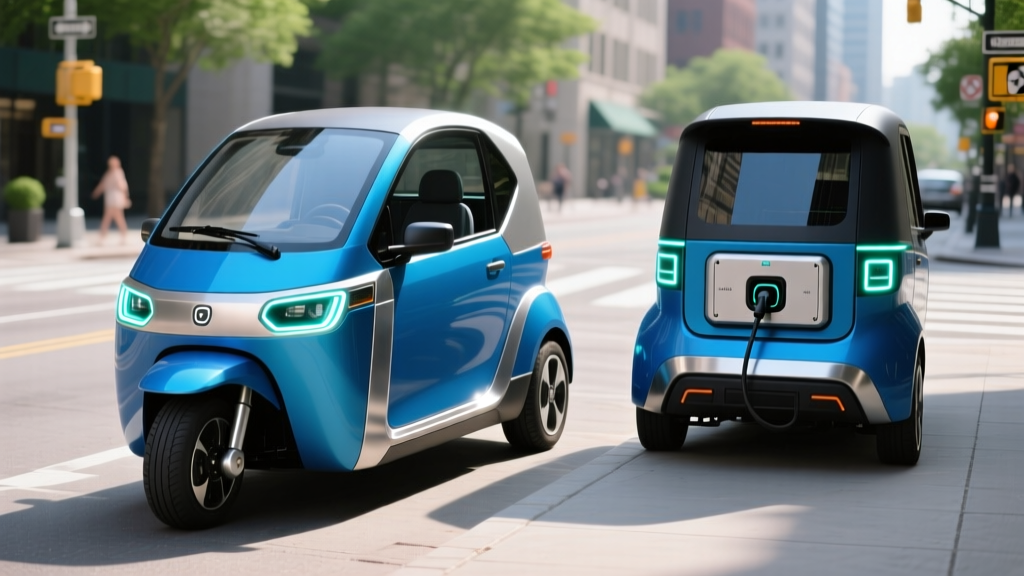
An electric tuktuk is a compact, three-wheeled battery-electric vehicle (BEV) designed primarily for short-range urban and campus transport. Most models offer 30–60 miles of EPA-equivalent range on a 5–15 kWh lithium-ion battery, with top speeds of 25–45 mph. In the United States, electric tuktuks are generally classified as Low-Speed Vehicles (LSVs) or Neighborhood Electric Vehicles (NEVs) under FMVSS standards and are not street-legal on roads with speed limits above 35 mph in most states. Prices range from $6,000 to $18,000 before any applicable incentives. They are best suited for resort properties, university campuses, planned communities, and private commercial fleets — not as replacements for a conventional passenger car.
What Exactly Is an Electric Tuktuk?
The tuktuk — also known as an auto-rickshaw — originated as a gas-powered three-wheeled passenger vehicle common across South and Southeast Asia. The electric tuktuk replaces the internal-combustion engine with a battery-electric powertrain: typically a 3–10 kW electric motor driving the rear axle, paired with an LFP (lithium iron phosphate) or NMC (nickel manganese cobalt) battery pack mounted under the floor or seat bench.
Modern electric tuktuks sold in or imported to the US fall into several categories:
- Neighborhood Electric Vehicles (NEVs): FMVSS-compliant, limited to 25 mph, street-legal on roads with speed limits ≤35 mph.
- Low-Speed Vehicles (LSVs): Federally regulated, require VIN, seat belts, headlamps, and registration. Max speed 25 mph.
- Off-road / private-property vehicles: Not street-legal; used on campuses, resorts, farms, and private commercial sites.
- Medium-speed variants (emerging): Some manufacturers offer 35–45 mph models, but US street legality varies heavily by state and municipality.
If you're considering an electric tuktuk, the first question is not range or price — it's where you are legally allowed to drive it.
Street Legality in the US: What You Must Know
The National Highway Traffic Safety Administration (NHTSA) classifies three-wheeled low-speed vehicles under specific FMVSS standards. Key requirements for a street-legal LSV include:
- Maximum speed of 25 mph
- VIN number and manufacturer certification
- Headlamps, turn signals, tail lamps, and reflectors
- Exterior mirrors and a parking brake
- Seat belts for all seating positions
- Windshield (glazed, meeting safety standards)
Even if an electric tuktuk meets federal LSV standards, state and local laws determine whether it can be registered and driven on public roads. States like California, Florida, and Texas have relatively permissive NEV/LSV laws, while others restrict three-wheeled vehicles more tightly. Always check with your state DMV before purchasing.
Imported tuktuks from India, Thailand, or China may not meet FMVSS requirements out of the box. Importing a non-compliant vehicle for road use can result in seizure at the port. If you're buying from an overseas supplier, confirm FMVSS compliance documentation in writing before shipping.
Electric Tuktuk Specs: Battery, Range, and Charging
Here is a representative spec breakdown based on electric tuktuk models available or importable to the US market as of 2026:
| Spec | Entry-Level / Fleet | Mid-Range / Passenger | Premium / Commercial |
|---|---|---|---|
| Battery Capacity | 5–8 kWh (LFP) | 10–12 kWh (LFP) | 12–15 kWh (NMC) |
| Motor Power | 3–5 kW | 5–7 kW | 7–10 kW |
| Top Speed | 25 mph | 25–35 mph | 35–45 mph |
| Range (rated) | 30–40 mi | 40–55 mi | 50–65 mi |
| Range (real-world, loaded) | 20–30 mi | 30–45 mi | 40–55 mi |
| Charge Time (120V Level 1) | 5–7 hours | 8–12 hours | 10–14 hours |
| Charge Time (240V Level 2) | 2–3 hours | 3–5 hours | 4–6 hours |
| Seating | 2–3 passengers | 4–6 passengers | 4–6 passengers |
| Curb Weight | 600–900 lbs | 900–1,300 lbs | 1,200–1,600 lbs |
| Base Price (USD) | $6,000–$9,000 | $10,000–$14,000 | $14,000–$18,000+ |
Real-World Range vs. Rated Range
Electric tuktuks carry small batteries and are highly sensitive to load and terrain. A tuktuk rated for 50 miles may deliver only 30–35 miles with 4–6 passengers aboard or in hilly areas. Cold weather (below 40°F) can reduce range by 15–30% depending on battery chemistry — LFP packs tend to lose more range in cold conditions than NMC, though they offer longer cycle life and better thermal stability in warm climates. If your daily route exceeds 25 miles round-trip with a full load, plan for mid-day opportunity charging or choose a larger battery pack.
Electric Tuktuk vs. Gas Tuktuk vs. Golf Cart: Cost Comparison
Many buyers considering an electric tuktuk are also evaluating gas-powered tuktuks and electric golf carts. Here is how the economics compare over a 3-year ownership horizon:
| Cost Factor | Electric Tuktuk | Gas Tuktuk (200cc) | Electric Golf Cart (4-seat) |
|---|---|---|---|
| Purchase Price | $12,000 | $7,500 | $11,000 |
| Fuel / Energy (3 yrs, 5,000 mi/yr) | $450 (at $0.15/kWh) | $2,250 (at $3.50/gal, 35 mpg) | $400 (at $0.15/kWh) |
| Maintenance (3 yrs) | $300 | $1,500 (oil, filters, belts, exhaust) | $250 |
| Insurance (3 yrs) | $900–$1,500 | $1,200–$1,800 | $600–$1,000 |
| Battery Replacement Reserve | $0 (under warranty) | N/A | $0 (under warranty) |
| Estimated 3-Year Total | $13,650–$14,250 | $12,450–$13,050 | $12,250–$12,650 |
The electric tuktuk has a higher purchase price but significantly lower operating costs. The break-even point against a gas tuktuk typically arrives around year 2–3 depending on mileage and local fuel/electricity prices. For commercial fleets running 10,000+ miles per year, the savings compound quickly.
Charging Setup: What You Actually Need
Most electric tuktuks ship with a Level 1 (120V) onboard charger that plugs into a standard household outlet. This is adequate for overnight charging if your daily use is under 20–25 miles. However, for commercial operations or higher-mileage use cases, a Level 2 (240V) charging station dramatically reduces downtime.
| Level | Voltage | Power (kW) | Miles Added per Hour | Full Charge Time (10 kWh battery) |
|---|---|---|---|---|
| Level 1 (standard outlet) | 120V | 1.0–1.4 kW | 3–5 mi/hr | 8–12 hours |
| Level 2 (dedicated circuit) | 240V | 2.0–3.3 kW | 8–12 mi/hr | 3–5 hours |
Installation cost for a Level 2 circuit typically ranges from $500 to $2,000 depending on whether your electrical panel has capacity and the distance from panel to charging location. A licensed electrician should assess your setup — some older panels may need a 200-amp upgrade ($1,500–$3,500) before adding a dedicated 240V circuit. For fleet operations, budget for multiple Level 2 stations or a smart load-management system to avoid panel overloads.
Tax Credits and Incentives: Does the §30D Credit Apply?
This is where many buyers get confused. The federal IRS §30D clean vehicle credit (up to $7,500) applies to four-wheeled vehicles that meet specific MSRP caps, buyer income limits, battery sourcing requirements, and final-assembly rules. Because most tuktuks are three-wheeled, they do not qualify for the §30D credit.
However, there are adjacent incentives worth investigating:
- Commercial clean vehicle credit (§45W): Businesses may qualify for up to $7,500 on qualifying vehicles under 14,000 lbs GVWR — some three-wheeled commercial EVs may qualify, but confirm with a tax professional.
- State and local incentives: Some states (notably California's CVRP and various utility rebates) offer incentives for neighborhood electric vehicles or low-speed EVs. Check your state energy office and local utility.
- Fleet and commercial grants: Municipal and campus fleets may qualify for EPA or DOE electrification grants that cover three-wheeled vehicles.
Always verify current-year incentive rules with official sources — eligibility criteria change frequently.
Common Misconceptions About Electric Tuktuks
| Myth | Fact |
|---|---|
| "You can drive a tuktuk on any US road." | Most are limited to roads with speed limits of 35 mph or less. Driving an LSV on a 45+ mph road is illegal in most states and dangerous given the lack of crash protection. |
| "Electric tuktuks need no maintenance." | While they eliminate oil changes and exhaust repairs, you still need brake service, tire replacement, suspension checks, and battery health monitoring. Budget $100–$200/year. |
| "Any imported tuktuk is street-legal." | Imported tuktuks must meet FMVSS standards to be registered for road use. Many Asian-market models lack required safety equipment and cannot be legally imported for street driving. |
| "The battery will need replacing in 2–3 years." | Modern LFP batteries in tuktuks are rated for 1,500–3,000 charge cycles. At one cycle per day, that's 4–8 years before significant degradation. Most manufacturers offer 3–5 year battery warranties. |
| "They're as safe as a car." | Tuktuks lack airbags, crumple zones, and the mass of a passenger car. They are appropriate for low-speed, controlled environments — not mixed highway traffic. |
Decision Framework: Should You Buy an Electric Tuktuk?
If-Then Guide for Buyers
- If you need a vehicle for a resort, campus, or private property → An electric tuktuk is an excellent fit. Low operating costs, zero local emissions, and passenger-friendly open-air design make it ideal for hospitality and institutional transport.
- If you want a street-legal commuter for a planned community with ≤35 mph roads → A street-legal NEV/LSV tuktuk can work, but confirm your state and local regulations first. Consider a 4-seat model with a 10+ kWh battery for practical daily range.
- If you need highway-capable transport → An electric tuktuk is not suitable. Look at a conventional BEV like the Chevrolet Bolt EV or Nissan LEAF instead.
- If you're comparing to a gas tuktuk for commercial use → The electric version will cost more upfront but saves $1,500–$2,500 over 3 years in fuel and maintenance. For fleets, the per-unit savings multiply significantly.
- If you lack access to a dedicated charging outlet → Charging on a standard 120V outlet is possible but slow (8–12 hours for a full charge). If you can't install a 240V circuit, limit your daily driving to under 20 miles or consider a smaller battery model you can charge via a portable generator as a backup.
- If cold winters are a factor (below 30°F regularly) → Expect 20–30% range loss. Garage storage and opportunity charging become essential. NMC batteries handle cold slightly better than LFP but trade cycle life for it.
What First-Time Electric Tuktuk Buyers Should Know
If this is your first electrified vehicle purchase, keep these practical realities in mind:
- Test before you buy. Ride quality, noise, braking feel, and visibility vary enormously between manufacturers. If you're buying online or importing, request a video walkaround and ride-along at minimum.
- Verify warranty terms in writing. Specifically, ask about battery capacity retention thresholds (e.g., "warranty covers degradation below 70% capacity within 5 years"), motor warranty, and whether parts are available in the US.
- Insurance can be tricky. Not all insurers write policies for three-wheeled LSVs. Get insurance quotes before finalizing your purchase — premiums for specialty vehicles can be higher than expected.
- Plan your charging infrastructure before delivery. Having a dedicated 240V outlet ready on day one avoids the frustration of slow Level 1 charging and range limitations.
- Register early. If you need street-legal registration, start the DMV process before the vehicle arrives. Some states require inspections, VIN verification, or special plates for LSVs.
Frequently Asked Questions
How far can an electric tuktuk really go on a single charge?
Rated range is typically 30–65 miles depending on battery size (5–15 kWh). Real-world range with passengers and moderate terrain is 20–55 miles. Cold weather reduces this further by 15–30%.
Can I drive an electric tuktuk on the highway?
No. Even the fastest models top out around 45 mph, and most are limited to 25 mph for LSV compliance. They are not designed for, and are not legal on, roads with speed limits above 35 mph in most jurisdictions.
How long does the battery last before it needs replacing?
Modern LFP batteries are rated for 1,500–3,000 full charge cycles. At daily use, that translates to roughly 4–8 years before capacity drops below 80%. Replacement battery packs cost $1,500–$4,000 depending on size and chemistry.
Does the federal EV tax credit apply to electric tuktuks?
Generally no. The IRS §30D credit requires four wheels. Three-wheeled tuktuks may qualify under the commercial vehicle credit (§45W) for business use, but consult a tax professional to confirm eligibility for your specific situation.
What's the difference between LFP and NMC batteries in a tuktuk?
LFP (lithium iron phosphate) batteries offer longer cycle life, better thermal safety, and lower cost, but lower energy density and worse cold-weather performance. NMC (nickel manganese cobalt) batteries pack more energy into a smaller space and handle cold better, but have shorter cycle life and higher cost. For warm-climate, daily-cycle fleet use, LFP is usually the better choice.
How much does it cost to charge an electric tuktuk per day?
At $0.15/kWh (US residential average) and a 10 kWh battery, a full charge costs about $1.50 — enough for 30–45 miles of driving. That's roughly $0.03–$0.05 per mile, compared to $0.10–$0.15 per mile for a gas tuktuk at current fuel prices.
Can I import a tuktuk from Thailand or India?
You can import one, but making it street-legal is a separate challenge. The vehicle must meet FMVSS standards for LSVs, including specific lighting, braking, and glazing requirements. Many Asian-market tuktuks do not meet these standards. Work with a registered importer and confirm compliance before purchasing.