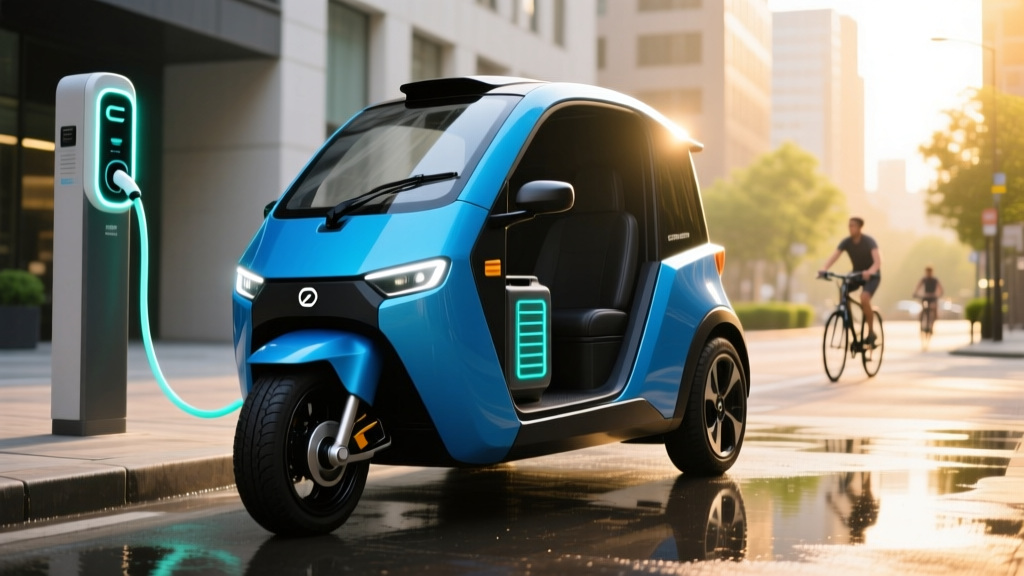
For commercial micro-mobility and urban transport, the electric tuk-tuk (three-wheeler) has shifted from a niche curiosity to a practical alternative for last-mile logistics and tourism. In 2026, the market is led by models like the Mahindra Treo and the Piaggio Ape E-City, offering ranges between 75 and 110 miles on a single charge.
Quick Verdict: Is an Electric Tuk Right for You?
- Best For: Urban delivery services, resort shuttles, and dense-city ride-hailing where daily mileage is under 60 miles.
- Upfront Cost: $6,500–$12,000 (before commercial incentives).
- Key Advantage: Fuel savings of ~65% compared to gas equivalents and significantly lower maintenance.
- Primary Limitation: Highway speeds (most are capped at 25–45 mph) and limited range for inter-city travel.
While these vehicles are not designed for the American interstate system, they are increasingly viable for private campuses, large-scale event venues, and specific municipal commercial zones. This guide breaks down the technical specifications and ownership realities of the modern electric three-wheeler.
Technical Specifications and Battery Chemistry
Most 2026 electric tuk-tuks utilize LFP (Lithium Iron Phosphate) chemistry. While LFP has a lower energy density than the NMC batteries found in most US passenger EVs, it offers superior thermal stability and a longer cycle life—essential for commercial vehicles that may be charged daily or even twice daily.
| Feature | Mahindra Treo (2026) | Piaggio Ape E-City |
|---|---|---|
| Battery Capacity | 77.4 kWh (LFP) | 8.9 kWh (LFP) |
| EPA-Est. Range | ~85 miles | ~110 miles |
| Peak Power | 15 kW (20 HP) | 18 kW (24 HP) |
| Top Speed | 45 mph | 40 mph |
| Charging Time (L2) | 3.5 hours | 4.5 hours |
| Payload Capacity | ~1,100 lbs | ~1,300 lbs |
Cost Breakdown: Electric Tuk vs. Gas Equivalent
The economic case for an electric tuk-tuk is built on the "cost-per-mile" metric. In a commercial setting, where vehicles are driven 40–60 miles a day, the savings on energy and maintenance are substantial.
| Category | Electric Tuk (Annual) | Gas Tuk (Annual) |
|---|---|---|
| Energy/Fuel Cost | $450 (at $0.15/kWh) | $1,400 (at $3.50/gal) |
| Maintenance | $150 (tires, cabin filter) | $550 (oil, plugs, belts) |
| Insurance | $900 | $750 |
| Total Annual Op-Cost | $1,500 | $2,700 |
Charging Infrastructure and Ownership Realities
Unlike passenger EVs, most electric tuks do not use the NACS or CCS connectors. They typically rely on standard 120V (Level 1) or 240V (Level 2) industrial plugs. This makes "fueling" incredibly easy for business owners with existing garage infrastructure, but it limits public charging options.
Decision Framework: Choosing Your Micro-Mobility Solution
- Choose Electric if: Your routes are predictable, under 70 miles daily, and you have a dedicated overnight parking spot with 240V access.
- Choose Gas if: You operate in rural areas, require high-speed road travel, or need to cover more than 100 miles in a single shift without downtime.
- Choose Hybrid if: You want electric efficiency in the city but need a gas engine for occasional long-distance logistics.
Federal Incentives and Commercial Credits
While the standard §30D tax credit is for personal passenger vehicles, many electric tuks qualify for the Commercial Clean Vehicle Credit (§45W). This can provide a credit of up to $7,500 for vehicles under 14,000 lbs, provided they meet the same battery-sourcing and MSRP requirements as personal EVs. Always consult a tax professional to verify eligibility for your specific business entity.
Common Misconceptions Addressed
| Myth | Fact |
|---|---|
| "They are just golf carts." | Modern tuks are commercial-grade with reinforced suspensions and LFP batteries designed for 2,000+ cycles. |
| "The batteries won't last." | LFP chemistry typically outlasts NMC in high-use scenarios, often retaining 80% capacity after 8 years. |
| "They can't handle hills." | With peak torque available at 0 RPM, 15–20 kW motors handle urban gradients better than gas 50cc equivalents. |
FAQ
Do I need a special license to drive an electric tuk?
Regulations vary by state. In many jurisdictions, three-wheeled vehicles with a top speed under 45 mph may be classified as "autocycles" or low-speed vehicles (LSVs), which sometimes have different licensing or registration requirements than standard passenger cars.
Can I charge a tuk-tuk at a public station?
Generally, no. Most public stations use CCS or NACS. Tuk-tuks usually require a standard industrial outlet or a proprietary wall-box provided by the manufacturer.