The Short Answer: A New Electric Truck Under $20K Doesn't Exist Yet
If you're searching for a new electric truck at $20K, the honest answer in 2026 is that no manufacturer sells one at that price point. The most affordable new electric pickups — the Ford Maverick Hybrid (not fully electric) and entry-level trims of trucks like the Chevrolet Silverado EV and Ford F-150 Lightning — start between $39,995 and $55,000 before incentives. However, a used electric truck under $20,000 is becoming possible in 2026, particularly with early-model Ford F-150 Lightnings (2022–2023 model years) depreciating into the $18,000–$24,000 range on the secondary market, and the federal used-EV tax credit (up to $4,000 under IRS §25E) bringing effective costs closer to that $20K threshold.
What Electric Trucks Actually Cost in 2026
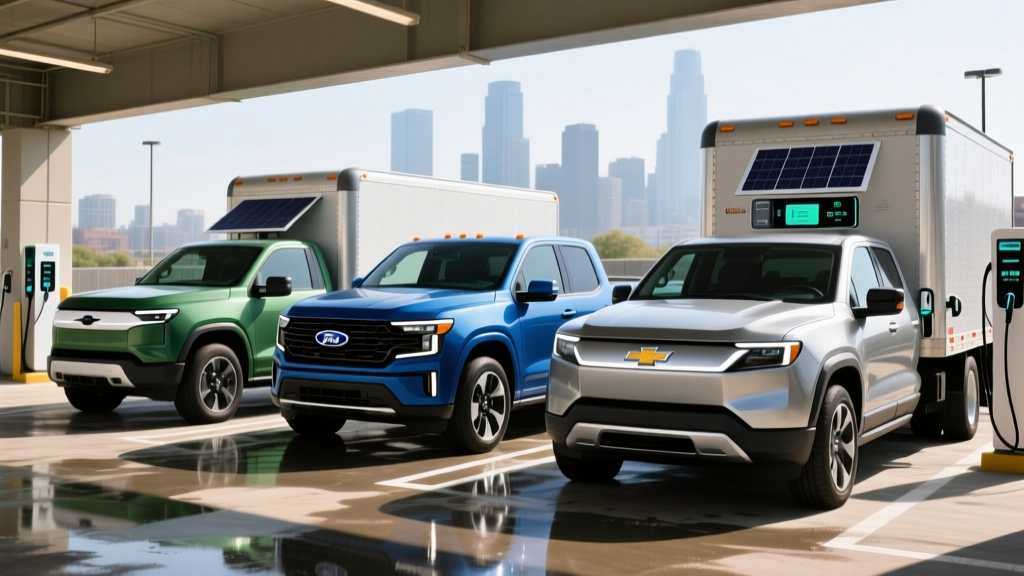
The electric truck market has matured since the Ford F-150 Lightning and Rivian R1T launched in 2022, but affordability remains the biggest barrier. Here's where new electric pickups actually price out for the 2026 model year:
| Model | Base MSRP (2026) | EPA Range | Battery (kWh) | Max DC Fast Charge | §30D Credit Eligible? |
|---|---|---|---|---|---|
| Ford F-150 Lightning (Pro) | $54,995 | 240 mi (Std Range) | 98 kWh usable (NMC) | 150 kW | Yes — up to $7,500 |
| Chevrolet Silverado EV (4WT) | $39,900 (work truck) | 280 mi | 100 kWh (NMC) | 200 kW | Yes — up to $7,500 |
| Rivian R1T (Standard) | $69,900 | 270 mi | 95 kWh (NMC) | 200 kW | Yes — up to $7,500 |
| Tesla Cybertruck (RWD) | $60,990 | 250 mi | ~100 kWh (NMC est.) | 250 kW | Yes — up to $7,500 |
The Chevrolet Silverado EV 4WT at $39,900 is the closest thing to a "budget" new electric truck, but it's a stripped-down work truck with minimal creature comforts. For a crew-cab, feature-competitive electric pickup, you're looking at $55,000+ before incentives.
After the §30D federal tax credit (up to $7,500, subject to income caps, MSRP limits of $80,000 for trucks, and critical-mineral/battery-sourcing requirements per IRS §30D rules), the Silverado EV 4WT drops to roughly $32,400 effective cost — still far from $20K.
The Used Electric Truck Path to $20K
Here's where the "electric truck 20k" search actually yields results. As of early 2026, early Ford F-150 Lightning models (2022–2023) are hitting the used market in meaningful numbers, and depreciation has been steep — partly due to battery-health concerns among second owners and the rapid pace of new EV introductions.
Current used-market pricing for the F-150 Lightning:
- 2022 F-150 Lightning Pro (Standard Range): $18,500–$23,000 depending on mileage and condition
- 2022 F-150 Lightning XLT (Standard Range): $21,000–$26,000
- 2023 F-150 Lightning Pro (Extended Range, 131 kWh): $24,000–$29,000
The federal used clean vehicle credit (§25E) provides up to $4,000 or 30% of the sale price (whichever is less) for qualified used EVs purchased from a dealer, with buyer income caps of $75,000 single / $150,000 joint. A 2022 Lightning Pro at $20,000 from a qualifying dealer could net a $4,000 credit, bringing effective cost to $16,000 — genuinely under $20K. However, this credit has strict requirements: the vehicle must be at least two model years old, sold through a licensed dealer, priced at or below $25,000, and the buyer must meet income thresholds. Always verify current eligibility with your tax professional.
Effective Cost Breakdown: Used F-150 Lightning vs. Comparable Gas Truck
| Cost Factor | Used 2022 F-150 Lightning Pro | Used 2022 F-150 Gas (XLT, 3.5L EcoBoost) |
|---|---|---|
| Purchase Price (dealer avg.) | $20,500 | $28,000 |
| Federal Tax Credit | −$4,000 (§25E) | $0 |
| Effective Purchase | $16,500 | $28,000 |
| Annual Fuel/Energy (15,000 mi/yr) | $720 (home charging at $0.14/kWh) | $2,250 (gas at $3.50/gal, 18 MPG combined) |
| Annual Maintenance | $350 (no oil changes, fewer wear items) | $850 (oil, filters, transmission service) |
| Insurance (annual avg.) | $2,100 | $1,500 |
| 5-Year Total Operating Cost | $15,850 | $23,000 |
| 5-Year Total Cost of Ownership | $32,350 | $51,000 |
Assumptions: 15,000 miles/year, 85% home Level 2 charging, electricity at national average $0.14/kWh, gas at $3.50/gal. Insurance is higher for EVs due to repair costs. Source: fueleconomy.gov for efficiency data.
Real-World Range and Charging: What to Expect
The 2022–2023 F-150 Lightning Standard Range carries a 98 kWh usable NMC battery with an EPA-rated 240 miles. Real-world range tells a different story depending on conditions:
EPA Range: 240 miles (Standard Range) / 320 miles (Extended Range)
Real-World Expectations:
- Mixed driving (city/highway, moderate temps): 210–225 miles
- Highway at 70+ mph: 185–200 miles
- Cold weather (below 32°F): 155–180 miles (30–35% loss typical for NMC packs without preconditioning)
- Towing (5,000 lb trailer): 110–140 miles — electric trucks lose range dramatically under load
On DC fast charging, the Standard Range Lightning peaks at 150 kW, achieving a 10–80% charge in approximately 34 minutes at a compatible station. However, the charge curve tapers significantly above 80% — a full 10–100% session takes closer to 55 minutes. The Extended Range model (131 kWh) supports up to 150 kW as well but takes longer due to the larger pack, approximately 41 minutes for 10–80%.
For home Level 2 charging on a 48-amp (11.5 kW) circuit, expect roughly 9 hours from empty to full on the Standard Range pack. This is the critical ownership variable: if you cannot charge at home, an electric truck becomes significantly less practical. Public DC fast charging costs $0.35–$0.55/kWh in most markets, which erases much of the fuel-cost advantage and adds substantial time to your routine.
Electric Truck vs. Gas Truck: The Honest Comparison
| Factor | Used F-150 Lightning (Electric) | Used F-150 Gas (3.5L EcoBoost) |
|---|---|---|
| Effective Purchase Price (after credits) | $16,500 | $28,000 |
| Cost Per Mile (energy/fuel) | $0.048 (home charging) | $0.15 (gas) |
| Range (real-world mixed) | 210–225 mi | 420–450 mi |
| Towing Capacity | 7,700 lb (Std Range) | 11,300 lb |
| Payload | 2,235 lb | 1,775 lb |
| 0–60 mph | ~4.5 sec (Std Range) | ~5.8 sec |
| Refuel/Recharge Time | 34 min (10–80% DC fast) / 9 hr (L2 home) | 5 min |
| Frunk Cargo | 14.1 cu ft (lockable, powered) | None |
| Annual Maintenance | ~$350 | ~$850 |
| Battery/Powertrain Warranty (from new) | 8 yr / 100,000 mi | 5 yr / 60,000 mi (powertrain) |
The electric truck wins on operating costs, acceleration, payload, and the frunk. The gas truck wins on range, towing range (critical for work use), refueling speed, and infrastructure availability. Neither is universally better — it depends entirely on your driving pattern.
Common Misconceptions About Budget Electric Trucks
| Myth | Fact |
|---|---|
| "The $7,500 tax credit means I can get a new electric truck for $20K." | The credit applies to new vehicles starting at ~$40K+ and has income caps ($150K single / $300K joint), MSRP caps ($80K for trucks), and battery-sourcing requirements. It reduces a $55K truck to ~$47.5K, not $20K. |
| "Electric truck batteries need replacing every 5 years." | NMC batteries in the F-150 Lightning are warrantied for 8 years/100,000 miles at 70% capacity retention. Data from fueleconomy.gov and fleet studies show typical degradation of 10–15% over 8 years. Full replacement (if needed out of warranty) runs $15,000–$22,000. |
| "You can tow long distances with an electric truck." | Towing cuts EV range by 40–55%. A Lightning rated at 240 miles will deliver ~120 miles towing a 5,000 lb trailer at highway speeds. Plan for frequent 30-minute charging stops. |
| "Public charging is everywhere now." | The Tesla Supercharger network (now NACS-compatible for Ford via adapter) and Electrify America have expanded, but rural charging deserts persist. Home Level 2 charging is essential for practical EV truck ownership. |
| "Used EVs are risky because of battery degradation." | Most 2022 Lightnings will still have 4–6 years of battery warranty remaining. Request a battery State of Health (SoH) report from the dealer or use an OBD-II scanner app to check capacity before purchase. |
Decision Framework: Should You Buy an Electric Truck at This Budget?
Choose a Used Electric Truck Under $20K If:
- You can install a Level 2 home charger (240V, 48-amp circuit; expect $800–$2,000 for installation including electrical panel assessment by a licensed electrician)
- Your daily driving is under 150 miles round-trip (commute, errands, local work sites)
- You rarely tow more than 3,000 pounds or take road trips exceeding 200 miles one-way
- You qualify for the §25E used-EV credit (income under $75K single / $150K joint, vehicle under $25K from a dealer)
- You value low operating costs ($0.05/mile energy vs. $0.15/mile gas) and minimal maintenance
- You want the frunk, instant torque, and Pro Power Onboard (the Lightning's built-in generator feature, up to 9.6 kW on Extended Range)
Stick With a Gas or Hybrid Truck If:
- You tow heavy loads (5,000+ lb) regularly or drive long rural routes without reliable charging
- You live in an apartment or lack access to home or workplace charging
- You live in a region with extreme cold (sustained sub-20°F winters) and cannot garage the truck — range loss compounds with cabin heating demands
- You need 400+ miles of range without stopping (gas trucks still dominate here)
- Your budget is strictly $20K out-the-door and you cannot absorb higher insurance premiums ($500–$800/year more than a comparable gas truck)
What a First-Time EV Truck Buyer Must Know
If you're transitioning from a gas truck to electric, these practical realities will define your ownership experience:
Home charging is non-negotiable for convenience. Relying solely on public DC fast charging adds 2–4 hours per week to your routine and costs roughly 3× more per mile than home charging. Budget $1,200–$2,500 for a quality Level 2 charger (ChargePoint Home Flex, Emporia Level 2, or Ford Connected Charge Station) plus professional installation. If your home has a 100-amp electrical panel, a panel upgrade to 200 amps may be required, adding $1,500–$3,000.
kWh is your fuel tank; kW is your fuel pump. The Lightning's 98 kWh battery is the size of its "tank" — it determines range. The 150 kW DC fast-charge rate is how quickly it "refuels." Don't confuse the two: a higher-kWh pack gives more range, while a higher-kW charge rate fills it faster.
Preconditioning matters. Before DC fast charging, use the truck's navigation to route to the charger — this triggers battery preconditioning, warming the pack to optimal temperature for faster charging. Skipping this in cold weather can add 10–15 minutes to your charge time.
Insurance will be higher. EV insurance premiums run 15–30% above comparable gas vehicles due to higher repair costs (specialized body shops, battery-pack protection structures, sensor recalibration). Get quotes before purchasing. According to IIHS, the F-150 Lightning earns Good ratings in most crash categories, which helps moderate premiums.
Check the battery warranty transfer. Ford's 8-year/100,000-mile battery warranty transfers to subsequent owners. A 2022 model with 45,000 miles still has roughly 5.5 years and 55,000 miles of coverage remaining — significant protection against the most expensive potential repair.
Frequently Asked Questions
Is there any new electric truck I can buy for under $20,000 in 2026?
No. The cheapest new electric truck available is the Chevrolet Silverado EV 4WT at $39,900 MSRP. After the maximum $7,500 §30D federal credit, the effective cost is approximately $32,400 — still well above $20K. No manufacturer has announced a new electric pickup at the $20K price point, and industry analysts don't expect one before 2028 at the earliest.
Can I get a used Ford F-150 Lightning for under $20K?
Yes, as of 2026, some 2022 F-150 Lightning Pro (Standard Range) models with higher mileage (50,000+ miles) are listing between $18,500 and $22,000 at dealerships. Combined with the up-to-$4,000 §25E used clean vehicle credit (if you meet income and dealer-purchase requirements), effective costs can dip below $16,000–$18,000.
How much does it cost to charge an electric truck at home?
At the national average electricity rate of $0.14/kWh, fully charging the F-150 Lightning's 98 kWh Standard Range battery costs about $13.72, giving you roughly 210 real-world miles. That works out to approximately $0.048 per mile — compared to $0.15 per mile for a gas F-150 getting 18 MPG combined at $3.50/gallon. Over 15,000 miles per year, home charging saves roughly $1,530 in fuel costs annually.
What happens to the battery in a used electric truck?
NMC lithium-ion batteries degrade gradually. Real-world fleet data shows 8–12% capacity loss over the first 3 years / 60,000 miles, with degradation slowing significantly after that. A 2022 Lightning in 2026 with 45,000 miles will likely retain 88–92% of its original capacity, meaning ~210 miles of its original 240-mile EPA range. The remaining factory battery warranty (8 yr / 100,000 mi, 70% capacity threshold) provides coverage against abnormal degradation.
How does the used EV tax credit (§25E) work?
The §25E credit provides 30% of the purchase price, up to $4,000 maximum, for qualified used clean vehicles. Requirements per IRS guidelines: the vehicle must be at least two model years old, purchased from a licensed dealer (not private party), priced at $25,000 or less, and the buyer must have modified adjusted gross income not exceeding $75,000 (single) or $150,000 (married filing jointly). The credit is non-refundable and can only be claimed once per vehicle. Consult a tax professional to confirm your eligibility.
Is an electric truck practical for towing?
For light towing (under 3,000 lb, short distances), yes — the Lightning's instant torque and low center of gravity make it a stable tow vehicle. For heavy or long-distance towing, no. Towing a 5,000 lb trailer at highway speeds cuts range by 40–55%, turning a 240-mile truck into a 120-mile truck. You'll need to stop every 90–100 miles for 30+ minute DC fast-charging sessions. Gas and diesel trucks remain far more practical for frequent heavy towing.
Editor's note: Pricing, tax credit rules, and vehicle availability reflect early 2026 data. Federal incentive rules under IRS §30D and §25E are subject to legislative changes. Always verify current eligibility at irs.gov and consult a tax professional before making purchase decisions based on incentive assumptions.