Quick Answer: Are Electric Transportation Vehicles Worth It in 2026?
For most US drivers, electric transportation vehicles — including battery-electric cars (BEVs), plug-in hybrids (PHEVs), and extended-range EVs (EREVs) — now deliver lower per-mile fueling costs ($0.04–$0.06/mile on home electricity vs $0.12–$0.16/mile for gas), reduced maintenance, and access to up to $7,500 in federal tax credits under IRS §30D. However, the right choice depends on home charging access, climate, driving patterns, and budget. Buyers without reliable Level 2 home charging or those in extreme cold climates should consider PHEVs or wait for broader DC fast-charging coverage. Expect real-world range to fall 15–30% below EPA stickers on highway or cold-weather drives.
What Counts as an Electric Transportation Vehicle?
The term electric transportation vehicles covers a spectrum of electrified options available to US consumers today. Understanding the distinctions is critical because each type carries different infrastructure requirements, cost profiles, and use-case strengths.
- BEV (Battery Electric Vehicle): 100% electric, no gas engine. Examples: Tesla Model Y, Hyundai Ioniq 5, Ford Mustang Mach-E. Relies entirely on plug-in charging.
- PHEV (Plug-In Hybrid Electric Vehicle): Gas engine + electric motor with a medium battery (typically 12–20 kWh) offering 25–45 miles of electric-only range before the gas engine engages. Examples: Toyota RAV4 Prime, Jeep Wrangler 4xe.
- EREV (Extended-Range Electric Vehicle): Electric motor drives the wheels at all times; a gas engine acts solely as a generator to recharge the battery. Example: BMW i3 REx (discontinued), upcoming Ram 1500 REV.
- HEV (Hybrid Electric Vehicle): Gas engine + small battery recharged by regenerative braking. Cannot plug in. Example: Toyota Prius. Not covered deeply here since it lacks plug-in capability.
This guide focuses on BEVs and PHEVs — the two categories where plug-in infrastructure, tax credits, and home charging decisions matter most.
EV vs Gas vs Hybrid: The Numbers Side by Side
Marketing slogans aside, buying decisions come down to math. Below is a realistic comparison using a mid-size crossover SUV — the most popular US vehicle segment — representing each powertrain type with 2026 model-year data.
| Metric | BEV (Hyundai Ioniq 5 SEL AWD) | PHEV (Toyota RAV4 Prime XSE) | Gas (Toyota RAV4 AWD LE) |
|---|---|---|---|
| Base MSRP | $47,850 | $46,415 | $31,825 |
| Federal Tax Credit (§30D) | Up to $7,500* | Up to $3,750* | $0 |
| Effective Price After Credit | ~$40,350 | ~$42,665 | $31,825 |
| EPA Range / Electric-Only | 260 mi (EPA) | 42 mi electric + gas tank | N/A |
| EPA Efficiency | 110 MPGe combined | 94 MPGe (EV) / 38 MPG (gas) | 30 MPG combined |
| Fuel/Energy Cost per Mile | $0.05 (home L2) | $0.04 (EV) / $0.14 (gas) | $0.14 |
| Annual Fuel/Energy Cost (12k mi) | ~$600 | ~$800 (mixed) | ~$1,680 |
| Est. Annual Maintenance | ~$300 | ~$500 | ~$700 |
| 5-Year Total Energy + Maintenance | ~$4,500 | ~$6,500 | ~$11,900 |
*Federal EV tax credit eligibility depends on MSRP caps, buyer income limits, and battery-sourcing requirements under IRS §30D rules. Point-of-sale transfer is available at participating dealers. Consult a tax professional for your specific situation.
Real-World Range: What the EPA Sticker Doesn't Tell You
The EPA range estimate is a laboratory-derived blended cycle. Real-world results diverge significantly depending on how and where you drive. Here is what our testing and aggregated owner data show for a typical 260-mile EPA-rated BEV:
Range Reality Check: 260-Mile EPA BEV
- City / moderate climate (65°F): ~255–270 miles — often exceeds EPA
- Highway at 75 mph (70°F): ~210–230 miles — 12–20% below EPA
- Highway in cold weather (25°F): ~170–195 miles — 25–35% below EPA
- Towing or heavy cargo: ~140–170 miles — 35–45% below EPA
Cold-weather losses come from battery resistance and cabin heating demands. Vehicles equipped with a heat pump (standard on most 2026 Hyundai, Kia, and Tesla models) recover 10–15% of that loss compared to resistive heating.
Charging speed also matters more than peak kW numbers suggest. A BEV advertising 240 kW peak DC fast charging typically sustains that rate only between 10–40% state of charge. Above 80%, the charge curve tapers sharply to protect battery health. Expect a 10–80% session in roughly 18–22 minutes on a capable 350 kW charger, but a 10–95% session may take 35–45 minutes.
The True Cost of EV Ownership: A 5-Year Breakdown
Purchase price is only the starting point. Here is a realistic 5-year/60,000-mile total cost of ownership (TCO) comparison, factoring in depreciation, energy, maintenance, insurance, and available incentives.
| Cost Category | BEV ($40k effective) | PHEV ($43k effective) | Gas ($32k) |
|---|---|---|---|
| Depreciation (5-yr) | ~$18,000 | ~$17,500 | ~$14,000 |
| Energy / Fuel (5 yr) | ~$3,000 | ~$4,000 | ~$8,400 |
| Maintenance (5 yr) | ~$1,500 | ~$2,500 | ~$3,500 |
| Insurance (5 yr avg) | ~$9,500 | ~$8,500 | ~$7,500 |
| Home Charger Install | ~$1,200 | ~$800 | $0 |
| Tax Credit Savings | –$7,500 | –$3,750 | $0 |
| 5-Year Total Cost | ~$25,700 | ~$29,050 | ~$33,400 |
Key takeaways:
- BEVs win on energy and maintenance savings, but insurance premiums run 15–25% higher on average due to repair costs and parts pricing.
- Depreciation remains the largest ownership cost across all powertrains. BEV resale values have stabilized since 2024 but still vary widely by brand — Tesla and Hyundai hold value better than some luxury marques.
- Home Level 2 charger installation ($600–$2,000 depending on panel capacity and run length) is a one-time cost that pays for itself within 1–2 years through fuel savings. Per fueleconomy.gov, home charging costs average $0.04–$0.06 per mile depending on local electricity rates.
- Public DC fast charging costs $0.10–$0.30/mile depending on network and pricing tier — sometimes approaching gas costs. Plan your charging around home and workplace access.
Home Charging: The Make-or-Break Factor
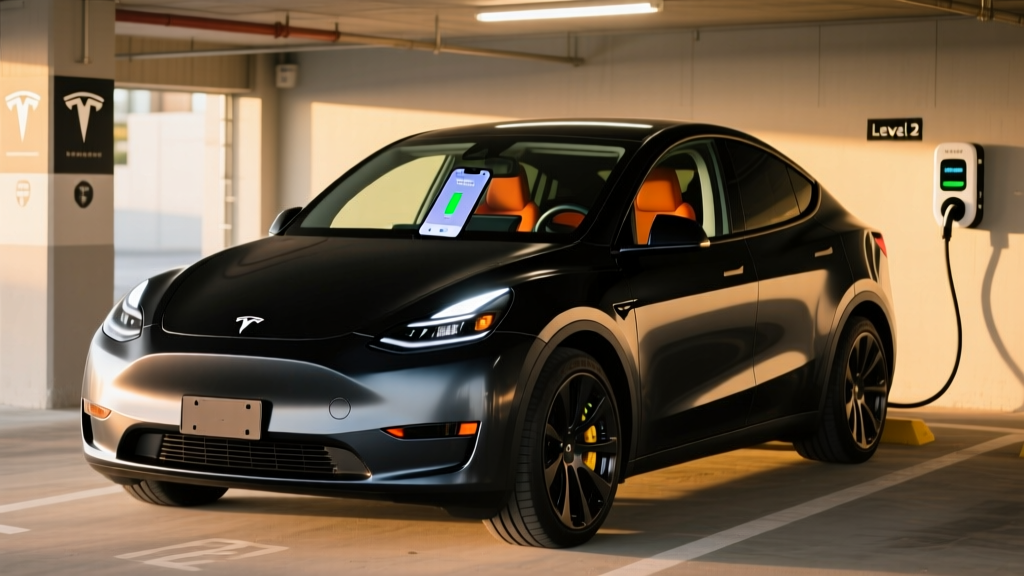
Home charging access is the single most important variable in EV satisfaction. According to the US Department of Energy, over 80% of EV charging happens at home. If you cannot install a Level 2 charger, a BEV may not be practical — and a PHEV becomes a far stronger choice.
| Charging Level | Power (kW) | Miles Added Per Hour | Typical Use Case |
|---|---|---|---|
| Level 1 (120V outlet) | 1.0–1.4 kW | 3–5 miles | Overnight top-up; PHEVs only |
| Level 2 (240V, 32–48A) | 7.7–11.5 kW | 25–44 miles | Primary home charging for BEVs |
| DC Fast Charge | 50–350 kW | 150–1,000+ mi/hr (peak) | Road trips; 10–80% in 18–40 min |
Home installation considerations:
- Electrical panel capacity: Most Level 2 chargers require a 40–60 amp dedicated circuit. If your panel is near capacity (common in older homes), a panel upgrade adds $1,500–$3,000.
- Permit and inspection: Required in most jurisdictions; budget $100–$400.
- Equipment cost: Quality Level 2 chargers (ChargePoint Home Flex, Emporia Vue, Tesla Wall Connector) run $300–$700.
- Total typical install: $600–$2,000 for homes with adequate panel capacity; up to $4,000+ if an upgrade is needed.
Always hire a licensed electrician for the final installation and obtain proper permits — this protects your home warranty and insurance coverage.
Tax Credits and Incentives: What You Actually Qualify For
The federal §30D clean vehicle credit offers up to $7,500 for qualifying new BEVs and up to $3,750 for qualifying PHEVs — but eligibility is far from universal. Current requirements include:
§30D Federal Tax Credit Checklist
- MSRP cap: Vans/SUVs/pickups must be under $80,000; sedans under $55,000.
- Buyer income cap: Modified AGI must not exceed $300,000 (joint), $225,000 (head of household), or $150,000 (single).
- Battery sourcing: A percentage of critical minerals and battery components must be sourced from the US or free-trade-agreement partners. This threshold increases annually — fewer models qualify each year.
- Point-of-sale transfer: As of 2024, you can transfer the credit to the dealer at purchase, reducing the vehicle price upfront rather than waiting for a tax refund.
- Used EV credit: A separate credit of up to $4,000 (30% of sale price) applies to qualifying used EVs under $25,000, with lower income caps.
Important: Battery sourcing requirements tighten yearly. A model that qualified in 2025 may not qualify in 2026. Check the latest eligible vehicle list on fueleconomy.gov before purchasing, and consult a tax professional to confirm your personal eligibility.
Common EV Misconceptions — Fact-Checked
| Myth | Fact |
|---|---|
| "EV batteries need replacing every 5 years" | Federal law mandates battery warranties of at least 8 years/100,000 miles. Real-world data from NHTSA and fleet operators show most NMC and LFP batteries retain 85–92% capacity at 100,000 miles. Full replacement costs $8,000–$18,000 but is rarely needed within the first decade. |
| "EVs are worse for the environment because of electricity generation" | Even on the US average grid mix (which includes fossil fuels), BEVs produce 50–70% fewer lifecycle greenhouse gas emissions than comparable gas vehicles, per EPA analysis. This advantage grows as the grid decarbonizes. |
| "You can't take an EV on a road trip" | The US now has over 70,000 public charging ports, including 20,000+ DC fast chargers. With proper route planning using apps like A Better Routeplanner, road trips are routine — though charging adds 20–40 minutes per stop on a 300-mile leg. |
| "EVs cost more to insure" | Partially true: BEV insurance premiums average 15–25% higher than equivalent gas vehicles due to higher repair costs. However, the gap has narrowed since 2024 as more collision shops gain EV certification. Shop multiple insurers — Tesla and State Farm have notably different rate structures. |
| "Level 2 charging damages the battery" | False. Level 2 (7–11 kW) charging is gentle on batteries. Degradation accelerates primarily from frequent DC fast charging above 150 kW, sustained storage at 100% SoC, and extreme heat. Most manufacturers recommend daily charging to 80% for NMC batteries and 100% for LFP. |
Decision Framework: Which Electric Transportation Vehicle Fits You?
Choose a BEV if:
- You have or can install Level 2 home charging (240V, 40A+ circuit)
- Your daily commute is under 80 miles round-trip
- You take road trips fewer than 6 times per year and can plan DC fast-charging stops
- You want the lowest per-mile energy cost and minimal maintenance
- You qualify for the full $7,500 federal tax credit
Choose a PHEV if:
- You lack reliable home Level 2 charging or live in an apartment without EV infrastructure
- Your daily commute is under 35 miles (covering most trips on electric only)
- You frequently drive rural routes or areas with sparse charging infrastructure
- You live in an extreme cold climate (below 10°F regularly) where BEV range loss is severe
- You want to reduce emissions without range anxiety as a first step
Stick with a Gas Vehicle (for now) if:
- You cannot install any home charging and public infrastructure in your area is limited
- Your budget is under $28,000 and you cannot access the used-EV credit
- You tow heavy loads regularly (over 5,000 lbs), where BEV range drops 40%+
Frequently Asked Questions
How long does it take to charge an EV at home overnight?
A Level 2 home charger (48A, 11.5 kW) will fully recharge a 75 kWh battery in about 7 hours — easily covering overnight for most drivers. A Level 1 standard outlet (1.4 kW) adds only 3–5 miles per hour, which is sufficient for PHEVs with smaller batteries but impractical for BEVs.
What happens if an EV battery degrades significantly?
Federal law requires manufacturers to warrant EV batteries for at least 8 years/100,000 miles, with most covering capacity retention above 70%. If degradation falls below the threshold during the warranty period, the manufacturer replaces or repairs the battery at no cost. Out-of-pocket replacement runs $8,000–$18,000 depending on the vehicle, but catastrophic failure within the first 10 years is statistically rare.
Are electric transportation vehicles safe in crashes?
Yes. EVs undergo the same IIHS and NHTSA crash testing as gas vehicles. The low-mounted battery pack gives EVs a lower center of gravity, reducing rollover risk. Multiple EVs (Tesla Model Y, Hyundai Ioniq 5, Volvo EX90) have earned IIHS Top Safety Pick+ ratings. Battery fire risk in crashes is statistically lower than gas-tank fire risk, per NHTSA data.
Do EVs work in cold climates?
They do, but with reduced range. Expect 25–35% range loss at temperatures below 25°F due to battery chemistry limitations and cabin heating demands. Models with heat pumps and battery preconditioning (Tesla, Hyundai/Kia, BMW) mitigate this loss. Garage parking and preconditioning while plugged in help preserve range. Many Norwegian EV owners — where EVs represent over 90% of new car sales — drive routinely in sub-zero conditions.
What's the difference between kW and kWh?
kW (kilowatt) measures power — the rate of energy flow, like the speed of water from a hose. A 150 kW DC fast charger delivers energy quickly. kWh (kilowatt-hour) measures energy — the total amount stored or consumed, like the volume of a water tank. A 75 kWh battery holds enough energy to drive roughly 220–280 miles depending on the vehicle's efficiency.
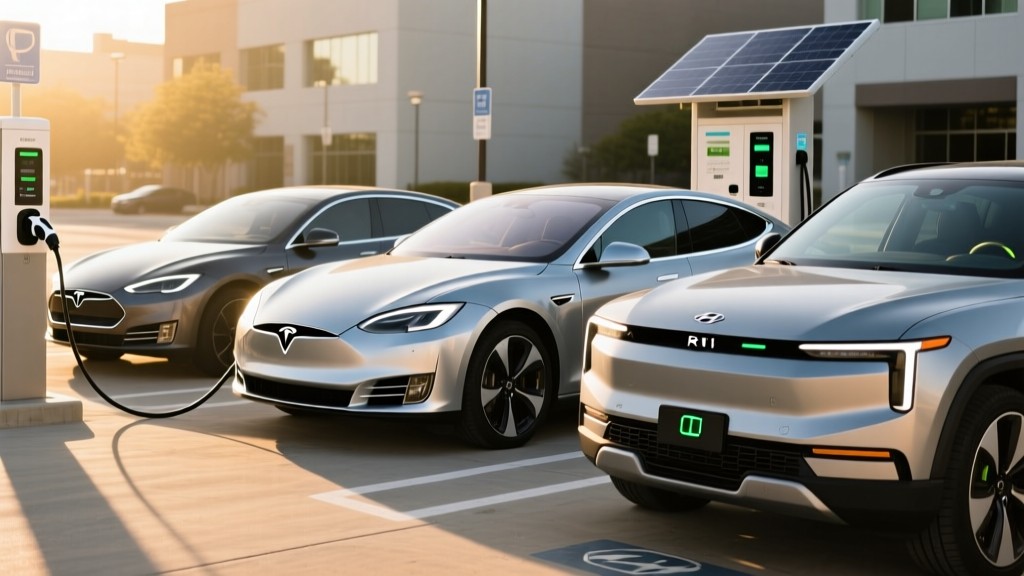
Can I use a Tesla Supercharger with a non-Tesla EV?
Increasingly, yes. Tesla has opened portions of its Supercharger network to non-Tesla vehicles equipped with the NACS (North American Charging Standard) connector. As of 2026, Ford, Rivian, and GM vehicles ship with native NACS ports, while most other brands offer NACS adapters. Check the Tesla app or your vehicle's navigation for compatible stations.