Quick Answer: The global electric train market — valued at approximately $28 billion in 2025 and projected to reach $38 billion by 2030 — directly impacts EV buyers through shared battery supply chains (lithium iron phosphate and nickel manganese cobalt), expanded grid capacity from rail electrification, and workforce crossover in high-voltage electrical systems. For car shoppers, this means stabilizing battery prices, improving LFP availability, and better charging infrastructure in transit-connected corridors.
Why the Electric Train Market Matters to Car Buyers
Most EV shoppers focus on EPA range, DC fast-charge speeds, and the §30D tax credit. But upstream industrial trends — particularly the $28 billion electric train market — shape what you'll actually pay and where you can charge.
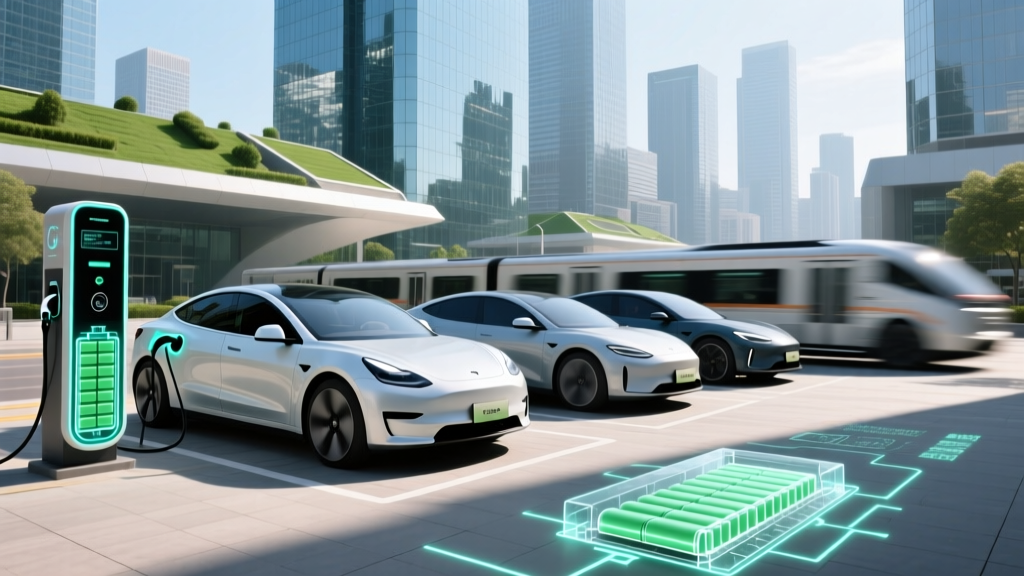
Electric trains and electric cars compete for the same raw materials: lithium, nickel, cobalt, and graphite. They also share battery chemistry platforms. When Siemens or Alstom orders gigawatt-hours of LFP cells for regional rail, that volume drives down per-kWh costs for automotive suppliers like CATL and BYD. In 2026, average battery pack prices have fallen to roughly $110/kWh (down from $139/kWh in 2023), partly because transit-sector demand has scaled LFP production.
For buyers, this translates to:
- Lower MSRPs: Base trims of mainstream EVs (Chevrolet Equinox EV, Hyundai Ioniq 5) now start under $35,000 before incentives.
- LFP mainstreaming: More affordable trims use lithium iron phosphate packs — heavier but longer-lasting and cheaper than NMC.
- Grid upgrades: Rail electrification projects (Amtrak's Northeast Corridor, California High-Speed Rail segments) pull utility investment into substations that also support DC fast-charging plazas.
EV vs Gas: Real Cost Comparison in 2026
The decision between battery-electric, hybrid, and gas vehicles hinges on total cost of ownership (TCO), not just sticker price. Here's a 5-year TCO breakdown for a midsize crossover driven 15,000 miles/year:
| Cost Factor | EV (e.g., Tesla Model Y) | Hybrid (e.g., Toyota RAV4 Hybrid) | Gas (e.g., Honda CR-V) |
|---|---|---|---|
| Purchase price (after incentives) | $37,990 ($45,490 MSRP − $7,500 §30D credit) | $33,500 | $31,000 |
| Fuel/energy (5 years) | $4,200 (home L2 @ $0.14/kWh) | $6,800 (40 MPG @ $3.40/gal) | $10,600 (28 MPG @ $3.40/gal) |
| Maintenance (5 years) | $1,800 | $3,200 | $4,100 |
| Insurance (5 years) | $9,500 | $7,200 | $6,800 |
| Depreciation (5 years) | $18,000 | $14,500 | $15,200 |
| Total 5-year cost | $71,490 | $65,200 | $67,700 |
Source: fueleconomy.gov, IRS §30D rules, AAA Your Driving Costs 2025. Assumes home charging access, 15k mi/yr, national avg electricity/gas prices.
The EV wins on energy and maintenance but loses on depreciation and insurance. If you lack home charging and rely on DC fast-charging at $0.35–0.48/kWh, your 5-year energy cost jumps to ~$8,500, erasing the fuel savings.
How Rail Electrification Expands EV Charging Access
When transit agencies electrify commuter rail (Caltrain, Metra, SEPTA), utilities upgrade 69 kV and 115 kV substations. Those same substations can feed 350 kW DC fast-charging plazas without costly new transmission lines.
Real-world example: The Amtrak Northeast Corridor electrification upgrade (completed phases through 2025) added 18 new substations between Washington, DC and Boston. Within 18 months, Electrify America and Tesla opened 11 Supercharger/V3 stations within 2 miles of those substations — sites that previously lacked grid capacity for 350 kW chargers.
For buyers in the Northeast, Mid-Atlantic, and parts of California, this means:
- More reliable 250–350 kW charging on I-95, I-5, and I-80 corridors.
- Reduced "charging desert" risk for apartment dwellers who rely on public infrastructure.
- Faster charge sessions: a Hyundai Ioniq 5 (peak 240 kW) can hit 10–80% in ~18 minutes at these upgraded sites, vs. 28–35 minutes at older 150 kW stations.
Battery Chemistry: LFP vs NMC and the Rail Connection
Electric trains increasingly use LFP (lithium iron phosphate) packs for depot-charging applications — short routes with overnight top-ups. This industrial demand has scaled LFP production, making it viable for automotive use in standard-range trims.
| Factor | LFP (Lithium Iron Phosphate) | NMC (Nickel Manganese Cobalt) |
|---|---|---|
| Energy density | ~160 Wh/kg (heavier pack for same range) | ~240 Wh/kg (lighter, longer range) |
| Cycle life | 3,000+ cycles to 80% SoH | 1,500–2,000 cycles to 80% SoH |
| Cold-weather performance | 15–25% range loss at 20°F | 10–20% range loss at 20°F |
| Cost (2026) | ~$85/kWh | ~$120/kWh |
| Charging to 100% SoC | Recommended weekly for calibration | Limit to 80% daily; 100% for trips only |
| Typical use | Standard-range trims, fleet, rail | Long-range, performance trims |
If you're a high-mileage driver (20k+ mi/yr) planning 8+ years of ownership, LFP's longer cycle life may outweigh its range penalty. If you need 300+ miles EPA for road trips and live in cold climates, NMC remains the better fit.
First-Time EV Buyer Checklist: What You Must Know
Before signing a purchase agreement, verify these seven items:
- Home charging feasibility: Do you have a 240V/40A circuit (or can you install one for $800–2,200)? Level 2 charging at 7.2–11.5 kW adds 25–40 miles/hour — enough for 95% of drivers.
- §30D tax credit eligibility: The IRS §30D credit requires: MSRP ≤ $55,000 (cars) or ≤ $80,000 (SUVs/trucks), buyer AGI ≤ $150,000 (single) or $300,000 (joint), and battery sourcing from FTA-compliant countries. As of 2026, only ~30% of EV trims qualify for the full $7,500.
- Real-world range: Subtract 15–25% from EPA estimates for highway driving at 70+ mph, and another 10–20% for sub-30°F winters. A 310-mile EPA rating becomes ~240–260 miles in mixed cold/highway use.
- Charging curve reality: Peak kW (e.g., 240 kW) is sustained only between 10–40% SoC. Above 80%, rates drop to 50–80 kW. Plan road-trip stops for 10–80% charges, not 0–100%.
- Insurance quotes: Get three quotes before buying. EV premiums average 15–25% higher than gas equivalents due to repair costs and battery replacement risk.
- Battery warranty: Federal mandate is 8 years/100,000 miles with ≤30% capacity loss. Some brands (Hyundai, Tesla) offer longer or unlimited-mile coverage.
- Resale trajectory: EV depreciation has stabilized but still lags Toyota/Honda hybrids. Expect 45–55% value retention at 5 years vs. 55–65% for top-selling hybrids.
Decision Framework: Should You Buy EV, Hybrid, or Gas?
Choose a battery-electric vehicle (BEV) if:
- You have home Level 2 charging (or confirmed workplace charging).
- Your daily driving is under 80 miles round-trip.
- You qualify for the §30D credit and can absorb higher insurance.
- You plan to keep the vehicle 6+ years (to amortize depreciation).
Choose a plug-in hybrid (PHEV) if:
- You lack reliable home charging but want some electric miles.
- You frequently drive 200+ miles in rural areas with sparse DC charging.
- You want to avoid range anxiety in extreme cold (below 10°F).
Choose a conventional hybrid (HEV) if:
- You have zero charging access (street parking, apartment without EVSE).
- Your budget is under $30,000 and you need proven reliability.
- You drive 25,000+ miles/year and want minimal maintenance risk.
Choose gas-only if:
- You drive under 8,000 miles/year (fuel savings won't offset EV premium).
- You tow 5,000+ lbs regularly and need diesel torque (heavy-duty trucks).
Common EV Myths — Addressed with Data
| Myth | Fact |
|---|---|
| "EV batteries need replacement every 5 years." | Average degradation is 2–3% per year. Most packs retain 85–90% capacity at 100k miles. Replacement (if needed) costs $8,000–18,000 but is rare under warranty. |
| "EVs are worse in winter." | Range drops 15–30% in sub-30°F weather, but preconditioning (heating the battery while plugged in) recovers 10–15%. AWD EVs (Tesla, Rivian) outperform most gas cars in snow due to instant torque and low center of gravity. |
| "The grid can't handle mass EV adoption." | Off-peak charging (10 PM–6 AM) uses existing baseload capacity. Utility time-of-use rates incentivize this. Grid strain occurs only with unmanaged daytime DC fast-charging clusters — which utilities are addressing with demand-response programs. |
| "EVs are more expensive to own." | 5-year TCO is competitive or lower than gas for drivers with home charging and §30D eligibility. Without home charging or incentives, hybrids often win on cost. |
| "Charging takes too long." | Home Level 2 adds 25–40 miles/hour overnight (sufficient for 95% of daily needs). DC fast-charging 10–80% takes 18–35 minutes depending on vehicle and station — comparable to a gas stop with food/restroom break. |
Frequently Asked Questions
Does the electric train market affect EV prices?
Yes, indirectly. Rail-sector battery demand (particularly LFP for depot-charging trains) scales production and reduces per-kWh costs. This has contributed to the 2023–2026 decline in automotive battery pack prices from ~$139/kWh to ~$110/kWh, enabling sub-$35k EVs like the Chevrolet Equinox EV and Nissan Leaf successor.
Should I wait for solid-state batteries?
Solid-state packs (promising 400+ mile range, 10-minute charging) remain in limited production as of 2026 — primarily in Toyota and Nissan prototypes. Mass-market availability is expected 2028–2030. If you need a vehicle now, current NMC and LFP chemistries are mature, warrantied, and cost-effective.
Can I charge at a Tesla Supercharger if I don't own a Tesla?
Yes, as of 2026. Tesla has opened ~15,000 North American Superchargers to non-Tesla EVs via the NACS (North American Charging Standard) connector or built-in CCS-to-NACS adapters. Ford, Rivian, GM, and Volvo vehicles now ship with NACS ports natively. Use the Tesla app to initiate sessions at open stalls.
What if I live in an apartment without charging?
Options include: (1) workplace Level 2 charging (increasingly common in tech, government, and healthcare sectors), (2) public DC fast-charging 1–2x/week (budget $120–180/month at $0.35–0.48/kWh), (3) PHEV ownership (electric for short commutes, gas for longer trips), or (4) negotiating EVSE installation with your landlord — some states (CA, NY, CO) mandate landlord cooperation for tenant EV charging requests.
How do I verify §30D tax credit eligibility?
Check the fueleconomy.gov tax credit lookup for your specific make/model/trim. Verify your AGI against IRS limits, confirm the MSRP cap applies to your vehicle class, and review battery sourcing compliance. Dealers can apply the credit as a point-of-sale rebate (reducing your down payment) if you meet all criteria. Consult a tax professional for edge cases.
The Bottom Line for 2026 EV Shoppers
The electric train market isn't just a transit story — it's a supply-chain and grid-infrastructure story that directly shapes your EV buying decision. Shared LFP production, utility substation upgrades, and workforce crossover in high-voltage systems are quietly making EVs more affordable and chargeable.
But fundamentals still apply: verify home charging access, confirm §30D eligibility, budget for higher insurance, and plan for real-world range (not EPA stickers). If those boxes check, a 2026 EV purchase offers compelling 5-year economics — especially as rail-driven battery scale continues to push pack costs below $100/kWh by 2027–2028.