The Short Answer on Electric Tractors
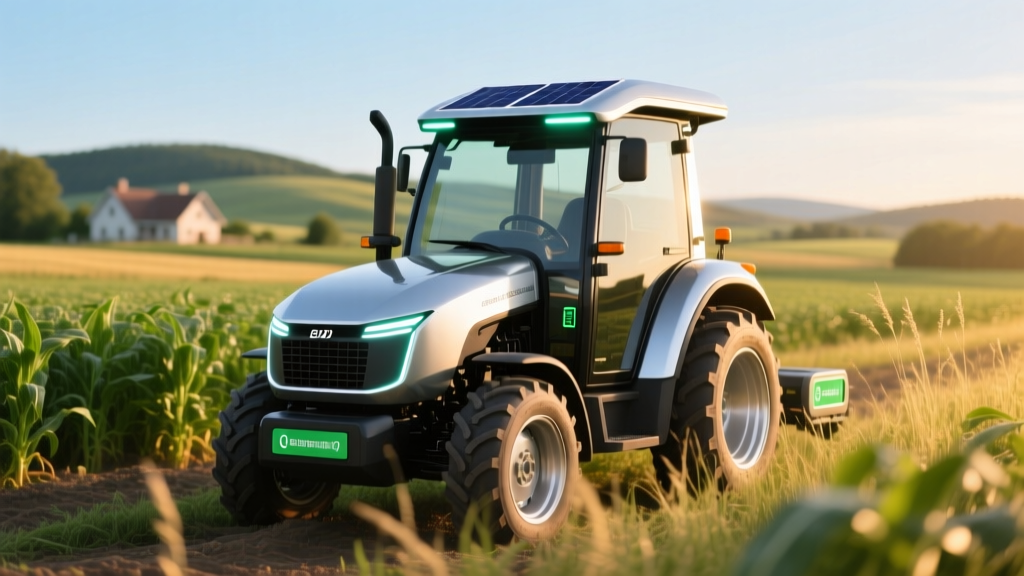
As of 2026, electric tractors are viable for light-duty and compact utility work — think small-acreage mowing, landscaping, tilling garden plots, and property maintenance on 1–10 acres. Battery-electric compact tractors from brands like Solectrac (eTrac), Monarch Tractor, and Fendt (e100 Vario concept) offer 25–70 kWh battery packs delivering 3–8 hours of light-to-moderate runtime. However, high-horsepower row-crop and heavy-agriculture electric tractors do not yet exist at commercial scale. If you need 100+ HP for plowing, baling, or large-scale farming, diesel remains the only practical option today.
What Electric Tractors Actually Exist in 2026?
The electric tractor market in 2026 is split into three categories, and understanding where the technology stands is critical before spending $30,000–$150,000+ on equipment that may or may not fit your operation.
Compact/utility electric tractors (under 40 HP equivalent): This is where battery-electric technology is most mature. The Solectrac eTrac series, for instance, offers a 28 kWh LFP (lithium iron phosphate) battery pack producing roughly 25–40 HP equivalent, priced starting around $34,999. Monarch Tractor's MK-V, positioned more toward specialty crops and vineyards, uses a larger battery system (approximately 60–80 kWh depending on configuration) and delivers up to 70 HP equivalent with autonomous mowing capabilities — starting around $69,000 before incentives.
Mid-range prototypes and limited production (40–80 HP): A few manufacturers have shown prototypes or limited-run models in this range, but availability is sparse and pricing is often "contact dealer." Fendt's e100 Vario concept demonstrated a 100 kWh battery system, but as of 2026, it remains a technology demonstrator rather than a widely purchasable product.
Heavy agricultural tractors (100+ HP): No battery-electric tractor at this power class is commercially available. The energy density problem is fundamental: a 200 HP diesel tractor running 10+ hours in the field would need a battery pack exceeding 500 kWh — weighing several tons and costing more than the tractor itself. John Deere, Case IH, and Kubota are investing in electric and hybrid drivetrain R&D, but production models are years away.
| Model | Battery (kWh) | Chemistry | HP Equivalent | Runtime (est.) | Base MSRP |
|---|---|---|---|---|---|
| Solectrac eTrac | 28 kWh | LFP | ~25–40 HP | 4–6 hrs (light duty) | ~$34,999 |
| Solectrac eUtility | 56 kWh | LFP | ~40 HP | 5–8 hrs (light duty) | ~$54,999 |
| Monarch MK-V | ~60–80 kWh | NMC | ~40–70 HP | 8–10+ hrs (mowing/spraying) | ~$69,000 |
| Fendt e100 Vario | 100 kWh | NMC | ~100 HP | ~4 hrs (est.) | Concept / Not for sale |
Electric Tractor vs. Diesel: Cost and Performance Compared
The economic case for an electric tractor hinges on your use pattern, local electricity rates, and whether you can offset the higher upfront price with fuel and maintenance savings. Let's run the numbers for a typical compact utility scenario: a 30–40 HP equivalent tractor used 500 hours per year for mowing, light tilling, and loader work on a 5-acre property.
| Cost Category | Electric (e.g., Solectrac eTrac) | Diesel (e.g., Kubota L3301) |
|---|---|---|
| Purchase Price (MSRP) | $34,999 | $22,000–$26,000 |
| Fuel/Energy Cost per Hour | $0.80–$1.50 (at $0.12–$0.22/kWh) | $4.50–$6.50 (at $3.80–$4.50/gal diesel) |
| Annual Fuel/Energy (500 hrs) | $400–$750 | $2,250–$3,250 |
| Annual Maintenance | $50–$150 (no oil, filters, coolant) | $400–$800 (oil, filters, coolant, belts) |
| 5-Year Fuel + Maintenance Total | $2,250–$4,500 | $13,250–$20,250 |
| Estimated Battery Replacement (Year 10+) | $5,000–$10,000 | N/A |
The math is clear: electric tractors save $2,000–$3,500 per year in fuel and maintenance for moderate-use compact applications. The purchase premium of $9,000–$13,000 pays back in roughly 3–5 years. After that, you're saving money every operating hour. But this assumes 500 hours/year at light-to-moderate loads. If you're running a PTO-driven implement (rotary cutter, tiller) at full load, energy consumption increases significantly, and runtime drops.
Real-World Runtime, Charging, and Battery Considerations
Manufacturer runtime claims deserve the same skepticism as EPA range estimates on electric cars. A Solectrac eTrac claiming "up to 6 hours" of runtime assumes light mowing on flat terrain. Hook up a rear-mounted tiller and work heavy clay soil, and that runtime could drop to 2–3 hours.
- Light mowing (brush hog, flat terrain): Expect 80–100% of claimed runtime
- Moderate loader work: Expect 60–80% of claimed runtime
- Heavy PTO implement use (tilling, augering): Expect 40–60% of claimed runtime
- Cold weather (below 40°F): Expect 15–30% runtime reduction, similar to EVs
Charging logistics matter enormously. Most compact electric tractors charge on Level 2 (240V) at rates of 3.3–7.2 kW. A 28 kWh battery at 7.2 kW takes roughly 4 hours for a full charge. A 56 kWh pack at the same rate takes 8+ hours. This means you typically charge overnight and work during the day — fine for property maintenance, problematic if you need continuous multi-shift operation.
DC fast charging is not yet standard on most electric tractors, though Monarch has indicated future support. Without it, mid-day top-ups are slow. If your operation demands 10+ hours of continuous heavy work in a single day, a single-battery electric tractor won't cut it — you'd need a second battery pack (where swappable designs allow it) or you need to accept the downtime.
Battery chemistry choice matters. LFP batteries (used by Solectrac) are heavier but offer superior cycle life (3,000–5,000+ cycles to 80% capacity), better thermal stability, and no cobalt. NMC batteries (used in some Monarch configurations) are lighter and more energy-dense but typically deliver 1,500–2,500 cycles to 80%. For a tractor used 500 hours/year, either chemistry will likely outlast a decade of ownership — but LFP is the more durable choice for daily-use commercial applications.
Incentives, Tax Credits, and Total Cost of Ownership
Federal and state incentives can significantly reduce the effective purchase price of an electric tractor, though the rules are specific and evolving.
The IRS §30D Clean Vehicle Credit applies to qualifying new electric vehicles, but the tractor must meet on-road vehicle classification requirements to qualify — and most agricultural tractors do not qualify as "motor vehicles" under §30D because they are not designed for public road use. The Monarch MK-V, which is designed with road-capable features and autonomous operation for vineyard/orchard use, may qualify depending on configuration and IRS interpretation, but you should consult the IRS guidelines and a tax professional before counting on the $7,500 credit.
More reliably, electric tractors may qualify for:
- USDA REAP Grants (Rural Energy for America Program): Can cover up to 50% of eligible equipment costs for agricultural producers and rural small businesses. An electric tractor used in a qualifying farm operation may be eligible. Check USDA's REAP page for current funding availability.
- State-level agricultural electrification incentives: California's CORE program and similar initiatives in Oregon, New York, and other states offer point-of-sale rebates for off-road electric equipment, sometimes $5,000–$15,000+ for agricultural tractors.
- Utility company rebates: Some rural electric cooperatives and investor-owned utilities offer rebates for electric agricultural equipment to reduce peak diesel demand on their grids.
| Category | Electric (Solectrac eTrac) | Diesel (Kubota L3301) |
|---|---|---|
| Purchase Price | $34,999 | $24,000 |
| USDA REAP Grant (est. 25%) | –$8,750 | $0 |
| State Incentive (varies) | –$3,000 to –$10,000 | $0 |
| Effective Purchase Price | $16,249–$23,249 | $24,000 |
| 5-Year Fuel/Energy | $2,000–$3,750 | $11,250–$16,250 |
| 5-Year Maintenance | $250–$750 | $2,000–$4,000 |
| 5-Year Total Cost | $18,499–$27,749 | $37,250–$44,250 |
| Cost Per Operating Hour (5 yrs, 2,500 hrs) | $7.40–$11.10 | $14.90–$17.70 |
With incentives applied, the electric tractor can actually cost less to purchase and dramatically less to operate over five years. The break-even point can arrive in year one if you stack USDA grants with state rebates.
Common Misconceptions About Electric Tractors
| Myth | Fact |
|---|---|
| "Electric tractors can't do real farm work" | For light-to-moderate compact tasks (mowing, tilling small plots, loader work, spraying), current electric tractors perform well. They cannot yet replace 100+ HP diesel tractors for heavy tillage or large-scale row-crop operations. |
| "The battery will die in a few years and cost a fortune to replace" | LFP batteries are rated for 3,000–5,000+ charge cycles. At one cycle per day, 300 days/year, that's 10–16 years before hitting 80% capacity. Replacement packs run $5,000–$10,000 — significant, but amortized over a decade, it's $500–$1,000/year. |
| "You need a special electrical service to charge" | Most compact electric tractors charge on a standard 240V outlet (like a dryer outlet) at 3.3–7.2 kW. If you already have a 240V outlet in your barn or garage, you may need zero electrical work. A new 240V/50A circuit installation typically costs $500–$2,000. |
| "Electric tractors are underpowered" | Electric motors deliver instant peak torque from 0 RPM — an advantage over diesel for loader breakout force and hill climbing. A 40 HP equivalent electric tractor often feels more responsive than a 40 HP diesel in stop-and-go loader work. |
| "There are no electric tractors available to buy" | Solectrac sells direct and through dealers. Monarch Tractor takes orders for the MK-V. Availability is limited and lead times can be months, but these are real, purchasable products — not vaporware. |
Decision Framework: Should You Buy an Electric Tractor?
Choose an Electric Tractor If:
- Your work is light-to-moderate duty on under 10 acres: mowing, landscaping, garden tilling, small-scale orchard/vineyard maintenance, snow blowing, light loader work.
- You have 240V power access at your barn, garage, or shop — or can install it for under $2,000.
- You operate 3–6 hours per day and can charge overnight between sessions.
- You qualify for USDA REAP grants or state incentives that bring the effective purchase price below a comparable diesel model.
- Noise and emissions matter: Electric tractors are near-silent and produce zero local exhaust — critical for use near livestock, in residential areas, or in enclosed spaces like greenhouses.
- You want minimal maintenance: No engine oil, no fuel filters, no coolant flushes, no DEF fluid, no glow plugs.
Stick With Diesel (or Wait) If:
- You need 60+ HP for heavy PTO implements: Large rotary cutters, balers, heavy tillage, post-hole augers in rocky soil — current electric tractors can't sustain these loads for full workdays.
- You run 8–12+ hour days during peak season and can't afford 4-hour charging breaks.
- You operate in extreme cold regularly (below 20°F for extended periods): Battery runtime drops significantly, and diesel tractors, while also affected by cold, can simply refuel in minutes.
- You have no access to 240V charging and installing it would require a costly panel upgrade or long trench runs exceeding $5,000.
- Your budget is strictly under $20,000 and you can't access grants: The used diesel tractor market at this price point offers abundant, proven options.
What First-Time Electric Tractor Buyers Should Know
If you've decided an electric tractor fits your operation, here are the practical details that separate a smooth ownership experience from a frustrating one:
1. Size your battery for your worst-case day, not your average day. If you occasionally need 5 hours of heavy tilling, don't buy a 28 kWh pack that only delivers 2.5 hours under that load. Go for the 56 kWh option or ensure you can swap/add battery modules.
2. Verify implement compatibility. Electric tractors use standard Category 1 three-point hitches and PTO shafts, but PTO-driven implements designed for diesel tractor RPM curves may not perform identically. Confirm PTO speed (540 RPM standard) and hydraulic flow rates with the manufacturer before pairing implements.
3. Plan your charging infrastructure before delivery. A 50A/240V circuit with a NEMA 14-50 outlet is the most common setup. Have a licensed electrician confirm your panel has capacity. Total install cost: $500–$2,000 for most barn/garage setups; $2,000–$5,000 if you need a panel upgrade or long conduit runs.
4. Understand the warranty. Solectrac offers a 5-year/5,000-hour battery warranty. Monarch provides a comparable powertrain warranty. Compare this against diesel engine warranties, which typically cover 2–5 years but exclude wear items that electric tractors simply don't have.
5. Dealer support is still developing. Unlike Kubota or John Deere with thousands of dealerships, electric tractor brands have smaller service networks. Ask about mobile service, parts availability, and turnaround times before purchasing. Some brands sell direct with ship-to-you parts and video-call diagnostics.
Frequently Asked Questions
How long do electric tractor batteries last?
LFP batteries, used in most current electric tractors, are rated for 3,000–5,000+ full charge cycles before degrading to 80% of original capacity. At typical usage patterns (one charge cycle per workday, ~250–300 days/year), that translates to 10–16+ years of service life. NMC batteries offer 1,500–2,500 cycles, still equating to 5–10 years of typical use.
Can I use my existing implements with an electric tractor?
Yes, in most cases. Electric compact tractors use standard Category 1 three-point hitches and 540 RPM PTO shafts, compatible with the vast majority of implements designed for sub-60 HP tractors. Hydraulic remotes, where equipped, also follow standard fittings. Verify hydraulic flow rate (GPM) and PTO HP ratings to ensure your implement doesn't exceed the tractor's capacity.
Do electric tractors qualify for the $7,500 federal EV tax credit?
Generally, no — the IRS §30D Clean Vehicle Credit applies to vehicles designed for public road use with four wheels. Most agricultural tractors don't meet this definition. However, some road-capable models may qualify depending on configuration. USDA REAP grants and state agricultural equipment incentives are more reliable paths to reducing purchase cost. Consult a tax professional for your specific situation.
What happens if the battery runs out mid-job?
Unlike a diesel tractor that can be refueled in 3 minutes from a jerry can, a depleted electric tractor requires charging time. At 7.2 kW Level 2, expect roughly 4 hours for a full charge of a 28 kWh pack. Plan your work sessions around battery capacity, and consider a second battery pack if your operation demands continuous use.
Are electric tractors safe to use around water and in rain?
Yes. Electric tractors are sealed to IP67 or similar ratings for battery and motor components, comparable to the water resistance of modern electric cars. You can operate in rain and wet fields. Standard precautions apply: don't submerge electrical components, and follow manufacturer guidance for pressure washing.