Quick Answer: Should You Buy an Electric Toyota Car?
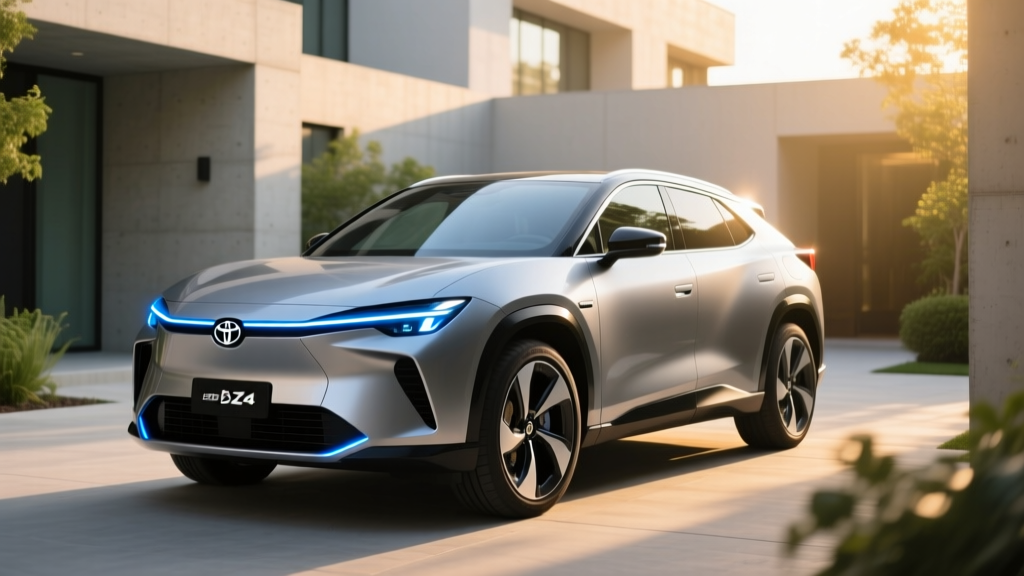
If you want a fully electric Toyota in 2026, the bZ4X is currently Toyota's only mass-market BEV available in the US. It offers an EPA-estimated 252 miles of range (FWD), 114 MPGe combined, and starts around $38,465. However, for most Toyota shoppers, a Prius Prime or RAV4 Prime plug-in hybrid delivers better real-world flexibility, lower cost, and no charging dependency. Buy the bZ4X if you have reliable home charging, drive under 200 miles daily, and want zero tailpipe emissions. Buy a Toyota PHEV if you take road trips, lack home charging, or live in extreme climates.
Toyota's Electric Car Lineup: What's Actually Available
Toyota has been cautious about full electrification, investing heavily in hybrids instead. As of the 2026 model year, Toyota's US electric car lineup consists of:
- bZ4X — All-electric compact SUV (the only true "electric Toyota car" currently on sale)
- Prius Prime — Plug-in hybrid with ~44 miles electric-only range
- RAV4 Prime — Plug-in hybrid SUV with ~42 miles electric-only range
- Grand Highlander Hybrid / Highlander Hybrid — Conventional hybrids (no plug)
Toyota has announced additional bZ-series EVs and a next-generation EV platform, but those remain unreleased. If you're shopping today for an electric Toyota car, the bZ4X is your option.
bZ4X Range, Efficiency, and Real-World Numbers
The 2026 Toyota bZ4X uses a 71.4 kWh lithium-ion battery pack (NMC chemistry). Here's what the EPA says versus what you'll actually experience:
EPA Range vs. Real-World Expectation
| Metric | bZ4X FWD | bZ4X AWD |
|---|---|---|
| EPA Range | 252 miles | 228 miles |
| Real-World Highway (70 mph) | ~210-230 miles | ~190-210 miles |
| Cold Weather (20°F, mixed) | ~170-190 miles | ~155-175 miles |
| Combined MPGe | 114 MPGe | 104 MPGe |
| Energy Consumption | 29 kWh/100mi | 32 kWh/100mi |
Source: fueleconomy.gov
The bZ4X's range is competitive with the Hyundai Ioniq 5 (303 mi) and Volkswagen ID.4 (275 mi) but trails the Tesla Model Y (320 mi). More importantly, Toyota's efficiency is mid-pack — you'll use more kWh per mile than a Tesla or Hyundai, which matters when you're paying for public DC fast charging.
Charging Speed and Infrastructure
Charging is where the bZ4X reveals its 2022-era engineering. Toyota quotes a peak DC fast-charge rate of 150 kW (FWD) or 100 kW (AWD). In practice:
- 10-80% DC fast charge: ~30-35 minutes at a 150+ kW station
- Sustained rate: Peaks briefly near 150 kW, then tapers significantly above 50% SoC
- Level 2 home charging: 6.6 kW onboard charger adds ~25 miles per hour of charging
- Level 1 (120V outlet): ~3-4 miles per hour — impractical for daily use
The bZ4X uses the CCS1 connector. Toyota has committed to adopting NACS (Tesla's connector) for future models, but the 2026 bZ4X still requires a CCS-to-NACS adapter to access Tesla Superchargers. This limits your fast-charging network compared to native NACS vehicles.
Common Misconceptions About the bZ4X
| Myth | Fact |
|---|---|
| "The bZ4X qualifies for the full $7,500 federal tax credit" | Eligibility depends on battery sourcing, your income, and MSRP caps under IRS §30D rules. As of 2026, the bZ4X may qualify for partial or no credit due to critical-mineral sourcing requirements. Always check IRS.gov before purchasing. |
| "I can charge at Tesla Superchargers" | Only with a CCS-to-NACS adapter, and not all Superchargers support non-Tesla vehicles yet. Plan routes using Electrify America, EVgo, or ChargePoint. |
| "252 miles is enough for road trips" | Real-world highway range is ~210-230 miles, and you'll want to charge at 20% SoC, not 0%. Expect 150-180 miles between stops on the highway. |
| "Toyota's battery warranty is best-in-class" | Toyota covers the battery for 8 years/100,000 miles (standard for EVs), guaranteeing 70% capacity retention. This matches most competitors but isn't exceptional. |
Cost Comparison: bZ4X vs. Gas vs. Hybrid
Let's compare the bZ4X to a gas-powered RAV4 and a RAV4 Prime PHEV over 5 years and 60,000 miles. Assumptions: $3.50/gallon gas, $0.15/kWh electricity, 15,000 miles/year.
| Category | bZ4X FWD | RAV4 Gas (LE) | RAV4 Prime PHEV |
|---|---|---|---|
| Base MSRP (2026) | $38,465 | $30,425 | $43,690 |
| Est. Federal Tax Credit | $0-$7,500* | $0 | $0-$7,500* |
| 5-Year Fuel/Energy Cost | $2,700 | $7,500 | $3,900 |
| 5-Year Maintenance | $1,200 | $2,800 | $2,200 |
| 5-Year Insurance (est.) | $9,500 | $7,800 | $8,900 |
| 5-Year Total Cost | $51,865 - $44,365 | $48,525 | $58,690 - $51,190 |
*Tax credit eligibility varies by buyer income, battery sourcing, and MSRP caps. Consult a tax professional and verify current-year rules at IRS.gov.
The bZ4X can be cost-competitive with gas if you qualify for the full tax credit and charge primarily at home. But the RAV4 Prime offers similar savings with zero range anxiety — you get 42 miles of electric-only driving for daily commutes and a gas engine for road trips.
Real-World Ownership: What First-Time EV Buyers Need to Know
Before buying any electric Toyota car, honestly assess these factors:
Home Charging Access
Do you have a garage or dedicated parking spot where you can install a Level 2 (240V) charger? If yes, EV ownership is convenient — plug in at night, wake up "full." If you rely on street parking or apartment living with no charging, the bZ4X becomes a burden. Public DC fast charging is expensive ($0.35-$0.50/kWh) and time-consuming.
Climate and Range Loss
If you live in the northern US or mountain states, expect 20-30% range loss in winter. The bZ4X has a heat pump (standard on most trims), which helps, but cold weather still reduces battery efficiency and slows charging speeds. If you need 250+ miles of range year-round, the bZ4X won't deliver in January.
Driving Patterns
The bZ4X works well for:
- Daily commutes under 80 miles round-trip
- Suburban errands and school runs
- Occasional road trips with planned charging stops
It's less ideal for:
- Frequent 400+ mile road trips (you'll stop 2-3 times)
- Towing (max 2,200 lbs, which cuts range in half)
- Rural areas with sparse charging infrastructure
Insurance and Depreciation
EVs typically cost 15-25% more to insure than gas equivalents due to higher repair costs and battery replacement risk. Get quotes before purchasing. Depreciation on the bZ4X has been steeper than Tesla or Hyundai, partly due to Toyota's slower charging and mid-pack range.
Decision Framework: Is the bZ4X Right for You?
Choose the bZ4X If:
- You have home Level 2 charging or reliable workplace charging
- Your daily driving is under 150 miles
- You qualify for the federal tax credit (check income and sourcing rules)
- You want zero tailpipe emissions and don't mind planning road-trip charging
- You prefer Toyota's brand reputation and dealer network
Choose a Toyota PHEV (RAV4 Prime / Prius Prime) If:
- You lack home charging access
- You take frequent road trips or drive in rural areas
- You live in extreme cold climates
- You want EV-like daily driving without range anxiety
- You want lower upfront cost (Prius Prime starts ~$33,000)
Choose a Different EV (Tesla Model Y, Hyundai Ioniq 5) If:
- You need 300+ miles of real-world range
- You want faster DC charging (20-25 min 10-80%)
- You want access to the full Tesla Supercharger network without adapters
- You prioritize tech features and over-the-air updates
Frequently Asked Questions
Does Toyota make a fully electric car?
Yes, the Toyota bZ4X is Toyota's only all-electric vehicle currently sold in the US. It's a compact SUV with 228-252 miles of EPA range depending on drivetrain.
How much does it cost to charge a Toyota bZ4X at home?
At $0.15/kWh, fully charging the 71.4 kWh battery costs ~$10.70. That's roughly $0.045 per mile, compared to $0.15-$0.18 per mile for a gas RAV4.
Is the Toyota bZ4X eligible for the $7,500 federal tax credit?
Eligibility depends on current-year IRS §30D rules, including battery critical-mineral sourcing, your modified adjusted gross income (caps: $150k single / $300k joint), and MSRP limits ($80k for SUVs). As of 2026, many non-US-built EVs fail the sourcing requirements. Verify at IRS.gov or consult a tax professional.
How long does the bZ4X battery last?
Toyota warranties the battery for 8 years/100,000 miles with a 70% capacity retention guarantee. Real-world degradation data is still limited (the bZ4X launched in 2023), but NMC batteries typically lose 10-15% capacity over 8-10 years with proper care (avoid frequent 100% charges and extreme heat).
Should I buy the bZ4X or wait for Toyota's next EV?
Toyota has announced a next-generation EV platform with improved range and charging, but no US release date is confirmed. If you need an EV now, the bZ4X is adequate but not class-leading. If you can wait 2-3 years, Toyota's future EVs will likely be more competitive.
Is the bZ4X better than a Prius Prime?
For most buyers, no. The Prius Prime offers 44 miles of electric-only range (enough for most commutes), 50+ MPG on gas, and no charging dependency. It's also $5,000-$10,000 cheaper. The bZ4X only makes sense if you want zero emissions and have reliable home charging.