Quick Answer: What Is an Electric Tow Truck in 2026?
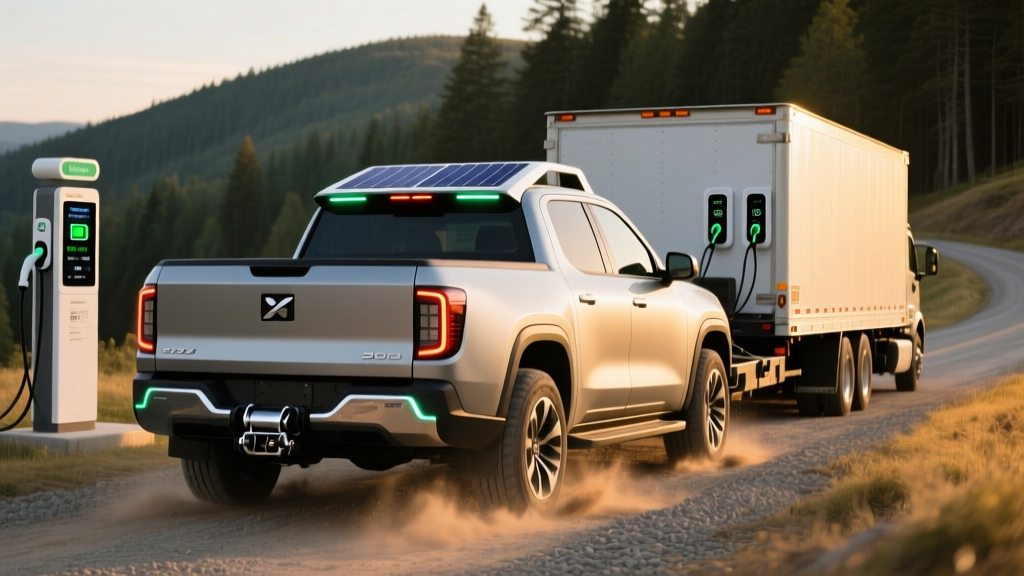
An electric tow truck in the consumer and light-commercial sense refers to a battery-electric pickup capable of towing substantial loads — currently between 5,000 and 10,000 lbs depending on the model. Vehicles like the Ford F-150 Lightning (max 10,000 lbs), Rivian R1T (max 11,000 lbs), and Chevrolet Silverado EV (max 10,000 lbs) lead this segment. However, towing at max capacity typically cuts real-world range by 40–55%, making route planning and DC fast charging access essential. Heavy-duty commercial flatbed wreckers (Class 5–8) remain overwhelmingly diesel in 2026, though electric chassis from Volvo and Lightning eMotors are entering fleet service for short-haul recovery.
EV Pickup Towing Capacity: The Numbers That Matter
When buyers search for an electric tow truck, they're usually evaluating whether an EV pickup can replace their gas or diesel truck for boat, trailer, camper, or equipment hauling. The answer depends heavily on the specific model, battery pack, and trim. Here is how the major 2026 contenders stack up on paper:
| Model (2026) | Max Tow Rating | Battery (Usable kWh) | EPA Range (Unloaded) | Peak DC Charge (kW) | Starting MSRP |
|---|---|---|---|---|---|
| Ford F-150 Lightning (Ext. Range) | 10,000 lbs | ~131 kWh (NMC) | 320 mi | 150 kW | ~$62,995 |
| Rivian R1T (Dual-Motor Max) | 11,000 lbs | ~141 kWh (NMC) | 352 mi | 220 kW | ~$83,000 |
| Chevrolet Silverado EV (4WT) | 10,000 lbs | ~200 kWh (NMC) | 400 mi | 350 kW | ~$72,000 |
| GMC Sierra EV (Denali) | 10,000 lbs | ~200 kWh (NMC) | 390 mi | 350 kW | ~$87,000 |
| Tesla Cybertruck (AWD) | 11,000 lbs | ~123 kWh (NMC) | 325 mi | 250 kW | ~$81,630 |
These are manufacturer-rated maximums under ideal conditions. The real story is what happens to your battery when you hook up a 6,000-lb enclosed trailer and hit the interstate at 70 mph.
The Range Penalty: Real-World Towing Data
Every EV pickup suffers dramatic range reduction under tow. This is physics, not a software bug: you are pushing or pulling significantly more mass through the air, and rolling resistance multiplies with weight. Independent testing and owner data consistently show:
Real-World Towing Range Expectations
Ford F-150 Lightning (320 mi EPA unloaded): Expect 140–180 miles towing a 5,000–7,000 lb trailer at highway speeds in moderate weather. Heavy box trailers in headwinds can push this below 130 miles.
Rivian R1T Max Pack (352 mi EPA unloaded): Expect 160–200 miles under similar conditions. The larger battery helps, but the aerodynamic penalty of a tall trailer remains brutal.
Chevrolet Silverado EV 4WT (400 mi EPA unloaded): The segment's largest usable battery (~200 kWh) translates to roughly 190–230 miles towing — the best in the segment, but still roughly a 50% cut.
Cold weather compounds this: Add a 15–25% further reduction when towing in temperatures below 35°F. Battery internal resistance increases and cabin/trailer heating draws additional energy.
For context, a gas F-150 with the 3.5L EcoBoost and 36-gallon tank retains roughly 280–350 miles of range under the same towing load. The gas truck still wins on raw towing range, but the EV wins on fuel cost per mile, instant torque for low-speed maneuvering, and zero tailpipe emissions at the work site.
EV vs Gas Truck Towing: Cost and Performance Breakdown
Let's compare what it actually costs to tow 200 miles in an electric vs. gas pickup, assuming a 6,000-lb trailer and national average energy prices (electricity at $0.16/kWh, gasoline at $3.40/gallon as of early 2026):
| Metric | Electric (F-150 Lightning) | Gas (F-150 EcoBoost 4x4) |
|---|---|---|
| Energy consumption towing (~6,000 lb trailer) | ~2.0–2.5 kWh/mi | ~9–11 MPG |
| Energy cost for 200 miles | $64–$80 (home L2 rate) | $62–$76 |
| Energy cost for 200 miles (DC fast charge) | $96–$125 (avg $0.48/kWh) | $62–$76 |
| Estimated stops needed (200 mi) | 1 DC fast charge (15–35 min) | 0–1 fuel stop (10 min) |
| Annual maintenance (est.) | ~$300–$500 | ~$800–$1,200 |
| Oil changes per year | 0 | 2–3 |
The energy cost parity at home-charging rates is notable — EVs lose their per-mile cost advantage when you rely on public DC fast charging at $0.45–$0.60/kWh. For fleet operators or owners who tow frequently and have depot-level Level 2 or Level 3 charging, the EV math works well. For those who tow long distances on road trips relying on public infrastructure, the gas truck still holds a convenience edge in 2026.
One area where the EV consistently wins: low-speed control. Electric motors deliver maximum torque at 0 RPM, making inching a trailer into a tight campsite or boat ramp smoother than any torque converter. Regenerative braking also reduces brake wear significantly when descending grades with a heavy load.
Charging an Electric Tow Truck: What You Need to Know
Charging speed matters enormously when towing, because you will charge more often. Here is a realistic breakdown of charging levels and what they mean for a truck owner:
| Charging Level | Power (kW) | Miles Added Per Hour (Unloaded) | Practical Use Case |
|---|---|---|---|
| Level 1 (120V household) | 1.2–1.9 kW | 2–4 mi/hr | Emergency only — impractical for truck batteries |
| Level 2 (240V home/work) | 7.6–19.2 kW | 15–37 mi/hr | Overnight recharge; 131 kWh pack in 8–14 hours |
| DC Fast (typical public) | 50–150 kW | 100–250 mi/hr | Road-trip top-ups; 10–80% in 30–50 min |
| DC Ultra-Fast (350 kW stations) | 200–350 kW | 300–500+ mi/hr | Silverado EV / Sierra EV: 10–80% in ~20 min |
Critical towing charging note: kW (power) is the rate of energy delivery; kWh (energy) is the total battery capacity. A 131 kWh battery charging at 150 kW peak will not charge in 52 minutes — the charge curve tapers significantly above 80% State of Charge (SoC). Expect 10–80% in roughly 35–45 minutes for the F-150 Lightning at a 150 kW station, and plan your stops accordingly.
Trailer charging logistics: Most DC fast charging stalls are designed for passenger cars. Pulling a 24-foot enclosed trailer into a ChargePoint or Electrify America station often means unhitching or finding a pull-through station. Ford's Pro network and Tesla Superchargers with pull-through stalls are improving this, but it remains a pain point in 2026.
Home Charging Setup for Towing
If you plan to tow regularly, a Level 2 home charger is essentially mandatory. Budget for:
| Item | Estimated Cost Range |
|---|---|
| Level 2 EVSE (40–80A hardwired) | $400–$900 |
| Electrician labor (standard install) | $500–$1,500 |
| Electrical panel upgrade (if 100A → 200A) | $1,500–$3,500 |
| Permit and inspection | $100–$300 |
| Total typical install | $1,000–$6,200 |
Always have a licensed electrician evaluate your panel capacity before purchasing equipment. A 80A charger (like Ford's Charge Station Pro) requires a 100A dedicated circuit, which many older homes cannot support without an upgrade. The IRS Residential Clean Energy Credit covers 30% of home charging equipment and installation costs through 2032, up to $1,000 — confirm eligibility with a tax professional.
Federal Tax Credits and Commercial Incentives
The IRS §30D Clean Vehicle Credit offers up to $7,500 for qualifying new EVs, but several restrictions apply to electric tow truck buyers:
- MSRP cap: Pickup trucks must be under $80,000 MSRP to qualify. This eliminates the Rivian R1T Max, GMC Sierra EV Denali, and higher-trim Cybertruck configurations.
- Buyer income cap: Modified AGI must not exceed $150,000 (single), $225,000 (head of household), or $300,000 (joint).
- Battery sourcing requirements: Critical minerals and battery components must meet escalating domestic-content thresholds. Check the DOE/EPA qualified vehicle list before purchasing — eligibility changes as supply chains shift.
- Point-of-sale transfer: As of 2024, buyers can transfer the credit to the dealer at purchase, reducing the out-of-pocket price directly rather than waiting for a tax refund.
Commercial fleet buyers should look at the §45W Commercial Clean Vehicle Credit instead — this offers up to $7,500 for light-duty and up to $40,000 for heavy-duty commercial EVs, with different eligibility rules and no MSRP or income caps. Consult a tax professional for fleet-specific guidance.
Decision Framework: Should You Buy an Electric Tow Truck?
Choose an Electric Pickup for Towing If:
- Your typical tow trips are under 150 miles round-trip (covers most boat ramps, dump runs, and local job sites)
- You have reliable Level 2 charging at home or your work depot
- You value low-speed torque control for trailer maneuvering and reduced brake wear
- You want to eliminate job-site idling emissions (useful for indoor or residential work)
- You tow frequently enough that fuel savings offset the higher purchase price within 3–5 years
- You qualify for the §30D or §45W tax credit
Stick With Gas or Diesel for Towing If:
- You regularly tow over 200 miles one-way with no reliable DC fast charging on the route
- You tow in extreme cold (below 20°F) where range loss compounds severely
- You need a heavy-duty (¾-ton or 1-ton) truck with 15,000+ lb tow ratings — no consumer EV pickup matches this yet
- Your budget is under $50,000 — used gas trucks offer far more options at this price point
- You live in a charging desert with limited public DC infrastructure
Common Misconceptions About Electric Tow Trucks
| Myth | Fact |
|---|---|
| "EVs can't tow heavy loads" | The Rivian R1T and Cybertruck are rated for 11,000 lbs — comparable to many gas half-ton trucks. The limitation is range under load, not capability. |
| "Towing will destroy the battery" | High-load towing increases battery temperature, but modern thermal management systems (liquid cooling) keep cells within safe limits. Degradation from towing is marginal vs. normal use. Most manufacturers warranty the battery for 8 years / 100,000 miles at ≥70% capacity retention. |
| "You can't tow in cold weather" | You can, but expect a 40–65% total range reduction (towing + cold combined). Preconditioning the battery while plugged in mitigates this partially. |
| "Charging takes too long on a road trip" | At a 350 kW station, the Silverado EV can add ~200 miles of (unloaded) range in 15 minutes. Towing range is proportionally less. Plan 30–40 minute stops every 120–170 miles when loaded. |
| "Electric trucks are all under $50,000" | Most capable EV pickups start between $62,000 and $87,000 in 2026. The base F-150 Lightning Pro at ~$52,995 is the most affordable entry point, but with reduced range and tow rating. |
5-Year Ownership Cost Snapshot
Below is an estimated 5-year / 75,000-mile total cost of ownership (TCO) comparison for an owner who tows a 5,000-lb trailer approximately 5,000 miles per year and drives 10,000 additional miles unloaded annually. Electricity at $0.14/kWh (home), gasoline at $3.40/gal:
| Cost Category | F-150 Lightning (Ext. Range) | F-150 Gas (3.5L EcoBoost 4x4) |
|---|---|---|
| Purchase price (after est. incentives) | ~$55,500 | ~$56,000 |
| Energy cost (5 years) | ~$7,200 | ~$14,800 |
| Maintenance (5 years) | ~$1,800 | ~$4,500 |
| Insurance (5 years, est.) | ~$11,500 | ~$9,200 |
| Depreciation (est. 5-yr) | ~$22,000 | ~$18,000 |
| Estimated 5-Year TCO | ~$98,000 | ~$102,500 |
The EV pulls ahead primarily through energy and maintenance savings, though higher insurance premiums and steeper depreciation partially offset this. Your actual numbers will vary by state, driving pattern, and electricity rate. EV insurance tends to cost 15–25% more due to higher repair costs for battery and structural components.
What First-Time EV Truck Buyers Should Know
If you've never owned an electric vehicle and you're considering an EV pickup for towing, prepare for these ownership realities:
- Route planning is mandatory when towing. Apps like A Better Routeplanner (ABRP) let you input trailer weight and route elevation to estimate range and charging stops. Do not rely on the dashboard range estimator alone — it's calibrated for unloaded driving.
- Preconditioning matters. Most EV pickups can warm or cool the battery while plugged in before a trip. This improves charging speed and efficiency. Use your truck's scheduled departure feature every time.
- Tire wear increases significantly. EV pickups are 1,500–2,500 lbs heavier than their gas counterparts. Combined with towing, expect to replace tires every 25,000–35,000 miles instead of 40,000–50,000. Budget for LT-rated tires designed for EV truck loads.
- Regenerative braking changes your driving style. One-pedal driving is effective unloaded, but when towing heavy, you'll want to switch to a lower regen setting to avoid abrupt deceleration that can stress the hitch and trailer brakes.
- Not all public chargers accommodate trailers. Before a trip, research pull-through charging options. Tesla Supercharger stations with pull-through stalls, Electrify America's larger locations, and truck-stop chargers (like those from NREL's alternative fueling database) are your best options.
Frequently Asked Questions
Can an electric pickup tow a travel trailer or fifth wheel?
Most electric pickups can tow travel trailers in the 4,000–8,000 lb range, which covers many mid-size campers. Fifth wheels typically require a heavy-duty truck with a gooseneck hitch and 15,000+ lb ratings — no consumer EV pickup currently offers this. If your trailer is under 7,000 lbs GVWR and your route has charging infrastructure, an EV pickup is viable.
How much range do you lose towing with an electric truck?
Expect a 40–55% range reduction towing a moderately loaded trailer (5,000–7,000 lbs) at highway speeds. An F-150 Lightning with 320 miles EPA range unloaded will realistically deliver 140–180 miles when towing. Cold weather, headwinds, high altitude, and tall/boxy trailers push this toward the lower end.
Are there electric commercial tow trucks (wreckers/flatbeds)?
Yes, but they are emerging slowly. Companies like Lightning eMotors and Volvo offer electric chassis for medium-duty (Class 5–7) applications. These are suited for short-range urban recovery (50–100 mile routes) with depot charging. Long-haul heavy wreckers remain diesel territory in 2026 due to the energy density requirements of 20,000+ lb loads over extended distances.
Does towing void the EV battery warranty?
No. Towing within the manufacturer's rated capacity is a normal use case and is covered under the standard battery warranty (typically 8 years / 100,000 miles with ≥70% capacity retention). Exceeding the rated tow capacity or modifying the vehicle could void coverage — always stay within the door-jamb sticker ratings.
What's the best electric truck for towing in 2026?
For maximum tow rating: the Rivian R1T and Tesla Cybertruck at 11,000 lbs. For maximum towing range: the Chevrolet Silverado EV with its ~200 kWh battery and 400-mile EPA rating (yielding the longest real-world towing distance). For best value: the Ford F-150 Lightning Extended Range at ~$62,995, with strong tow capacity and the widest service network.