Quick Answer: Are Electric Three Wheeled Vehicles Worth Buying in 2026?
Electric three wheeled vehicles — primarily enclosed autocycles like the Aptera and open-air neighborhood EVs (NEVs) like the EVolution Electric Vehicles Forester and Polk Company's eCycle — serve a narrow but real niche. They deliver 40–100+ miles of range at a fraction of a full-size EV's price, with operating costs under $0.04/mile. However, they sacrifice crash protection, highway capability (NEVs are capped at 25 mph), and cargo space. They make sense as a second vehicle for short commutes under 30 miles in mild climates, but they are not a primary-car replacement for most buyers.
What Qualifies as an Electric Three Wheeled Vehicle?
The term covers two very different vehicle classes, and confusing them is the most common buyer mistake:
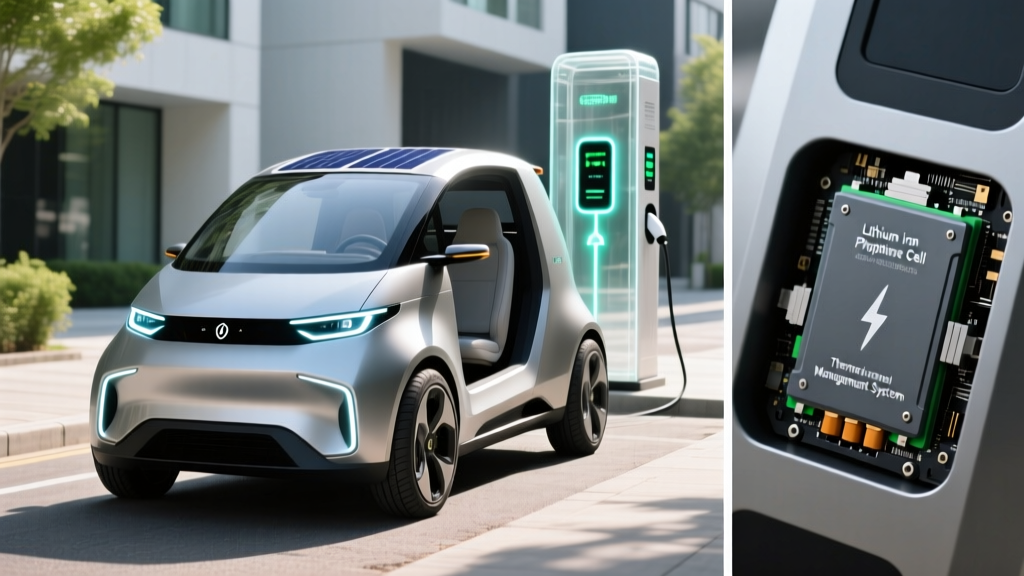
- Autocycles (highway-capable): Three-wheeled, enclosed or semi-enclosed vehicles that meet federal motor-vehicle safety standards (FMVSS) for motorcycles but are often licensed as autocycles at the state level. The Aptera is the leading example — a solar-assisted, two-seat commuter with up to 100 miles of EPA-estimated range.
- Neighborhood Electric Vehicles (NEVs / LSVs): Low-speed vehicles federally limited to a top speed of 25 mph, legal only on roads posted 35 mph or below (varies by state). Brands like EVolution Electric Vehicles, Polk Company, and Arcimoto (now largely discontinued) produce these for campus, resort, and short-errand use.
This distinction determines whether the vehicle can replace a car commute or only supplements one.
2026 Models Compared: Range, Battery, and Price
| Model | Class | Battery (kWh) | EPA Est. Range | Top Speed | Base MSRP | Fed. Tax Credit |
|---|---|---|---|---|---|---|
| Aptera 2e (40 kWh) | Autocycle | ~40 kWh (NMC) | ~100 mi | 110 mph | ~$35,000 | Eligibility varies* |
| Aptera 2e (60 kWh) | Autocycle | ~60 kWh (NMC) | ~150 mi | 110 mph | ~$42,000 | Eligibility varies* |
| EVolution Forester 4 | NEV / LSV | ~10 kWh (LiFePO4) | ~40 mi | 25 mph | ~$16,500 | Not eligible (NEV) |
| Polk Company eCycle | NEV / LSV | ~7 kWh (LiFePO4) | ~30 mi | 25 mph | ~$12,000 | Not eligible (NEV) |
*The Aptera's eligibility for the §30D federal tax credit depends on final battery sourcing and critical-mineral compliance under current IRS rules. Always verify on IRS.gov before purchasing. NEVs do not qualify for §30D because they are not classified as highway-capable motor vehicles.
Real-World Range Reality Check
The Aptera's solar array (adding roughly 1–4 miles of range per day depending on sun exposure and parking habits) is genuinely useful for short commutes — but in overcast Pacific Northwest winters or garage-parked scenarios, expect zero solar contribution. Highway driving at 70+ mph will reduce range by 20–30% versus the EPA estimate. NEV range figures are more stable because speeds never exceed 25 mph, but cold weather (below 40°F) still cuts lithium battery capacity by 10–15%.
Cost Breakdown: Electric Three Wheelers vs. Gas Car vs. Full EV
| Cost Factor | Aptera (Autocycle) | Honda Civic (Gas Baseline) | Chevy Equinox EV |
|---|---|---|---|
| Purchase Price | $35,000–$42,000 | $25,000–$30,000 | $33,000–$43,000 |
| Federal Tax Credit | Up to $7,500 (if eligible) | $0 | Up to $7,500 |
| Net Effective Price | ~$27,500–$42,000 | $25,000–$30,000 | ~$25,500–$43,000 |
| Fuel / Energy Cost per Mile | $0.03–$0.05 (home charging) | $0.12–$0.16 (gas, 30 MPG avg) | $0.04–$0.06 (home charging) |
| Annual Fuel/Energy (12,000 mi) | $360–$600 | $1,440–$1,920 | $480–$720 |
| Maintenance (Annual) | ~$100–$200 | ~$500–$800 | ~$200–$400 |
| Insurance (Annual Avg.) | $800–$1,400* | $1,200–$1,800 | $1,400–$2,000 |
*Insurance for autocycles varies significantly by state and carrier. Some insurers classify them as motorcycles, which can lower premiums but may offer less personal-injury coverage than auto policies. Get quotes before purchasing.
Charging: What You Actually Need at Home
Most electric three wheeled vehicles charge via standard J1772 connectors (autocycles) or simple 120V household outlets (NEVs). Here is what that looks like in practice:
| Charging Level | Power (kW) | Aptera (40 kWh) Time | NEV (10 kWh) Time | Miles Added/Hour |
|---|---|---|---|---|
| Level 1 (120V household) | 1.2–1.4 kW | ~30 hours (0–100%) | ~8 hours (0–100%) | 3–5 mi/hr |
| Level 2 (240V, 32A) | 7.7 kW | ~5.5 hours (0–100%) | ~1.5 hours (0–100%) | 25–30 mi/hr |
| DC Fast Charge (CCS) | Up to ~50 kW | ~45 min (10–80%) | N/A (no DCFC on most NEVs) | N/A |
Home charging reality: NEV owners can typically rely on a standard 120V garage outlet — no electrician needed. Aptera owners benefit from a Level 2 home charger (~$500–$1,200 installed for a basic setup) to make overnight charging practical. If your electrical panel is older or near capacity, a panel upgrade could add $1,500–$3,000 — get a quote from a licensed electrician before assuming you can plug in a Level 2 unit.
Common Misconceptions About Electric Three Wheelers
| Myth | Fact |
|---|---|
| "Three wheels means they tip over easily." | Modern autocycles like the Aptera use a two-front, one-rear "tadpole" layout with a low center of gravity, providing stability comparable to a four-wheeled car in normal driving. However, they lack the redundancy of four contact patches in extreme maneuvers. |
| "They qualify for the $7,500 EV tax credit." | Only highway-capable autocycles may qualify — and only if they meet §30D battery-sourcing, critical-mineral, MSRP, and buyer-income requirements. NEVs/LSVs do not qualify at all. Verify at IRS.gov. |
| "Solar panels on the Aptera mean I never need to plug in." | The integrated solar adds roughly 1–4 miles/day in good conditions. A 30-mile round-trip commute still requires regular plug-in charging. Think of solar as a range extender, not a primary charge source. |
| "NEVs are legal on any road." | Federal law restricts NEVs to roads with speed limits of 35 mph or below, though some states allow crossing higher-speed roads. Check your state's DOT regulations. |
| "Insurance is cheap because they're small." | Autocycle insurance varies wildly. Limited crash-test data and low production volume can actually raise premiums. NEVs may be insurable under homeowner's or specialty policies, but coverage is often minimal. |
Who Should Buy an Electric Three Wheeled Vehicle? A Decision Framework
Choose an Electric Three Wheeler If:
- You already have a primary vehicle for highway trips, cargo hauling, and family transport.
- Your daily commute is under 30 miles round-trip on roads at or below 35 mph (NEV) or you want a hyper-efficient solo commuter (autocycle).
- You live in a mild climate — extreme cold degrades range and makes open-air NEVs impractical for months.
- You have home charging access — even a 120V outlet works for NEVs; Level 2 is ideal for autocycles.
- You want to minimize per-mile cost — at $0.03–$0.05/mile, these are among the cheapest motorized transport options available.
Look at a Full EV or PHEV Instead If:
- You need one vehicle to do everything — road trips, winter driving, passengers, cargo.
- You drive on highways regularly — NEVs are legally excluded; autocycles work but offer less crash protection.
- You live in a region with harsh winters — cold weather and limited heating make three-wheelers uncomfortable and range-challenged.
- You need back seats or significant cargo space — most three-wheelers seat two people with minimal storage.
- You want the full federal tax credit certainty — mainstream EVs like the Equinox EV or Hyundai Ioniq 5 have well-established credit eligibility.
Ownership Considerations First-Time Buyers Overlook
Safety and Crash Protection
Autocycles fall under motorcycle FMVSS standards, meaning they are not crash-tested by the NHTSA the way cars are. Some, like the Aptera, include a reinforced safety cell, airbags, and three-point harnesses — but they lack the mass and crumple zones of a 4,000-pound SUV. NEVs have even less protection: no airbags, minimal structure. This is the single biggest trade-off versus a conventional EV.
Registration, Licensing, and Helmet Laws
State laws vary significantly. In some states, autocycles require a motorcycle endorsement; in others, a standard driver's license suffices. Helmet requirements also vary. NEVs require a standard license but cannot be driven on most highways. Check your state's DMV before purchasing — a vehicle that's perfectly legal in Florida may be restricted in New York.
Resale Value and Manufacturer Support
Three-wheeled EVs are a low-volume, niche market. Resale data is sparse, and depreciation is unpredictable. Aptera is a startup with limited production history; NEV makers are small companies without dealer networks. If the manufacturer ceases operations, parts and service become a challenge. This is a real risk that mainstream EV buyers don't face.
Battery Longevity
Most three-wheeled EVs use LFP (lithium iron phosphate) or NMC (nickel manganese cobalt) batteries. LFP, common in NEVs, offers longer cycle life (2,000–3,000+ cycles) and better thermal stability but lower energy density. NMC, used in autocycles like the Aptera, provides more range per kilogram but degrades faster if routinely charged to 100% or exposed to extreme heat. Expect 8–15 years of usable battery life depending on chemistry and care — similar to mainstream EVs. Warranty terms vary; confirm minimum 8-year/80,000-mile coverage (or equivalent for the vehicle class) before buying.
Frequently Asked Questions
Do electric three wheeled vehicles require a motorcycle license?
It depends on your state and the vehicle class. Enclosed autocycles like the Aptera are classified as autocycles in many states and require only a standard driver's license. Other three-wheelers may require a motorcycle endorsement. NEVs always require a standard driver's license. Check your state DMV for specifics.
Can I drive an NEV on a 45 mph road?
Generally, no. Federal law restricts NEVs to roads with posted speed limits of 35 mph or below. Some states allow NEVs to cross higher-speed roads at intersections, but not to travel along them. Violating this can result in citations and may void insurance coverage in an accident.
How much does it cost to charge an electric three wheeler at home?
At the US average electricity rate of ~$0.16/kWh (per EIA data), fully charging a 40 kWh Aptera costs about $6.40, while a 10 kWh NEV costs about $1.60. Over 12,000 miles annually, that's roughly $360–$600 for an autocycle and $240–$400 for an NEV — compared to $1,440–$1,920 for a 30 MPG gas car.
Is the Aptera's solar charging actually useful?
The Aptera's integrated solar panels can add approximately 1–4 miles of range per day under good sun exposure. For a 15-mile daily commute with outdoor parking, this could cover a meaningful portion of your driving. But for garage-parked vehicles, cloudy climates, or longer commutes, solar is supplemental only. You will still plug in regularly.
Are electric three wheelers safe in rain and snow?
Enclosed autocycles like the Aptera handle rain comparably to a small car, though lighter weight means less traction in standing water. Snow and ice are more problematic — the single rear wheel provides less traction than a four-wheel layout, and low vehicle weight reduces grip. NEVs with open cabins are impractical in rain and cold. If you live in a snowy climate, a three-wheeler should be a fair-weather second vehicle only.
What happens if the manufacturer goes out of business?
This is a genuine risk with niche vehicle makers. Unlike mainstream automakers with established parts networks and dealer service departments, three-wheeled EV startups may leave owners without warranty support, replacement parts, or software updates. Before buying, research the company's financial stability, production volume, and service infrastructure. Consider this risk alongside the lower purchase price.