The Electric Telluride: What Buyers Need to Know Right Now
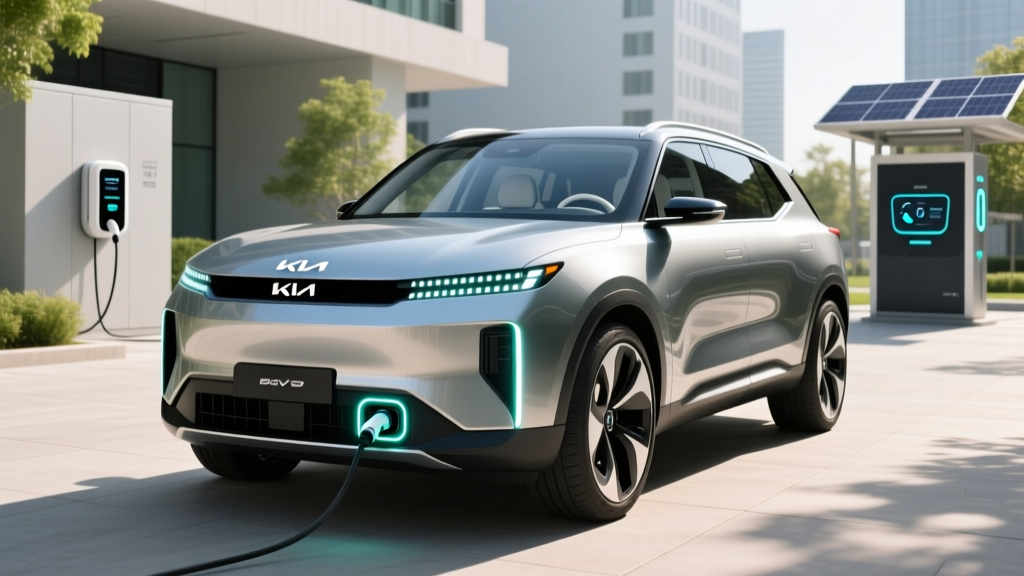
Kia has confirmed an all-electric version of its best-selling Telluride SUV, expected to arrive for the 2026 model year. As of early 2026, final EPA range figures, pricing, and battery specs remain preliminary. Based on Kia's EV9 platform (which shares the E-GMP architecture), industry analysts project an EPA range of roughly 270–310 miles, a usable battery capacity near 100 kWh, and DC fast-charging capability peaking around 230–250 kW. Expected starting MSRP is in the $50,000–$55,000 range before incentives, positioning it as a direct rival to the Rivian R1S, Tesla Model X, and the gas Telluride it will eventually supplement.
Bottom line: If you need a three-row family EV with mainstream pricing, the electric Telluride is one of the most anticipated entries — but it isn't on dealer lots yet. Here's everything confirmed, everything projected, and how to decide whether to wait or buy now.
Projected Specs: What the Electric Telluride Will Likely Offer
Kia hasn't published a full spec sheet, but the electric Telluride is widely reported to ride on the same E-GMP platform underpinning the EV9. That gives us a strong basis for estimates. Here's what the numbers will likely look like across the expected trim lineup:
| Spec | Projected (Base RWD) | Projected (AWD) |
|---|---|---|
| EPA Range | ~290–310 mi | ~270–285 mi |
| Battery (usable) | ~100 kWh (NMC) | ~100 kWh (NMC) |
| Horsepower | ~215 hp (single motor) | ~379 hp (dual motor) |
| 0–60 mph | ~7.8 sec | ~4.9 sec |
| Peak DC Charge Rate | ~236 kW | ~236 kW |
| 10–80% DC Fast Charge | ~24 min | ~24 min |
| Level 2 Charge Rate | 10.9 kW | 10.9 kW |
| Towing Capacity | ~3,500 lb (est.) | ~5,000 lb (est.) |
| Seating | 6 or 7 passengers | |
These figures track closely with the Kia EV9, which uses a 99.8 kWh usable NMC battery and achieves an EPA-estimated 279–304 miles depending on drivetrain. The electric Telluride, being larger and heavier, may land on the lower end of these projections.
Real-World Range Expectations
EPA sticker: ~290–310 mi (RWD), ~270–285 mi (AWD) — projected
Highway driving (70–75 mph): Expect 10–15% below EPA, so roughly 240–270 mi in fair conditions
Cold weather (below 32°F): Plan for 20–30% range reduction, dropping effective range to 190–230 mi
Charging-curve taper: The 236 kW peak won't hold to 80%. Expect sustained rates of ~170–180 kW through 60% SoC, tapering sharply past 80%.
Electric Telluride vs. Gas Telluride: Cost & Capability Comparison
The current gas Telluride starts around $37,500 and delivers a combined 21–23 MPG. The electric Telluride will carry a significantly higher sticker price but dramatically lower fuel and maintenance costs. Here's a data-driven side-by-side based on 15,000 miles/year driven and national-average energy prices:
| Factor | Gas Telluride (2025 SX) | Electric Telluride (Projected AWD) |
|---|---|---|
| Base MSRP | ~$44,000 | ~$53,000–$58,000 |
| Federal Tax Credit (§30D) | $0 | Up to $7,500 (see eligibility below) |
| Effective Starting Price | ~$44,000 | ~$45,500–$50,500 |
| Fuel/Energy Cost (Annual) | ~$2,500 (gas at $3.40/gal, 22 MPG) | ~$650 (home charging at $0.16/kWh) |
| Annual Maintenance | ~$600 | ~$200 |
| 5-Year Fuel + Maintenance | ~$15,500 | ~$4,250 |
| 5-Year Total Cost (purchase + fuel + maint.) | ~$59,500 | ~$54,000–$59,000 |
The electric Telluride reaches cost parity with the gas version within roughly 4–5 years for buyers who can charge primarily at home. Public DC fast-charging at $0.40–$0.55/kWh narrows the gap significantly — a critical factor for apartment dwellers or frequent road-trippers.
Charging Reality: Home, Public, and What It Costs
Charging access is the single biggest variable in EV ownership satisfaction. Here's what electric Telluride buyers should plan for:
| Level | Power | Miles Added/Hour | Use Case |
|---|---|---|---|
| Level 1 (120V) | ~1.4 kW | ~4–5 mi/hr | Emergency/overnight top-off |
| Level 2 (240V, home) | 10.9 kW | ~35–38 mi/hr | Daily charging (full overnight) |
| DC Fast Charge | Up to ~236 kW | ~150 mi in 15 min (peak) | Road trips, quick top-ups |
Home Level 2 Installation Costs
Expect to pay $800–$2,500 for a quality Level 2 home charger installation if your electrical panel has capacity. If a panel upgrade to 200A is needed, add $1,500–$3,500. Kia's E-GMP vehicles use the NACS connector starting with the 2025 model year, meaning the electric Telluride will charge natively at Tesla Superchargers — a major public-charging advantage over CCS-only vehicles.
| Component | Typical Cost Range |
|---|---|
| Level 2 Charger (hardware) | $350–$700 |
| Electrician labor (standard install) | $500–$1,500 |
| Permit fees | $50–$200 |
| Panel upgrade (if needed) | $1,500–$3,500 |
| Total (no panel upgrade) | $900–$2,400 |
| Total (with panel upgrade) | $2,400–$5,900 |
Federal Tax Credit: Will the Electric Telluride Qualify?
Under current IRS §30D rules, the electric Telluride must meet several criteria to qualify for the full $7,500 federal tax credit, which can now be transferred to the dealer at point of sale as an instant discount. Here's the eligibility checklist:
- MSRP cap: SUVs must be priced at or below $80,000. The electric Telluride should clear this easily.
- Buyer income cap: Modified AGI ≤ $150,000 (single), ≤ $300,000 (joint). Exceed this and you're ineligible.
- Battery sourcing: Critical minerals and battery components must meet escalating domestic/free-trade-partner thresholds. Kia's supply chain is still adapting — early units may qualify for only $3,750 (half credit) depending on sourcing compliance.
- Final assembly: Must occur in North America. Kia's Georgia plant (which builds the EV9) is the likely production site, which satisfies this requirement.
- Point-of-sale transfer: You can apply the credit as an instant rebate at the dealer rather than waiting for tax filing.
Caveat: Kia's EV9 initially qualified for only $3,750 of the credit due to battery-component sourcing. The electric Telluride may face the same partial eligibility at launch. Always verify current status on fueleconomy.gov before purchasing, and consult a tax professional for your specific situation.
Electric Telluride vs. the Competition
Three-row EV SUVs remain a thin segment. Here's how the electric Telluride projects against its closest rivals:
| Spec | Electric Telluride (Proj.) | Kia EV9 (2025) | Rivian R1S (Dual) | Tesla Model X |
|---|---|---|---|---|
| EPA Range | ~280 mi | 279–304 mi | ~340 mi | 311–335 mi |
| Battery | ~100 kWh | 99.8 kWh | ~120 kWh | 100 kWh |
| Peak DC Charge | ~236 kW | 236 kW | ~220 kW | 250 kW |
| Starting MSRP | ~$53,000 | $54,900 | $79,900 | $79,990 |
| Federal Credit | Up to $7,500 | Up to $7,500 | $7,500 | $7,500 |
| Third Row | Yes | Yes | Yes (tight) | Yes (tight) |
| Towing | ~5,000 lb | 5,000 lb | 7,700 lb | 5,000 lb |
The electric Telluride's advantage is price — it undercuts the R1S and Model X by $25,000+ while offering comparable three-row utility. Its disadvantage is range: the Rivian and Tesla both offer 300+ miles EPA, which translates to roughly 20–40 more highway miles before you need to stop.
Common Misconceptions About the Electric Telluride
| Myth | Fact |
|---|---|
| "It's just an EV9 with a Telluride badge." | While platform-sharing is likely, the Telluride is larger (more cargo, more third-row space) and may receive a slightly larger battery or revised tuning for its heavier body. |
| "I'll get 310 miles of real-world range." | EPA estimates assume mixed driving. Sustained highway speeds of 70–80 mph and cold weather cut range 15–30%. Plan for 220–260 real-world highway miles. |
| "It'll charge at 236 kW the whole time." | No EV sustains peak rate. Expect ~170–180 kW average through 60% SoC, with sharp tapering above 80%. A 10–80% session takes ~24 minutes, but 80–100% adds another 20+. |
| "Everyone gets the full $7,500 tax credit." | Income caps, battery-sourcing rules, and MSRP limits all apply. Early production units may only qualify for $3,750. Verify on fueleconomy.gov. |
| "I don't need home charging — public chargers are everywhere." | Public DC charging costs 3–5× more than home charging ($0.40–$0.55/kWh vs. $0.12–$0.16/kWh). Without home charging, your annual fuel cost jumps from ~$650 to ~$2,000+. |
Decision Framework: Should You Wait for the Electric Telluride?
Wait for the Electric Telluride If:
- You need a three-row SUV under $60,000 and can wait until late 2026/early 2027 for deliveries.
- You have home Level 2 charging (or can install it) and drive under 250 miles/day.
- You value Kia's warranty (10-year/100,000-mile powertrain) and dealer network over maximum range.
- You want native NACS/Supercharger access without an adapter.
Buy Something Else Now If:
- Need a vehicle today: The Kia EV9 is already on sale with nearly identical specs and a proven track record. Starts at $54,900.
- You tow heavy: The Rivian R1S offers 7,700-lb towing vs. the Telluride's projected ~5,000 lb — at a steep price premium ($79,900+).
- You lack home charging: A PHEV like the Toyota Grand Highlander Hybrid (36 MPG combined, no plug needed) may save more money and hassle than any EV without a garage charger.
- You regularly drive 300+ miles between stops: The Model X or R1S offer 320–340 miles EPA, reducing highway stop frequency.
Frequently Asked Questions
When will the electric Telluride be available to buy?
Kia has confirmed the electric Telluride for production, with an expected on-sale date in late 2026 as a 2027 model year vehicle. Exact timing may shift — Kia's Georgia plant (where the EV9 is built) is the most likely production site.
Will the electric Telluride have a front trunk (frunk)?
The EV9 offers a modest frunk (~1.8 cu ft on RWD, smaller on AWD). The electric Telluride should offer similar — enough for charging cables and a small bag, but not a major cargo area.
What battery chemistry will it use?
Based on the E-GMP platform, expect NMC (nickel-manganese-cobalt) chemistry, which offers higher energy density than LFP but requires more careful charge management for long-term health. Kia recommends daily charging to 80% and only charging to 100% for road trips.
What is the battery warranty?
Kia covers its EV batteries for 10 years/100,000 miles with a capacity-retention threshold of 70%. If the battery degrades below 70% of original capacity within the warranty period, Kia will repair or replace it. This is one of the strongest battery warranties in the segment.
Can I charge at Tesla Superchargers?
Yes. Kia switched to the NACS connector for its E-GMP vehicles starting with the 2025 model year. The electric Telluride will have a native NACS port, granting direct access to Tesla's Supercharger network (now 20,000+ stalls in North America) without an adapter.
How does insurance cost compare to the gas Telluride?
EV insurance typically runs 15–25% higher than equivalent gas vehicles due to higher repair costs and battery replacement exposure. Expect annual premiums of $1,800–$2,400 for the electric Telluride vs. $1,400–$1,900 for the gas version, depending on your state, driving record, and coverage level. Get quotes before committing.