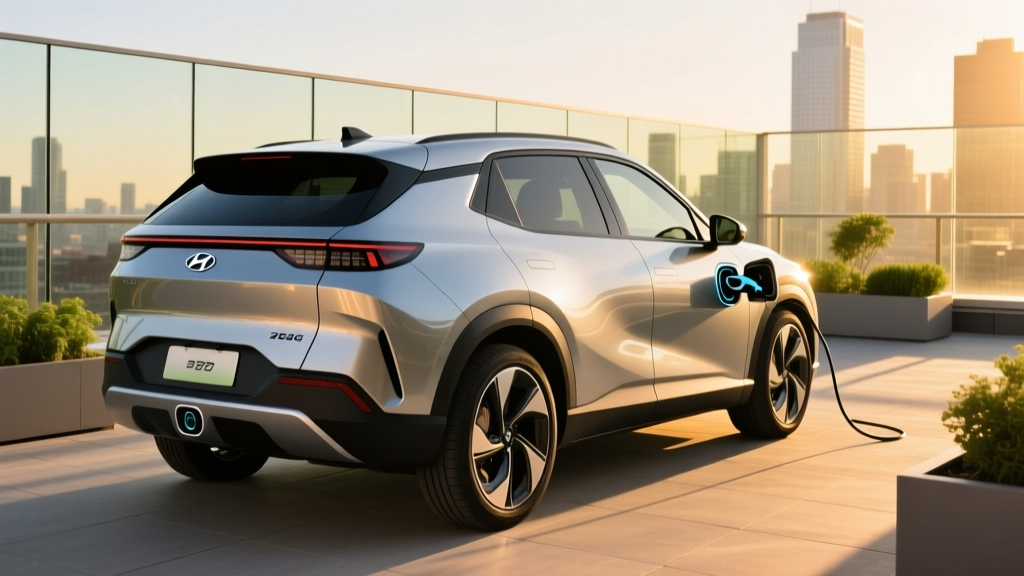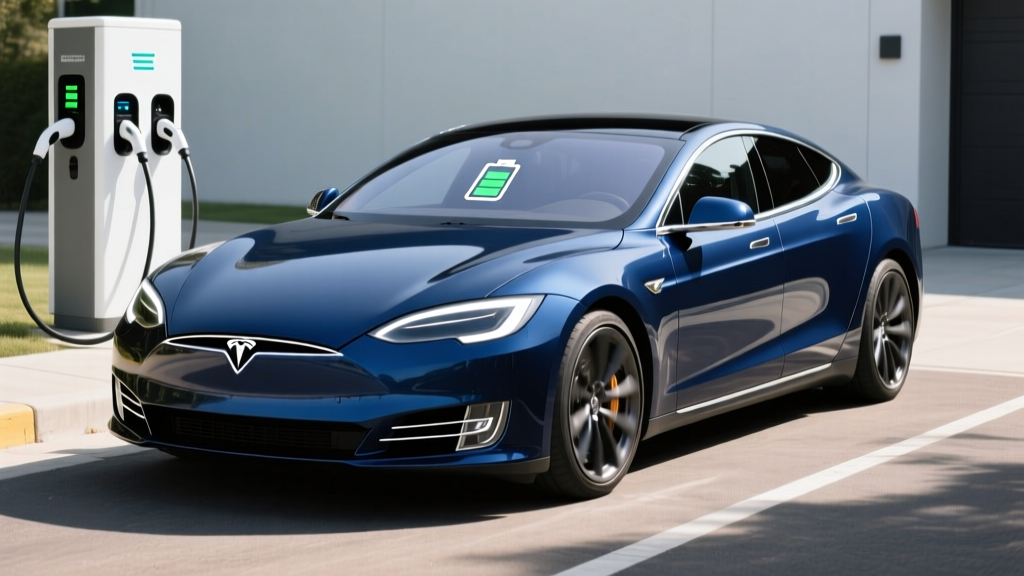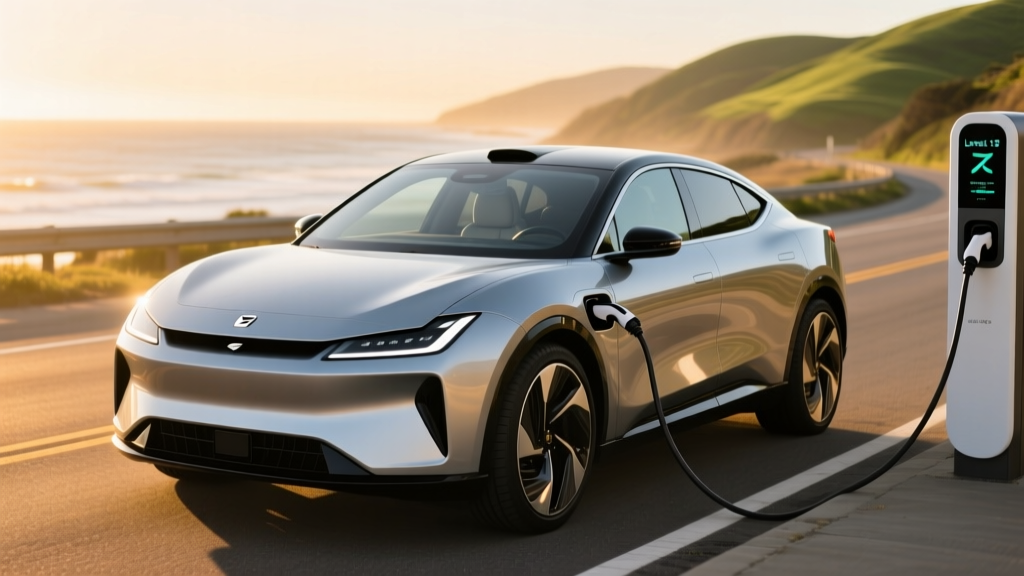
Why Fleet Operators Are Eyeing the Electric Taxi Cab
High-mileage drivers—taxi operators, rideshare fleet owners, livery services—burn through fuel and maintenance faster than any other segment of the driving public. A typical taxi accumulates 50,000 to 70,000 miles per year. At those volumes, even a few cents per mile in savings compound into thousands annually. That math is precisely why the electric taxi cab is no longer a novelty in cities like New York, Los Angeles, and London—it's an economic argument.
But the upfront price of an EV, the complexity of federal tax credits, higher insurance premiums, and charging logistics all complicate the picture. This guide breaks down the real total cost of ownership (TCO) for running an electric taxi cab in 2026, covering purchase price, the IRS §30D credit, fuel and maintenance savings, insurance reality, depreciation trends, and which models actually make sense for fleet duty.
5-Year Total Cost of Ownership: Electric Taxi Cab vs. Gas Sedan
To model realistic fleet economics, we compared a battery-electric midsize sedan (representative of a Tesla Model 3 RWD or Hyundai Ioniq 6 SE) against a conventional gas fleet favorite (a Toyota Camry LE) over 5 years and 300,000 miles of taxi service. All figures are per-vehicle estimates; actual costs vary by metro area, utility rates, and driving patterns.
| Cost Category | Electric Sedan (2026) | Gas Sedan (2026) |
|---|---|---|
| Purchase Price (MSRP) | $38,990 | $28,500 |
| Federal Tax Credit (§30D) | −$7,500 (if eligible) | $0 |
| Net Purchase Cost | $31,490 | $28,500 |
| Fuel / Energy (300k mi) | $18,000 ($0.06/mi) | $42,857 ($0.143/mi) |
| Maintenance (5 yr) | $4,500 | $12,000 |
| Insurance (5 yr) | $22,500 | $16,500 |
| Depreciation (est.) | $18,000 | $12,000 |
| Total 5-Year Cost | $94,490 | $111,857 |
| Cost Per Mile (all-in) | $0.315 | $0.373 |
The verdict: Even with a higher purchase price and steeper insurance, the electric taxi cab saves roughly $17,300 over 5 years at 300,000 miles, driven primarily by fuel and maintenance deltas. At lower annual mileage (say, 30,000 mi/yr), the savings shrink and the payback period lengthens.
Federal Tax Credit: IRS §30D Rules for 2026
The federal EV tax credit under IRS §30D can reduce the effective purchase price of a qualifying electric taxi cab by up to $7,500. But eligibility is not automatic—it depends on buyer income, vehicle MSRP, battery sourcing, and the vehicle's final assembly location. Fleet buyers operating as LLCs or corporations should consult a tax professional; the credit is structured for individual taxpayers, though point-of-sale transfer rules have broadened access.
§30D Eligibility Checklist (2026 Tax Year)
- Income caps (Modified AGI): $300,000 joint filers / $225,000 head of household / $150,000 individual
- MSRP caps: Vans, SUVs, and pickups ≤ $80,000; sedans and other vehicles ≤ $55,000
- Battery sourcing: ≥ 80% of critical minerals (by value) must be extracted or processed in the U.S. or an FTA partner country, or recycled in North America (2026 threshold)
- Battery components: 100% of battery components must be manufactured or assembled in North America (2026 threshold)
- Foreign Entity of Concern (FEOC): Battery cannot contain components or critical minerals from a FEOC (phased in 2024–2027)
- Final assembly: Must occur in North America
- Point-of-sale transfer: Buyers can transfer the credit to the dealer at purchase, receiving the benefit as a price reduction even without sufficient tax liability
Fleet reality: Many taxi fleet owners purchase vehicles through business entities. The §30D credit is an individual income tax credit, but the Commercial Clean Vehicle Credit (§45W) may apply for business-owned vehicles—up to $7,500 for vehicles under 14,000 lbs GVWR. Consult a tax professional to determine which credit applies to your operating structure.
State, Local, and Utility Incentives
Beyond the federal credit, incentives vary dramatically by jurisdiction. Examples include:
- New York: Drive Clean Rebate up to $2,000; NYC-specific fleet electrification grants for medallion taxis
- California: CVRP rebate up to $7,000 for income-qualified buyers; utility rebates (PG&E, SCE) for Level 2 charger installation
- Colorado: Innovative Motor Vehicle Tax Credit up to $5,000 for new EVs
- Utility rebates: Many municipal utilities offer $500–$1,500 for home or depot Level 2 charger installation; some offer time-of-use (TOU) rates that slash overnight charging costs
Always verify current incentive availability at afdc.energy.gov and your state's energy office, as programs change annually.
Charging vs. Gas: The Per-Mile Cost Math
The single largest operating-cost advantage for an electric taxi cab is energy cost. Here's the concrete math:
| Metric | Electric Sedan | Gas Sedan |
|---|---|---|
| Efficiency | 28 kWh/100 mi (120 MPGe) | 32 MPG combined |
| Energy price | $0.14/kWh (commercial L2) / $0.07/kWh (depot overnight) | $3.25/gal (regular) |
| Cost per mile (home/depot) | $0.020/mi | $0.102/mi |
| Cost per mile (public DCFC) | $0.039–$0.078/mi | $0.102/mi |
| Blended fleet avg (70% depot, 30% DCFC) | $0.038/mi | $0.102/mi |
For a taxi covering 60,000 miles/year, that translates to approximately $2,280/year on electricity (blended) vs. $6,120/year on gas—a $3,840 annual fuel savings. Over 5 years at this mileage, fuel savings alone approach $19,200.
Critical caveat: These savings depend on depot or overnight charging at commercial/TOU rates. Taxis that rely entirely on public DC fast charging at $0.35–$0.55/kWh will see their per-mile cost rise to $0.098–$0.154/mi, erasing much of the advantage. Fleet operators should prioritize installing Level 2 chargers at their depot or garage. A 19.2 kW Level 2 station can fully recharge a ~75 kWh battery in roughly 4 hours—ideal for shift changes.
Maintenance Savings: Where EVs Dominate Fleet Economics
High-mileage fleet vehicles endure the worst maintenance schedules in the auto industry. An electric taxi cab eliminates the most frequent and costly service items:
| Service Item | EV Cost | Gas Vehicle Cost |
|---|---|---|
| Oil changes (every 5k mi = 60 over 5 yr) | $0 | $3,000–$4,200 |
| Transmission fluid | $0 (single-speed) | $300–$600 |
| Brake pads & rotors | $400–$800 (regen extends life 2–3×) | $2,400–$3,600 |
| Spark plugs / ignition | $0 | $600–$1,200 |
| Exhaust / emissions | $0 | $500–$1,500 |
| Coolant flush | $200–$400 | $400–$800 |
| Tires (EVs wear tires ~20% faster due to weight) | $3,000–$4,000 | $2,400–$3,200 |
| Cabin air filter, wipers, misc. | $500–$800 | $500–$800 |
| Total Maintenance | $4,100–$6,000 | $9,700–$15,900 |
Regenerative braking is the unsung hero of fleet maintenance. By using the electric motor to decelerate, regen dramatically reduces friction brake wear. Many EV taxis report original brake pads lasting beyond 100,000 miles. The trade-off: EVs are heavier, so tire replacement comes more frequently and costs slightly more per set.
Insurance: The Cost Category Where EVs Lose
Insurance is the most consistently higher cost for electric taxi cab operators. Industry data from major commercial fleet insurers shows EV premiums running 25–40% higher than equivalent gas vehicles for livery/taxi use.
Why EV insurance costs more:
- Higher repair costs: Battery pack damage in a collision often results in a total loss; specialized high-voltage repair training is required
- Parts cost: EV-specific components (battery modules, power electronics, drive units) carry premium pricing
- Limited collision repair network: Fewer body shops are certified for high-voltage system repairs, increasing claim cycle times
- Higher vehicle MSRP: Insurers base premiums partly on replacement cost
For a commercial taxi policy, expect annual premiums in the range of $4,000–$5,500 for an EV vs. $3,000–$4,000 for a gas sedan, depending on metro area, driver records, and coverage limits. Over 5 years, that's an additional $5,000–$7,500 in insurance costs—partially offset by fuel and maintenance savings, but a real line item that fleet operators must budget for.
Mitigation strategies: Some insurers now offer EV-specific fleet policies with telematics-based pricing. Safe driving data from the vehicle's onboard systems can reduce premiums by 10–15%.
Depreciation and Resale Value Trends
EV depreciation has been volatile. In 2023–2024, Tesla price cuts and a flood of off-lease EVs sent used EV values tumbling. By 2026, the market has stabilized somewhat, but EVs still depreciate faster than Toyota Camrys in most segments.
For a fleet taxi, depreciation matters differently than for a personal owner:
- Extreme mileage penalty: A 5-year-old taxi with 300,000 miles has minimal resale value regardless of powertrain. Gas fleet sedans at this mileage sell for $3,000–$5,000 at auction.
- Battery health is king: An EV taxi's resale value hinges on State of Health (SoH). Fleet operators should monitor SoH via the vehicle's telematics and document battery capacity over time. A battery at 80%+ SoH at 300,000 miles still has value; one at 65% does not.
- Battery warranty coverage: Most manufacturers warrant the battery at 8 years/100,000 miles (some, like Hyundai, at 10 years/100,000 miles) for a minimum of 70% capacity retention. For taxis exceeding 100,000 miles in 2 years, the warranty will expire long before the vehicle is retired—plan for potential battery replacement or refurbishment costs of $8,000–$15,000.
Estimated 5-year depreciation for an electric taxi cab purchased at ~$31,500 (after credit) and retired at 300,000 miles: $18,000–$22,000, vs. $12,000–$14,000 for a gas sedan bought at $28,500. The EV loses more in absolute dollars, but the fuel and maintenance savings more than compensate.
Best EV Models for Electric Taxi Cab Duty in 2026
Not every EV suits fleet taxi service. The priorities are: range sufficient for a full shift without mid-shift charging, fast DC charging for quick turnaround, durable interior, spacious rear seat, low cost per mile, and available fleet/commercial pricing.
| Model | EPA Range | Battery (kWh) | DC Fast Charge (10–80%) | Base MSRP | Key Fleet Advantage |
|---|---|---|---|---|---|
| Tesla Model 3 RWD | 272 mi (real-world ~220–245 mi hwy) | 60 kWh (LFP) | ~25 min at 170 kW peak | $38,990 | LFP battery longevity; Supercharger network; OTA updates |
| Hyundai Ioniq 6 SE | 361 mi (real-world ~290–310 mi) | 77.4 kWh (NMC) | ~18 min at 240 kW peak | $42,750 | Ultra-fast 800V charging; low drag; spacious cabin |
| Toyota bZ4X XLE | 252 mi (real-world ~200–220 mi) | 71.4 kWh (NMC) | ~30 min at 150 kW peak | $43,070 | Toyota fleet support; familiar service network |
| Chevrolet Equinox EV LT | 315 mi (real-world ~260–280 mi) | 85 kWh (NMC) | ~24 min at 150 kW peak | $33,600 | Lowest MSRP; qualifies for §30D; roomy crossover format |
Top pick for pure economics: The Chevrolet Equinox EV at $33,600 MSRP (potentially $26,100 after the $7,500 credit) offers the lowest entry cost and 315 miles of EPA range—enough for most single-shift taxi operations without mid-shift charging.
Top pick for high-utilization fleets: The Hyundai Ioniq 6 SE charges from 10–80% in approximately 18 minutes on a 350 kW charger, minimizing downtime between shifts. Its 800V architecture is a genuine operational advantage for taxis running 16+ hours/day with driver swaps.
Frequently Asked Questions
How much does it really cost to own an electric taxi cab over 5 years?
Based on our 300,000-mile model, total 5-year cost for an EV fleet sedan is approximately $94,500, vs. $111,900 for a gas equivalent—a savings of roughly $17,400. This assumes eligibility for the $7,500 federal credit, depot charging at blended rates of ~$0.10/kWh, and commercial fleet insurance. Your actual cost depends on local electricity rates, mileage, and insurance market.
Do I qualify for the federal EV tax credit as a fleet operator?
The §30D credit is an individual income tax credit with income caps ($150k single / $300k joint), MSRP caps ($55k sedans / $80k SUVs/vans), and strict battery-sourcing requirements. If your fleet vehicles are titled to a business entity, the Commercial Clean Vehicle Credit (§45W) may apply instead. The point-of-sale transfer option allows the credit to be applied as a purchase-price reduction at the dealer. Consult a tax professional for your specific structure.
How much do I save on fuel and maintenance per year?
At 60,000 miles/year, expect approximately $3,840/year in fuel savings (charging at depot rates vs. gas at $3.25/gal) and $1,500–$2,280/year in maintenance savings (no oil changes, reduced brake wear, no exhaust system repairs). Combined annual operating savings: roughly $5,300–$6,100 per vehicle.
Are electric taxi cabs more expensive to insure?
Yes—typically 25–40% more expensive than gas equivalents for commercial livery policies. Higher repair costs, battery replacement risk, and elevated MSRP drive premiums up. Budget an additional $1,000–$1,500/year per vehicle. Telematics-based policies and EV-specific fleet insurers may reduce this gap.
How well do EVs hold their value at taxi mileage?
At 300,000 miles, resale value is low for any vehicle. An EV taxi may fetch $3,000–$8,000 depending on battery State of Health (SoH). Battery health documentation is critical—fleets that can certify 80%+ SoH command better auction prices. Plan for the vehicle to be nearly fully depreciated in your TCO model; the operational savings during service life are where the EV wins.
Can an electric taxi cab complete a full 12-hour shift without charging?
It depends on the model and city. A typical urban taxi covers 150–250 miles per 12-hour shift. The Hyundai Ioniq 6 SE (361 mi EPA, ~290 mi real-world) can complete most shifts with range to spare. The Tesla Model 3 RWD (272 mi EPA, ~220 mi real-world) may require a 20-minute DC fast charge top-up during a meal break in high-mileage markets. Cold-weather cities should plan for 20–30% range reduction in winter.