The Short Answer on the Electric Tacoma
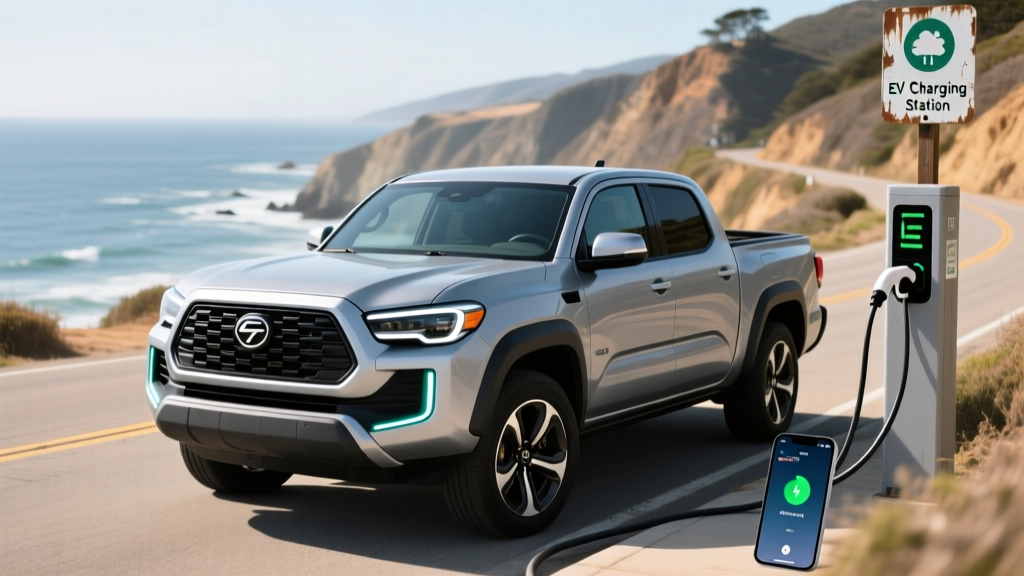
As of early 2026, Toyota has not yet released a production electric Tacoma. The next-generation Tacoma lineup currently includes a 2.4-liter turbo gas engine and the i-FORCE MAX hybrid powertrain. Toyota has signaled interest in electrifying its truck portfolio, and industry reporting points to a battery-electric Tacoma variant potentially arriving for the 2027 or 2028 model year, likely built on a dedicated EV platform shared with upcoming Toyota trucks. Until then, buyers wanting an electrified midsize truck from Toyota should consider the Tacoma i-FORCE MAX hybrid (up to 26 MPG combined) or look at competitors like the Ford Maverick hybrid or the upcoming electric midsize trucks from other manufacturers. This guide covers what we know, what to expect, and how to prepare.
What Toyota Has Said About an Electric Tacoma
Toyota's approach to truck electrification has been deliberate — some would say cautious. The company has prioritized hybrids across its truck and SUV lineup, introducing the i-FORCE MAX hybrid powertrain in both the Tundra and Tacoma. However, Toyota's broader EV strategy has shifted significantly since 2023, with the company committing to a lineup of 30 battery-electric vehicles by 2030 and investing heavily in solid-state battery research.
For the Tacoma specifically, Toyota executives have acknowledged that an electric variant is under consideration, but no official production timeline, pricing, or specifications have been published. What we can piece together from Toyota's platform strategy, supplier announcements, and the competitive landscape gives us a reasonable picture of what an electric Tacoma would need to deliver.
Platform and Battery Expectations
The current fourth-generation Tacoma (introduced for 2024) rides on Toyota's TNGA-F body-on-frame platform, shared with the 4Runner, Land Cruiser, and Tundra. An electric Tacoma would likely use a modified or dedicated EV skateboard architecture. Based on Toyota's announced battery roadmap:
- Battery chemistry: Toyota has indicated it will use both NMC (nickel manganese cobalt) and LFP (lithium iron phosphate) cells across its EV lineup. A truck application demanding higher energy density and towing capability would likely use NMC, though an LFP option for a base work-truck trim is possible for cost savings and longevity.
- Battery capacity (estimated): 80–100 kWh usable, based on competitive midsize and full-size electric truck benchmarks.
- Target range (estimated): 250–320 miles EPA, depending on trim and battery size — consistent with the class.
How an Electric Tacoma Would Compare to the Gas and Hybrid Tacoma
Until official specs drop, the most useful exercise is benchmarking the electric Tacoma against what's available now. Here's how the current 2026 Tacoma powertrains stack up, and where an EV variant would likely land:
| Spec | Gas (i-FORCE 2.4T) | Hybrid (i-FORCE MAX) | Electric (Projected) |
|---|---|---|---|
| Powertrain | 2.4L Turbo I4 | 2.4L Turbo I4 + Electric Motor | Dual-Motor AWD (est.) |
| Horsepower | 278 hp | 326 hp | ~350–450 hp (est.) |
| Torque | 317 lb-ft | 465 lb-ft | ~500+ lb-ft (est.) |
| EPA Fuel Economy / MPGe | ~20–23 MPG combined | ~24–26 MPG combined | ~70–85 MPGe (est.) |
| Range / Tank | ~380–420 mi | ~430–460 mi | ~250–320 mi (est.) |
| 0–60 mph | ~7.0 sec | ~6.0 sec | ~4.5–5.5 sec (est.) |
| Max Towing | 6,500 lb | 6,000 lb | ~5,000–7,500 lb (est.) |
| Starting MSRP | ~$33,000 | ~$41,000 | ~$50,000–$55,000 (est.) |
| Federal Tax Credit (§30D) | N/A | N/A | Up to $7,500 (if eligible) |
Sources: Toyota Tacoma specs, fueleconomy.gov. Electric Tacoma figures are author projections based on competitive benchmarks and are not official Toyota data.
Projected Ownership Costs: Electric Tacoma vs. Gas Tacoma
The upfront premium of an electric truck is real, but operating costs tell a different story over time. Here's a five-year ownership comparison using reasonable projections for an electric Tacoma versus the gas i-FORCE model, assuming 15,000 miles driven annually:
| Category | Gas Tacoma (~$33K MSRP) | Electric Tacoma (~$52K est. MSRP) |
|---|---|---|
| Purchase Price (after incentives) | $33,000 | $44,500 (after est. $7,500 credit) |
| Fuel / Energy (5 yrs, 75K mi) | $10,500 (21 MPG, $3.50/gal) | $3,750 (home L2 at $0.14/kWh) |
| Maintenance (5 yrs) | $3,200 | $1,200 |
| Insurance (5 yrs, est.) | $7,500 | $8,500 |
| Estimated Depreciation | $12,000 | $16,000 |
| 5-Year Total | ~$66,200 | ~$73,950 |
Key takeaway: Even with significantly lower fuel and maintenance costs (roughly $8,750 saved over five years), the electric Tacoma's higher purchase price and steeper depreciation mean it likely won't achieve cost parity with the gas model in five years for most buyers. The break-even point would likely come around year 7–8, depending on electricity rates, gas prices, and annual mileage. Higher-mileage drivers benefit more from EV economics.
Note on the federal §30D tax credit: To qualify for the full $7,500, the vehicle must meet battery component and critical mineral sourcing requirements set by the IRS. Buyer income caps apply ($150K single / $300K joint), and the truck MSRP must not exceed $80,000. The credit can be transferred to the dealer at point of sale as an instant discount. Always verify current-year eligibility rules with a tax professional.
Charging an Electric Tacoma: What to Expect
Truck buyers who tow, haul, and venture off-pavement have specific charging concerns. Based on competitive electric truck charging performance, here's what an electric Tacoma would likely offer:
| Level | Power | Miles Added/Hour | Notes |
|---|---|---|---|
| Level 1 (120V) | ~1.4 kW | ~3–4 mi/hr | Emergency/trickle only; full charge in 3+ days |
| Level 2 (240V, 48A) | ~11.5 kW | ~30–38 mi/hr | Overnight home charging; full charge in ~8–10 hrs |
| DC Fast Charge (peak) | ~150–200 kW (est.) | ~500+ mi/hr (peak) | 10–80% in ~25–35 min; tapers above 80% |
A critical distinction for truck buyers: kW is power (how fast energy flows), while kWh is energy (how much the battery holds). A 90 kWh battery charged at a sustained 150 kW would theoretically fill in about 36 minutes — but real-world charge curves mean the rate slows significantly above 80% State of Charge (SoC) to protect battery health. Expect the 10–80% session to be the practical fast-charging window on road trips.
Home Charging Setup Costs
Most electric truck owners will want a Level 2 home charger. Here's a realistic installation cost breakdown:
| Item | Low End | High End |
|---|---|---|
| Level 2 EVSE (hardwired, 48A) | $400 | $750 |
| Electrician labor (240V circuit, 50A breaker) | $500 | $1,500 |
| Permit and inspection | $50 | $200 |
| Electrical panel upgrade (if needed, 200A) | $1,500 | $3,500 |
| Total (no panel upgrade) | $950 | $2,450 |
| Total (with panel upgrade) | $2,450 | $5,950 |
Have a licensed electrician evaluate your panel capacity before committing to a purchase. Many homes built before 2000 have 100A panels that may not support a 48A continuous EV load alongside existing appliances.
Real-World Ownership Considerations for an Electric Truck
Truck ownership isn't the same as sedan ownership, and an electric Tacoma would amplify certain considerations:
Towing Range Penalty
Every electric truck tested to date loses 40–55% of its range when towing near max capacity. An electric Tacoma rated for 300 miles unloaded might deliver just 140–170 miles while towing a 4,000-pound trailer at highway speeds. This is the single biggest practical limitation for truck buyers who tow regularly. Gas and hybrid trucks lose efficiency too, but their longer baseline range and faster refueling make towing less disruptive.
Cold-Weather Range Loss
In sustained below-freezing temperatures, expect 15–30% range reduction due to battery chemistry limitations and cabin heating demands. A heat pump (which Toyota has been adopting across its EV lineup) mitigates this somewhat, but physics is physics. If you live in the northern tier states and need reliable 250+ mile range in January, factor in this loss.
Off-Road and Trail Use
Electric motors deliver instant torque at zero RPM — excellent for rock crawling and low-speed technical trails. Regenerative braking also provides precise speed control on descents. The trade-off: remote trail use means no charging infrastructure, and battery capacity is your fixed "fuel tank." Plan routes carefully until charging networks expand into backcountry areas.
Payload Considerations
Battery packs add significant weight. Electric trucks typically carry 500–1,000 pounds less payload than their gas counterparts. If you regularly load the bed to capacity, verify the electric variant's payload rating once published.
Common Misconceptions About Electric Trucks
| Myth | Fact |
|---|---|
| "Electric trucks can't tow anything real." | Electric trucks can tow near their rated capacity — but range drops sharply. The issue isn't capability; it's range while towing and charging logistics on long hauls. |
| "Batteries won't last and cost $20K to replace." | Federal law mandates EV battery warranties of at least 8 years/100,000 miles. Most modern packs retain 85–90% capacity at 150K miles. Replacement costs are declining; a midsize truck pack in 2028 may cost $8,000–$12,000 out of warranty. |
| "I'll be stuck charging for hours." | Home Level 2 charging happens overnight while you sleep — zero extra time spent. DC fast charging adds 150–200 miles in 20–30 minutes on road trips. |
| "EVs are worse in the cold." | Range drops 15–30% in freezing weather, but EVs start instantly (no cold cranking), cabin heat is instant with a heat pump, and preconditioning while plugged in preserves range. |
| "An electric Tacoma will qualify for the full $7,500 tax credit." | Not guaranteed. The §30D credit depends on battery sourcing, critical mineral content, buyer income, and MSRP caps. Toyota's battery supply chain will determine eligibility at launch. |
Decision Framework: Should You Wait for the Electric Tacoma?
Choose Your Path
Wait for the electric Tacoma if:
- You have reliable home Level 2 charging (garage or driveway with 240V access)
- Your daily driving is under 100 miles round-trip and you rarely tow more than 2,000 lb
- You want to minimize fuel and maintenance costs and plan to keep the truck 8+ years
- You're not in a rush — the earliest realistic arrival is 2027–2028 model year
- Off-peak electricity rates in your area are below $0.15/kWh
Buy the gas or hybrid Tacoma now if:
- You regularly tow 3,000+ lb on long trips (range and charging logistics remain problematic for EV towing)
- You live in an apartment or lack home charging access
- You need a truck this year and can't wait 1–2 model years
- You drive in extreme cold frequently and need maximum range reliability
- Your budget tops out around $35,000–$42,000 (the electric Tacoma will likely start above $50K before incentives)
Consider a competitor's electric truck now if:
- You want an EV truck today — the Ford F-150 Lightning (full-size), Rivian R1T (midsize/premium), or Chevrolet Silverado EV are available or in production
- You're open to a full-size truck and the F-150 Lightning's ~$55K starting price works for your budget
Frequently Asked Questions
Is Toyota making an electric Tacoma?
Toyota has not officially announced a production electric Tacoma as of early 2026. The company has confirmed plans to expand its EV lineup significantly and has acknowledged electrification of its truck portfolio, but no timeline, pricing, or specifications have been published. Industry analysts expect a battery-electric Tacoma could arrive for the 2027 or 2028 model year.
What electric midsize trucks are available now?
As of 2026, the midsize electric truck segment remains thin. The Rivian R1T is the primary offering, starting around $70,000. The Ford Maverick hybrid (not fully electric) offers excellent efficiency in a compact truck format. Full-size electric trucks like the Ford F-150 Lightning and Chevrolet Silverado EV are available but are larger and more expensive than a Tacoma would be.
Would an electric Tacoma qualify for the $7,500 federal tax credit?
It depends on several factors at the time of purchase. Under current IRS §30D rules, the vehicle must meet battery component and critical mineral sourcing thresholds, the buyer's adjusted gross income must fall below caps ($150K single, $300K joint), and the MSRP must not exceed $80,000 for trucks. Toyota's battery supply chain decisions will determine whether the electric Tacoma qualifies. Always consult a tax professional before relying on credit eligibility.
How much would it cost to charge an electric Tacoma at home?
Assuming a 90 kWh battery and a national average residential electricity rate of $0.16/kWh, a full charge from empty would cost roughly $14.40. For a typical week of 250 miles of driving (consuming approximately 65 kWh), you'd spend about $10.40 on electricity — compared to roughly $37 in gasoline for a 21 MPG gas Tacoma at $3.50/gallon. Over a year, home charging could save $1,200–$1,500 versus gasoline.
What's the best Tacoma to buy right now if I want to save on fuel?
The Tacoma i-FORCE MAX hybrid is the most fuel-efficient Tacoma currently available, delivering approximately 24–26 MPG combined depending on trim. It costs roughly $8,000 more than the base gas model but provides significantly more torque (465 lb-ft) and better fuel economy. For buyers who want maximum efficiency without waiting for an EV, the hybrid is the pragmatic choice.