The Short Answer: What Do Electric Surfboards Have to Do With Your Next EV?
Electric surfboard dynamics — the physics of how battery-powered watercraft accelerate, sustain speed, and manage energy under load — share the same foundational engineering as modern electric vehicles. Both rely on lithium-based battery packs, brushless DC motors, inverter-driven power delivery, and thermal management systems. For EV buyers, understanding how e-foils and electric surfboards manage kWh capacity versus kW output, battery degradation under high-discharge conditions, and real-world range versus rated range offers a micro-scale masterclass in the exact decisions you'll make when choosing an EV. The differences matter just as much: a surfboard's ~2 kWh pack versus a car's 75–100 kWh pack means vastly different charging times, costs, and ownership realities.
Electric Surfboard Dynamics, Explained: The Powertrain Parallel
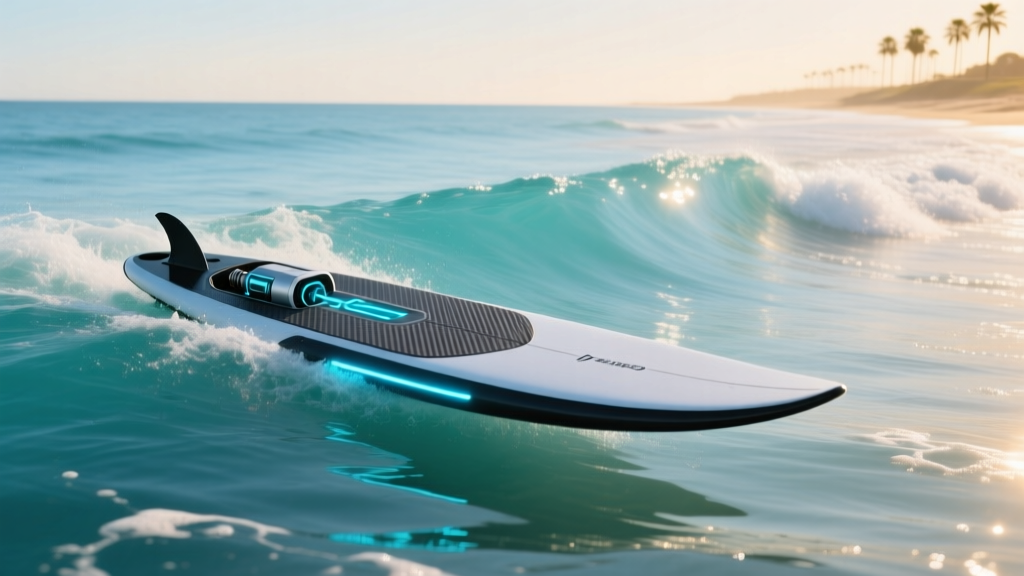
At its core, an electric surfboard is a compact, high-discharge EV. A typical 2026 performance e-foil packs a 2.0–2.5 kWh lithium-ion battery (usually NMC chemistry for energy density) driving a 5–12 kW brushless motor through a waterproofed inverter. That power-to-weight ratio is extreme — roughly equivalent to a 4,000-pound car running a 200+ kW motor off a 75 kWh pack.
The physics that govern electric surfboard dynamics translate directly:
- kWh (energy capacity) determines ride time — typically 45–90 minutes depending on throttle usage, rider weight, and water conditions.
- kW (power output) determines acceleration and top speed — most boards hit 25–35 mph with peak draw of 8–12 kW.
- Thermal management is critical. Continuous high-discharge riding heats battery cells rapidly, and unlike a Tesla or Hyundai with active liquid cooling, most surfboards rely on passive cooling or water immersion — which limits sustained output.
- State of Charge (SoC) taper mirrors the EV charging curve: as the battery depletes below 30%, voltage sag reduces available power, and riders feel a noticeable drop in acceleration.
For EV shoppers, this is the same calculus at scale. A battery electric vehicle with an 84 kWh NMC pack and 250 kW peak charge rate faces the identical trade-offs between energy density, discharge rate, and thermal limits — just with more sophisticated management systems.
Cost Comparison: Electric Surfboard Ownership vs. EV Ownership
Both categories demand upfront investment, ongoing energy costs, and eventual battery replacement. Here's how the economics stack up in 2026:
| Category | Electric Surfboard (2026) | Average EV (2026) |
|---|---|---|
| Purchase price | $4,000–$12,000 | $35,000–$65,000 (before credits) |
| Battery capacity | 2.0–2.5 kWh (NMC) | 60–100 kWh (LFP or NMC) |
| Energy cost per full charge | $0.30–$0.40 (at $0.16/kWh) | $9.60–$16.00 (at $0.16/kWh) |
| Charge time (Level 1 / 120V) | 3–4 hours | 30–60+ hours (not practical) |
| Charge time (Level 2 / 240V) | 1–1.5 hours | 6–10 hours |
| DC fast charging | Not available | 15–30 min (10–80%) |
| Battery lifespan | 300–500 cycles (~3–5 years) | 1,500–3,000 cycles (~10–15+ years) |
| Battery replacement cost | $1,500–$3,000 | $8,000–$20,000+ |
| Federal tax credit eligibility | None | Up to $7,500 (§30D, with caveats) |
The surfboard's per-kWh cost is actually higher — roughly $2,000–$4,800/kWh for the full system versus an EV at ~$350–$650/kWh at the pack level. That's because EVs benefit from massive economies of scale and automotive-grade cell manufacturing. The lesson for EV buyers: battery cost per kWh continues to decline, and the pack in a 2026 EV is dramatically more cost-efficient per unit of energy than a niche marine application.
EV vs. Gas: What Surfboard Dynamics Teach About Efficiency
| Metric | EV (2026 Median Sedan/SUV) | Gas Car (2026 Equivalent) |
|---|---|---|
| Energy cost per mile | $0.04–$0.06 (home charging) | $0.12–$0.16 (at $3.40/gal, 28 MPG) |
| "Fuel" cost for 12,000 miles/year | $480–$720 | $1,440–$1,920 |
| Maintenance per year | $300–$500 (no oil, fewer brakes) | $800–$1,200 |
| 0–60 mph (typical dual-motor EV) | 3.5–5.0 seconds | 6.0–8.0 seconds |
| Energy conversion efficiency | ~85–90% (battery to wheels) | ~20–30% (fuel to wheels) |
| 5-year total fuel + maintenance | $3,900–$6,100 | $11,200–$15,600 |
The efficiency parallel is striking. An electric surfboard converts roughly 80–85% of its stored battery energy into thrust through the impeller. A gas-powered jetboard (yes, they exist — brands like Awake and Radinn offer gas models) converts only about 25% of its gasoline energy into forward motion, losing the rest as heat and exhaust. The same ratio holds for cars: EVs waste far less energy, which is why the per-mile cost is so much lower.
Real-World Ownership Considerations: What EV Buyers Must Face
Here's where the surfboard analogy ends and practical EV ownership begins. These are the factors that determine whether an EV works for your life:
Home Charging Access
If you can install a Level 2 (240V) home charger — typically a 40-amp or 48-amp wall unit on a dedicated circuit — EV ownership is transformative. You wake up every morning with a full "tank." Installation costs range from $800–$2,500 depending on panel capacity, run length, and local permitting. If your electrical panel needs a 200-amp upgrade, add $1,500–$3,000.
If you cannot charge at home (apartment living, no garage, street parking only), public charging becomes your lifeline. DC fast charging at networks like Electrify America or EVgo costs $0.35–$0.55/kWh — effectively doubling your per-mile cost and adding 20–40 minutes per session.
Climate and Range Reality
EPA range estimates are measured under moderate conditions. In real-world driving:
- Highway driving at 75+ mph: Expect 10–15% range reduction vs. EPA combined.
- Cold weather (below 30°F): Expect 20–35% range loss due to cabin heating and reduced battery chemistry efficiency. EVs with heat pumps (standard on most 2026 models) mitigate this by ~10%.
- Mountain driving: Elevation gain consumes significant energy; regenerative braking on descent recovers some but not all.
An e-foil rider experiences the same dynamics in miniature: cold water temperatures reduce battery output, riding against chop or current drains the pack faster, and aggressive carving burns more kW than calm, straight-line cruising.
Charging Speed and the Curve
DC fast charging is rated by peak kW — but that peak is only sustained for a portion of the session. A vehicle rated for 240 kW peak might sustain that rate only between 10–50% SoC, then taper to 120 kW, then 60 kW above 80%. A realistic 10–80% session for a modern 2026 EV takes 18–30 minutes depending on battery size, chemistry, and charger capacity.
Common Misconceptions: Myth vs. Fact
| Myth | Fact |
|---|---|
| "EV batteries need replacing every few years." | 2026 EV batteries are warrantied for 8 years/100,000 miles minimum (federal mandate). Real-world data shows most retain 85–90% capacity at 150,000 miles. |
| "EVs are worse for the environment because of battery mining." | Lifecycle analyses consistently show EVs produce 50–70% fewer emissions over their lifetime, even accounting for battery manufacturing. The grid is getting cleaner every year. |
| "Charging takes too long for road trips." | With 150–250 kW DC fast charging, a 10–80% top-up takes 18–25 minutes — roughly a meal or rest break. Planning apps like A Better Routeplanner optimize stops. |
| "The federal tax credit is $7,500 for every EV." | The §30D credit has income caps ($150K single / $300K joint), MSRP caps ($55K cars / $80K SUVs/trucks), and strict battery-sourcing requirements. Many popular models qualify for $3,750 or $0. Always verify on the IRS site. |
| "EVs are slow in cold weather." | EVs deliver instant torque regardless of temperature. Acceleration is unaffected; range is what drops. Preconditioning the battery while plugged in mitigates both range loss and charging slowdowns. |
Decision Framework: Should You Buy an EV, a Hybrid, or Wait?
Buy a battery EV (BEV) if:
- You have reliable home or workplace Level 2 charging access.
- Your daily driving is under 80 miles round-trip (covers 90%+ of US commuters).
- You want the lowest per-mile operating cost and minimal maintenance.
- You're buying a vehicle that qualifies for the §30D credit at your income level.
Buy a plug-in hybrid (PHEV) if:
- You can charge at home but frequently take road trips over 300 miles.
- You want 25–45 miles of electric-only range for commuting plus gas flexibility.
- You live in a region with sparse DC fast-charging infrastructure.
Stick with a conventional hybrid (HEV) or wait if:
- You have zero access to any charging (no home, no workplace, limited public).
- Your budget is under $28,000 and you need a new vehicle (EV options remain limited at this price point).
- You regularly tow heavy loads over long distances in cold climates — current EV towing range is limited.
What a First-Time EV Buyer Should Know Before Purchasing
Whether you came to this page curious about electric surfboard dynamics or ready to buy your first EV, here's the practical checklist:
- Get a home charging assessment. Have a licensed electrician evaluate your panel capacity (100-amp panels often need upgrading to 200-amp for a 48-amp EV charger). Budget $1,200–$3,500 total for equipment and installation.
- Verify tax credit eligibility yourself. Use the IRS clean vehicle credit page and check the specific VIN with the dealer. Battery sourcing rules change frequently — a model that qualified in 2025 may not in 2026.
- Test-drive in conditions you'll actually experience. If you live in Minnesota, test in winter. If you commute on the freeway, drive at 70+ mph and watch the efficiency readout.
- Compare insurance costs. EVs often carry 10–25% higher premiums due to repair costs for battery packs and aluminum-intensive structures. Get quotes before committing.
- Understand the warranty. Federal law mandates at least 8 years/100,000 miles on the battery pack and powertrain. Some manufacturers offer 10 years. The warranty guarantees a minimum capacity retention — typically 70% of original capacity.
- Plan for road trips. Download PlugShare or A Better Routeplanner. Map a real trip you'd take and see how many charging stops are required and how reliable the chargers are along that route.
Do electric surfboards use the same battery chemistry as EVs?
Most electric surfboards use NMC (nickel manganese cobalt) lithium-ion cells for maximum energy density in a compact, lightweight package — the same chemistry found in many EVs from manufacturers like BMW, Volkswagen, and Hyundai. However, many 2026 EVs are shifting to LFP (lithium iron phosphate) batteries, which are heavier but cheaper, longer-lasting, and free of cobalt. You won't see LFP in surfboards because the weight penalty is unacceptable on a board that must be carried and maneuvered by hand.
How much does it cost to charge an EV versus fueling a gas car annually?
At the US average electricity rate of ~$0.16/kWh and an average EV efficiency of 3.5 miles/kWh, driving 12,000 miles per year costs roughly $550–$720 in electricity. The same distance in a gas car averaging 28 MPG at $3.40/gallon costs $1,457. That's a savings of $700–$900 per year, or $3,500–$4,500 over five years. If you charge primarily on free or low-cost workplace/solar power, savings increase further.
Is an EV practical if I can only use public charging?
It's workable but less convenient and more expensive. DC fast charging costs $0.35–$0.55/kWh at most networks, which narrows the cost advantage over gasoline to roughly 30–40% savings instead of 60–70%. You'll also spend 1–2 hours per week at chargers for a typical commuter. If public charging is your only option, a PHEV with 30–40 miles of electric range may be a better fit — you can charge overnight at a public Level 2 for daily commuting and use gas for everything else.
What happens to an EV battery after it degrades?
EV batteries don't "die" suddenly — they gradually lose capacity. A 2026 EV with an 84 kWh pack might hold 72–75 kWh after 150,000 miles (85–90% State of Health). That means your 310-mile EPA range becomes roughly 265–280 miles. If capacity drops below the warranty threshold (usually 70%), the manufacturer replaces or refurbishes the pack at no cost. Out-of-warranty replacement runs $8,000–$20,000 depending on the vehicle, though prices continue to decline.
Can electric surfboard tech eventually improve EV batteries?
Indirectly, yes. The high-discharge, marine-environment demands of electric surfboards push development in waterproofing, thermal management under sustained load, and rapid-charge tolerance — all of which feed back into automotive battery R&D. Solid-state batteries, which promise higher energy density and faster charging with improved safety, are being tested in both marine and automotive applications. Toyota, Samsung SDI, and QuantumScape all target solid-state production in the 2027–2029 window.