Quick Answer: Should You Buy an Electric Super Car?
An electric super car delivers hypercar-level acceleration (0-60 in under 3 seconds) with daily-driver practicality — but expect to pay $90,000 to $250,000+, face higher insurance premiums ($4,000-$9,000/year), and accept real-world highway range 15-25% below EPA estimates. Models like the Porsche Taycan Turbo GT, Tesla Model S Plaid, and Lotus Emeya lead the segment in 2026. If you have home Level 2 charging, drive mostly in moderate climates, and prioritize instant torque over track-day endurance, an electric super car is a compelling ownership proposition. If you regularly road-trip through charging deserts or live in extreme cold, a hybrid supercar (like the Corvette E-Ray) may better suit your needs.
What Qualifies as an Electric Super Car?
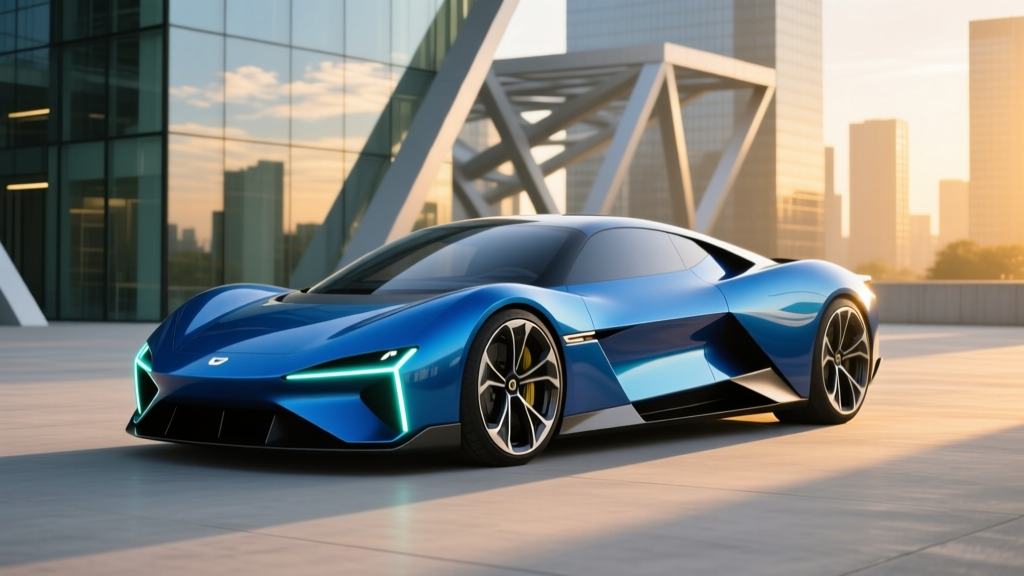
The term "electric super car" covers high-performance EVs that rival or exceed traditional supercars in straight-line acceleration while offering four-door practicality (in most cases). Unlike a $3 million Rimac Nevera, the models in this guide are series-production vehicles you can actually order from a dealer in 2026. The segment includes:
- Porsche Taycan Turbo GT — 1,019 hp, 0-60 in 2.3s, EPA 269 mi, from ~$199,800
- Tesla Model S Plaid — 1,020 hp, 0-60 in 1.99s, EPA 396 mi, from ~$89,990
- Lotus Emeya R — 905 hp, 0-60 in 2.78s, EPA 310 mi (est.), from ~$155,000
- BMW i7 M70 — 650 hp, 0-60 in 3.5s, EPA 295 mi, from ~$168,000
- Mercedes-AMG EQS 53 — 751 hp, 0-60 in 3.4s, EPA 235 mi, from ~$147,000
- Audi RS e-tron GT Performance — 912 hp, 0-60 in 2.5s, EPA 270 mi (est.), from ~$165,000
These vehicles share large battery packs (80-120 kWh usable), dual or tri-motor AWD layouts, and DC fast-charging capability ranging from 200 kW to over 320 kW.
Spec Comparison: 2026 Electric Super Car Leaders
| Model | HP | 0-60 mph | Battery (kWh usable) | EPA Range | Peak DC Charge (kW) | 10-80% Time | Base MSRP |
|---|---|---|---|---|---|---|---|
| Tesla Model S Plaid | 1,020 | 1.99s | ~100 (NMC) | 396 mi | 250 | ~27 min | $89,990 |
| Porsche Taycan Turbo GT | 1,019 | 2.3s | 97 (NMC) | 269 mi | 320 | ~18 min | $199,800 |
| Lotus Emeya R | 905 | 2.78s | 102 (NMC) | 310 mi (est.) | 350 | ~18 min | $155,000 |
| Audi RS e-tron GT Perf. | 912 | 2.5s | 93.4 (NMC) | 270 mi (est.) | 320 | ~18 min | $165,000 |
| Mercedes-AMG EQS 53 | 751 | 3.4s | 107.8 (NMC) | 235 mi | 200 | ~31 min | $147,000 |
| BMW i7 M70 | 650 | 3.5s | 101.7 (NMC) | 295 mi | 195 | ~34 min | $168,000 |
Sources: fueleconomy.gov, manufacturer press sites. Real-world highway range is typically 15-25% below EPA figures, with greater loss in cold weather. Always check current-year specs as manufacturers update mid-cycle.
Real-World Range Reality Check
The Tesla Model S Plaid's EPA 396-mile rating is the segment benchmark, but in sustained 75-mph highway driving at 40°F, expect closer to 280-310 miles before needing to charge. The Taycan Turbo GT's 269-mile EPA figure translates to roughly 200-220 miles highway in moderate weather, dropping to 170-190 miles in sub-freezing conditions. Porsche compensates with best-in-class 320 kW charging, meaning a 10-80% stop takes roughly 18 minutes — but only if you precondition the battery and arrive at a capable charger.
Electric Super Car vs. Gas Supercar: The Cost Breakdown
The purchase price of an electric super car is high, but total cost of ownership tells a more nuanced story compared to gasoline supercars like the McLaren Artura ($240,000+), Ferrari 296 GTB ($320,000+), or Lamborghini Huracán (discontinued, but comparable at ~$280,000). Here's how five-year costs compare:
| Cost Category | Tesla Model S Plaid ($89,990) | Porsche Taycan Turbo GT ($199,800) | Gas Supercar Avg. (~$250,000) |
|---|---|---|---|
| Purchase Price | $89,990 | $199,800 | $250,000 |
| Federal Tax Credit (§30D) | $0 (MSRP cap exceeded) | $0 (MSRP cap exceeded) | $0 |
| 5-Year Energy/Fuel | $4,500 (home L2 @ $0.14/kWh) | $5,200 (home L2) | $18,000 (premium @ $4.80/gal, 14 mpg) |
| 5-Year Maintenance | $2,500 | $4,500 | $15,000+ |
| 5-Year Insurance (avg.) | $28,000 | $35,000 | $32,000 |
| Estimated Depreciation (5yr) | $40,000 | $90,000 | $80,000 |
| 5-Year Total Cost | ~$165,000 | ~$334,500 | ~$395,000 |
Insurance estimates based on national averages for high-performance vehicles; actual premiums vary significantly by driver profile, location, and carrier. Depreciation is estimated based on historical EV luxury segment trends. Gas supercar fuel cost assumes 10,000 miles/year at 14 mpg combined.
The energy savings are real: charging a Model S Plaid at home on Level 2 at the national average of $0.14/kWh costs roughly $0.045 per mile, compared to $0.34 per mile for a gas supercar requiring premium fuel. That's a $2,700/year energy advantage at 10,000 miles annually. However, insurance on high-performance EVs remains steep — insurers factor in expensive battery replacement costs ($20,000-$35,000) and high repair costs after collision damage.
Charging Infrastructure: What You Actually Need
Owning an electric super car demands a home charging setup. These vehicles have large batteries (93-108 kWh usable), which means Level 1 (120V) charging is essentially useless — adding only 3-4 miles of range per hour, or 50+ hours for a full charge. You need Level 2 at minimum.
| Charging Level | Power | Miles Added/Hour | Full Charge Time (100 kWh pack) | Use Case |
|---|---|---|---|---|
| Level 1 (120V) | 1.4 kW | 3-4 mi | ~60 hours | Not viable for super car ownership |
| Level 2 (240V, 48A) | 11.5 kW | 28-35 mi | ~9 hours | Minimum viable home setup |
| Level 2 (240V, 80A) | 19.2 kW | 45-55 mi | ~5.5 hours | Ideal for daily fast turnaround |
| DC Fast (250-350 kW) | 250-350 kW | ~1,000+ mi/hr (peak) | 10-80% in 18-27 min | Road trips |
Home Charging Installation Costs
| Item | Typical Cost Range | Notes |
|---|---|---|
| Level 2 EVSE (48A-80A) | $500 - $1,200 | Wallbox, ChargePoint, Tesla Wall Connector |
| Electrical Panel Upgrade | $0 - $3,500 | Required if panel lacks 60-100A spare capacity |
| Wiring & Conduit (50ft run) | $500 - $2,000 | Varies by distance from panel to garage |
| Electrician Labor | $800 - $2,500 | Licensed electrician required; permit included |
| Permit & Inspection | $100 - $400 | Varies by municipality |
| Total (typical) | $1,900 - $9,600 | Average install: ~$3,500 for 48A circuit |
For an electric super car with a 100 kWh battery, we recommend a 48-amp minimum circuit (delivering 11.5 kW) to ensure overnight charging completes before morning. An 80-amp circuit is ideal if your panel supports it. Always hire a licensed electrician and pull a permit — unpermitted work can void home insurance and create fire risk. Some utilities offer rebates of $250-$750 for Level 2 installations; check with your local provider.
Battery Longevity and Warranty
Every electric super car in this segment uses NMC (nickel manganese cobalt) chemistry, chosen for its high energy density — essential for packing 90+ kWh into a performance chassis. The trade-off versus LFP (lithium iron phosphate) is slightly faster long-term degradation and higher cost, but NMC delivers the energy density these cars require.
Manufacturer battery warranties are federally mandated at a minimum of 8 years/100,000 miles, with a capacity retention threshold (usually 70% of original capacity). Porsche covers the Taycan battery for 8 years/100,000 miles at 70% retention. Tesla covers the Model S battery for 8 years/150,000 miles at 70%. Real-world degradation data from Tesla fleet telemetry and independent testing suggests NMC packs in high-performance applications lose roughly 10-15% capacity over 100,000 miles, with the steepest drop in the first 20,000 miles before leveling off.
Battery replacement cost remains a concern: a full pack replacement for a Taycan or Model S runs $20,000-$35,000 out of warranty. However, catastrophic battery failure within the warranty period is rare — most degradation is gradual.
Common Misconceptions About Electric Super Cars
| Myth | Fact |
|---|---|
| "They're slower than gas supercars on a track" | The Taycan Turbo GT set a 7:07.55 Nürburgring lap — faster than many gas supercars. However, sustained track use causes thermal throttling; EVs can't yet match gas cars for 30+ lap sessions without power reduction. |
| "You get the full $7,500 tax credit" | None of these vehicles qualify. The IRS §30D credit caps sedan MSRP at $55,000 and SUVs/trucks at $80,000. Every electric super car exceeds these limits. |
| "Charging takes too long for road trips" | At 320 kW (Taycan), a 10-80% charge takes ~18 minutes with proper battery preconditioning. Plan charging stops around rest breaks and the delay becomes minimal. However, charging above 80% slows dramatically due to the charge curve taper — plan to leave at 80%. |
| "Electric super cars are maintenance-free" | No oil changes, but tire wear is 20-30% faster than gas equivalents due to instant torque and heavy weight (5,000+ lbs). Expect $1,500-$3,000 per tire set, replaced every 15,000-20,000 miles. Brake fluid, cabin filters, and coolant still require periodic service. |
| "Range doesn't matter with fast charging" | Real-world range determines how often you stop. A 200-mile real-world highway range means stopping every 2.5 hours at 80 mph. That's manageable for most, but add cold weather (-15°F) and you're stopping every 2 hours. |
Decision Framework: Is an Electric Super Car Right for You?
Choose an electric super car if:
- You have a garage or dedicated parking with access to a 240V circuit (or can install one)
- Your daily commute is under 150 miles round-trip
- You prioritize instant acceleration and silent, effortless highway passing over engine sound and track endurance
- You live in a moderate climate or accept 15-25% range loss in winter
- You're in a region with reliable DC fast-charging infrastructure (Tesla Supercharger, Electrify America, or IONNA) for road trips
- Your household has a second vehicle or you don't regularly drive 400+ miles in a single day
Consider a hybrid or gas supercar instead if:
- You live in an apartment without charging access and your area has sparse public DC chargers
- You regularly drive 300+ miles in a day through rural areas (charging deserts exist in parts of the Mountain West, Great Plains, and rural South)
- You prioritize sustained track-day performance (20+ hot laps) where thermal management still favors ICE
- You live in a region with extreme cold (below 0°F for weeks) and have no heated garage
- Your budget can't absorb $4,000-$9,000/year insurance premiums on top of the purchase price
First-Time EV Buyer Essentials
If an electric super car is your first EV, here's what the dealer won't emphasize:
- Preconditioning is non-negotiable. Battery preconditioning (warming the pack to optimal temperature before DC fast charging) can mean the difference between a 320 kW peak charge and a 50 kW trickle. Always use the car's navigation to route to a charger — this triggers preconditioning automatically in the Taycan, Model S, and Emeya.
- Learn the charge curve. Peak DC charge rate (e.g., 320 kW) only applies at low state of charge (typically 10-40%). Above 80%, charging slows dramatically to protect the battery. Plan road-trip stops to charge from 10-80%, then drive on. Charging from 80-100% at a DC station wastes time.
- Tire cost is the hidden ownership shock. Performance EVs eat tires. Budget $2,000+ per set and expect 15,000-20,000 miles of life. Some owners go through two sets in the first year if they exploit the instant torque frequently.
- One-pedal driving changes everything. Regenerative braking recaptures energy and reduces brake wear. Most owners rarely use the friction brakes, which is why EV brake pads can last 80,000+ miles. However, brake fluid still degrades — service it per the maintenance schedule to prevent corrosion.
- kW vs. kWh — know the difference. kW (kilowatts) measures power — how fast you charge or how much power the motors produce. kWh (kilowatt-hours) measures energy — the size of the battery tank. A 100 kWh battery charged at 10 kW takes 10 hours. Think of kW as the hose diameter and kWh as the pool size.
2026 Tax Credit and Incentive Reality
Under the current IRS §30D rules, the federal clean vehicle credit of up to $7,500 requires:
- Sedan MSRP under $55,000 (SUVs/trucks under $80,000)
- Buyer AGI under $150,000 single / $300,000 joint
- Battery components and critical minerals meeting domestic sourcing thresholds
Every electric super car discussed here exceeds the MSRP cap and therefore does not qualify for the new-vehicle federal credit. Some states offer additional incentives (California's CVRP, Colorado's tax credit, etc.) that may not have MSRP caps, but these vary by jurisdiction — check your state's official energy or DMV website. If you're considering a used electric super car (Model S, original Taycan), the used EV credit (§25E) offers up to $4,000 or 30% of the sale price (whichever is less) on vehicles under $25,000 — but most used electric super cars still exceed this price threshold.
Frequently Asked Questions
Are electric super cars faster than gas supercars?
In straight-line acceleration, yes. The Tesla Model S Plaid hits 60 mph in 1.99 seconds — faster than virtually any production gas car. The Porsche Taycan Turbo GT does it in 2.3 seconds. However, above 150 mph, many gas supercars (McLaren 750S, Ferrari 296) maintain stronger acceleration due to the absence of battery weight and electric motor power taper at high RPM.
How much does it cost to charge an electric super car at home?
At the national average electricity rate of $0.14/kWh, fully charging a 100 kWh battery costs roughly $14. That provides 250-350 real-world miles depending on the model and driving style. Annual home charging cost for 10,000 miles is approximately $560-$700 — compared to $3,400+ for a gas supercar at 14 mpg with premium fuel.
Do electric super cars hold their value?
Depreciation is steeper than gas supercars in the first 2-3 years (some models lose 30-40% of value), driven by rapid technology improvements and battery-health concerns among used buyers. However, limited-production models like the Taycan Turbo GT may hold value better due to exclusivity. Long-term EV depreciation data is still evolving.
Can I daily-drive an electric super car in winter?
Yes, but expect 20-30% range reduction in sustained sub-freezing temperatures. The battery's internal resistance increases in cold, reducing both available energy and regenerative braking effectiveness. Preconditioning the cabin and battery while plugged in at home mitigates this. All models in this segment offer AWD, which aids winter traction. A heated garage is strongly recommended in climates that regularly drop below 10°F.
What's the cheapest electric super car available in 2026?
The Tesla Model S Plaid at $89,990 is the most affordable entry point, offering 1,020 hp and a 396-mile EPA range. It's also the only model with access to the full Tesla Supercharger network (now opening to other brands via NACS adoption). For a more traditional luxury experience, the Audi RS e-tron GT Performance starts around $165,000.
Do electric super cars qualify for any tax credits?
Not the federal §30D new-vehicle credit — all exceed the $55,000/$80,000 MSRP caps. Some states offer incentives without MSRP limits. Consult a tax professional and check your state's energy office website for current programs. Rules change frequently.