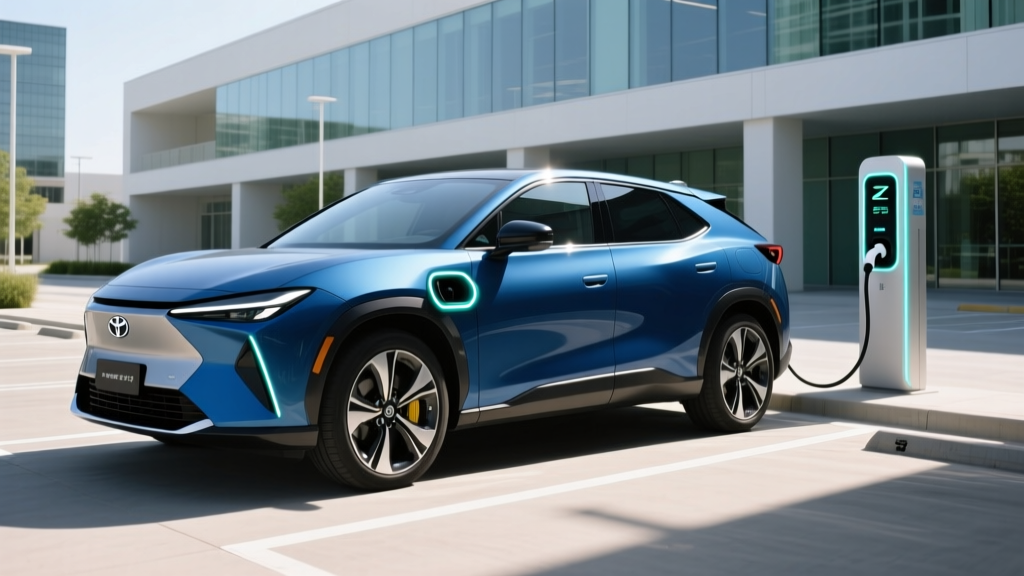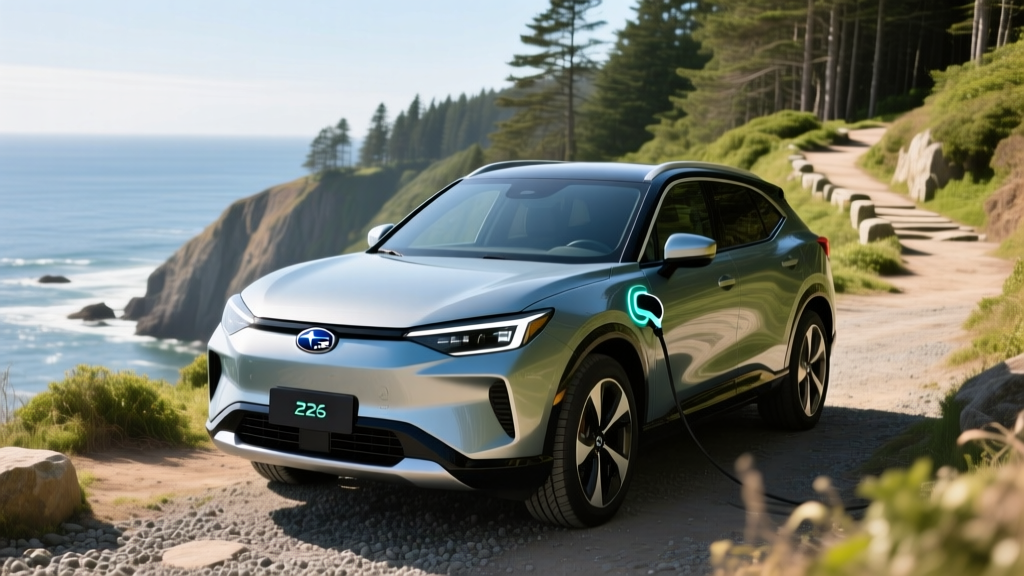
If you are shopping for electric Subarus in 2026, your only current option is the Subaru Solterra, a dual-motor all-wheel-drive SUV developed jointly with Toyota (its twin is the bZ4X). The quick verdict: the Solterra delivers genuine Subaru AWD capability and solid build quality, but its EPA-estimated 227 miles of range (on higher trims with 20-inch wheels) and modest DC fast-charging speed make it best suited for buyers with reliable home charging and mostly regional driving needs. Subaru has confirmed additional EV models are in development, but none are on sale yet.
Solterra Specs: Range, Battery, and Charging at a Glance
| Specification | 2026 Subaru Solterra |
|---|---|
| Battery (usable) | ~71.4 kWh, lithium-ion (NMC chemistry) |
| EPA Range | 227 mi (Limited/Touring, 20" wheels) / 228 mi (Premium, 18" wheels) |
| Real-World Highway Range | ~180–200 mi (70+ mph, moderate temps) |
| Cold-Weather Range (20°F) | ~160–180 mi (est. 20–25% reduction) |
| DC Fast Charge (peak) | ~100 kW (CCS connector) |
| 10–80% DC Fast Charge | ~55 minutes |
| Level 2 Charge Rate | ~6.6 kW (~23 mi/hr added) |
| Horsepower / Torque | 215 hp / 248 lb-ft |
| 0–60 mph | ~6.5 seconds |
| MPGe (combined) | 104 MPGe (Premium trim) |
| Drivetrain | Dual-motor AWD (standard all trims) |
| Battery/Powertrain Warranty | 8 years / 100,000 miles |
| Starting MSRP (Premium) | ~$39,995 |
The Solterra's ~71.4 kWh usable battery uses NMC (nickel-manganese-cobalt) chemistry, which offers higher energy density than LFP but is more sensitive to sustained 100% state-of-charge storage. Subaru recommends daily charging to around 80% for battery longevity — which effectively gives you about 180 usable daily miles before accounting for real-world efficiency losses.
Charging Speed: The Solterra's Biggest Limitation
Here is where prospective electric Subaru buyers need clear-eyed data. The Solterra's DC fast-charging architecture peaks at roughly 100 kW — and that peak is not sustained. The charge curve tapers significantly above 50% state-of-charge, meaning a 10–80% session takes approximately 55 minutes at a capable DC fast charger.
To put that in context: a Hyundai Ioniq 5 or Kia EV6 on an 800V architecture can hit 235+ kW and complete 10–80% in about 18 minutes. The Tesla Model Y on a V3 Supercharger peaks around 250 kW and finishes 10–80% in roughly 25–27 minutes. The Solterra's charge speed is closer to older-generation EVs, and this matters if you road-trip frequently.
| Charging Level | Power (kW) | Miles Added Per Hour | Full Charge Time |
|---|---|---|---|
| Level 1 (120V outlet) | ~1.4 kW | ~4 mi/hr | ~50+ hours (0–100%) |
| Level 2 (240V, 32A home) | ~6.6 kW | ~23 mi/hr | ~11 hours (0–100%) |
| DC Fast (100 kW peak) | Up to 100 kW | ~180+ mi/hr (at peak) | ~55 min (10–80%) |
Home charging is critical for Solterra ownership. With a Level 2 home charger, you wake up to a full battery every morning — effectively eliminating range concerns for daily driving within ~100-mile round trips. Without home charging access, relying on public DC fast chargers at 55-minute intervals becomes tedious quickly. If you live in an apartment without charging access, the Solterra (or any EV) requires careful logistics planning.
Electric Subaru vs. Gas Outback: Cost and Efficiency Compared
The natural cross-shop for most Subaru buyers is the Subaru Outback, the brand's best-selling wagon/SUV. Here is how the numbers stack up over 5 years and 75,000 miles of ownership.
| Factor | 2026 Solterra (Premium) | 2026 Outback (Premium) |
|---|---|---|
| Base MSRP | ~$39,995 | ~$34,995 |
| Federal Tax Credit (§30D) | Up to $7,500 (eligibility varies) | $0 |
| Effective Purchase Price | ~$32,495 (if full credit applies) | $34,995 |
| Energy/Fuel Cost (75k mi) | ~$2,700 (home charging at $0.14/kWh) | ~$8,100 (28 MPG avg at $3.50/gal) |
| Maintenance (5 yr) | ~$1,200 (tire rotations, cabin filter, fluid top-offs) | ~$3,500 (oil changes, brakes, filters) |
| Insurance (5 yr avg) | ~$9,500 (EVs typically 15–20% higher) | ~$7,800 |
| 5-Year Total Cost* | ~$45,895 | ~$54,395 |
*Totals include purchase price (after credit), energy/fuel, maintenance, and insurance. Excludes depreciation, registration, and state incentives. Source estimates based on fueleconomy.gov data and national averages.
The Solterra can come out ahead on a pure cost basis over 5 years — primarily if you qualify for the full §30D federal tax credit and charge at home at residential electricity rates. The fuel savings alone (~$5,400 over 75,000 miles) are substantial. However, EV insurance premiums are typically 15–20% higher, and the Solterra's higher starting MSRP eats into early savings.
Federal Tax Credit: What Solterra Buyers Need to Know
The IRS §30D clean vehicle credit can reduce your effective Solterra purchase price by up to $7,500, but eligibility depends on several factors that change periodically:
- Buyer income caps: Modified AGI must not exceed $150,000 (single), $225,000 (head of household), or $300,000 (joint).
- MSRP cap: The vehicle must have an MSRP at or below $80,000 for SUVs — the Solterra clears this easily.
- Battery sourcing requirements: A percentage of critical minerals and battery components must be sourced from the U.S. or free-trade-agreement countries. These thresholds tighten annually, and eligibility can shift mid-year.
- Point-of-sale transfer: As of 2024+, you can transfer the credit to the dealer at purchase, reducing your out-of-pocket cost immediately rather than waiting for a tax refund.
Critical caveat: Battery-sourcing rules have caused several EVs to lose partial or full credit eligibility on short notice. Always verify the Solterra's current credit status on the fueleconomy.gov tax credit page and consult a tax professional before finalizing your purchase.
Real-World Ownership: Climate, Driving Patterns, and Daily Life
Subaru's core buyers live in regions with real winters — the Northeast, Mountain West, Pacific Northwest, and Upper Midwest. This makes cold-weather EV performance especially relevant.
Cold-weather range loss: Lithium-ion batteries lose efficiency in cold temperatures, and cabin heating draws significant energy. Expect 20–25% range reduction at 20°F compared to mild-weather driving. The Solterra's heat pump (standard on most trims) helps mitigate this, but physics is physics — a 227-mile EPA range becomes roughly 170 miles on a cold January highway drive in Vermont.
AWD performance: This is where the Solterra earns its Subaru badge. The dual-motor AWD system provides instant torque to all four wheels with no mechanical lag. In snow and ice testing, the Solterra's traction control and X-MODE drive settings perform comparably to Subaru's legendary symmetrical AWD — and in some scenarios, the instant electric torque delivery actually outperforms mechanical AWD off the line.
Ground clearance: At 8.3 inches, the Solterra matches the Outback, making it viable for unplowed driveways and light trail use. This is a genuine advantage over lower-riding EVs like the Tesla Model 3 or Hyundai Ioniq 6.
Cargo space: The Solterra offers approximately 23.8 cubic feet behind the rear seats and ~56 cu ft with seats folded. There is no front trunk (frunk). This is adequate but trails the Outback's ~32.5 / 75.7 cu ft — a trade-off of the EV platform's battery packaging.
Common Misconceptions About Electric Subarus
| Myth | Fact |
|---|---|
| "The battery will need replacing in a few years and cost a fortune." | The Solterra's battery is warranted for 8 years/100,000 miles against degradation below 70% capacity. Real-world data from similar platforms shows ~5–8% degradation over the first 100,000 miles. Full battery replacement (rare) would cost roughly $12,000–$18,000 out of warranty. |
| "Electric Subarus can't handle real winter conditions." | Dual-motor AWD, 8.3" ground clearance, X-MODE, and a heat pump make the Solterra one of the more winter-capable EVs on the market. Range drops in cold, but traction and capability remain strong. |
| "Charging takes too long for road trips." | At ~55 minutes for 10–80%, it is slower than competitors. Road trips are viable with planning, but you will spend more time at chargers than in an Ioniq 5 or Model Y. This is the Solterra's most legitimate drawback. |
| "I'll save money immediately compared to my gas Subaru." | Not necessarily. Higher insurance, a higher purchase price (before credits), and potential home charger installation costs ($500–$2,000) mean break-even can take 3–5 years depending on your mileage and electricity rates. |
| "Subaru is making more electric models soon." | Subaru has announced plans for additional EVs by the late 2020s, but as of 2026, the Solterra is the only electric Subaru you can buy. Any additional models remain in development with no confirmed U.S. specs or pricing. |
Decision Framework: Is the Electric Subaru Right for You?
Choose the Subaru Solterra if:
- You have home Level 2 charging (garage or driveway with 240V access)
- Your daily round-trip commute is under 100 miles
- You need AWD and ground clearance for snow, dirt roads, or outdoor activities
- You value the Subaru brand, dealer network, and build quality
- Most of your driving is regional, with road trips under ~200 miles between stops
- You qualify for the federal tax credit, bringing the effective price below a comparably equipped Outback
Look elsewhere if:
- You cannot charge at home and rely on public charging (the Solterra's slow DC charging makes this painful)
- You regularly take road trips exceeding 300 miles and want minimal charging downtime (consider the Ioniq 5, EV6, or Model Y)
- You need more than 227 miles of range for your lifestyle
- Cargo volume is a top priority (the Outback offers significantly more)
- You are looking for a three-row electric Subaru — none exists yet
What First-Time EV Buyers Should Know Before Purchasing a Solterra
If this is your first electric vehicle, a few ownership realities differ significantly from the gas-car experience:
Home charging setup: Budget $500–$2,000 for a Level 2 home charger installation (equipment + licensed electrician + permit). If your home's electrical panel is maxed out (common in older homes with 100-amp service), a panel upgrade to 200 amps can add $1,500–$3,000. Get an electrician's assessment before committing to the car.
Charging etiquette and apps: You will need accounts with networks like Electrify America, EVgo, and ChargePoint. Download the apps, set up payment, and learn how to initiate a session before your first public charge. The Solterra uses the CCS connector (not NACS/Tesla), though adapters are increasingly available.
One-pedal driving and regen: The Solterra offers adjustable regenerative braking via paddle shifters, but it does not provide true one-pedal driving that comes to a complete stop (unlike a Nissan Leaf or Tesla). You will still use the brake pedal regularly.
Tire costs: EVs are heavier and deliver instant torque, which accelerates tire wear. Expect to replace tires every 30,000–40,000 miles rather than the 50,000+ miles typical on a gas Outback. Budget $800–$1,200 for a set of quality all-season or winter tires.
Maintenance is minimal but not zero: No oil changes, no spark plugs, no transmission fluid. You will still need cabin air filter replacements, brake fluid checks, windshield washer fluid, and tire rotations. Brake pads last much longer thanks to regenerative braking — often 100,000+ miles.
Frequently Asked Questions
Are there other electric Subarus besides the Solterra?
As of 2026, no. The Solterra is Subaru's only production EV. Subaru has announced plans to offer more electrified models later in the decade, but no additional battery-electric models are currently on sale or available for order in the U.S. Several concept vehicles have been shown, but none have confirmed U.S. specs, pricing, or timing.
How long does it take to charge a Subaru Solterra at home?
On a Level 2 home charger (240V, ~6.6 kW), a full 0–100% charge takes approximately 11 hours. In practice, most owners plug in nightly and charge from ~30% to 80%, which takes roughly 5–6 hours — easily completed overnight. On a standard 120V outlet (Level 1), expect about 4 miles of range added per hour, which is only practical for very low-mileage drivers or emergency trickle charging.
Does the Subaru Solterra qualify for the $7,500 federal tax credit?
It may, but eligibility depends on current battery-sourcing rules, your income, and the vehicle's MSRP. The Solterra's MSRP is well under the $80,000 SUV cap. However, critical-mineral and battery-component sourcing requirements tighten annually under §30D, and a vehicle's eligibility can change. Always verify current status at fueleconomy.gov and consult a tax professional. The credit can now be transferred to the dealer at point of sale, reducing your purchase price directly.
How does the Solterra perform in snow compared to a gas Subaru?
The Solterra's dual-motor AWD provides excellent traction in snow, with instant electric torque delivery and Subaru's X-MODE traction management. The low center of gravity (battery pack under the floor) improves stability. The main trade-off is range reduction — expect 20–25% less range in sustained sub-freezing conditions. For pure traction and capability, the Solterra holds its own against any gas-powered Subaru.
What is the Solterra's towing capacity?
The Solterra is rated to tow up to 2,000 pounds — adequate for a small utility trailer, a pair of dirt bikes, or a light pop-up camper. This trails the gas Outback's 3,500-pound rating. Towing also significantly reduces range, potentially by 30–40%, so plan accordingly.
Will Subaru release a larger electric SUV or three-row EV?
Subaru has indicated that additional EVs are part of its long-term strategy, and a larger SUV is widely expected. However, no specific model, timeline, or U.S. pricing has been confirmed as of 2026. If you need three rows today, you will need to look at competitors like the Kia EV9, Rivian R1S, or Tesla Model X.