The Short Answer
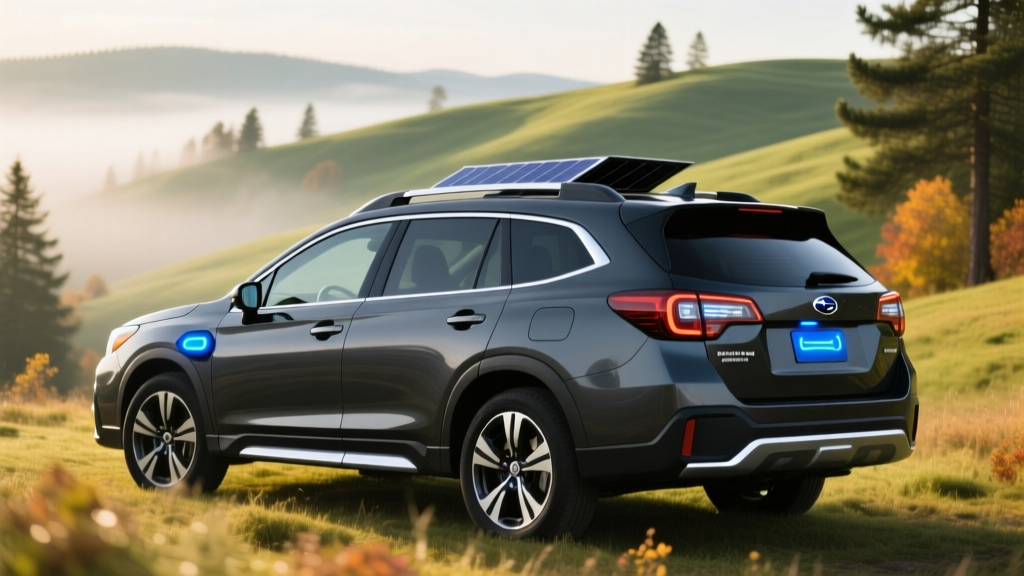
There is no electric Subaru Outback as of the 2026 model year. Subaru has not announced a battery-electric Outback variant. The closest all-electric option in Subaru's lineup is the Subaru Solterra, a compact electric SUV co-developed with Toyota (which sells it as the bZ4X). If you need Outback-level cargo space and ground clearance with electric power, you'll need to look at competitors like the Hyundai Ioniq 5, Kia EV6, or wait for Subaru's next-generation EV plans, which remain unannounced.
The Subaru Outback has been one of America's most popular wagons for over two decades, prized for its 8.7 inches of ground clearance, standard all-wheel drive, and rugged practicality. As more buyers search for an electric Subaru Outback, the question is understandable — but the answer requires navigating what Subaru actually offers today, what the Solterra delivers, and how an EV stacks up against the gas Outback in real ownership costs.
Why There's No Electric Subaru Outback (Yet)
Subaru's electrification strategy has been cautious. The brand's core buyer skews toward outdoor enthusiasts in rural or mountainous regions — precisely the demographic most affected by charging infrastructure gaps and cold-weather range reduction. Rather than electrify its highest-volume model, Subaru partnered with Toyota to launch the Solterra on Toyota's e-TNGA platform, a dedicated EV architecture that underpins a smaller crossover segment.
The 2026 Subaru Solterra slots in below the Outback in size and utility:
- Wheelbase: 112.2 inches (Outback: 108.1 in — but the Outback is longer overall at 191.1 in vs. Solterra's 184.6 in)
- Cargo volume: ~27 cu ft behind rear seats (Outback: 32.5 cu ft)
- Ground clearance: 8.3 in (Outback: 8.7 in)
- Towing: Not rated for towing (Outback: up to 3,500 lbs with turbo engine)
If you're specifically searching for an electric Subaru Outback because you need that cargo deck length for kayaks, dogs, or camping gear, the Solterra falls short of the Outback's wagon-hatch utility. Subaru has not published a timeline for an electrified Outback successor.
The Solterra: Subaru's Actual EV, by the Numbers
For buyers open to a smaller Subaru EV, the 2026 Solterra is the only option. Here's what the spec sheet looks like:
| Spec | 2026 Subaru Solterra |
|---|---|
| EPA Range | ~227 miles (Limited/Touring with 20" wheels) |
| Battery Capacity | 72.8 kWh (usable), lithium-ion |
| Drivetrain | Dual-motor AWD, 215 hp, 249 lb-ft torque |
| 0-60 mph | ~6.5 seconds |
| Peak DC Fast Charge | ~100 kW (CCS1 connector) |
| 10-80% DC Charge Time | ~56 minutes |
| Level 2 Charge Rate | 6.6 kW (~9 hours for full charge) |
| MPGe (combined) | ~102 MPGe |
| Base MSRP | ~$44,995 (Premium trim, before incentives) |
| Battery Warranty | 8 years / 100,000 miles |
Real-World Range Reality Check
The Solterra's EPA estimate of ~227 miles drops significantly under real-world conditions. Expect approximately 180-200 miles on the highway at 70+ mph, and 150-170 miles in sub-freezing temperatures due to battery chemistry limitations and cabin heating demand. The 100 kW peak DC charge rate is also a weak point — it's well below the 200-350 kW rates offered by rivals like the Hyundai Ioniq 5 or Ford Mustang Mach-E, meaning longer stops on road trips.
Solterra vs. Gas Outback: 5-Year Cost Comparison
Since there's no electric Outback, the real purchase decision is: Solterra EV vs. the conventional gas Outback. Here's a five-year ownership projection assuming 15,000 miles/year, $3.50/gallon gas, and $0.14/kWh home electricity:
| Category | 2026 Solterra (Premium) | 2026 Outback (Premium, 2.5L) |
|---|---|---|
| MSRP (before incentives) | $44,995 | $34,995 |
| Federal Tax Credit (§30D) | Up to $7,500 (if eligible) | $0 |
| Effective Purchase Price | ~$37,495 | $34,995 |
| Fuel/Energy (5 yrs, 75k mi) | ~$3,150 (home charging) | ~$9,375 (28 MPG combined) |
| Maintenance (5 yrs) | ~$1,200 | ~$3,000 |
| Insurance (5 yrs, est.) | ~$9,500 | ~$7,500 |
| 5-Year Total Cost (est.) | ~$51,345 | ~$54,870 |
The Solterra can break even or save modestly over five years if you qualify for the full federal tax credit and charge primarily at home. However, several caveats apply:
- Tax credit eligibility is not guaranteed. The §30D credit has income caps ($150K single / $300K joint), MSRP caps ($80K for SUVs), and battery sourcing/critical mineral requirements that change annually. The Solterra has qualified for the full $7,500 in prior years, but verify current eligibility on IRS.gov before purchasing.
- Insurance runs higher on the Solterra — typically 20-30% more than the gas Outback due to higher repair costs and EV claim severity.
- Public charging costs more. If you rely on DC fast chargers at $0.35-$0.50/kWh, your 5-year energy cost climbs to $7,000-$10,000, erasing the fuel savings.
Who Should Buy the Solterra — and Who Should Wait
Decision Framework
Choose the Solterra if:
- You have reliable Level 2 home charging (garage or driveway with 240V access)
- Your daily driving is under 80 miles round-trip
- You want Subaru's Symmetrical AWD and X-Mode for snow and light trails
- You qualify for the federal tax credit and/or state EV incentives
- You don't need to tow or haul long cargo (roof boxes work, but reduce range ~10-15%)
Stick with the gas Outback if:
- You regularly drive 300+ miles in a day through areas with sparse charging
- You tow a trailer, boat, or bike rack that exceeds the Solterra's unrated towing capacity
- You live in an apartment or lack home charging access
- You need maximum cargo volume (32.5 cu ft vs. 27 cu ft)
- You frequently drive in extreme cold (-10°F or below) where range loss compounds
Consider a competitor EV if:
- You want Outback-class space: the Hyundai Ioniq 5 (303 mi range, 240 kW charging, ~$42,000) or Kia EV9 (300 mi, 3-row, ~$55,000) offer more utility
- You need faster road-trip charging: the Tesla Model Y (320 mi, 250 kW Supercharger access) or Ford Mustang Mach-E (312 mi, 150 kW) outpace the Solterra's 100 kW ceiling
Common EV Misconceptions Addressed
| Myth | Fact |
|---|---|
| "EVs are worse in cold weather." | EVs lose 20-30% range in freezing temps, but AWD traction is excellent (instant torque, low center of gravity). Preconditioning the battery while plugged in mitigates range loss and preserves charging speed. |
| "The battery will need replacing in 5 years." | Modern lithium-ion EV batteries are warranted for 8 years/100,000 miles at 70% capacity retention. Real-world data from fueleconomy.gov and owner surveys show most packs retain 85-90% capacity at 100K miles. |
| "Charging takes too long for road trips." | The Solterra's 100 kW peak rate is genuinely slow — a 10-80% charge takes ~56 minutes, vs. 18-25 minutes on a 200+ kW vehicle. This is a legitimate limitation, not a myth. |
| "I'll save thousands on maintenance." | Partial truth. You eliminate oil changes, spark plugs, and transmission fluid. But tire wear increases 15-20% due to EV weight and instant torque, and cabin air filters, brake fluid, and wiper blades still need service. |
| "The tax credit makes EVs cheaper than gas cars." | Only if you qualify. Income limits, MSRP caps, and battery sourcing rules (§30D) mean not every buyer gets $7,500. The credit can be transferred at point-of-sale as a discount, but eligibility varies — consult a tax professional. |
What Subaru's EV Future Might Hold
Subaru has announced plans to launch additional EVs by the late 2020s, including models built on a new dedicated EV platform (distinct from the Toyota-shared e-TNGA). However, the company has not confirmed an electric Outback specifically. Industry analysts expect Subaru's next EV to target a larger crossover or midsize SUV segment, but specs, pricing, and availability remain unannounced.
For buyers who love the Outback formula — wagon versatility, 8.7 inches of ground clearance, 3,500-lb towing, and a proven boxer engine — the 2026 gas Outback remains the only option that delivers it all. The hybrid Outback variant (mild-hybrid, not plug-in) offers marginal fuel-economy gains (~1-2 MPG) without EV charging requirements.
Frequently Asked Questions
Will Subaru make an electric Outback?
Subaru has not announced an electric Outback. The brand has confirmed additional EVs are planned for the late 2020s, but no model name, specs, or timeline has been published. The Solterra remains Subaru's only all-electric vehicle as of 2026.
Is the Subaru Solterra the same size as the Outback?
No. The Solterra is a compact SUV, shorter overall than the Outback with less cargo volume (27 cu ft vs. 32.5 cu ft) and no towing rating. It's closer in size to a Subaru Crosstrek than an Outback.
Does the Solterra qualify for the $7,500 federal tax credit?
The Solterra has qualified in prior model years, but §30D credit eligibility depends on current-year battery sourcing rules, your income, and the vehicle's MSRP. Always verify on IRS.gov before purchase. The credit can be applied as a point-of-sale discount through participating dealers.
How does the Solterra handle snow and off-road compared to the Outback?
The Solterra features Subaru's X-Mode traction management and 8.3 inches of ground clearance, making it capable on snow and light trails. However, the gas Outback's 8.7 inches of clearance, longer wheel travel, and proven AWD system give it an edge in deeper snow or rougher terrain. The Solterra's range also drops sharply in cold weather, which is a real concern for mountain driving.
What EV has similar utility to the Outback?
No current EV matches the Outback's exact combination of wagon-hatch cargo space, 8.7" ground clearance, and 3,500-lb towing. The closest competitors in the electric space are the Hyundai Ioniq 5 (more cargo, faster charging, 303 mi range) and the Tesla Model Y (320 mi range, Supercharger network, but lower ground clearance). For towing, the Ford F-150 Lightning or Rivian R1S exceed the Outback but at a much higher price point.
What should a first-time EV buyer know before purchasing the Solterra?
Three priorities: (1) Confirm you have access to Level 2 home charging — a 240V outlet or hardwired charger is essential for daily convenience; installation typically costs $500-$2,000 depending on electrical panel capacity. (2) Understand that the Solterra's 100 kW DC charging rate means 45-60 minute stops on road trips, longer than most competitors. (3) Budget for higher insurance premiums and plan your cold-weather range expectations at 150-170 miles, not the 227-mile EPA sticker.