Quick Answer: Electric streetcar manufacturing in Concord, New Hampshire, is anchored by specialty transit builders and rail-vehicle suppliers serving municipal light-rail and heritage-streetcar projects across the Northeast. While Concord itself is not a mass-production EV auto hub, the city's proximity to advanced manufacturing corridors and its growing EV-charging infrastructure make it a relevant case study for buyers considering how electrified transit technology intersects with personal EV ownership in New England. If you're researching EVs in the Concord, NH area, expect real-world ranges to drop 20-30% in winter, home Level 2 charging to cost roughly $800-$2,500 to install, and the federal §30D tax credit to remain available on eligible models with strict MSRP, income, and battery-sourcing requirements.
Why Concord, New Hampshire Matters in the Electrified Transit Conversation
Concord, the state capital of New Hampshire, sits at the intersection of several trends reshaping how Americans think about electrified transportation. The city has historical roots in rail and carriage manufacturing dating back to the 19th-century Abbot-Downing Company, which built the famous Concord coach. Today, that legacy intersects with modern electric streetcar manufacturing and the broader push toward zero-tailpipe-emission transit.
For EV buyers in the Concord area — or those researching how electrified public transit influences local charging infrastructure and policy — understanding this landscape matters. Cities that invest in electric streetcars and light rail tend to build out public DC fast-charging networks more aggressively, directly benefiting private EV owners. Concord's location along the I-93 corridor between Boston and the White Mountains also makes it a critical waypoint for EV road-trippers needing reliable charging.
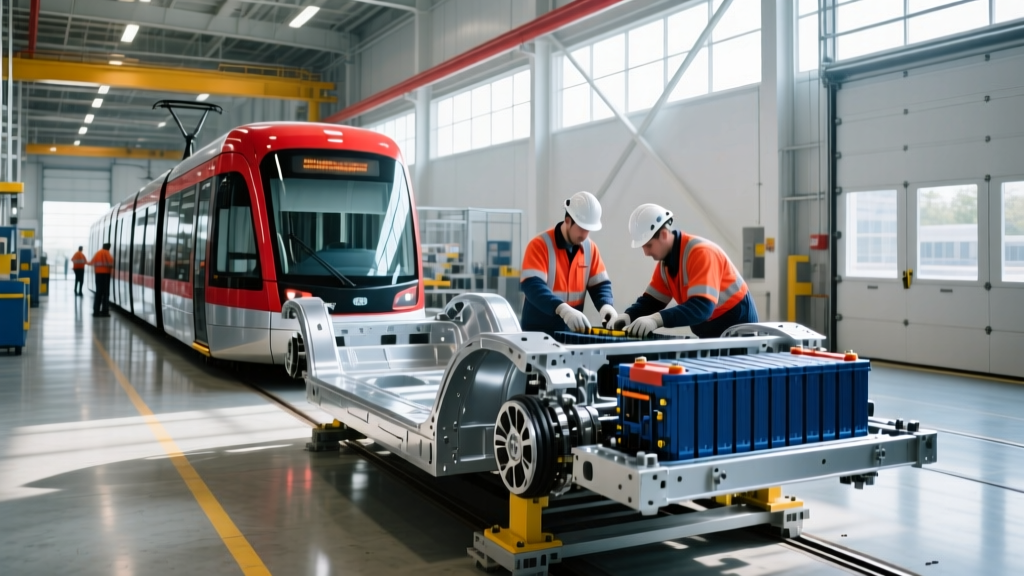
Several small-batch and heritage streetcar manufacturers and suppliers operate in greater New England, providing vehicles for municipal transit authorities and tourist-oriented streetcar lines. These builders leverage electric traction motors, lithium-based battery packs or overhead catenary power, and regenerative braking systems — the same core technologies found in consumer battery-electric vehicles (BEVs) from Tesla, Hyundai, Ford, and others.
Electric Streetcar Tech vs. Consumer EVs: Shared DNA
The engineering overlap between an electric streetcar and a modern BEV is substantial. Both use:
- Electric traction motors — typically permanent-magnet synchronous or AC induction, producing instant torque from 0 RPM
- Regenerative braking — converting kinetic energy back into stored electrical energy during deceleration, extending range and reducing brake wear
- Lithium-based energy storage — streetcars increasingly use LFP (lithium iron phosphate) or NMC (nickel manganese cobalt) battery packs for off-wire operation
- Thermal management systems — liquid cooling and heating loops to maintain optimal battery temperature in New England's -10°F winters and 95°F summers
- Power electronics — inverters and DC-DC converters managing energy flow between battery, motor, and auxiliary systems
Where streetcars diverge from consumer EVs is scale and duty cycle. A typical modern streetcar might use a 75-150 kWh battery pack for off-wire segments, compared to a 2026 Hyundai Ioniq 5's 84 kWh usable pack or a Tesla Model Y's ~75 kWh. Streetcars prioritize cycle life and durability over energy density, often favoring LFP chemistry for its 3,000+ cycle longevity and thermal stability — a trade-off consumer EV buyers also weigh when choosing between LFP-equipped standard-range models and NMC long-range variants.
| Attribute | Modern Electric Streetcar | Diesel Transit Bus | 2026 Consumer BEV (e.g., Ioniq 5) |
|---|---|---|---|
| Powertrain | Electric traction motor (AC) | Diesel engine + transmission | Electric motor (PMSM/induction) |
| Energy Source | Overhead wire or onboard battery (75-150 kWh) | Diesel fuel (60-100 gal tank) | Lithium-ion battery (58-100 kWh) |
| Regen Braking | Yes | No (retarder only) | Yes |
| Range / Off-Wire | 5-20 mi off-wire; unlimited on catenary | 300-500 mi per tank | 250-360 mi (EPA) |
| Tailpipe Emissions | Zero | NOx, PM, CO₂ | Zero |
| Fuel/Energy Cost per Mile | ~$0.15-$0.30/mi (electricity) | ~$0.65-$0.90/mi (diesel) | ~$0.04-$0.12/mi (home charging) |
| Maintenance Cost | Low (no engine, fewer moving parts) | High (engine, transmission, emissions systems) | Low (no oil changes, fewer brake replacements) |
What EV Buyers in the Concord, NH Area Should Know
If you're shopping for an EV in or near Concord, New Hampshire, your ownership experience will be shaped by three regional factors: cold-weather range loss, home charging feasibility, and public charging access along travel corridors.
Cold-Weather Reality
New Hampshire winters routinely drop below 20°F from December through March, with occasional dips to -10°F or lower. In these conditions, expect:
- 20-30% range reduction compared to EPA estimates due to cabin heating demands and reduced battery chemistry efficiency
- Slower DC fast charging — cold batteries accept charge more slowly until preconditioned; a 250 kW-capable vehicle may peak at only 80-120 kW if the pack is cold-soaked
- Heat pump advantage — EVs equipped with heat pumps (standard on many 2026 Hyundai, Tesla, and BMW models) lose only 15-20% range in cold weather vs. 30-40% for resistive-heater-equipped vehicles
Real-World Range in Concord, NH Winters:
EPA 310 mi (e.g., 2026 Ioniq 5 Long Range AWD) → Expect ~220-250 mi in mixed winter driving at 20°F. On the highway at 70 mph in 10°F weather, plan for ~190-210 mi before needing to charge. Preconditioning your battery while plugged in at home recovers much of this loss.
Home Charging Access
Concord's housing stock includes many single-family homes with garages or driveways, making Level 2 home charging feasible for most residents. However, renters and condo owners may face challenges.
| Item | Low Estimate | High Estimate | Notes |
|---|---|---|---|
| Level 2 EVSE (40A-48A, hardwired) | $400 | $750 | ChargePoint Home Flex, Emporia Vue, Wallbox Pulsar Plus |
| Electrician labor (240V/50A circuit) | $500 | $1,500 | Depends on panel proximity and wire run length |
| Electrical panel upgrade (if needed) | $1,500 | $3,500 | Required if existing panel is 100A or at capacity |
| Permit and inspection | $50 | $200 | Concord, NH permitting fees |
| Total (no panel upgrade) | $950 | $2,450 | |
| Total (with panel upgrade) | $2,450 | $5,950 |
A licensed electrician should evaluate your panel capacity before installation. Many Concord homes built before 1980 have 100-amp panels that may require upgrading to 200-amp service to safely support a 48A EV charger alongside existing loads. Consult a licensed electrician for final specifications.
Public Charging Infrastructure
Concord benefits from its position on I-93, with DC fast chargers available at key locations:
- Tesla Superchargers — multiple stalls in the Concord area (now opening to NACS-equipped non-Tesla vehicles)
- Electrify America / EVgo / ChargePoint — CCS-equipped DC fast stations along I-93 and I-89 corridors
- Level 2 destination chargers — available at several Concord hotels, shopping centers, and the NH State House area
For trips to the White Mountains (2-3 hours north), plan charging stops carefully. The Franconia Notch and Kancamagus Highway areas have fewer fast chargers, making a larger battery pack (80+ kWh usable) or a PHEV with gas backup a practical choice for frequent mountain drivers.
Cost Comparison: EV vs. Gas vs. Hybrid in New Hampshire
Let's compare the five-year total cost of ownership for three representative vehicles a Concord buyer might consider in 2026:
| Cost Category | 2026 Hyundai Ioniq 5 SEL (BEV) | 2026 Toyota RAV4 Hybrid XLE (HEV) | 2026 Honda CR-V EX-L (Gas) | |
|---|---|---|---|---|
| MSRP (before incentives) | $43,500 | $34,500 | $36,800 | |
| Federal §30D Tax Credit | -$7,500 (if eligible) | $0 (not a BEV/PHEV) | $0 | |
| Effective Purchase Price | $36,000 | $34,500 | $36,800 | |
| Fuel/Energy (5 yr / 75k mi) | $2,800 (home L2 at $0.18/kWh) | $6,200 (40 MPG @ $3.30/gal) | $8,900 (29 MPG @ $3.30/gal) | |
| Maintenance (5 yr) | $1,500 | $3,200 | $3,800 | |
| Insurance (5 yr avg) | $9,500 | $7,800 | $7,500 | |
| Estimated Depreciation | $14,000 | $11,000 | $13,500 | |
| 5-Year Total Cost | $63,800 | $62,700 | $70,500 |
Notes: Tax credit eligibility depends on MSRP caps ($55,000 sedans / $80,000 SUVs), buyer income limits ($150K single / $300K joint), and battery critical-mineral sourcing rules per IRS §30D guidelines. Electricity rate based on NH average residential rate of ~$0.22/kWh, with off-peak home charging at ~$0.18/kWh. Insurance premiums are higher for BEVs on average due to repair costs. Depreciation estimates based on industry averages. Consult a tax professional for credit eligibility.
The BEV wins on fuel and maintenance but pays more upfront (before credits) and in insurance. The hybrid offers a compelling middle ground for buyers without reliable home charging access or who frequently drive into charging-desert areas of northern NH.
Common EV Misconceptions — Addressed with Data
| Myth | Fact |
|---|---|
| "EVs can't handle NH winters." | EVs lose 20-30% range in cold weather, but models with heat pumps and battery preconditioning mitigate this. A 310-mi EPA vehicle still delivers ~220-250 real-world winter miles — sufficient for most daily driving and commutes. Remote preconditioning while plugged in warms the cabin and battery using grid power, preserving range. |
| "Batteries need replacing every few years at huge cost." | Modern lithium-ion EV batteries are warrantied for 8 years / 100,000 miles (federally mandated minimum). Real-world degradation data shows most packs retain 85-92% capacity at 100,000 miles. LFP chemistry packs often retain 90%+ at 150,000 miles. Full replacement costs $8,000-$18,000 but is rarely needed within normal ownership periods. |
| "Charging takes too long." | Home Level 2 charging adds 25-35 miles per hour of charging — plug in overnight and wake up to a full battery every morning. DC fast chargers deliver 10-80% in 18-25 minutes on 2026 vehicles with 200+ kW capability. Most driving requires no charging stop at all. |
| "EVs are worse for the environment because of electricity generation." | Even on New Hampshire's grid mix (which includes natural gas, nuclear, hydro, and growing renewables), a BEV produces 50-70% fewer lifecycle CO₂ emissions than a comparable gas vehicle over 150,000 miles, per EPA analysis. As the grid decarbonizes, this advantage grows. |
| "I'll be stranded without charging stations." | Southern NH's I-93 and I-89 corridors have DC fast chargers every 25-40 miles. The real risk is in rural Coös and Grafton counties, where PHEVs or planning ahead with apps like PlugShare is essential. Concord itself has multiple public charging options. |
Decision Framework: Which Electrified Vehicle Fits Your Concord Lifestyle?
Choose a Battery-Electric Vehicle (BEV) if:
- You have access to Level 2 home charging (garage, driveway, or employer-provided)
- Your daily driving is under 120 miles round-trip
- You qualify for the federal §30D tax credit (income under $150K single / $300K joint, vehicle under MSRP caps)
- You want the lowest per-mile fuel cost (~$0.04-$0.08/mi on home charging)
- You primarily drive the I-93 corridor with reliable fast-charger access
Choose a Plug-in Hybrid (PHEV) if:
- You lack reliable home charging but can plug in occasionally
- You frequently drive to rural northern NH or Vermont where chargers are sparse
- You want 25-40 miles of electric-only commuting with gas-engine backup for longer trips
- You want to reduce fuel consumption without any range-anxiety risk
Choose a Standard Hybrid (HEV) if:
- You have no access to any plug-in charging (apartment, street parking)
- You want better MPG (35-45 combined) without changing your fueling habits
- You drive high annual miles (20,000+) in mixed rural/highway conditions
- You want the lowest upfront purchase price among electrified options
Stick with a Gas Vehicle if:
- Your budget is under $28,000 and you need a newer vehicle
- You tow heavy loads (5,000+ lbs) regularly — though EV trucks like the Ford F-150 Lightning and Rivian R1T handle this, they cost $55,000+
- You drive extremely low annual miles (under 5,000) where fuel savings won't offset a higher purchase price
The Streetcar-to-EV Pipeline: What Transit Manufacturing Means for Car Buyers
The connection between electric streetcar manufacturing and consumer EV ownership is more direct than it might appear. The supply chain for electric traction motors, power inverters, LFP battery cells, and thermal management systems serves both transit and automotive markets. Companies building electric streetcars in New England often source from the same Tier 1 suppliers (BorgWarner, Dana, CATL, BYD) that equip consumer BEVs.
When a city like Concord invests in electrified transit — whether streetcars, electric buses, or charging-equipped bus rapid transit — it creates local demand for electrical infrastructure upgrades, trained EV technicians, and public charging stations. This infrastructure benefits private EV owners through:
- Grid upgrades — utility investments in transformer capacity and distribution to support transit charging also enable residential EV adoption
- Workforce development — technicians trained on electric streetcars and buses often transition to automotive EV service
- Policy momentum — municipalities with electrified transit fleets tend to adopt EV-friendly zoning, building codes requiring EV-ready construction, and public charging investment
- Charging network expansion — transit-agency charging depots sometimes open to public use during off-peak hours
For the individual buyer researching "electric streetcar manufacturing Concord New Hampshire," the practical takeaway is that the Concord region's engagement with electrified transit technology signals a maturing local EV ecosystem. This translates to better charging access, more knowledgeable service departments, and growing community support for EV ownership over the coming decade.
Frequently Asked Questions
Are there electric streetcar manufacturers in Concord, NH?
Concord has historical roots in rail and carriage manufacturing, and several specialty transit-vehicle builders and suppliers operate in the greater New England region. These companies typically produce low-volume, custom streetcars and light-rail vehicles for municipal transit agencies and heritage lines rather than mass-market consumer products. The broader Northeast corridor, including facilities in Massachusetts and New York, hosts additional electric rail-vehicle manufacturing.
What does an electric streetcar cost compared to a diesel bus?
A modern electric streetcar typically costs $3-5 million per vehicle, while a standard 40-foot diesel transit bus costs $500,000-$700,000. However, streetcars have 30-40 year service lives (vs. 12-15 years for buses), lower per-mile energy costs ($0.15-$0.30/mi vs. $0.65-$0.90/mi diesel), and dramatically lower maintenance costs. On a lifecycle basis, electric streetcars can be cost-competitive on high-ridership routes.
Can I charge my EV at home in Concord, NH?
Most Concord homeowners with a garage or driveway can install a Level 2 (240V) home charger for $950-$2,500 if no electrical panel upgrade is needed. Homes with older 100-amp panels may need a $1,500-$3,500 panel upgrade. Renters should check with landlords and explore portable Level 1 (120V) chargers that add 3-5 miles of range per hour — sufficient for low-mileage commuters.
How does the federal EV tax credit work in 2026?
The IRS §30D Clean Vehicle Credit offers up to $7,500 for eligible new BEVs and PHEVs, but eligibility requires meeting multiple criteria: vehicle MSRP under $55,000 (sedans) or $80,000 (SUVs/trucks), buyer modified adjusted gross income under $150,000 (single) or $300,000 (joint), and battery components and critical minerals meeting domestic-sourcing thresholds that increase annually. The credit can be transferred to the dealer as a point-of-sale discount. Always verify current-year rules at irs.gov and consult a tax professional.
What's the best EV for New Hampshire winters?
Look for models with: (1) a heat pump for efficient cabin heating, (2) battery preconditioning for fast charging in cold weather, (3) AWD for snow traction, and (4) a large battery (80+ kWh usable) to absorb the 20-30% winter range penalty. The 2026 Hyundai Ioniq 5 AWD, Tesla Model Y Long Range, and BMW iX xDrive50 all meet these criteria. Per fueleconomy.gov, the Ioniq 5 AWD delivers 290 mi EPA range — expect ~210-240 mi in real NH winter conditions.
Is a PHEV better than a BEV for rural New Hampshire driving?
For drivers who regularly travel to Coös, Grafton, or Carroll counties where DC fast chargers are sparse, a PHEV (like the Toyota RAV4 Prime with 42 mi electric-only range and 38 MPG combined on gas) offers a practical compromise. You get electric commuting in Concord while retaining gas-engine range for mountain trips. However, if your rural driving is occasional rather than daily, a BEV with 300+ mi EPA range and good route planning via PlugShare or A Better Routeplanner is entirely viable.