Should Your Fleet Go Electric? The Street Sweeper Question Answered
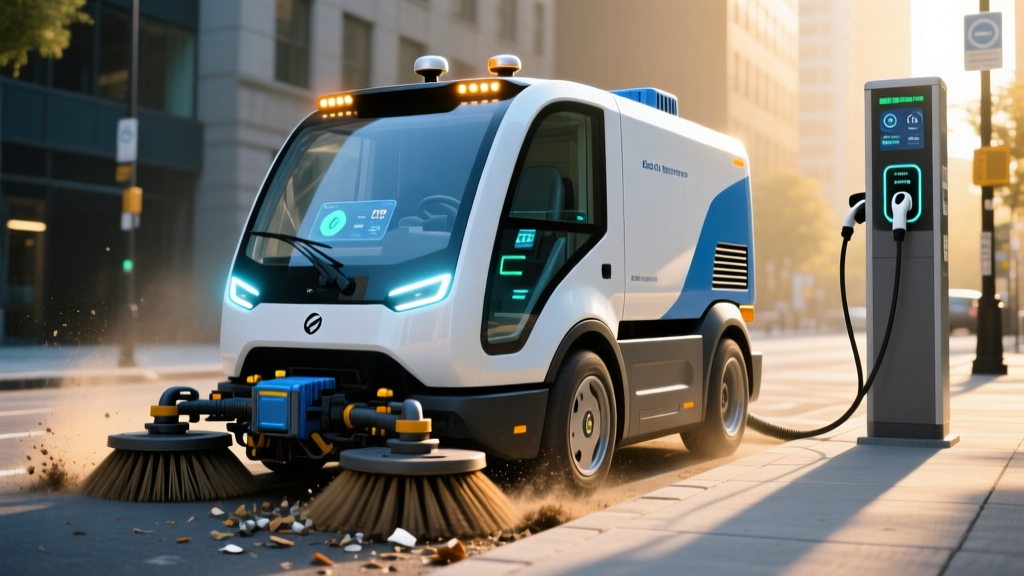
The short answer: An electric street sweeper makes financial sense for fleets with predictable daily routes under 100 miles, access to overnight depot charging, and operating in areas with strict idle-emission or noise ordinances. Expect upfront costs 40–70% higher than diesel equivalents, but total cost of ownership (TCO) typically reaches parity within 5–7 years thanks to fuel and maintenance savings. Models like the Dulevo e.DZero and Elgin Pelican EV offer 80–120 miles of real-world range on a 150–250 kWh battery pack, with overnight Level 2 (AC) charging being standard and DC fast charging available on select models.
Municipal and contract sweepers operate in a unique duty cycle: low average speeds (5–15 mph), frequent stop-start, long idle periods running vacuum and water systems, and return-to-base nightly operations. That duty cycle is nearly ideal for battery-electric powertrains, which recover energy through regenerative braking and eliminate wasteful diesel idling. But the transition isn't as simple as swapping a fuel tank for a battery pack. Sweeper bodies demand auxiliary power for fans, pumps, and brooms — all of which draw from the same high-voltage battery that propels the chassis.
This guide examines the real numbers behind electric street sweepers available or announced for the 2026 model year: purchase pricing, range and battery specifications, charging infrastructure requirements, maintenance savings, and a direct comparison against the diesel sweepers that still dominate most fleets. If you're a fleet manager, municipal procurement officer, or commercial sweeping contractor weighing the switch, the data below will help you decide whether the timing is right.
Electric vs. Diesel Street Sweepers: The Numbers Side by Side
The core purchase decision comes down to whether higher capital expenditure is justified by lower operating costs. Here's how a typical Class 5–7 electric mechanical-broom sweeper compares to a diesel counterpart in the same weight class, based on 2026 manufacturer data and fleet operator reports.
| Metric | Electric Street Sweeper | Diesel Street Sweeper |
|---|---|---|
| Base Purchase Price (chassis + body) | $350,000 – $525,000 | $220,000 – $310,000 |
| Battery / Fuel Capacity | 150–250 kWh (LFP chemistry common) | 50–80 gal diesel tank |
| Real-World Operating Range | 80–120 mi (varies by sweeping load) | 200–350 mi |
| Energy/Fuel Cost per Operating Hour | $4 – $9 (electricity at $0.12/kWh avg) | $18 – $32 (diesel at ~$4.20/gal) |
| Annual Maintenance Cost (est.) | $3,500 – $6,000 | $9,000 – $14,000 |
| Oil Changes / Year | 0 | 4–8 |
| DPF / Emissions System Service | Not applicable | $2,000–$5,000 per cleaning/replacement |
| Noise at Operator Station | ~65 dB(A) | ~82 dB(A) |
| Tailpipe Emissions | Zero | NOx, PM, CO₂ |
| Typical Service Life | 10–15 years (battery may need replacement at yr 8–12) | 10–15 years (engine rebuild at yr 8–12) |
The fuel-cost gap is the most consistent advantage. A diesel sweeper averaging 2.5 gallons per hour of combined driving and sweeping burns roughly $10.50/hour in fuel alone at current diesel prices. An electric sweeper drawing an average of 40 kW during the same mixed duty cycle uses about 40 kWh per hour — roughly $4.80 at commercial electricity rates. Over a 2,000-hour operating year, that's an $11,400 annual fuel saving per unit.
Range, Battery Specs, and What Real Sweeping Routes Demand
Unlike passenger EVs, street sweeper range isn't measured in highway miles. It's measured in operating hours and route miles at low speed, with the sweeping system drawing continuous auxiliary load. A typical municipal route covers 30–60 miles at 8–12 mph with the broom and vacuum engaged for 60–80% of operating time.
Here's what current-generation electric sweeper powertrains deliver:
| Specification | Dulevo e.DZero (2025/2026) | Elgin Pelican EV | Bucher CityCat 5006ev |
|---|---|---|---|
| Battery Chemistry | LFP (Lithium Iron Phosphate) | LFP | NMC (Lithium Nickel Manganese Cobalt) |
| Usable Battery Capacity | ~200 kWh | ~160 kWh | ~180 kWh |
| Estimated Operating Hours (full sweep load) | 8–10 hours | 6–8 hours | 7–9 hours |
| Propulsion Motor Output | ~200 kW (268 hp) | ~150 kW (201 hp) | ~175 kW (235 hp) |
| On-Board Charger (AC Level 2) | 22 kW | 19.2 kW | 22 kW |
| DC Fast Charge Capability | Up to 80 kW (CCS) | Up to 60 kW (CCS) | Up to 80 kW (CCS) |
| 10–80% DC Charge Time (est.) | ~90 minutes | ~100 minutes | ~85 minutes |
| Battery Warranty | 8 years / 2,500 cycles | 8 years / 2,000 cycles | 8 years / 2,500 cycles |
Real-world range caveat: Manufacturers quote operating hours under moderate conditions. In practice, heavy debris loads (wet leaves, gravel after storms), steep grades, and extreme cold can reduce effective operating time by 20–35%. An 8-hour rated sweeper in a Minnesota January may deliver only 5.5–6 hours before needing a charge — similar to the range loss passenger EVs experience in cold weather, driven by battery internal resistance and cabin/heater loads.
LFP (lithium iron phosphate) chemistry dominates this segment for good reason: it offers longer cycle life (2,000–3,000+ cycles vs. ~1,000–1,500 for NMC), better thermal stability, and lower cost per kWh. The trade-off is lower energy density, meaning heavier and larger battery packs — acceptable in a Class 5–7 vehicle where payload margins are generous.
Charging Infrastructure: What Your Depot Actually Needs
Most street sweepers return to a municipal depot or contractor yard nightly, making depot charging the default strategy. Here's what infrastructure planning looks like:
| Charging Setup | Power Level | Full Charge Time (200 kWh pack) | Estimated Install Cost per Stall |
|---|---|---|---|
| Level 2 AC (22 kW on-board) | 22 kW | ~9 hours (overnight) | $8,000 – $18,000 |
| DC Fast Charger (60–80 kW) | 60–80 kW | ~2.5–3 hours (0–100%) | $45,000 – $95,000 |
| DC Fast Charger (150 kW shared) | 150 kW | ~1.5 hours (sweeper limited to 80 kW intake) | $80,000 – $140,000 |
For most fleets, overnight Level 2 charging at 22 kW is sufficient. A sweeper finishing its route at 5 PM with 30% state of charge (SoC) needs roughly 140 kWh to reach full — achievable in under 7 hours on a 22 kW connection. This is the most cost-effective approach and avoids demand charges that utilities impose on high-power DC installations.
Depot electrical upgrade reality: A fleet of five sweepers charging simultaneously at 22 kW each draws 110 kW continuous — roughly 275 amps at 480V three-phase. Many municipal depots will need a panel upgrade or dedicated transformer. Budget $25,000–$75,000 for electrical service upgrades, and engage a licensed electrical contractor early in the procurement timeline. Utilities in some jurisdictions offer make-ready infrastructure incentives that offset a portion of these costs.
DC fast charging is valuable for mid-day top-ups or double-shift operations, but most sweepers don't need it. The charge curve on LFP packs is relatively flat up to about 80% SoC, then tapers significantly — meaning the last 20% takes disproportionately longer regardless of charger rating.
Total Cost of Ownership: 10-Year Fleet Projection
The purchase-price premium of an electric street sweeper is significant, but operating savings compound year over year. Below is a simplified 10-year TCO model for a single unit operating 2,000 hours per year. This assumes commercial electricity at $0.12/kWh and diesel at $4.20/gallon — adjust for your local rates.
| Cost Category (10-Year) | Electric Sweeper | Diesel Sweeper |
|---|---|---|
| Purchase Price | $435,000 | $265,000 |
| Fuel / Electricity | $96,000 | $210,000 |
| Maintenance (engine, filters, fluids) | $48,000 | $115,000 |
| Battery Replacement (year 10, est.) | $55,000 – $80,000 | — |
| Engine / DPF Rebuild (year 9, est.) | — | $18,000 – $30,000 |
| Depot Charging Infrastructure (amortized) | $12,000 | — |
| Insurance (est. differential) | +$8,000 | Baseline |
| Estimated 10-Year Total | $654,000 – $679,000 | $608,000 – $620,000 |
At face value, the diesel sweeper still holds a slight TCO edge over 10 years. However, this model excludes several factors that frequently tip the balance toward electric:
- Federal and state incentives: The IRS §45W Commercial Clean Vehicle Credit provides up to $40,000 for qualifying commercial EVs above 14,000 lbs GVWR (the relevant credit for fleet-purchased sweepers, not the §30D consumer credit). Many states and air-quality districts add $20,000–$75,000 in additional voucher funding, particularly in California (CARB HVIP), New York (NYTVIP), and Colorado.
- Demand charges and time-of-use rates: Smart depot charging during off-peak hours can reduce electricity cost by 30–40% versus the flat rate assumed above.
- Emissions compliance costs: Diesel sweepers operating in non-attainment air-quality zones face increasingly strict idle-reduction and emissions mandates that add compliance overhead.
- Resale value: Early data suggests electric sweepers may retain value better as municipalities set zero-emission procurement mandates.
With a $40,000 federal credit and $50,000 in state voucher funding, the electric sweeper's 10-year TCO drops to roughly $564,000–$589,000 — a clear savings of $20,000–$56,000 over diesel.
Common Misconceptions About Electric Street Sweepers
| Myth | Fact |
|---|---|
| "Electric sweepers can't handle heavy debris like gravel or wet leaves." | Modern electric sweepers use the same mechanical-broom and vacuum systems as diesel models. The sweeping mechanism is electrically driven rather than PTO-driven, and manufacturers size the motors to match or exceed diesel auxiliary power output. Performance parity is the norm, not the exception. |
| "The battery won't last a full shift." | Most municipal sweeping shifts run 6–8 hours. Current electric sweepers with 160–250 kWh packs are rated for 6–10 hours of mixed sweeping. Routes with extreme loads should spec the larger battery option or plan a mid-day 30-minute DC top-up. |
| "Cold weather makes them unusable." | Cold weather reduces range — expect 20–35% loss below freezing — but doesn't render the vehicle unusable. Fleet operators in cold climates spec larger battery packs, use battery preconditioning, and store vehicles in heated or semi-heated depots. Several northern European and Canadian municipalities operate electric sweepers year-round. |
| "Charging takes too long for double-shift operations." | With a 60–80 kW DC fast charger, a 20–80% top-up takes roughly 60–75 minutes. For double shifts, a mid-shift fast charge or a battery-swap system (offered by some manufacturers) keeps utilization high. |
| "There are no federal incentives for commercial sweepers." | The IRS §45W Commercial Clean Vehicle Credit offers up to $40,000 for vehicles over 14,000 lbs GVWR purchased by tax-exempt entities (including municipalities) as a direct-pay credit. Consult a tax professional for eligibility specifics. |
First-Time EV Fleet Buyer: What You Need to Know Before You Spec
If this is your fleet's first electric heavy vehicle, several practical realities deserve attention before you issue an RFP:
1. Lead times are long. Electric sweeper chassis and bodies are often built to order, with 12–18 month lead times not uncommon. Begin procurement planning at least two years before your target in-service date.
2. Operator training matters. Drivers accustomed to diesel sweepers need training on regenerative braking behavior (the vehicle decelerates more aggressively when lifting off the accelerator), state-of-charge monitoring, and preconditioning routines. Budget 2–3 days of hands-on training per operator.
3. Telematics integration is essential. Fleet management software that tracks SoC, energy consumption per route, battery health (State of Health, or SoH), and charging patterns is not optional — it's how you validate that the vehicle is meeting route requirements and identify efficiency improvements.
4. Warranty coverage differs from diesel. Battery warranties typically guarantee 70–80% capacity retention over 8 years or a set number of charge cycles. Understand the warranty trigger: some manufacturers warrant based on calendar years, others on cycle count, and the threshold for a "warranty event" (e.g., dropping below 70% SoH) determines whether you get a replacement, refurbishment, or prorated credit.
5. Insurance premiums run 10–20% higher. Specialty commercial EV insurance is still maturing. Get quotes before finalizing the purchase — some insurers offer discounts for fleet safety telematics that partially offset the premium increase.
Decision Framework: Is an Electric Street Sweeper Right for Your Fleet?
Choose an electric street sweeper if:
- Your daily routes are under 100 miles or 8 operating hours
- Vehicles return to a central depot nightly with predictable schedules
- Your depot has (or can upgrade to) 480V three-phase electrical service
- You operate in a jurisdiction with zero-emission vehicle mandates or incentive programs
- Noise ordinances restrict early-morning or nighttime diesel sweeping in residential areas
- Your fleet lifecycle plan is 10+ years, allowing operating savings to offset the purchase premium
- You can access the §45W commercial credit and/or state voucher programs
Stick with diesel (or delay EV adoption) if:
- Routes regularly exceed 120 miles or 10 hours of continuous sweeping
- Vehicles operate from multiple dispersed locations without charging infrastructure
- Your depot electrical service is limited and utility upgrades are cost-prohibitive or take 2+ years
- You operate in extreme cold (below -10°F) for extended periods without heated storage
- Your fleet replacement cycle is under 7 years, limiting the payback period for operating savings
- Your budget cycle cannot absorb the higher upfront cost, and no grant/voucher funding is available
Frequently Asked Questions
What's the difference between kW and kWh on an electric sweeper spec sheet?
kW (kilowatts) measures power — the rate of energy flow, like the size of a water pipe. It determines motor output and charging speed. kWh (kilowatt-hours) measures energy capacity — the total amount of electricity the battery holds, like the size of a fuel tank. A 200 kWh battery delivering an average of 25 kW during sweeping will run for roughly 8 hours (200 ÷ 25 = 8). Confusing these two is the most common spec-sheet error.
Do electric street sweepers qualify for the $7,500 consumer EV tax credit?
No. The IRS §30D consumer credit applies to personal-use vehicles under specific MSRP and buyer income caps. Street sweepers are commercial/fleet vehicles that fall under the §45W Commercial Clean Vehicle Credit, which provides up to $40,000 for vehicles over 14,000 lbs GVWR. Tax-exempt entities like municipalities can elect "direct pay" to receive the credit as a payment rather than a tax offset. Always consult a tax professional for your specific situation.
How long does the battery last, and what does replacement cost?
LFP batteries in commercial sweepers are typically rated for 2,000–3,000 full charge cycles before dropping below 70–80% of original capacity. At one cycle per day, that's 5.5–8 years of daily use, or 10–15 years with less intensive schedules. Replacement battery packs for 150–250 kWh systems currently cost $55,000–$95,000 installed, though prices are declining roughly 8–12% annually as LFP cell costs fall.
Can I use a public DC fast charger for a street sweeper?
Technically yes, if the charger supports CCS1 and the vehicle's charge port is accessible given the sweeper body configuration. Practically, public DCFC stations are designed for passenger vehicles — the stalls may not accommodate a 25-foot sweeper, and the per-kWh cost ($0.35–$0.55 at public stations) is far higher than depot electricity ($0.08–$0.15/kWh). Depot charging is strongly preferred for cost and logistics reasons.
What maintenance does an electric sweeper still require?
The sweeping body (brooms, flaps, water pumps, hopper hydraulics, vacuum fans) requires the same maintenance as a diesel sweeper. What's eliminated: engine oil changes, fuel filters, air filters, coolant flushes, DPF cleaning/replacement, DEF fluid, and transmission service (most electric sweepers use a single-speed reduction gear). Brake wear is also significantly reduced thanks to regenerative braking handling the majority of deceleration.