What Counts as an Electric Street Legal Vehicle?
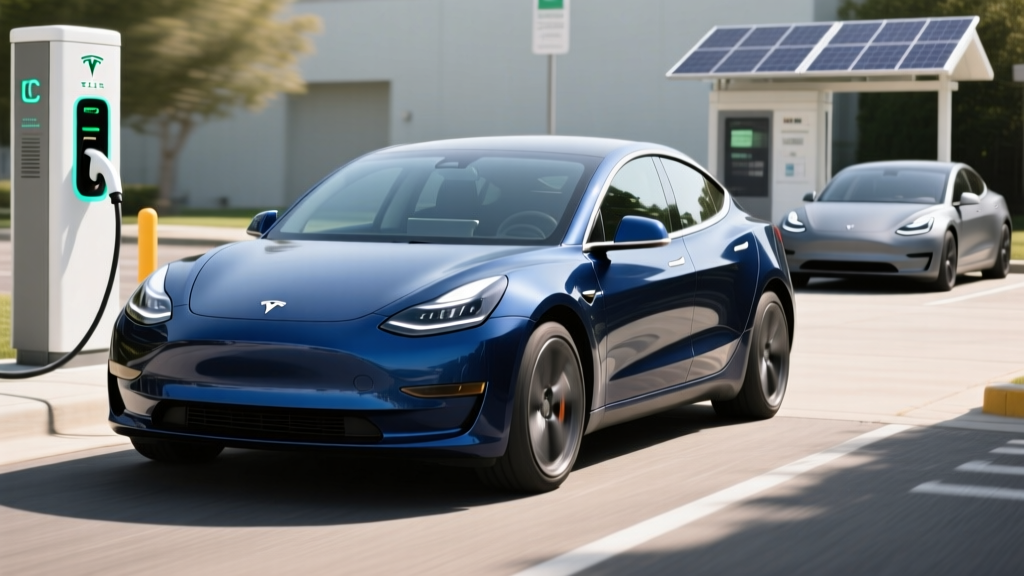
Any battery-powered vehicle approved for public roads qualifies. In 2026, electric street legal vehicles span three main categories: Neighborhood Electric Vehicles (NEVs/Low-Speed Vehicles) limited to 20–25 mph on roads with speed limits up to 35 mph; full Battery Electric Vehicles (BEVs) like the Tesla Model 3, Hyundai Ioniq 6, and Chevrolet Equinox EV with full highway capability; and Plug-in Hybrid Electric Vehicles (PHEVs) like the Toyota RAV4 Prime that blend an electric motor with a gas engine. Your right choice depends entirely on your daily mileage, road type, and budget.
NEV vs Full EV vs PHEV: Which Street Legal Electric Vehicle Fits Your Life?
The term "electric street legal vehicles" often triggers searches for golf-cart-style neighborhood runabouts, but the category is far broader. Before spending a dollar, map your actual driving pattern against these three vehicle classes.
| Category | Top Speed | EPA Range (Electric) | Base MSRP (2026) | Best For |
|---|---|---|---|---|
| NEV / LSV (e.g., GEM e2, Arcimoto FUV) | 25 mph | 30–60 mi | $12,000–$20,000 | Gated communities, campus, short errands on ≤35 mph roads |
| Full BEV (e.g., Chevy Equinox EV, Tesla Model 3) | 110–145 mph | 250–360 mi | $33,000–$52,000 | Any road, commuting, road trips |
| PHEV (e.g., Toyota RAV4 Prime, Jeep Wrangler 4xe) | 100–125 mph | 32–45 mi electric, then gas | $43,000–$55,000 | Short electric commute + long gas road trips |
NEVs are federally regulated under FMVSS 500 and require seat belts, headlamps, turn signals, and VIN registration in most states. They are not legal on highways or roads posted above 35 mph. If your daily route includes a 45-mph arterial, an NEV is not street legal for your use case — you need a full BEV or PHEV.
Real Costs: Purchase, Charging, Fuel, Maintenance & Insurance
Upfront price is only the entry fee. The ownership math shifts dramatically once you factor in energy, maintenance, and the federal §30D tax credit. Below is a realistic 5-year cost comparison assuming 12,000 miles/year, $3.50/gallon gasoline, and $0.16/kWh home electricity (national average per EIA).
| Cost Category (5 yr / 60k mi) | Gas Sedan (Toyota Camry LE) | Full BEV (Chevy Equinox EV 2LT) | PHEV (Toyota RAV4 Prime) |
|---|---|---|---|
| Purchase (after credits) | $28,500 | $33,400 (after up to $7,500 §30D) | $43,000 (credit varies by sourcing) |
| Energy / Fuel | $6,300 | $2,300 | $3,100 |
| Maintenance | $3,200 | $900 | $2,400 |
| Insurance (avg) | $7,800 | $9,200 | $8,400 |
| 5-Year Total | $45,800 | $45,800 | $56,900 |
Key caveats: BEV insurance runs 10–20% higher than equivalent gas models due to repair costs and battery replacement exposure. The §30D credit is not guaranteed — it depends on your modified adjusted gross income (≤$150k single, ≤$300k joint), the vehicle's MSRP cap ($55k cars, $80k SUVs/trucks), and critical-mineral/battery-sourcing rules that tighten each year. Always verify current eligibility on IRS.gov or use the point-of-sale transfer at the dealer.
Charging Reality: Home, Public, and the Cold-Weather Penalty
The single biggest predictor of EV satisfaction is home charging access. If you can install a Level 2 (240V, 32–48 amp) home charger, you'll do 90%+ of your charging at home and rarely visit a public station. Installation typically runs $800–$2,200 for the charger and electrical work, but can climb to $4,000+ if your panel needs a 200-amp upgrade.
Without home charging — apartment dwellers, street parkers — a BEV becomes a logistics project. You'll rely on DC fast chargers at 150–350 kW (adding 150–250 miles in 20 minutes) or slower public Level 2 stations. Plan on $0.35–$0.55/kWh at public DC chargers, roughly doubling the cost-per-mile versus home charging.
Cold-weather reality check: Any BEV loses 20–35% of its EPA-rated range at 20°F, per fueleconomy.gov testing and independent data. A 300-mile EPA BEV realistically delivers 200–230 miles in a Minnesota January. Heat pumps (standard on Hyundai/Kia/many 2026 models) recover 5–10% of that loss. PHEVs sidestep this problem entirely — the gas engine picks up when the battery weakens.
5 Common Misconceptions About Electric Street Legal Vehicles
| Myth | Fact |
|---|---|
| "NEVs are just golf carts — no paperwork needed." | LSVs require VIN registration, insurance, and a driver's license in most states. They must meet FMVSS 500. |
| "EV batteries need replacing every 5 years." | Modern NMC and LFP batteries retain 85–95% capacity after 100,000 miles. Federal law mandates an 8-year/100,000-mile battery warranty (10 years in CARB states). |
| "You'll get stuck without a charger on road trips." | The US now has 200,000+ public charging ports. Tesla Superchargers are open to NACS-equipped Fords, Rivians, and GMs. Plan routes on PlugShare or A Better Routeplanner. |
| "EVs are slower than gas cars." | Instant torque gives most BEVs quicker 0–60 times than equivalent gas models. A base Tesla Model 3 RWD does 0–60 in 5.8 sec; the Performance variant hits 3.1 sec. |
| "The §30D tax credit is $7,500 for everyone." | Credit phases based on income caps, MSRP caps, and battery-sourcing requirements. Many buyers qualify for $3,750 or $0. Check IRS guidance before purchasing. |
Decision Framework: Which Electric Street Legal Vehicle Should You Buy?
If / Then Guide
- If your daily round trip is under 25 miles, you live in a planned community or rural town with ≤35 mph roads, and you want the lowest entry price: an NEV/LSV like the GEM e2 or Arcimoto FUV works. Expect $12k–$20k, no §30D credit, and a second gas car for highway trips.
- If you commute 30–80 miles daily, have home charging, and want the lowest 5-year cost: a full BEV like the Chevrolet Equinox EV (EPA 319 mi, ~$33,400 after credit) or Hyundai Ioniq 6 (EPA 361 mi, ~$38,000) is optimal. Budget $1,500–$2,500 for Level 2 home install.
- If you take 4+ road trips per year over 300 miles, live in an apartment without charging, or face brutal winters: a PHEV like the Toyota RAV4 Prime (42 mi electric, 38 mpg gas after) removes range anxiety. You get an EV commute and a gas car for everything else.
- If you need a work truck or tow over 5,000 lbs: the Ford F-150 Lightning (EPA 240–320 mi, 7,700-lb tow) or Rivian R1T are street-legal electric options, though towing halves real-world range.
First-Time EV Buyer Checklist
- Audit your daily miles. 85% of Americans drive under 40 miles/day — well within any modern BEV's range.
- Confirm home charging feasibility. Talk to a licensed electrician about your panel capacity before buying.
- Verify §30D eligibility. Income, MSRP cap, and battery sourcing all gate the credit. Use the IRS clean vehicle credit tool.
- Test-drive in conditions you actually face. Highway, hills, winter — not just the dealership lot.
- Get an insurance quote before signing. BEV premiums can surprise first-time buyers.
- Download PlugShare and A Better Routeplanner. Know your local charging landscape before delivery day.
Frequently Asked Questions
Are NEVs street legal on any road?
No. Federal law restricts Low-Speed Vehicles to roads with posted speed limits of 35 mph or less, though some states allow limited crossings of higher-speed roads. They are not highway-legal and cannot be driven on interstates.
Do electric street legal vehicles qualify for the federal tax credit?
Full BEVs and PHEVs can qualify for up to $7,500 under §30D if you meet income caps, the vehicle meets MSRP caps, and battery-sourcing requirements are satisfied. NEVs and LSVs generally do not qualify because they are not classified as highway-capable vehicles.
What's the cheapest street legal electric vehicle I can buy new in 2026?
Among full BEVs, the Nissan Leaf S starts around $28,140 (EPA 149 mi). Among NEVs, Chinese-import neighborhood carts start near $8,000 but verify DOT/FMVSS compliance before registering. The Chevrolet Equinox EV and Tesla Model 3 RWD hover around $33,000 before credits with 300+ mile range.
How long do EV batteries really last?
Data from Tesla, Hyundai, and real-world fleets shows most NMC batteries retain 85–90% capacity at 150,000 miles. LFP chemistry (used in base Tesla Model 3, many Ford and Rivian models) shows even slower degradation. Replacement, if needed out of warranty, runs $8,000–$18,000 depending on pack size.
Can I tow with an electric street legal vehicle?
Yes, but real-world range drops sharply. The Ford F-150 Lightning tows up to 7,700 lbs, but expect range to fall from 300 to roughly 150 miles at highway speeds with a loaded trailer. Rivian R1T and Tesla Cybertruck have similar trade-offs.