Quick Answer: Is an Electric Street Legal Dirt Bike Right for You?
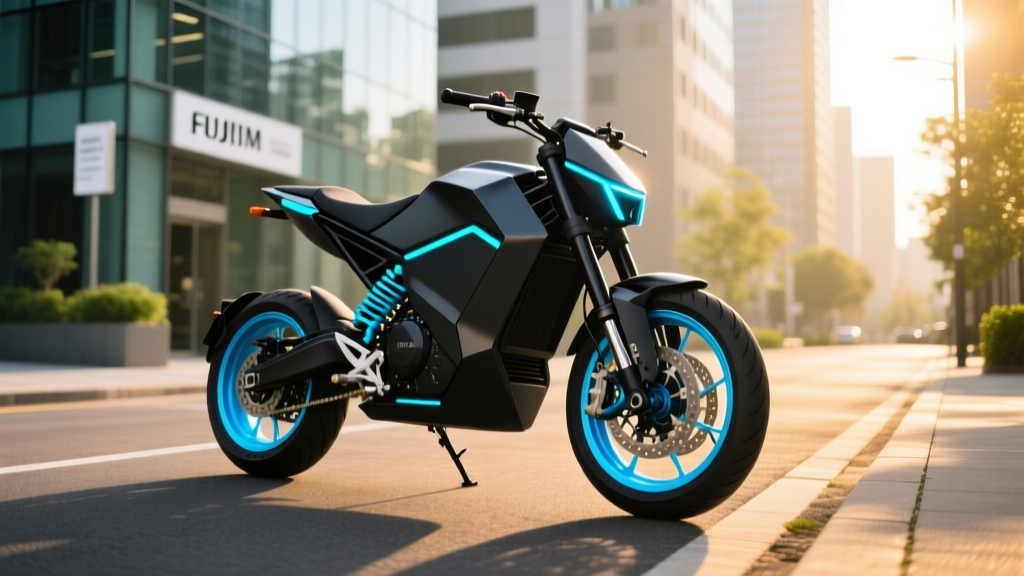
An electric street legal dirt bike is a battery-powered dual-sport motorcycle equipped with DOT-approved lighting, mirrors, horn, speedometer, and license plate mount — making it legal for public road use while retaining off-road capability. In 2026, expect to pay $5,500–$12,000 for a quality model, with real-world street range of 40–80 miles from a 3–7 kWh battery pack. Charging costs roughly $0.50–$1.20 per full charge on a standard 120V outlet (Level 1), and maintenance is minimal compared to gas equivalents — no oil changes, air filters, or clutch replacements. However, these bikes are best suited for riders with home charging access, commutes under 50 miles round-trip, and light-to-moderate off-road use. They are not highway-capable in most cases (top speeds 60–85 mph) and cold weather can reduce range by 15–25%.
What Exactly Is an Electric Street Legal Dirt Bike?
The term "electric street legal dirt bike" describes a specific category: an electric motorcycle built on a dirt bike or dual-sport chassis that has been equipped — either from the factory or via aftermarket conversion — with the components required by your state's Department of Motor Vehicles for on-road registration. Unlike pure off-road electric motocross bikes (such as the KTM SX-E or Sur-Ron Light Bee off-road variants), a street-legal version must include:
- DOT-compliant headlight (high and low beam)
- LED taillight and brake light
- Turn signals (required in most states)
- Side mirrors (at least one, two in some states)
- Electric horn
- Speedometer and odometer
- License plate bracket with illumination
- Street-legal tires (DOT-marked, not pure knobby motocross tires)
- A valid 17-digit VIN (Vehicle Identification Number)
Several manufacturers sell models that meet these requirements out of the box. Notable 2026 options include the CSC RX1E (~$5,800 MSRP, 4.2 kWh battery, ~45-mile real-world range), the Zero FX (~$11,495 MSRP, 7.2 kWh battery, ~70-mile real-world range), and the Sur-Ron Storm Bee street-legal variant (~$6,200 MSRP, 6.0 kWh, ~55-mile real-world range). Some riders also convert off-road models to street-legal status, though this process varies significantly by state and can cost $300–$800 in parts and inspection fees.
Electric vs Gas Dirt Bike: Street-Legal Cost Comparison
Before pulling the trigger, it's worth understanding how an electric street legal dirt bike stacks up against a gas dual-sport like the Honda CRF300L or Yamaha WR250R in terms of real ownership costs. The data below uses a 5-year / 15,000-mile ownership horizon — typical for a dual-sport used for commuting and weekend trail riding.
| Category | Electric (e.g., Zero FX) | Gas (e.g., Honda CRF300L) |
|---|---|---|
| Purchase Price (MSRP) | $11,495 | $5,349 |
| Fuel / Electricity Cost | $180 (at $0.14/kWh avg) | $1,250 (at $3.80/gal, 55 MPG avg) |
| Maintenance (5 yr) | $200 (brake pads, chain lube, tires) | $1,800 (oil, filters, valve checks, chain, sprockets) |
| Insurance (5 yr avg) | $1,800 ($360/yr) | $1,500 ($300/yr) |
| Registration / Taxes | $450 | $450 |
| Estimated Resale Value | $4,500 | $3,200 |
| Total 5-Year Net Cost | $9,625 | $7,149 |
Key takeaway: The electric option costs roughly $2,400–$2,600 more over five years, primarily due to higher upfront MSRP. However, the gap narrows significantly if you ride more miles annually (fuel savings compound), if your local utility offers off-peak EV charging rates, or if you factor in the time savings from near-zero routine maintenance. For high-mileage commuters doing 5,000+ miles per year, the break-even point can arrive around year 4.
One important note: federal EV tax credits under IRS §30D apply to four-wheeled vehicles only. Electric motorcycles, including street-legal dirt bikes, do not qualify for the $7,500 federal clean vehicle credit. Some states offer separate two-wheeler EV rebates — check your state energy office for current programs.
Range, Battery, and Charging: The Numbers That Matter
Range is the single most important spec for any electric vehicle, and for electric street legal dirt bikes, the gap between manufacturer claims and real-world results can be significant. Here's what the data actually shows for popular 2026 models:
| Model | Battery (kWh) | Claimed Range | Real-World Range (Street) | Charge Time (120V) | Peak Power (HP) | Top Speed |
|---|---|---|---|---|---|---|
| Zero FX (Z-Force 7.2) | 7.2 kWh (NMC) | 89 mi | 60–70 mi | ~9.5 hours | 46 HP | 85 mph |
| CSC RX1E | 4.2 kWh (NMC) | 60 mi | 38–48 mi | ~5.5 hours | 27 HP | 70 mph |
| Sur-Ron Storm Bee (Street) | 6.0 kWh (NMC) | 75 mi | 48–58 mi | ~7.5 hours | 30 HP | 68 mph |
| KTM Freeride E-XC (Street Conv.) | 3.9 kWh (NMC) | 55 mi | 32–40 mi | ~5.0 hours | 24 HP | 60 mph |
Real-world range caveats: Manufacturer range figures assume mixed riding at moderate speeds (30–45 mph) on flat terrain. Expect the following reductions:
- Sustained highway speeds (55–70 mph): 25–35% range loss due to aerodynamic drag, which scales with the square of velocity
- Cold weather (below 40°F / 4°C): 15–25% range loss from reduced lithium-ion cell efficiency and increased rolling resistance
- Aggressive off-road riding: 30–45% range loss from high-current draw during acceleration and hill climbs
- Combined worst case (cold + highway + hills): Up to 50% reduction from claimed range
Charging reality: Most electric street legal dirt bikes charge exclusively on Level 1 (standard 120V household outlet). They draw between 0.5 kW and 1.0 kW, meaning a full charge takes 5–10 hours depending on battery size. A few premium models like the Zero FX offer an optional Charge Tank accessory (~$2,000) that enables Level 2 charging at up to 3.3 kW via a J1772 connector, cutting charge time to 2–3 hours. DC fast charging is not available on any current production street-legal dirt bike — the battery packs are simply too small to justify the infrastructure cost and thermal management complexity.
This means home charging is essentially mandatory. If you live in an apartment without garage or outlet access, or park on the street, keeping an electric dirt bike charged becomes a significant logistical challenge. Some riders manage by removing the battery pack (if the design allows) and charging it indoors, but this is model-dependent and not always practical with 50–80 lb battery packs.
Street-Legal Requirements: What You Need to Know
Not every electric dirt bike can simply be registered for street use. The requirements vary by state, but the general framework follows federal DOT standards and state-specific vehicle codes. Here's what you need to verify before purchasing:
Factory Street-Legal Models
Bikes sold as street-legal from the factory (Zero FX, CSC RX1E, Sur-Ron Storm Bee street variant) come with all required equipment pre-installed and a proper 17-digit VIN. These can typically be registered at your local DMV like any other motorcycle, provided you have:
- Proof of insurance meeting your state's minimum liability requirements
- A valid motorcycle endorsement on your driver's license (Class M in most states)
- Payment of registration fees and applicable sales tax
Aftermarket Street-Legal Conversions
If you're converting an off-road-only electric dirt bike, the process is more complex. You'll need to source and install DOT-compliant lighting, mirrors, horn, and speedometer, then pass a state inspection (where required). Some states — notably California — require a special construction or kit vehicle verification (Form REG 5036) for converted off-road vehicles. Other states are more lenient. Budget $300–$800 for parts and potential inspection fees, and confirm your state's process before purchasing an off-road-only model for conversion.
Insurance Considerations
Insurance for electric street legal dirt bikes typically costs $250–$500 per year for liability-only coverage and $400–$800 per year for comprehensive/collision, depending on the bike's value, your riding history, and your state. Some insurers are unfamiliar with electric motorcycle models and may initially quote higher premiums — shopping quotes from at least three providers (including motorcycle-specialty insurers like Progressive Motorcycle and Dairyland) usually yields better rates.
Common Misconceptions: Myth vs Fact
There's a lot of misinformation circulating about electric street legal dirt bikes. Let's address the most common claims with actual data:
| Myth | Fact |
|---|---|
| "Electric dirt bikes have no power" | The Zero FX produces 46 HP and 78 lb-ft of torque available instantly at 0 RPM — comparable to a 250cc gas four-stroke, with stronger low-end acceleration. Electric motors deliver peak torque immediately, unlike gas engines that need to build RPMs. |
| "Batteries need replacing every 2 years" | Modern NMC lithium-ion packs in quality electric motorcycles are rated for 1,000–1,500 full charge cycles before reaching 80% capacity. At 50 miles per charge, that's 50,000–75,000 miles — far more than most riders will accumulate. Zero Motorcycles warranties their batteries for 5 years with no mileage limit. |
| "You can't ride them off-road" | Electric dirt bikes excel off-road. Instant torque, low center of gravity (battery mounted low in the frame), and no engine heat make them capable trail machines. The primary limitation is range on aggressive off-road loops, not capability. |
| "They're completely silent, which is dangerous" | Most street-legal models include an artificial sound generator for pedestrian awareness at low speeds. At higher speeds, tire and wind noise are audible. Off-road, the reduced noise is actually an advantage for trail access — many riding areas are opening specifically to electric motorcycles due to lower noise impact. |
| "Charging takes too long for practical use" | For daily commuting, you charge overnight at home — exactly like a phone. A 50-mile commute uses roughly 4–5 kWh, which replenishes in 5–6 hours on a standard outlet. The "charging time" objection only applies if you need to ride 100+ miles in a single day with no access to an outlet between rides. |
Real-World Ownership: What First-Time Buyers Should Know
Beyond the spec sheet, here are the practical realities that experienced electric motorcycle owners wish they'd known before buying:
Home Charging Setup
You'll need a dedicated 120V outlet (standard NEMA 5-15) near your parking spot. Most bikes come with a standard charger that plugs into any household outlet. If your parking area doesn't have an outlet within reach of the charger cable (typically 6–10 feet), expect to pay $150–$400 for an electrician to install one. If you're considering a Level 2 upgrade (Zero FX Charge Tank), you'll need a 240V outlet (NEMA 14-50 or hardwired J1772 station), which costs $500–$1,500 installed depending on your electrical panel's capacity and distance from the parking spot. Always use a licensed electrician and pull a permit — unpermitted electrical work can void your homeowner's insurance.
Cold-Weather Riding
Lithium-ion batteries lose efficiency in cold temperatures. Below 40°F, expect 15–25% less range. Below 20°F, the reduction can reach 30–40%. Unlike gas bikes, there's no engine heat to warm you — you'll need heated grips and proper cold-weather gear. If you live in a region with harsh winters, plan your routes conservatively and consider whether an electric dirt bike is practical as a year-round commuter or better suited to spring-through-fall riding.
Maintenance Advantages
This is where electric street legal dirt bikes genuinely shine. A gas dual-sport requires oil changes every 2,000–4,000 miles, air filter cleaning/replacement, valve clearance checks every 10,000–15,000 miles, carburetor or fuel injection servicing, clutch cable adjustment, and exhaust system maintenance. An electric model eliminates all of these. Your maintenance checklist is essentially:
- Chain tension and lubrication (every 500–1,000 miles)
- Brake pad inspection (every 2,000 miles)
- Tire pressure and tread (before every ride)
- Battery health check via the manufacturer's app (periodic)
- Brake fluid flush (every 2 years)
Total annual maintenance cost: typically $30–$80, compared to $250–$500 for a gas equivalent.
Resale Value Reality
Electric motorcycles depreciate faster than gas equivalents in the current market. Expect to retain 35–45% of purchase price after 5 years, versus 50–60% for popular gas dual-sports. This is partly due to the smaller used-EV-motorcycle market and partly due to buyer uncertainty about battery health. Keep all maintenance records and battery health reports (most bikes have app-accessible State of Health data) to maximize resale value.
Decision Framework: Should You Buy an Electric Street Legal Dirt Bike?
Choose an Electric Street Legal Dirt Bike If:
- Your daily round-trip commute is under 50 miles (including a 20% buffer for detours and cold weather)
- You have reliable home charging access (garage, carport, or dedicated outdoor outlet)
- You value low maintenance and are willing to pay a premium upfront for long-term simplicity
- You ride primarily on streets, light trails, and fire roads — not extreme enduro or long-distance adventure routes
- You want to ride trails near noise-sensitive areas where electric motorcycles have better access
- You enjoy the instant torque and smooth, clutch-free riding experience
Stick With a Gas Dual-Sport If:
- You regularly ride more than 80 miles in a single day without access to charging
- You live in an apartment or park on the street with no outlet access
- You need highway-capable speeds (75+ mph sustained) for commuting
- You ride in extreme cold (below 20°F) for extended periods regularly
- You want maximum resale value and the broadest used-buyer market
- Your budget is under $5,000 and you need a proven, widely-serviced platform
Frequently Asked Questions
Do electric street legal dirt bikes qualify for any tax credits or rebates?
No. The federal IRS §30D clean vehicle credit applies only to four-wheeled vehicles. Electric motorcycles, including street-legal dirt bikes, are excluded. However, some states and utilities offer separate EV two-wheeler rebates — California's CVRP program, for example, has historically offered up to $900 for electric motorcycles. Check your state energy office and local utility for current programs.
How long do electric dirt bike batteries last before needing replacement?
Quality NMC lithium-ion packs are rated for 1,000–1,500 full charge cycles to 80% capacity. For a rider averaging 3,000 miles per year with a 50-mile real-world range, that's roughly 60 full cycles annually — meaning the battery should last 15–25 years before degrading to 80%. In practice, calendar aging (degradation from time, regardless of use) typically becomes the limiting factor around years 8–12. Replacement battery packs cost $2,500–$5,000 depending on the model and capacity.
Can I ride an electric street legal dirt bike on the highway?
Technically yes, if the bike's top speed meets your state's minimum highway speed requirement (typically 55–65 mph). However, most electric dirt bikes top out at 60–85 mph, and sustained high-speed riding drains the battery rapidly. A 70-mph cruise can cut range by 35–45% compared to city riding. For riders who need regular highway commuting, a larger electric motorcycle (Zero SR/S, LiveWire ONE) or a gas dual-sport is a more practical choice.
What's the difference between kW and kWh on an electric dirt bike?
This is the most common spec confusion. kW (kilowatts) measures power — how fast the motor can deliver energy, which determines acceleration and top speed. A 30 kW motor produces about 40 HP. kWh (kilowatt-hours) measures energy capacity — how much total energy the battery stores, which determines range. A 7.2 kWh battery holds 7.2 kilowatt-hours of energy. Think of kW as the size of the faucet and kWh as the size of the water tank.
Is it cheaper to charge at home or use public charging?
Home charging is dramatically cheaper. At the national average residential electricity rate of ~$0.16/kWh (per EIA data), a full charge of a 7.2 kWh battery costs about $1.15. Public Level 2 chargers typically charge $0.25–$0.49/kWh, and DC fast chargers (where available for motorcycles) can cost $0.40–$0.70/kWh. Since most electric dirt bikes only support Level 1 home charging, public charging infrastructure is largely irrelevant for daily use — another reason home access is critical.
Do I need a motorcycle license to ride an electric street legal dirt bike?
Yes, in virtually all states. Any two-wheeled vehicle registered for street use requires a motorcycle endorsement (typically Class M) on your driver's license. The process involves passing a written knowledge test and a riding skills test, or completing a Motorcycle Safety Foundation (MSF) Basic Rider Course, which typically costs $200–$350 and satisfies both requirements. Some states have a restricted "motor-driven cycle" license class for bikes under a certain power or speed threshold, but most electric street legal dirt bikes exceed those limits.