Electric steering racks are standard on nearly every modern EV, replacing the hydraulic power steering systems found in older gas cars. These systems use an electric motor to assist steering rather than engine-driven hydraulic pumps, resulting in measurable efficiency gains, reduced maintenance, and tighter integration with driver-assistance features like lane-keeping and automated parking.
Quick Answer: Electric Steering Racks in EVs
What it is: An electric power steering (EPS) system where an electric motor provides steering assistance instead of a hydraulic pump.
EV advantage: Eliminates parasitic engine load, improves efficiency by 2-3%, and enables advanced ADAS features.
Maintenance: No hydraulic fluid changes; typical replacement cost $800-$1,500 if failure occurs after warranty.
Standard on: Virtually all 2026 EVs including Tesla Model Y, Hyundai Ioniq 5, Ford Mustang Mach-E, Chevrolet Equinox EV.
How Electric Steering Racks Work in EVs
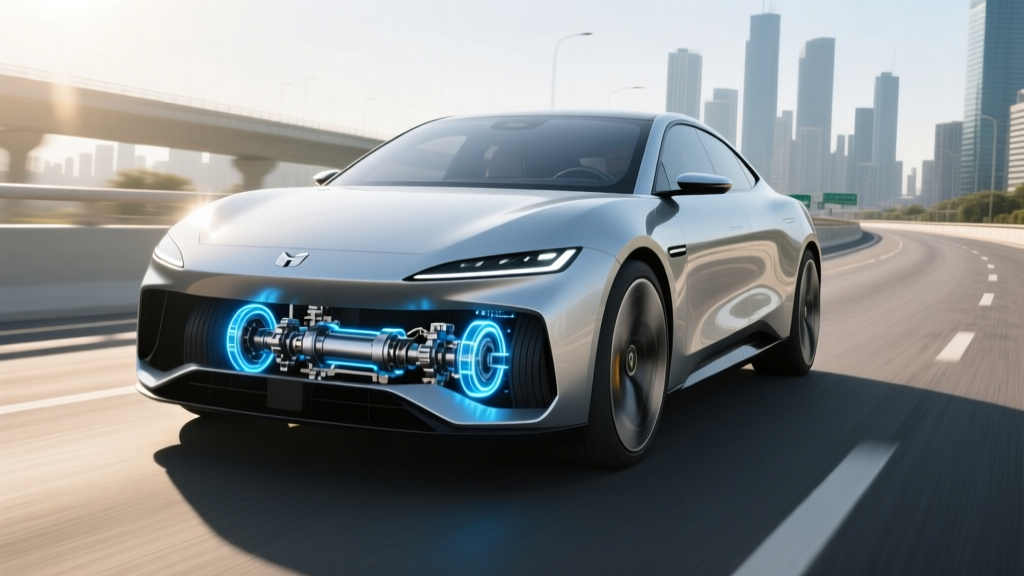
Electric steering racks use a brushless DC motor mounted either on the steering column (column-assist) or directly on the rack itself (rack-assist). Sensors detect steering torque and angle, then the motor provides proportional assistance. In EVs, this system draws power directly from the 12V auxiliary battery (which is charged by the main traction battery via a DC-DC converter).
Rack-mounted electric power steering (R-EPS) is increasingly common in EVs because it provides more direct feedback and higher assist force for heavier vehicles. The Tesla Model Y, for example, uses a rack-assist EPS system that enables its Autopilot lane-centering functionality. The Hyundai Ioniq 5 and Kia EV6 both use similar R-EPS configurations.
Unlike hydraulic systems that run continuously whenever the engine is on, electric steering racks only draw power when steering input is detected. This on-demand operation contributes to the overall efficiency advantage of EVs. According to EPA data, electric power steering systems consume roughly 0.1-0.2 kW during active steering maneuvers versus 1-2 kW continuous draw for hydraulic pumps in gas vehicles.
EV vs Gas Car: Steering System Comparison
| Feature | EV (Electric Steering Rack) | Gas Car (Hydraulic/EPS) |
|---|---|---|
| Power source | 12V battery (from DC-DC converter) | Engine-driven pump or 12V battery |
| Energy consumption | ~0.1-0.2 kW (on-demand) | 1-2 kW continuous (hydraulic) or ~0.15 kW (EPS) |
| Fluid maintenance | None | Hydraulic fluid change every 50k-100k miles (~$80-$150) |
| ADAS integration | Full (lane-keep, auto-park, emergency steer) | Limited on older hydraulic systems |
| Typical replacement cost | $800-$1,500 | $600-$1,200 (hydraulic rack) |
| Weight | ~15-25 lbs lighter (no pump, lines, fluid) | Heavier due to hydraulic components |
| Failure mode | Gradual (warning lights, reduced assist) | Sudden (fluid leak, pump failure) |
Most 2026 gas vehicles have also switched to electric power steering for the same efficiency and ADAS benefits. The key difference is that EVs were designed from the ground up with EPS, resulting in tighter software integration with regenerative braking and one-pedal driving modes. When you lift off the accelerator in a Tesla Model 3 or Hyundai Ioniq 6, the steering feel subtly adjusts to match the deceleration profile—something hydraulic systems cannot do.
Real Costs and Savings Over 5 Years
| Cost Category | EV (Electric Steering Rack) | Gas Car (Hydraulic Steering) |
|---|---|---|
| Power steering fluid (5 years/75k miles) | $0 | $80-$150 (1-2 changes) |
| Belt/pump replacement | $0 (no serpentine belt for steering) | $300-$600 (if pump fails) |
| Steering rack replacement (if needed) | $800-$1,500 | $600-$1,200 |
| Energy cost for steering (75k miles) | ~$15-$30 (included in charging cost) | ~$40-$80 (fuel consumed by pump) |
| Total 5-year steering-related cost | $15-$30 | $420-$950 |
These savings assume normal driving conditions and no catastrophic steering rack failure. Electric steering racks generally last the life of the vehicle, though isolated failures have been reported in early-production models. Tesla issued a service bulletin for 2020-2021 Model 3 units experiencing premature wear in the rack-assist motor, covering repairs under the 4-year/50,000-mile basic warranty.
For context on total EV ownership economics, a 2026 Chevrolet Equinox EV (starting at $33,600 MSRP before incentives) will save an estimated $4,200 in fuel and maintenance over 5 years compared to a gas Equinox, according to EPA estimates. The steering system contributes roughly 3-5% of those maintenance savings.
Electric Steering Rack and Driver-Assistance Systems
Electric steering racks are foundational to modern ADAS features. Without electric assist, systems like Tesla Autopilot, Ford BlueCruise, and GM Super Cruise could not provide lane-centering steering input. These are all SAE Level 2 systems, meaning the driver must remain engaged and hands-on (or eyes-on for BlueCruise/Super Cruise) at all times.
Common Misconceptions About EV Steering
| Myth: Electric steering feels numb and disconnected | Fact: Modern R-EPS systems in the Porsche Taycan, BMW i4, and Genesis GV60 provide tunable road feel through software. While hydraulic systems still offer the most feedback, the gap has narrowed significantly since 2020. |
| Myth: If the battery dies, you lose steering | Fact: The 12V auxiliary battery powers steering independently. Even if the main traction battery is depleted, the 12V system maintains steering and braking for safe stopping. Most EVs provide 30-60 minutes of 12V power after main battery depletion. |
| Myth: Electric steering racks fail more often | Fact: EPS systems have fewer moving parts than hydraulic (no pump, hoses, fluid). Failure rates are comparable or lower, with most issues being sensor or software-related rather than mechanical. |
| Myth: You can't do emergency maneuvers with EPS | Fact: Modern systems provide full assist up to steering lock. The IIHS tests all EVs with EPS in emergency avoidance scenarios, and models like the Hyundai Ioniq 5 and Tesla Model Y earn top ratings. |
What First-Time EV Buyers Should Know About Steering
Steering feel varies by brand: Tesla's steering is notably quick (roughly 2.0 turns lock-to-lock in Model 3/Y), while Hyundai/Kia EVs use a more traditional ratio (~2.7 turns). This affects parking maneuverability versus highway stability. Test-drive with both low-speed parking and highway lane changes in mind.
Regenerative braking affects steering input: In strong regen modes (Tesla "Standard," Hyundai "i-Pedal"), lifting off the accelerator causes deceleration that can subtly shift vehicle weight forward. This changes steering feel momentarily—new EV drivers often describe this as "twitchy" until they adapt.
Cold weather considerations: Electric steering racks perform consistently in cold weather, unlike hydraulic systems that can feel sluggish until fluid warms. However, if your EV's 12V battery is weak (common in extreme cold below -10°F), steering assist may be reduced until the battery warms. This is rare but documented in northern-climate ownership forums.
Warranty coverage: The electric steering rack is covered under the basic vehicle warranty (typically 3 years/36,000 miles or 5 years/60,000 miles) and sometimes under the powertrain warranty (5 years/60,000 miles to 8 years/100,000 miles depending on manufacturer). Check your specific warranty booklet—the steering rack is often classified as a "chassis component" rather than powertrain.
Decision Framework: Electric Steering Rack Considerations
Should Steering System Type Influence Your EV Purchase?
Choose an EV with rack-mounted EPS (R-EPS) if:
- You prioritize precise steering feel for spirited driving (Porsche Taycan, BMW i4, Tesla Model 3 Performance)
- You want the most advanced ADAS integration for lane-centering and automated parking
- You plan to keep the vehicle 8+ years and want minimal maintenance
Don't over-index on steering type if:
- Your primary concern is range, charging speed, or price—steering differences are marginal compared to these factors
- You're comparing EVs within the same segment (e.g., Ioniq 5 vs Mach-E)—both use similar R-EPS systems
- You're coming from a gas car with EPS (most 2018+ vehicles)—the feel will be familiar
Test-drive priority: If steering feel matters to you, test the specific model in both comfort and sport modes. The software tuning matters more than the hardware type.
Frequently Asked Questions
Can an electric steering rack be repaired, or must it be replaced?
Most electric steering rack issues are sensor or software-related and can be resolved with recalibration or sensor replacement ($150-$400). Mechanical failures (motor or gear wear) typically require full rack replacement. Unlike hydraulic racks, there are no seals or hoses to repair.
Does electric steering affect EV range?
Minimally. Electric steering consumes roughly 0.1-0.2 kW during active steering, which translates to less than 1 mile of range per hour of city driving. This is already factored into EPA range estimates. Highway driving uses even less steering assist.
Are electric steering racks reliable in high-mileage EVs?
Yes. Tesla Model S/X vehicles from 2012-2015 with 150,000+ miles commonly retain original steering racks. Hyundai/Kia EPS systems in the Kona Electric and Niro EV show similar durability. The lack of hydraulic fluid and fewer moving parts contributes to longevity.
Can I feel the difference between EV and gas car steering?
Most drivers notice EVs feel lighter at low speeds (parking) and more consistent across speed ranges. The absence of engine vibration also changes steering feedback. However, modern gas cars with EPS (2018+) feel very similar to EVs—the main difference is weight distribution due to the battery pack.
What happens if the electric steering motor fails while driving?
The system provides progressive warnings (dashboard alerts, increased steering effort) before complete failure. You retain manual steering capability (heavier effort, like older non-power-steering cars). Pull over safely. This is rare—NHTSA data shows EPS failure rates below 0.5% over 10 years.
Do all EVs use the same type of electric steering?
No. Column-assist EPS (C-EPS) mounts the motor on the steering column and is used in lighter EVs like the Chevrolet Bolt EV. Rack-assist EPS (R-EPS) mounts directly on the rack and is used in heavier EVs like the Ford F-150 Lightning and Rivian R1T for greater assist force. Direct-drive systems (rare, used in some prototypes) eliminate the mechanical linkage entirely.
Electric steering racks represent one of the quieter advantages of EV ownership—lower maintenance, better efficiency, and seamless integration with safety systems. While not a primary purchase driver like range or charging speed, understanding how these systems work helps set realistic expectations for ownership costs and driving experience.