Quick Answer: What Is Electric Steering in an EV?
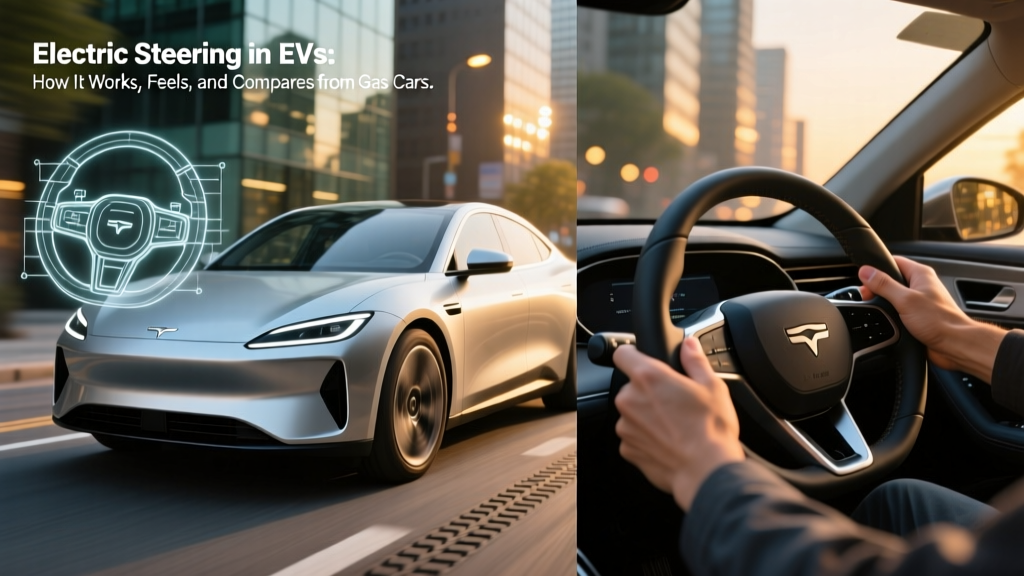
Electric steering — technically called Electric Power Steering (EPS) — uses an electric motor rather than a hydraulic pump to assist your steering input. Nearly every EV sold today uses EPS because it draws power only when you turn the wheel, eliminating the parasitic drag of a belt-driven hydraulic pump. That efficiency gain typically recovers 1–3% of battery range compared to a hydraulic system, and EPS is a prerequisite for Level 2 driver-assist features like lane-centering and automatic parking. The tradeoff? EPS can feel lighter and less communicative than a well-tuned hydraulic rack, though 2025–2026 models from Hyundai, BMW, and Porsche have largely closed that gap with variable-ratio racks and software-tuned feel profiles.
How Electric Power Steering Actually Works
When you turn the steering wheel, a torque sensor measures your input force and a steering-angle sensor reads wheel position. An electronic control unit (ECU) calculates how much assist to apply and commands a brushless electric motor — typically mounted on the steering column (column-type EPS) or directly on the rack gear (rack-type EPS) — to add that force.
In an EV, the EPS motor draws from the high-voltage traction battery through a DC-DC converter that steps voltage down to the 12V or 48V accessory bus. A typical EPS system consumes between 50 and 150 watts during active steering maneuvers and nearly zero during straight-line cruising. By contrast, a hydraulic power steering pump on a gas car runs continuously whenever the engine is on, drawing 2–5 horsepower (roughly 1,500–3,700 watts) regardless of whether you're turning.
That difference matters for efficiency. Over a 300-mile trip, an EPS system might consume 0.3–0.5 kWh of battery energy total. A hydraulic pump running for the same duration would waste several times that, which is one reason EVs achieve the MPGe figures they do — every parasitic loss eliminated counts.
EV vs. Gas Car Steering: A Data-Driven Comparison
Here is how electric steering in a typical 2026 EV stacks up against a conventional hydraulic or electro-hydraulic system in a comparable gas sedan:
| Metric | EV (EPS — e.g., Tesla Model 3, Hyundai Ioniq 6) | Gas Car (Hydraulic/Electro-Hydraulic — e.g., Mazda3, Subaru WRX) |
|---|---|---|
| Steering assist type | Fully electric (brushless motor on column or rack) | Hydraulic pump (belt-driven) or electro-hydraulic |
| Power draw (active steering) | 50–150 W | 1,500–3,700 W (continuous when engine runs) |
| Parasitic range/fuel loss | ~0.3–0.5 kWh per 300 mi | Reduces fuel economy ~1–2% |
| Variable assist | Yes — software-defined, speed-sensitive | Limited (hydraulic) or variable (electro-hydraulic) |
| ADAS integration (lane-centering) | Native — motor applies torque directly | Requires additional actuator or electro-hydraulic override |
| Steering feel / feedback | Software-simulated; improving yearly | Mechanical feedback from road; generally richer |
| Maintenance interval | None (no fluid, no pump, no belt) | Fluid change every 30k–60k mi; pump/belt replacement |
| Typical replacement cost (out of warranty) | $1,200–$2,800 (rack + motor assembly) | $400–$900 (pump); $800–$1,500 (rack) |
What Electric Steering Means for Range and Efficiency
EPS is one of several "invisible" efficiency gains in EVs. Because the motor only energizes during steering input, its contribution to overall consumption is minimal. On a 75 kWh battery pack (like the 2026 Tesla Model 3 Long Range with its EPA-rated 341-mile range), the steering system accounts for well under 1% of total energy use over a mixed-driving cycle.
The bigger efficiency story is what EPS enables. Lane-centering assist — a core feature of Level 2 systems like Tesla Autopilot, Ford BlueCruise, and Hyundai's Highway Driving Assist 2 — requires the steering system to apply precise, programmable torque without driver input. Hydraulic systems can do this with add-on actuators, but EPS does it natively and faster, with response times under 10 milliseconds. That precision also enables features like automated parking, lane-keep assist, and evasive steering assist (which gently nudges you away from a detected obstacle).
Steering Feel: The Enthusiast Complaint and the 2026 Reality
The most common criticism of electric steering is that it feels numb — disconnected from the road surface compared to a hydraulic rack that transmits texture through fluid and mechanical linkage. This was largely true for early EPS systems (circa 2010–2018), which used simple assist curves and low-resolution torque sensors.
Modern EPS systems have addressed this with several techniques:
- Variable gear ratios: Porsche's rear-axle steering and BMW's Integral Active Steering change the rack ratio based on speed — quick off-center for parking, slower and more deliberate at highway speeds. The 2026 BMW i5 uses this to deliver a steering feel that reviewers consistently rate among the best in the EV segment.
- Software-defined feel profiles: Hyundai's Ioniq 5 N simulates gear shifts, engine sound, and steering weight changes to mimic a performance ICE car. The steering firmness adjusts with drive mode (Eco, Normal, Sport, N Track).
- Higher-resolution torque sensors: Modern sensors detect inputs as small as 0.1 Nm, allowing the ECU to provide granular assist that feels more natural and less "boosted."
- Rack-mounted motors: Placing the assist motor on the rack rather than the column reduces compliance (flex) in the steering column, improving feedback.
That said, if you prioritize raw steering feel above all else, a well-sorted hydraulic system — like the one in a current Mazda MX-5 or the electro-hydraulic setup in a Subaru WRX — still communicates road texture more honestly. For daily commuting and highway driving, though, the gap has narrowed enough that most drivers won't notice.
Steer-by-Wire: The Next Step Beyond EPS
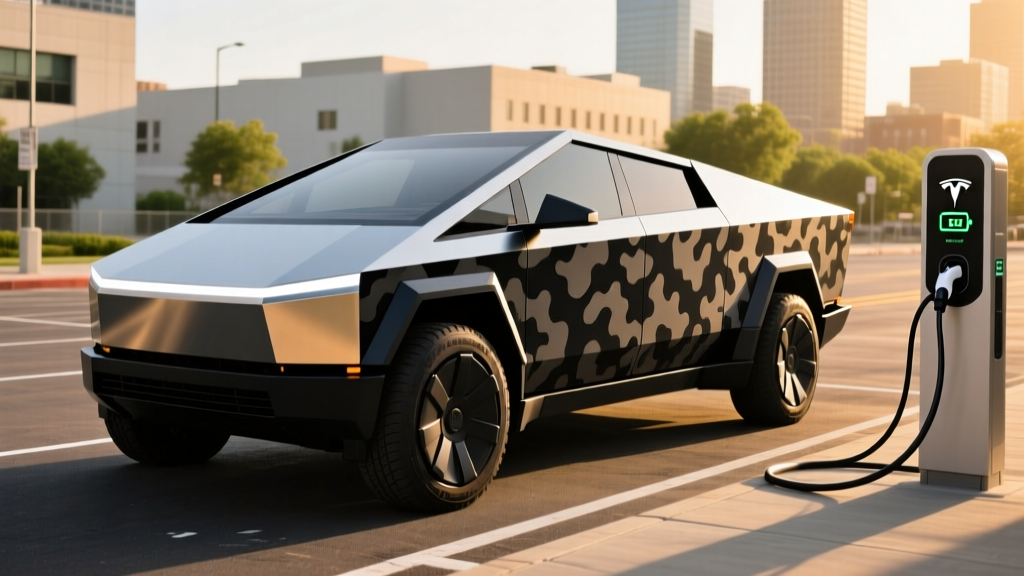
A growing number of 2025–2026 EVs are moving past traditional EPS to steer-by-wire, which eliminates the mechanical connection between the steering wheel and the rack entirely. The Tesla Cybertruck (2024–present) and the Lexus RZ 450e with its optional yoke are the most prominent examples. Toyota's bZ4X also offered steer-by-wire in certain markets.
In a steer-by-wire system, your steering input is read by sensors and transmitted electronically to a motor at the rack. This allows:
- Variable steering ratios that change dramatically (the Cybertruck goes lock-to-lock in roughly 340 degrees — less than one full turn — versus ~900 degrees in a conventional setup).
- Steering-wheel retraction or removal for future Level 4 autonomous operation.
- Elimination of vibration and kickback transmitted through the column.
The tradeoff is total reliance on software and redundant electronics. If the primary system fails, a backup must take over instantly — which is why steer-by-wire systems include dual or triple redundant ECUs and motors. The NHTSA has been evaluating steer-by-wire safety standards as adoption grows.
Cost of Ownership: Steering Maintenance in EVs vs. Gas Cars
One area where EV owners save meaningfully is steering system maintenance. Here's a realistic 5-year cost comparison assuming 75,000 miles driven:
| Steering-Related Cost | EV (EPS) | Gas Car (Hydraulic) |
|---|---|---|
| Power steering fluid (changes at 30k and 60k mi) | $0 (no fluid) | $60–$120 |
| Drive belt replacement (powers hydraulic pump, ~60k mi) | $0 (no belt-driven pump) | $150–$350 |
| Pump failure / replacement (probability ~5% over 75k mi) | $0 | $400–$900 (weighted: $20–$45 expected) |
| Rack-and-pinion leak repair (probability ~8% over 75k mi) | $0 (no hydraulic seals under pressure) | $800–$1,500 (weighted: $64–$120 expected) |
| EPS motor or ECU failure (probability ~2% over 75k mi) | $1,200–$2,800 (weighted: $24–$56 expected) | $0 |
| Total expected steering maintenance (5 yr / 75k mi) | $24–$56 | $294–$635 |
EV steering systems are simpler and largely maintenance-free. The risk is that if an EPS rack fails out of warranty, the replacement part (which integrates the motor and ECU) is more expensive than a standalone hydraulic pump. However, failure rates are low, and the powertrain warranty on most 2026 EVs covers the EPS motor for at least 5 years / 60,000 miles (with Hyundai and Kia extending to 10 years / 100,000 miles on key EV components).
Electric Steering and ADAS: What First-Time EV Buyers Should Know
Important: All current consumer driver-assist systems — Tesla Autopilot and FSD (Supervised), Ford BlueCruise, GM Super Cruise, Hyundai HDA2 — are SAE Level 2. The driver must remain attentive and ready to take over at any moment. EPS enables these features but does not make the car self-driving. Only Level 4 robotaxis like Waymo operate without a driver, and those are not available for personal purchase.
EPS is the hardware foundation for every Level 2 lane-centering system on the market. When you activate lane-centering, the EPS motor applies small, continuous torque adjustments to keep the vehicle centered in its lane. The system reads lane markings via a forward-facing camera and calculates corrections in real time.
What this means for buyers:
- All 2026 EVs with ADAS have EPS. There is no choice to make — EPS is standard.
- Steering feel during ADAS engagement varies by brand. Tesla's system applies firm, confident corrections; GM's Super Cruise is smoother and more gradual; some systems "fight" you if you try to make a lane change without canceling assist first.
- Hands-on vs. hands-off: Most systems require you to keep hands on the wheel (detected via torque sensors in the EPS). GM Super Cruise and Ford BlueCruise 1.0+ use infrared driver-monitoring cameras to allow hands-free operation on mapped highways, but your eyes must stay on the road.
Decision Framework: Does Steering Type Matter for Your EV Purchase?
Choose based on your priorities:
- If you want the lowest maintenance cost and best ADAS integration: Any modern EV with EPS. You'll never change steering fluid, and lane-centering will work seamlessly. Models like the 2026 Hyundai Ioniq 5 ($42,600 base MSRP) and Tesla Model 3 ($39,990) offer excellent EPS tuning.
- If steering feel is a top priority: Test-drive EVs known for better EPS tuning — the BMW i4 and i5, Porsche Taycan, and Hyundai Ioniq 5 N. Compare them back-to-back with a hydraulic-steering gas car to calibrate your expectations.
- If you're considering steer-by-wire: The Tesla Cybertruck is the primary option. Expect an adjustment period — the ultra-quick ratio feels unnatural for the first 30 minutes, then becomes intuitive. Note that steer-by-wire is still new, and long-term reliability data is limited.
- If you're buying used: Check whether the EPS rack has been replaced under warranty. A pre-purchase inspection should verify there is no play in the rack and that the EPS warning light does not illuminate during a test drive.
Common Misconceptions About Electric Steering
| Myth | Fact |
|---|---|
| "Electric steering drains the battery significantly." | EPS draws 50–150 W only during active turning. Over a 300-mile trip, total steering energy consumption is typically 0.3–0.5 kWh — less than 1% of a 75 kWh battery. |
| "EPS is less safe than hydraulic steering." | EPS systems include fail-safe modes. If the electric motor or ECU fails, the mechanical linkage between the steering wheel and rack remains intact — you can still steer manually, though it requires more effort. IIHS crash-test ratings are unaffected by steering type. |
| "You can't get good steering feel with EPS." | Early EPS (2010–2018) earned this reputation. Modern systems from BMW, Porsche, and Hyundai use rack-mounted motors, high-resolution sensors, and software feel profiles that enthusiasts rate highly. The gap with hydraulic is narrower than ever. |
| "If the 12V battery dies, I lose steering." | The EPS motor runs off the high-voltage traction battery via a DC-DC converter. A dead 12V battery will prevent the car from starting, but it won't cause steering loss while driving — the HV system keeps the EPS powered. |
| "Steer-by-wire is dangerous because there's no mechanical backup." | Steer-by-wire systems include redundant ECUs, motors, and power supplies. The Cybertruck, for example, has dual motors at the rack and independent control paths. The mechanical column is replaced by multiple electronic backups, not eliminated without redundancy. |
Frequently Asked Questions
Do all EVs use electric power steering?
Yes. Every mass-production EV sold in the US as of 2026 — from the Nissan Leaf to the Rivian R1T — uses Electric Power Steering (EPS). There is no hydraulic pump to drive because there is no engine to spin a belt. EPS is a natural fit for electric drivetrains.
Does electric steering affect my EV's EPA range?
Marginally. EPS is more efficient than hydraulic steering, and that efficiency is already baked into the EPA range figure on the window sticker. You won't see a separate line item for steering energy consumption. The real-world range impact is negligible — far less than the effect of cold weather (which can reduce range 20–30%) or sustained highway speeds above 75 mph.
Can I retrofit hydraulic steering onto my EV for better feel?
This is not practical or advisable. You'd need to add a hydraulic pump, reservoir, hoses, and a belt drive — all of which require an engine or a separate electric motor to run the pump. The weight, complexity, and energy penalty would reduce range and void your warranty. Instead, explore EVs with well-tuned EPS or consider aftermarket steering-wheel swaps (thicker rim, flat bottom) to improve the tactile experience.
What happens if my EV's EPS fails while driving?
The mechanical connection between the steering wheel and the rack remains intact. You will lose power assist — the steering will become heavy, similar to driving a car with the engine off — but you can still steer. Pull over safely. The EPS warning light will illuminate on the dash, and the vehicle may limit speed as a precaution.
Is steer-by-wire available on any 2026 EV I can buy today?
The Tesla Cybertruck is the primary steer-by-wire EV currently on sale in the US. Toyota has offered steer-by-wire on the bZ4X in select markets (primarily Japan and China), but it has not been widely available in the US. Expect more manufacturers to adopt steer-by-wire as the technology matures and regulatory frameworks solidify.