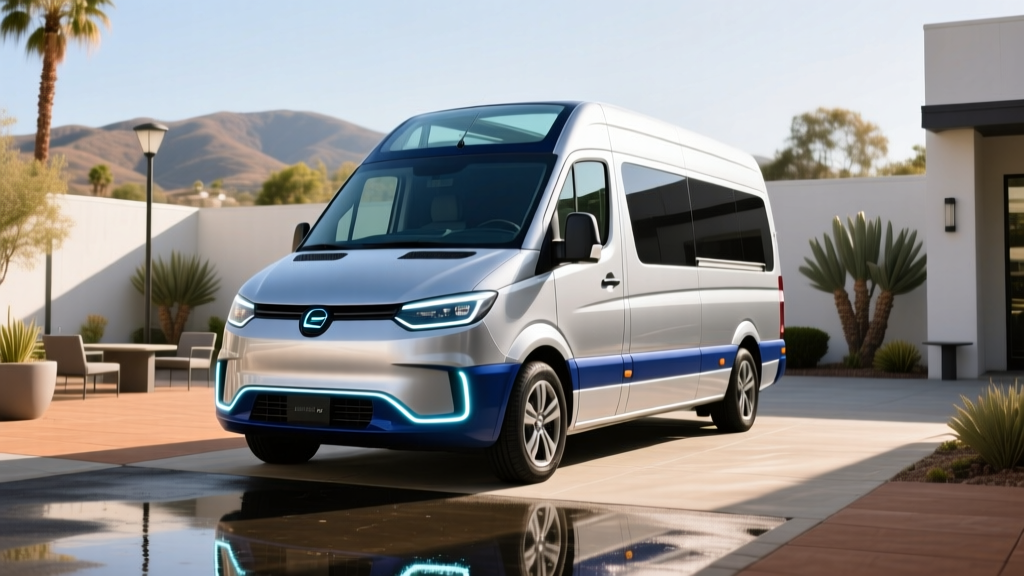
For Temecula business owners and fleet managers, the electric Sprinter van—specifically the Mercedes-Benz eSprinter—represents a shift from diesel overhead to predictable electric operating costs. With the 2026 model offering up to 200 miles of EPA-estimated range and access to Southern California's robust charging infrastructure, the eSprinter is a viable option for local delivery routes, mobile services, and shuttle operations in the Inland Empire.
Quick Answer: Is the eSprinter Right for Temecula?
If your daily routes stay under 150 miles (accounting for a real-world buffer for AC use and Temecula's hilly terrain), you have access to overnight Level 2 charging, and your business qualifies for California's HVIP or federal commercial clean vehicle credits, the eSprinter can significantly reduce per-mile operating costs compared to a diesel Sprinter. If you regularly drive to remote areas or need 300+ miles of daily range, stick with diesel or plan for mid-day DC fast charging stops.
2026 eSprinter Range and Battery Specs
The 2026 Mercedes-Benz eSprinter is available with two battery configurations, both using NMC (nickel-manganese-cobalt) lithium-ion chemistry for optimal energy density in a commercial vehicle:
| Specification | Standard Range (113 kWh) | Extended Range (150 kWh) |
|---|---|---|
| Usable Battery Capacity | 113 kWh | 150 kWh |
| EPA-Estimated Range | ~150 miles | ~200 miles |
| Real-World Range (loaded, AC, hills) | ~120-135 miles | ~165-180 miles |
| Max DC Fast Charge Rate | 115 kW | 115 kW |
| 10-80% DC Charge Time | ~42 minutes | ~55 minutes |
| Level 2 Charge Rate (AC) | 9.6 kW | 9.6 kW |
| Level 2 Full Charge Time | ~12 hours | ~16 hours |
| Motor Output | 201 hp / 295 lb-ft | 201 hp / 295 lb-ft |
| Payload Capacity (Cargo Van) | ~2,624 lbs | ~2,425 lbs |
| Starting MSRP (Cargo Van) | ~$72,000 | ~$82,000 |
Real-World Range Reality Check
Temecula's summer temperatures frequently exceed 95°F, and running the HVAC system can reduce range by 10-15%. If you're hauling near max payload up the I-15 corridor toward Murrieta or Lake Elsinore, expect the Extended Range model to deliver 165-180 miles in mixed driving. For routes staying within Temecula city limits and nearby Winchester, the Standard Range model is typically sufficient.
EV vs Diesel Sprinter: Cost Comparison
The decision between an eSprinter and a diesel Sprinter 2500 comes down to upfront cost versus long-term operating savings. Here's a 5-year total cost of ownership (TCO) breakdown assuming 20,000 miles driven annually:
| Cost Factor | eSprinter Extended Range | Diesel Sprinter 2500 |
|---|---|---|
| Base MSRP | $82,000 | $52,000 |
| Federal §45W Commercial Clean Vehicle Credit | -$7,500 (if eligible) | $0 |
| California HVIP Incentive (if eligible) | -$20,000 to -$45,000 | $0 |
| Effective Purchase Price (after incentives) | $29,500 - $54,500 | $52,000 |
| Fuel/Energy Cost (5 yrs, 100k miles) | $8,500 (SoCal commercial rate) | $22,500 (diesel @ $4.50/gal, 20 MPG) |
| Maintenance (5 yrs) | $3,500 | $9,000 |
| Insurance (5 yrs, commercial) | $12,500 | $11,000 |
| Estimated Resale Value (5 yrs) | $25,000 | $30,000 |
| 5-Year Total Cost of Ownership | $29,000 - $54,000 | $64,500 |
The eSprinter's economics hinge heavily on California incentives. The California Hybrid and Zero-Emission Truck and Bus Voucher Incentive Project (HVIP) can dramatically reduce the purchase price for eligible commercial fleets. Federal §45W Commercial Clean Vehicle Credit provides up to $7,500 for vehicles under 14,000 lbs GVWR (the eSprinter qualifies) and up to $40,000 for heavier vehicles. Always verify current-year eligibility with a tax professional, as sourcing and domestic-content rules apply.
Charging Infrastructure in Temecula
Temecula and the broader Inland Empire offer decent public charging infrastructure, but for commercial operations, depot-based Level 2 charging is the backbone of daily use.
| Charging Level | Power (kW) | Miles Added Per Hour | Best Use Case |
|---|---|---|---|
| Level 1 (120V) | 1.4 kW | ~3-4 miles | Not practical for eSprinter |
| Level 2 (240V, 40A) | 9.6 kW | ~25-30 miles | Overnight depot charging (12-16 hrs full) |
| DC Fast Charge | Up to 115 kW | ~150-180 miles | Mid-day top-ups (10-80% in ~42-55 min) |
Home/Depot Charging Installation: For a commercial location in Temecula, installing a dedicated 240V/40A circuit for Level 2 charging typically costs $2,500-$5,000, depending on panel capacity and trenching distance. If your facility requires a panel upgrade from 200A to 400A, add $3,000-$7,000. For fleet operations with multiple eSprinters, consider smart chargers with load management to avoid demand charges from Southern California Edison.
Public DC Fast Charging: Temecula has several Electrify America and EVgo stations capable of 150+ kW, which can add ~100 miles to an eSprinter in 30 minutes. However, frequent DC fast charging accelerates battery degradation slightly and costs more per kWh than depot charging. Use public DCFC for mid-day route extensions, not daily routine.
Tax Credits and Incentives for Temecula Buyers
Commercial EV buyers in California have access to some of the best incentive stacks in the country, but eligibility is complex:
- Federal §45W Commercial Clean Vehicle Credit: Up to $7,500 for the eSprinter (GVWR under 14,000 lbs). Vehicle must be assembled in North America, and battery components/minerals must meet domestic-sourcing thresholds that tighten annually. Claimed on IRS Form 8936 for businesses. Verify current-year rules at irs.gov.
- California HVIP Vouchers: Ranges from $20,000 to $45,000 depending on fleet size, vehicle class, and whether you operate in a disadvantaged community. Applications are processed through CARB and can have waitlists.
- South Coast AQMD Incentives: Temecula falls within the South Coast Air Quality Management District, which occasionally offers additional grants for zero-emission commercial vehicles.
- Utility Rebates: Southern California Edison and SDG&E offer rebates for commercial EV charger installation, sometimes covering 50-100% of equipment costs.
Important Caveat: Incentive programs change frequently, have funding caps, and require specific documentation. Work with a California-based commercial EV consultant or tax professional to confirm eligibility before purchase.
Decision Framework: Is the eSprinter Right for Your Temecula Operation?
Choose the eSprinter If:
- Your daily routes are under 150 miles (Extended Range) or 120 miles (Standard Range)
- You have access to overnight Level 2 charging at a depot or home
- Your business qualifies for California HVIP or federal commercial credits
- You operate primarily in Temecula, Murrieta, Winchester, or nearby areas
- You want to reduce maintenance downtime (no oil changes, fewer brake replacements due to regen)
- You value quiet, zero-tailpipe-emission operation for customer-facing mobile services
Stick with Diesel or Consider Alternatives If:
- Your routes regularly exceed 180 miles per day
- You lack access to overnight Level 2 charging
- You frequently tow near max capacity (the eSprinter's towing capacity is lower than diesel)
- You operate in extreme cold climates (less relevant for Temecula, but a factor for mountain routes in winter)
- Your business doesn't qualify for California or federal incentives
- You need immediate vehicle availability (eSprinter lead times can be 3-6 months)
Common Misconceptions About the eSprinter
| Myth | Fact |
|---|---|
| "The eSprinter can't handle Temecula's hills." | The 295 lb-ft of instant torque provides strong hill-climbing ability. Range does decrease on steep grades, but the motor handles inclines effortlessly. |
| "Charging takes too long for commercial use." | Overnight Level 2 charging (12-16 hours) is ideal for depot-based operations. For mid-day needs, DC fast charging adds ~100 miles in 30 minutes. |
| "The battery will need replacing in 5 years." | Mercedes-Benz warranties the eSprinter battery for 8 years/100,000 miles with a minimum 70% capacity retention. Real-world data from early adopters suggests 10-15% degradation over 150,000 miles. |
| "It's too expensive compared to diesel." | After California HVIP and federal credits, the eSprinter can cost less upfront than diesel. Operating costs (fuel + maintenance) are 50-60% lower per mile. |
| "There aren't enough charging stations in Temecula." | Temecula has multiple public DC fast chargers, and most commercial operations rely on depot charging anyway. Public infrastructure is a backup, not the primary solution. |
First-Time eSprinter Buyer Checklist
- Audit Your Routes: Track daily mileage for 2-4 weeks. If 90% of days are under 150 miles, the eSprinter is viable.
- Assess Charging Access: Confirm your depot or home has a 240V circuit or can accommodate one. Get a quote from a licensed electrician.
- Verify Incentive Eligibility: Consult a California EV incentive specialist to confirm HVIP and §45W eligibility for your business structure.
- Test Drive Loaded: Request a test drive with realistic payload to assess performance and range impact.
- Plan for Lead Times: Order 3-6 months in advance, especially for the Extended Range model.
- Budget for Charger Installation: Set aside $3,000-$8,000 for Level 2 charger installation, including potential panel upgrades.
Frequently Asked Questions
What's the real-world range of the eSprinter in Temecula's summer heat?
Expect 165-180 miles for the Extended Range model with AC running and moderate payload. The Standard Range delivers 120-135 miles under similar conditions. Preconditioning the battery while plugged in can mitigate some heat-related range loss.
Can I charge the eSprinter at a Tesla Supercharger?
No. The eSprinter uses a CCS1 connector for DC fast charging. Tesla Superchargers use the NACS connector, and while Tesla has opened some stations to non-Tesla EVs via a Magic Dock adapter, most Superchargers remain Tesla-only. Use Electrify America, EVgo, or ChargePoint DCFC stations in Temecula.
How long does the eSprinter battery last, and what's the replacement cost?
The battery is warrantied for 8 years/100,000 miles at 70% capacity retention. Real-world degradation is typically 1-2% per year. Out-of-warranty replacement costs are estimated at $20,000-$30,000, but most commercial vehicles will retire before needing a full battery swap.
Does the eSprinter qualify for the $7,500 federal tax credit?
Yes, but as a commercial vehicle, it qualifies under §45W (Commercial Clean Vehicle Credit), not §30D (consumer credit). The credit is up to $7,500 for vehicles under 14,000 lbs GVWR. Eligibility depends on battery sourcing and domestic assembly. Verify with a tax professional and the IRS guidelines.
Is the eSprinter good for mobile services like dog grooming or food trucks?
Yes, especially if your service area is local and you can charge overnight. The quiet operation and zero tailpipe emissions are customer-friendly. Just ensure your upfit equipment (refrigeration, water pumps, etc.) doesn't exceed the payload capacity or drain the 12V auxiliary system excessively.
What's the maintenance schedule for the eSprinter?
The eSprinter eliminates oil changes, fuel filters, and exhaust system maintenance. Expect cabin air filter replacements every 15,000-20,000 miles, brake fluid checks every 2 years, and tire rotations every 7,500 miles. Regenerative braking significantly extends brake pad life. Annual maintenance costs are roughly $700-$900, compared to $1,800-$2,200 for diesel.