Quick Answer: Is the Electric Sprinter Worth It?
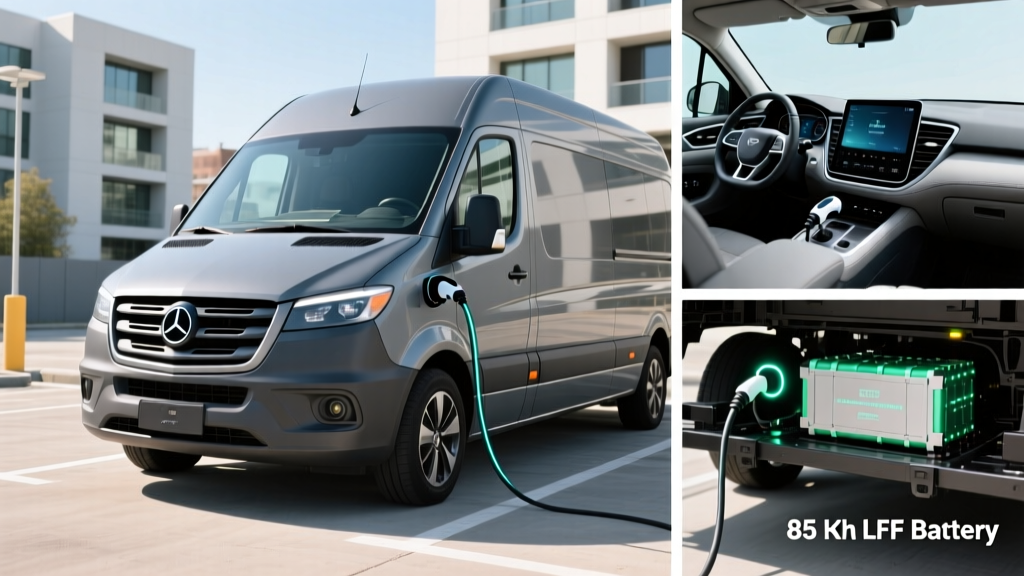
The 2026 Mercedes-Benz eSprinter delivers an EPA-estimated 200 miles of range from a 113 kWh (usable) NMC lithium-ion battery, with DC fast charging up to 115 kW (10–80% in roughly 42 minutes). Starting around $72,000 MSRP before incentives, it costs roughly 60–70% more upfront than a comparable diesel Sprinter — but fleet operators running predictable urban routes under 150 miles daily can recoup that premium in 3–5 years through fuel and maintenance savings. The eSprinter is best suited for last-mile delivery, shuttle services, and tradespeople with depot or home Level 2 charging access. It is not ideal for long-haul routes, extreme cold-climate operations without garage parking, or buyers without reliable charging infrastructure.
2026 eSprinter Specs: Range, Battery, and Charging
The 2026 eSprinter carries over the updated powertrain introduced for the 2024 model year, with minor software refinements to thermal management and regenerative braking calibration. Here are the exact figures buyers need:
| Specification | 2026 eSprinter (150" WB, High Roof) |
|---|---|
| EPA-Estimated Range | 200 miles |
| Real-World Range (mixed driving) | 160–185 miles |
| Real-World Range (highway 70 mph) | ~140–155 miles |
| Real-World Range (cold weather, <32°F) | ~120–145 miles |
| Battery Capacity (usable) | 113 kWh, NMC chemistry |
| Motor Output | 201 hp (150 kW), 295 lb-ft torque |
| 0–60 mph | ~9.5 seconds (unladen) |
| Max DC Fast Charge Rate | 115 kW (CCS1) |
| 10–80% DC Fast Charge Time | ~42 minutes |
| Level 2 AC Charge Rate | 9.6 kW |
| Level 2 Full Charge Time (0–100%) | ~12 hours |
| Cargo Volume (150" WB High Roof) | 488 cu ft |
| Max Payload | ~2,600 lbs |
| Base MSRP (Cargo Van 150" WB) | ~$72,000 |
| Battery Warranty | 8 years / 100,000 miles (70% capacity retention) |
Real-World Range Reality Check
The EPA rates the eSprinter at 200 miles, but commercial van operation rarely mirrors the test cycle. Expect 160–185 miles in typical mixed urban/suburban delivery use with moderate cargo loads. At sustained highway speeds of 70 mph, aerodynamic drag on the high-roof body cuts range to roughly 140–155 miles. In winter conditions below freezing, battery chemistry limitations and cabin/cargo heating demands can reduce range to 120–145 miles. The eSprinter does offer battery preconditioning when a DC fast charger is set as your navigation destination, which helps recover charging speed in cold weather — but range loss is a physical reality you must plan around.
Charging Infrastructure: What You Actually Need
The eSprinter uses a CCS1 connector for DC fast charging and a J1772 inlet for Level 2 AC charging. Mercedes-Benz has not adopted the NACS (Tesla-style) connector for the eSprinter as of the 2026 model year, though a future adapter or native switch remains possible.
| Charging Level | Power (kW) | Miles Added per Hour | Typical Use Case |
|---|---|---|---|
| Level 1 (120V outlet) | ~1.4 kW | ~3–4 mi/hr | Emergency/trickle only — impractical for daily use |
| Level 2 (240V, 40A circuit) | 9.6 kW | ~22–25 mi/hr | Overnight depot or home charging — full charge in ~12 hrs |
| DC Fast Charge (CCS1) | Up to 115 kW | ~150+ mi/hr (peak) | Mid-route top-ups; 10–80% in ~42 min |
Depot and Home Charging Costs
For fleet depot charging, a single commercial Level 2 station (hardwired, 48A) typically costs $2,500–$5,000 installed per unit, depending on electrical panel capacity and conduit run distance. If your facility requires a panel upgrade from 200A to 400A service, add $3,000–$8,000. For a single-owner operator charging at home, a Level 2 wallbox installation averages $1,200–$2,800 total (equipment plus licensed electrician). Always have a licensed electrician assess your panel capacity before committing — a 113 kWh battery pulling 9.6 kW for 12 hours is a significant sustained load.
The Charging Curve Reality
Mercedes quotes a peak DC fast-charge rate of 115 kW, but that peak is only sustained between roughly 10–40% state of charge. Above 60%, the charge rate tapers significantly — often dropping below 50 kW past 80%. This is standard behavior for NMC batteries protecting cell longevity, but it means a 10–90% charge will take closer to 60–65 minutes, not the 42 minutes quoted for 10–80%. Plan your route stops accordingly.
eSprinter vs. Diesel Sprinter: 5-Year Cost Breakdown
The core purchase decision comes down to total cost of ownership. Below is a comparison based on a fleet operator driving 12,000 miles per year over five years (60,000 miles total), using national average fuel and electricity prices as of early 2026.
| Cost Category | 2026 eSprinter (Electric) | 2026 Sprinter 2500 (Diesel) |
|---|---|---|
| Base MSRP | $72,000 | $45,500 |
| Federal Tax Credit (§30D) | Up to $7,500 (see eligibility below) | $0 |
| Effective Purchase Price | ~$64,500 | $45,500 |
| Fuel/Energy (60,000 mi) | $4,800 (at $0.14/kWh avg) | $13,200 (at $4.10/gal, 20 MPG) |
| Maintenance (60,000 mi) | ~$1,800 | ~$5,500 |
| Insurance (5-yr avg) | ~$12,000 | ~$9,500 |
| Estimated Resale (5 yr) | ~$28,000 | ~$22,000 |
| Net 5-Year Cost | ~$55,100 | ~$51,700 |
The eSprinter saves roughly $8,400 in fuel and $3,700 in maintenance over five years, but the higher purchase price and insurance premiums keep the net gap at approximately $3,400 more than diesel over 60,000 miles. However, this gap narrows significantly at higher annual mileage (15,000+ miles/year), in states with additional commercial EV incentives (such as California's HVIP or New York's Charge Ready NY), or where time-of-use electricity rates drop below $0.10/kWh. At 20,000 miles per year, the eSprinter typically breaks even with diesel around year 4.
Source: Efficiency and range data verified against fueleconomy.gov. Tax credit rules per IRS §30D guidelines.
Federal Tax Credit and Incentive Eligibility
The eSprinter may qualify for the federal §30D Clean Vehicle Credit of up to $7,500, but eligibility is not automatic. As of 2026, the following requirements apply:
- Vehicle MSRP cap: Vans fall under the $80,000 MSRP limit for SUVs/pickups/vans. The eSprinter cargo van base qualifies; fully optioned configurations above $80,000 do not.
- Buyer income limits: AGI must not exceed $150,000 (single), $225,000 (head of household), or $300,000 (joint filing).
- Battery sourcing: The $7,500 credit splits into two halves — $3,750 for critical minerals sourcing and $3,750 for battery component manufacturing. Sourcing requirements tighten annually; confirm current-year compliance on the IRS website or with a tax professional before purchase.
- Point-of-sale transfer: As of 2024+, eligible buyers can transfer the credit to the dealer at purchase, reducing the out-of-pocket price directly rather than waiting for a tax refund.
- Commercial fleet alternative: Businesses that do not qualify for §30D (e.g., LLCs or corporations without personal tax liability) may instead claim the §45W Commercial Clean Vehicle Credit — up to $7,500 for vehicles under 14,000 lbs GVWR or $40,000 for heavier vehicles. Consult a tax professional for your entity's eligibility.
State and local incentives vary widely and change frequently. California, Colorado, New York, and several other states offer additional commercial EV rebates of $2,500–$10,000+. Always check your state energy office or utility provider for current programs.
Common Misconceptions About the Electric Sprinter
| Myth | Fact |
|---|---|
| "200 miles of range means I can drive 200 miles loaded on the highway." | EPA range assumes mixed driving. A fully loaded eSprinter at 70 mph will realistically cover 130–150 miles before needing to charge. Plan routes with a 20% buffer. |
| "I can charge it on a regular wall outlet overnight." | Level 1 (120V) adds only ~3–4 miles of range per hour. Charging a depleted 113 kWh battery on Level 1 would take over 80 hours. Level 2 (240V) is essentially mandatory for daily commercial use. |
| "The battery will need replacing in a few years." | Mercedes warranties the battery for 8 years/100,000 miles at 70% capacity retention. NMC cells in commercial applications with proper thermal management typically retain 80–85% capacity at 150,000 miles based on fleet data from earlier eSprinter deployments. |
| "Electric vans can't handle cold weather." | Cold weather reduces range by 25–40%, but the eSprinter's liquid-cooled/heated battery and heat pump (standard on 2026 models) mitigate this. Preconditioning while plugged in preserves range. Garage parking in winter is a significant advantage. |
| "I'll save money immediately." | The upfront premium of ~$26,500 over diesel (before credits) means break-even typically takes 3–5 years depending on mileage, electricity rates, and incentive stacking. Low-mileage users may never break even. |
Who Should Buy the Electric Sprinter? A Decision Framework
Choose the eSprinter If:
- Your daily routes are under 150 miles round-trip with predictable stops
- You have (or can install) Level 2 charging at your depot or home
- You operate in a city or metro area with low-emission zone requirements or noise restrictions (the eSprinter is nearly silent)
- You drive 15,000+ miles per year, accelerating the fuel-savings payback
- You qualify for the §30D or §45W federal credit plus state incentives
- You value reduced maintenance downtime (no oil changes, no DEF fluid, no transmission service, regenerative braking extends brake life)
Stick With Diesel (or Wait) If:
- Your routes regularly exceed 180+ miles per day without reliable mid-route DC fast charging
- You operate in rural areas or charging deserts where CCS1 public chargers are sparse
- You need maximum payload — the eSprinter's battery adds significant weight, reducing payload by ~800 lbs vs. diesel
- You lack access to overnight Level 2 charging and cannot install it
- Your annual mileage is under 8,000 miles, making the upfront premium hard to justify
- You frequently tow — the eSprinter's towing capacity is limited to 5,000 lbs vs. 7,500+ for diesel
First-Time EV Van Buyer Essentials
If the eSprinter would be your first electric vehicle, here are the ownership realities that differ from diesel:
Regenerative braking changes your driving style. The eSprinter offers multiple regen levels, including a near one-pedal driving mode in urban settings. This recovers energy on deceleration and significantly reduces brake pad wear — many fleet operators report brake service intervals stretching past 80,000 miles.
Route planning must include charging. Unlike diesel, where any fuel station works in 5 minutes, DC fast charging requires a CCS1-compatible station, 20–45 minutes of dwell time, and awareness of the station's actual power output (many public chargers deliver 50 kW, not the 115 kW peak the eSprinter can accept). Apps like PlugShare and the Mercedes me connect navigation help, but always verify station status before relying on a single charger for a critical route.
Insurance costs more. Commercial EV insurance premiums run 15–25% higher than equivalent diesel vans, driven by higher repair costs for battery and power electronics damage. Get quotes before purchase — some commercial fleet insurers now offer EV-specific policies with better rates.
Maintenance is simpler but not zero. You eliminate oil changes, fuel filters, DEF refills, and transmission fluid. You still need tire rotations (EVs are heavier and wear tires faster), cabin air filter replacement, brake fluid checks, coolant system service for the battery thermal loop, and windshield washer fluid. Budget roughly $350–$500 per year for scheduled maintenance vs. $1,000–$1,500 for diesel.
FAQ: Electric Sprinter Ownership
What is the real-world range of the 2026 electric Sprinter?
The EPA rates it at 200 miles, but real-world mixed driving with moderate loads typically yields 160–185 miles. Highway-only driving at 70 mph drops to roughly 140–155 miles, and winter conditions below freezing can reduce range to 120–145 miles. Always plan routes with at least a 20% range buffer below the EPA figure.
How long does it take to charge the eSprinter?
On a Level 2 (240V, 9.6 kW) charger, a full 0–100% charge takes approximately 12 hours — suitable for overnight depot charging. On a DC fast charger at peak rate, 10–80% takes about 42 minutes, but expect 60–65 minutes for 10–90% due to charging-curve taper above 80%.
Does the eSprinter qualify for the $7,500 federal tax credit?
It may, depending on your income, the specific trim's MSRP (must be under $80,000), and current battery-sourcing requirements. Commercial entities should investigate the §45W credit instead. Always verify eligibility on irs.gov or with a tax professional before purchasing.
Can I tow with the electric Sprinter?
Yes, but capacity is limited. The eSprinter is rated for up to 5,000 lbs of towing — significantly less than the diesel Sprinter's 7,500+ lb rating. Towing also reduces range substantially, often by 30–40%.
What happens if the battery degrades?
Mercedes warranties the high-voltage battery for 8 years or 100,000 miles, guaranteeing at least 70% of original capacity. If capacity drops below that threshold within the warranty period, Mercedes will repair or replace the battery at no cost. Out-of-warranty replacement costs are estimated at $18,000–$25,000 based on current parts pricing, though costs are expected to decline as battery technology advances.
Is the eSprinter good for cold-weather operation?
It's viable but requires planning. The 2026 eSprinter includes a heat pump and battery thermal preconditioning, which help. Expect 25–40% range loss in sustained sub-freezing temperatures. Garage parking and preconditioning while plugged in are strongly recommended to preserve range and charging speed in winter.
What connector does the eSprinter use?
The 2026 eSprinter uses CCS1 for DC fast charging and J1772 for Level 2 AC charging. It does not currently use the NACS (Tesla Supercharger) connector. Check Mercedes-Benz official specs for the latest connector information, as the industry is gradually shifting toward NACS adoption.