Quick Answer: Is the Electric Sprinter Van Worth It in 2026?
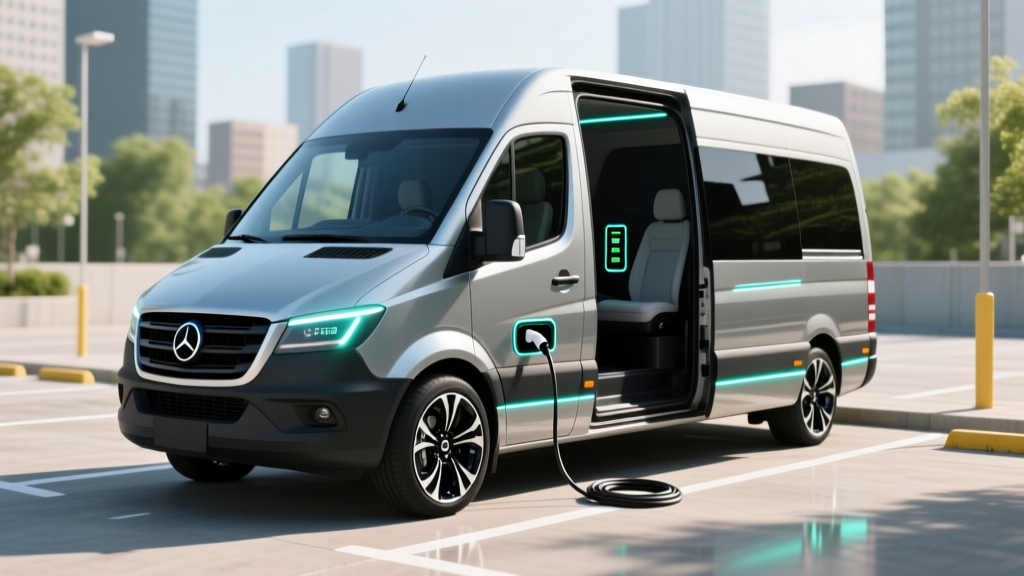
The 2026 Mercedes-Benz eSprinter is a purpose-built electric cargo and passenger van offering an EPA-estimated 204 miles of range from its 113 kWh usable NMC battery, 150 kW peak DC fast charging (10–80% in approximately 42 minutes), and a starting MSRP around $74,900 before federal incentives. It makes strong economic sense for fleet operators and owner-operators running predictable urban and suburban routes under 150 miles per day, especially where depot-level Level 2 charging is available overnight. For long-haul intercity routes exceeding 200 miles or operations in extreme cold climates, the diesel Sprinter remains the more practical choice today.
2026 eSprinter Specs at a Glance
| Specification | 2026 eSprinter (150" WB, High Roof) | 2026 Sprinter 2500 Diesel (Comparison) |
|---|---|---|
| EPA Range | 204 miles | ~470 miles (24 gal × ~19.5 mpg) |
| Battery (Usable) | 113 kWh (NMC) | N/A |
| Motor Output | 201 hp / 273 lb-ft torque | 188 hp / 332 lb-ft torque (2.0L turbodiesel) |
| 0–60 mph | ~8.5 sec (unladen) | ~11.0 sec (unladen) |
| Max DC Fast Charge | 150 kW (CCS1) | N/A |
| 10–80% DC Charge Time | ~42 minutes | N/A |
| Level 2 AC Charge Rate | 11 kW (full charge ~11 hours) | N/A |
| Cargo Volume (max) | 487 cu ft (170" WB) | 533 cu ft (170" WB) |
| Payload Capacity | ~2,775 lbs | ~3,330 lbs |
| GVWR | 9,990 lbs | 9,990 lbs |
| Base MSRP (cargo van) | ~$74,900 | ~$49,900 |
| Powertrain Warranty | 5 yr / 60,000 mi | 5 yr / 60,000 mi |
| Battery Warranty | 8 yr / 100,000 mi (70% retention) | N/A |
Real-World Range: What 204 EPA Miles Actually Means on a Route
The EPA's 204-mile figure for the eSprinter is derived from standardized laboratory cycles that don't reflect the realities of commercial van operation. Based on fleet testing data and real-world reviews, here's what to actually plan for:
Real-World Range Expectations
- Urban delivery route (stop-and-go, moderate load, 70°F): ~180–195 miles — regenerative braking recovers significant energy in city driving
- Suburban/highway mix (55–65 mph, half payload, 70°F): ~155–175 miles — aerodynamic drag dominates at highway speeds
- Cold weather (below 32°F, cabin heating active, full payload): ~120–145 miles — battery resistance increases and HVAC draws 3–5 kW continuously
- Hot weather (above 95°F, A/C active, full payload): ~150–165 miles — thermal management system consumes additional energy
Source: EPA estimates via fueleconomy.gov; real-world figures derived from fleet operator reports and Mercedes-Benz published efficiency data.
The eSprinter lacks a heat pump in the base configuration — it uses resistive PTC heating, which draws substantially more energy than a heat pump system in cold weather. Fleet operators in northern climates should budget for 35–40% range loss in winter and plan routes accordingly. Preconditioning the battery while still plugged in at the depot can recover some of that loss by warming the pack before departure without consuming driving-range energy.
Charging the eSprinter: Depot, Public, and What You'll Actually Need
Commercial van charging is fundamentally different from passenger EV charging. The eSprinter's 113 kWh battery is roughly 50% larger than a Tesla Model Y's pack, meaning Level 2 charging takes longer but overnight depot charging is entirely practical.
| Charging Level | Power (kW) | Miles Added Per Hour | Full Charge Time (0–100%) | Use Case |
|---|---|---|---|---|
| Level 1 (120V, 12A) | 1.4 kW | ~3–4 mi/hr | ~80+ hours | Emergency only — not viable for commercial use |
| Level 2 (240V, 48A) | 11 kW | ~28–30 mi/hr | ~11 hours | Overnight depot charging — primary method |
| DC Fast (CCS1, peak) | 150 kW | ~170 mi/hr (peak) | 10–80% in ~42 min | Mid-day top-ups, opportunity charging |
Key charging insight: The eSprinter's DC fast-charging curve peaks at 150 kW only between approximately 10–40% state of charge. Above 60%, the charge rate tapers significantly — from roughly 100 kW at 60% down to 40 kW by 80%, and below 15 kW above 90%. Planning a mid-route fast charge to 80% is practical; charging to 100% on DC fast adds over 30 unnecessary minutes.
Depot Charging Installation Costs
Most eSprinter owners will install one or more Level 2 wallbox chargers at a commercial depot or home garage. For a single 11 kW (48A) charger installation:
| Item | Estimated Cost Range |
|---|---|
| Commercial-grade Level 2 EVSE (e.g., ChargePoint CT4000, Enel X JuiceBox Pro) | $800 – $2,500 |
| Electrical panel upgrade (if needed — 200A to 400A service) | $2,000 – $8,000 |
| Wiring, conduit, and breaker (50A circuit, up to 100 ft run) | $1,500 – $4,000 |
| Licensed electrician labor | $1,500 – $3,500 |
| Permits and inspection | $200 – $800 |
| Total (single charger, no panel upgrade) | $4,000 – $10,800 |
| Total (single charger, with panel upgrade) | $6,000 – $18,800 |
Final installation specifications should always be confirmed with a licensed electrician familiar with local codes. Commercial installations may qualify for utility rebates and the federal Alternative Fuel Vehicle Refueling Property Credit (IRC §30C), which covers up to 30% of equipment and installation costs (capped at $100,000 per item for commercial properties).
eSprinter vs. Diesel Sprinter: 5-Year Cost of Ownership
The eSprinter carries a roughly $25,000 MSRP premium over the equivalent diesel Sprinter 2500. The question every buyer needs answered is whether operating-cost savings close that gap.
| Cost Category (5 years / 75,000 mi) | eSprinter (Electric) | Sprinter 2500 Diesel | Difference |
|---|---|---|---|
| Purchase price (base, before incentives) | $74,900 | $49,900 | +$25,000 (eSprinter) |
| Federal commercial EV credit (§45W, up to $7,500) | −$7,500 | $0 | −$7,500 (eSprinter) |
| Fuel / Energy (75,000 mi) | $6,750 (depot L2 @ $0.13/kWh) | $16,484 (19.5 mpg avg @ $4.25/gal diesel) | −$9,734 (eSprinter) |
| Maintenance (oil, filters, DEF, brakes, belts) | $2,200 (brake pads, cabin filter, coolant) | $6,800 (oil changes, DEF, fuel filters, DPF service, brake pads) | −$4,600 (eSprinter) |
| Depot charger install (amortized) | $6,000 | $0 | +$6,000 (eSprinter) |
| Insurance (estimated) | $12,500 | $10,500 | +$2,000 (eSprinter) |
| Tires (similar wear patterns) | $3,600 | $3,600 | $0 |
| 5-Year Total Cost | $98,450 | $87,284 | +$11,166 (eSprinter) |
| Cost per mile | $1.31 | $1.16 | +$0.15/mi (eSprinter) |
Analysis: Over 5 years and 75,000 miles, the eSprinter costs roughly $11,000 more than the diesel Sprinter when factoring in the purchase premium, charger installation, and higher insurance — even with substantial fuel and maintenance savings. However, the math shifts dramatically with higher annual mileage, access to cheaper electricity (utility fleet rates as low as $0.07/kWh), state and local incentives (which vary by jurisdiction — check your state energy office), and the §30C charging infrastructure credit. At 25,000 miles per year with $0.08/kWh electricity, the eSprinter reaches cost parity with diesel around year 6–7.
Fleet operators should also factor in non-cost advantages: zero tailpipe emissions for urban low-emission zone compliance, quieter operation for early-morning/late-night deliveries in residential areas, and reduced driver fatigue from the absence of diesel noise and vibration.
Federal Tax Credits and Incentives: What Actually Applies
Tax credit eligibility for the eSprinter differs from passenger EVs because it is classified as a commercial vehicle:
- IRC §45W (Commercial Clean Vehicle Credit): Up to $7,500 for vehicles under 14,000 lbs GVWR. The eSprinter at 9,990 lbs qualifies. The credit amount equals the lesser of 15% of the vehicle's basis (30% for vehicles not eligible for depreciation deduction in some cases) or the incremental cost over a comparable ICE vehicle. For the eSprinter, the $7,500 maximum typically applies.
- IRC §30D (Clean Vehicle Credit): This is the consumer credit up to $7,500 with income caps and MSRP limits — generally not the applicable credit for commercial van purchases. Businesses typically use §45W instead.
- IRC §30C (Charging Infrastructure Credit): Up to 30% of depot charger equipment and installation costs, capped at $100,000 per item for commercial property. This can offset $1,200–$5,600 of your charger install.
- State/local incentives: Vary significantly by jurisdiction. California's HVIP, for example, has offered vouchers up to $45,000 for electric commercial vans. Consult your state energy office or a tax professional for current program availability.
Tax credit rules are subject to change. Consult the IRS or a qualified tax professional before making purchase decisions based on incentive assumptions.
Common Misconceptions About the Electric Sprinter Van
| Myth | Fact |
|---|---|
| "The eSprinter can't handle a full day's route." | With 155–195 real-world miles depending on conditions, the eSprinter covers the majority of urban delivery routes. USPS has already deployed thousands of electric delivery vehicles on similar daily distances. Routes exceeding 150 miles in cold weather require mid-day opportunity charging or route planning adjustments. |
| "The battery will need expensive replacement within a few years." | Mercedes-Benz warranties the eSprinter battery for 8 years or 100,000 miles against degradation below 70% capacity. NMC chemistry in commercial-grade packs with active thermal management typically retains 80–85% capacity at 150,000 miles. Full battery replacement (if needed post-warranty) is estimated at $18,000–$25,000, though this cost continues to decline year over year. |
| "It's slower and less capable than the diesel." | The eSprinter's 201 hp and instant 273 lb-ft of torque delivers stronger acceleration (0–60 in ~8.5 sec vs. ~11 sec for diesel). Payload capacity is lower (~2,775 lbs vs. ~3,330 lbs) due to battery weight, and the cargo floor is slightly raised. Towing is limited to 5,000 lbs (vs. 7,500 for diesel). |
| "I can charge at any public station easily." | The eSprinter uses the CCS1 connector, which is widely available. However, its large size means many public charging stalls with tight parking spaces are impractical. Fleet operators should plan depot charging as the primary method and identify commercial-friendly DC fast-charging locations (with pull-through or oversized spots) for mid-day needs. |
| "Electric vans don't work in cold climates." | Range drops 25–40% in sub-freezing temperatures — this is real and significant. But with depot preconditioning, route planning for reduced range, and the option to add an auxiliary diesel heater for the cargo area (available from Mercedes-Benz), cold-climate operation is viable. Many fleets in Norway and northern US states operate electric vans year-round. |
Decision Framework: Should You Buy the Electric Sprinter Van?
Choose the eSprinter if:
- Your daily routes are under 150 miles with predictable patterns
- You have access to depot or home Level 2 charging (overnight is sufficient for most use cases)
- You operate in a city with low-emission zones or noise-restricted delivery windows
- You drive 20,000+ miles per year (higher mileage accelerates the fuel-savings payback)
- You can access state commercial EV incentives (California HVIP, New York Truck Voucher, etc.)
- You plan to own the vehicle 6+ years (total cost parity typically occurs in years 6–8)
Choose the diesel Sprinter if:
- Your routes regularly exceed 200 miles per day or vary unpredictably
- You operate primarily in extreme cold (sustained sub-20°F) without depot charging access
- You need maximum payload (3,330 lbs) or towing (7,500 lbs) capacity
- You lack depot charging access and cannot install it
- You plan to own the vehicle fewer than 5 years (the purchase premium won't be recouped)
- Your area has limited CCS1 DC fast-charging infrastructure for backup
First-Time Electric Van Buyer Checklist
If the eSprinter is your first commercial EV, here's what to plan before delivery day:
- Audit your routes. GPS-log 2–4 weeks of actual driving. If 90%+ of your days are under 150 miles, the eSprinter is viable. If even 20% of days exceed 180 miles, plan for mid-day DC fast charging or a mixed fleet.
- Get an electrical assessment. A licensed electrician should evaluate your depot's panel capacity. A single 48A Level 2 charger needs a 60A breaker and 6 AWG wire. Multiple chargers may require a service upgrade.
- Check utility rate structures. Commercial time-of-use rates can make overnight charging dramatically cheaper than daytime charging. Some utilities offer dedicated EV fleet rates as low as $0.06–$0.08/kWh off-peak.
- Confirm tax credit eligibility. Work with a tax professional to confirm §45W eligibility for your business structure and §30C eligibility for your charger installation. Rules differ for sole proprietors, LLCs, and corporations.
- Plan for cold weather. If you operate below freezing, add 30–40% to your worst-case range calculation. Consider the auxiliary diesel cargo heater option — it preserves battery range for propulsion while keeping the cargo area warm.
- Train your drivers. Regenerative braking in the eSprinter is strong enough to enable one-pedal driving in most urban situations. Drivers accustomed to diesel Sprinters need orientation on charge management, preconditioning routines, and the instrument cluster's energy-flow display.
Frequently Asked Questions
What is the real-world range of the electric Sprinter van?
The EPA rates the 2026 eSprinter at 204 miles. In real-world commercial use, expect 155–195 miles depending on route type, payload, and temperature. Urban stop-and-go routes with regenerative braking yield the best efficiency; highway driving at 70 mph and cold weather below 32°F produce the lowest range.
How long does it take to charge the eSprinter?
On a Level 2 depot charger at 11 kW, a full charge takes approximately 11 hours — ideal for overnight charging. On a 150 kW DC fast charger, 10–80% takes roughly 42 minutes. The charge rate tapers significantly above 80%, so DC fast charging past 80% is not time-efficient.
Does the eSprinter qualify for the $7,500 federal tax credit?
The eSprinter qualifies for the IRC §45W Commercial Clean Vehicle Credit of up to $7,500 — not the consumer §30D credit. §45W applies to vehicles used in a trade or business. Eligibility depends on your business structure and the incremental cost over a comparable ICE vehicle. Consult a tax professional and review current IRS guidance before purchasing.
What is the payload and towing capacity of the eSprinter vs. diesel?
The eSprinter offers approximately 2,775 lbs of payload capacity and 5,000 lbs of towing — both lower than the diesel Sprinter 2500's ~3,330 lbs payload and ~7,500 lbs towing. The battery pack adds roughly 1,300 lbs to the vehicle's curb weight, which reduces available payload. The cargo floor is also slightly higher due to the underfloor battery placement.
What happens if the eSprinter battery degrades?
Mercedes-Benz warranties the battery for 8 years or 100,000 miles against degradation below 70% of original capacity. NMC packs with active liquid thermal management in commercial service typically retain 80–85% capacity at 150,000 miles. If replacement is needed post-warranty, current estimates range from $18,000 to $25,000, though battery costs continue to decline. Battery health can be monitored via the Mercedes PRO connect telematics system.
Can I charge the eSprinter at Tesla Superchargers?
No. The eSprinter uses the CCS1 connector. While Tesla has opened some Supercharger locations to non-Tesla CCS vehicles via the Magic Dock adapter, most Supercharger stalls are too tight to accommodate the Sprinter's physical dimensions. Plan depot Level 2 charging and identify commercial-friendly CCS1 DC fast stations (Electrify America, EVgo, and ChargePoint all offer CCS1) for mid-day needs.
Is the eSprinter good for camper van conversions?
The eSprinter is an appealing conversion platform — zero tailpipe emissions enable camping in emission-sensitive areas, the instant torque handles mountain grades effortlessly, and the quiet powertrain enhances comfort. However, the ~$75,000 starting price, 204-mile range (less with conversion weight), and reduced payload leave less margin for conversion materials and amenities. Most camper conversions still favor the diesel Sprinter for its range, payload, and established aftermarket support.